- OCR and MICR are character reading technologies with different physical principles: optical versus magnetic.
- OCR is versatile and multipurpose for digitizing documents; MICR is specific and ultra-reliable for banking.
- Combining OCR and MICR allows for the extraction of data with high accuracy, security, and speed in critical environments.
- The choice depends on the type of document, sector, accuracy requirements, cost, and scalability.

OCR and MICR are two character recognition technologies that have been used for decades to automate data extraction from physical documents. Although at first glance they seem similar (both convert printed text into digital information ), they are actually based on very different principles and are applied to very different problems.
While OCR (Optical Character Recognition) relies on computer vision and pattern recognition algorithms to interpret text in images, MICR (Magnetic Ink Character Recognition) uses magnetic ink and special fonts and has become a de facto standard in banking for the secure, high-volume processing of checks and other financial documents. A thorough understanding of what each technology does, its advantages, limitations, and how they can be combined is key to choosing the right technology and avoiding unnecessary complications.
What is OCR and how does it actually work?
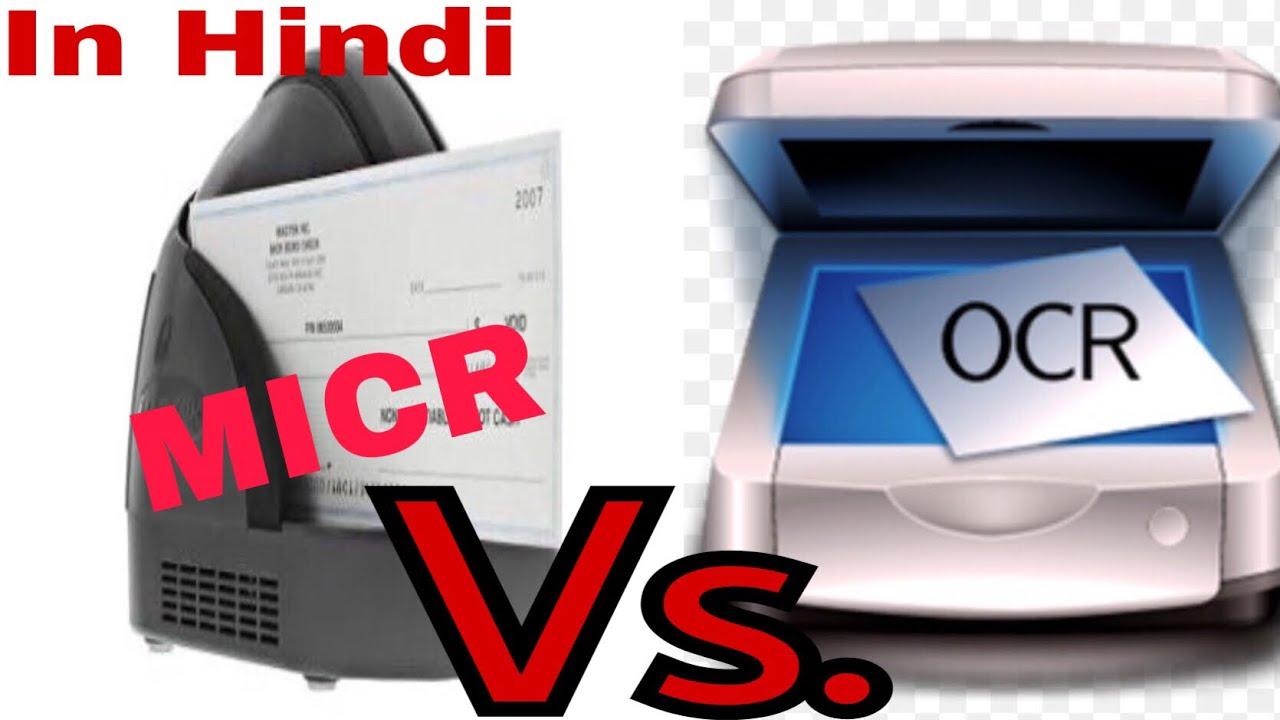
In practice, a modern OCR system follows a fairly sophisticated workflow: first, the image of the document is captured with a scanner or camera, then the shapes and patterns that resemble letters, numbers, or symbols are analyzed, and finally, those patterns are compared with a set of known characters to decide which character each one is.
Modern OCR engines use advanced pattern recognition algorithms, computer vision, and increasingly, neural networks trained on millions of examples. This allows them to handle a wide variety of fonts, sizes, complex layouts, and, in some cases, even handwritten text with a very high degree of accuracy.
Once the characters are identified, the system converts the content into structured digital text (for example, in ASCII or Unicode format), which can be edited, indexed, searched, and directly fed into databases or document management systems. This leap from paper to structured data is what has made OCR a fundamental component of digital transformation.
OCR applications have skyrocketed as the technology has matured. It is used to digitize historical archives , automate data entry in administration and business, improve accessibility for visually impaired people (reading documents aloud), power internal search engines, and accelerate document management in almost every sector.
What is MICR and why is it still critical in banking?
MICR (Magnetic Ink Character Recognition) technology is specifically designed for processing checks and financial documents . It is based on the idea that certain characters printed with magnetic ink, following a highly controlled format, can be read extremely reliably and quickly using specialized equipment.
At the bottom of any standard bank check is the well-known MICR line . This line encodes the routing number or bank code, the account number, and the check number . All of this is printed with a special, iron-oxide-rich ink that clearly responds to a magnetic field.
For reliable reading, MICR uses very specific fonts, such as E-13B or CMC-7 , which only include the digits 0 through 9 and a few special symbols. The design of these characters is optimized so that, when magnetized and subsequently read by the reader head, they generate clearly distinguishable magnetic signals.
A MICR system works like this: the check first passes through a magnet that magnetizes the ink ; then, as it passes through the reading head, each character generates a characteristic magnetic signal. The reader captures this signal and, using interpolation algorithms, converts it into digital characters that the clearing system and back-office software can process.
Thanks to this process, banks can process enormous volumes of checks with a very low error rate and a high level of security against tampering. Although electronic and mobile payments have grown exponentially, MICR remains a key technology for the legacy of checks and other printed financial instruments.
OCR vs MICR: fundamental differences
Both technologies share the ultimate goal – converting printed characters into digital data – but they do so with such different approaches that it is useful to compare them point by point to understand this clearly.
First, the underlying physical principles are entirely different. OCR relies on optics: it uses light and image sensors to capture a document, and then software to interpret the shapes. MICR, however, is based on magnetic properties : the information is printed with magnetic ink and read by detecting the signal generated when it is magnetized.
Secondly, the range of supported characters differs significantly. An OCR engine can recognize letters, numbers, special symbols, multiple alphabets, and even handwritten characters, provided the software is trained to do so. MICR, on the other hand, is limited to a small set of predefined characters (digits and a few symbols), printed in standard fonts such as E-13B or CMC-7.
Another key difference is the type of document they can process . OCR is applicable to virtually any printed or handwritten document: books, contracts, forms, invoices, license plates, tickets, posters, etc. MICR is used almost exclusively on checks and bank documents that include MICR lines, where the position and format of the characters are strictly defined.
Regarding the ink used , OCR is fairly indifferent: it can work with any ink or printing method as long as the contrast and image quality are reasonable. MICR requires magnetic ink based on iron oxide; if the check is printed with regular ink, the MICR reader will not be able to interpret it correctly or will require additional optical reading.
There are also notable differences in accuracy and reliability . Modern OCR has achieved very high success rates, but falls short of 100%, especially with poor-quality images, rare fonts, or complex manuscripts. MICR, designed for a highly structured environment, achieves near 100% accuracy in line reading, which is essential in financial operations where an error can be very costly.
Regarding the type of device , OCR is usually implemented as software that runs on scanners, multifunction printers, cameras, or even mobile phones. MICR requires specific hardware with magnetic heads , pre-magnetizing magnets, and often check-feeding mechanisms designed for banking.
Finally, regarding the subsequent use of the data , information captured by OCR is typically used for editing, archiving, indexing, analysis, or process automation (e.g., business processes and document intelligence). MICR information, on the other hand, is typically used to identify accounts, bank routes, and validate checks within clearing and fraud prevention systems.
Main uses and applications of OCR
The use cases for OCR have multiplied so much that it's rare to find a document-intensive sector that doesn't use it at some point in its value chain. Its greatest strength is its versatility , as it serves as a bridge between paper and structured data.
One of the most widespread uses is the digitization of printed documents . Companies, public administrations, and individuals scan contracts, files, reports, or books to convert them into searchable PDFs . This allows for the indexing of large volumes of information, improves access, and enables the implementation of electronic archiving policies without relying so heavily on physical paper.
Secondly, OCR is used extensively in data entry automation and form processing . In sectors such as banking, insurance, retail, and logistics, OCR extracts key fields from invoices, receipts, bank statements, delivery notes, and purchase orders. Integrated with workflows and back-office systems, it reduces human error and accelerates payment processing, identity verification, loan underwriting, and other administrative processes.
Another powerful application is text translation . By combining OCR with machine translation and natural language processing tools, it's possible to capture printed text in one language and translate it on the fly into another, useful for technical documentation, manuals, brochures, or even signage in international environments.
In the field of analytics and business intelligence , OCR makes it possible to extract data from large volumes of semi-structured or fully unstructured documents. When combined with machine learning techniques and natural language models, it can identify entities, amounts, dates, and key concepts to feed dashboards, trend analyses, or market research.
Finally, it's worth remembering the use of OCR for text recognition in real-world images , such as vehicle license plates, traffic signs, tickets, or screens. These applications, typical of industrial machine vision and smart city projects, rely on specialized OCR and models trained for specific scenarios; there is even practical documentation on OCR with mobile applications that illustrates these cases.
Most common uses of MICR in the financial sector
Although MICR is a much more specialized technology than OCR, its role in the banking ecosystem remains crucial . It is optimized for a few very specific scenarios, but in those scenarios it offers a combination of accuracy, speed, and security that is hard to match.
The prime use case is check processing . Every time a customer deposits a check at a teller window, smart ATM, or remote deposit solution, the MICR reader interprets the bottom line to capture the bank code, account number, and check number. This information is then transmitted to the clearing system to route the transaction to the appropriate issuing bank.
Another important use is batch processing . Financial institutions handle enormous volumes of checks and other MICR-lined documents daily. Reading equipment can process hundreds or thousands of documents per minute, minimizing manual intervention and reducing clearing time.
MICR also provides significant value in fraud prevention and document verification . The requirement to use magnetic ink and standard fonts makes it much more difficult to forge or alter a check without the system detecting it. Any tampering on the MICR line tends to generate inconsistent magnetic signals, triggering alerts and further reviews.
More generally, MICR has become an interoperability standard within the banking sector. Because the content and format of the MICR line are standardized, different banks and clearing houses can process the same documents without compatibility issues.
Key advantages of OCR in modern environments
The OCR market has been growing at a double-digit rate for years, driven by the need to digitize processes and extract information from diverse sources . It's not just about scanning documents: it's about automating decisions and feeding intelligent systems.
One of its major advantages is the increase in productivity and efficiency . Automating the reading of invoices, forms, or contracts drastically reduces the time spent typing data and checking for errors. Staff can then focus on higher value-added tasks, such as analysis, customer service, or exception management.
Versatility across various document types and formats is another strength of OCR. Advanced systems can handle highly heterogeneous documents without relying on rigid templates, identifying key fields even when the layout changes. This is especially useful in sectors that receive documents from multiple suppliers or institutions, each with its own format.
Another important advantage is the improvement in data quality and consistency . By eliminating much of the manual entry, typing errors, duplicates, and discrepancies are reduced. In fields such as healthcare or finance, where incorrect data can have serious consequences, this added reliability is critical.
Finally, OCR is increasingly integrated with AI, NLP, and language modeling technologies , giving rise to what is known as Intelligent Document Processing (IDP). These solutions not only recognize text but also understand its context, extract relevant information semantically, and can achieve accuracy levels exceeding 99% in well-designed scenarios.
Limitations and challenges of OCR
Despite its advancements, it's crucial to be aware of OCR's inherent limitations to avoid surprises in real-world projects. Not everything can be solved simply by scanning and calling it a day.
The first major weakness is its sensitivity to document or image quality . Blurry scans, poorly lit photographs, very faded text, or wrinkled documents can significantly increase the error rate. If the contrast is poor or the resolution insufficient, the OCR engine will struggle to clearly distinguish the shapes of the characters.
Furthermore, OCR typically works best when dealing with documents that are relatively consistent in format and typography . Highly decorative fonts, distorted text, chaotic layouts, or extremely irregular handwriting can confuse the system and require additional rules, manual reviews, or more specialized models.
The computational cost must also be considered . Processing large volumes of complex documents, especially when OCR is integrated with more powerful AI models, can require considerable resources. In real-time scenarios or with millions of pages, infrastructure can become a critical factor.
Finally, even with high success rates, OCR systems rarely achieve 100% accuracy. In contexts where every character counts (for example, amounts in financial transactions), it is often necessary to implement validations, selective human reviews, and quality control mechanisms to ensure an acceptable level of accuracy.
Main advantages of MICR compared to other technologies
MICR was designed from the outset with massive banking operations in mind, hence its strengths fit like a glove with the requirements of the traditional financial sector.
The most obvious strength is its extremely high reading accuracy . By working with a very limited character set and a controlled environment (standardized magnetic ink, fixed fonts, known positions), error rates are extremely low. This contributes to both operational efficiency and minimizing subsequent complaints and adjustments.
Another key advantage is its security and resistance to counterfeiting . The magnetic ink and the unique shape of the characters are not easily reproduced with home printers or simple counterfeiting techniques. Any attempt to tamper with the MICR line typically leaves a trace in the magnetic signal, making it easy to detect during processing.
MICR also stands out for its interoperability and standardization . Because the format and encoding of the line (content, field order, font type) are standardized, checks can travel between banks, clearinghouses, and systems from different manufacturers without technical compatibility issues.
Finally, having been designed for batch processing, MICR allows for the processing of large volumes of checks at high speed with very little human intervention, something that remains extremely valuable in many countries where the use of checks continues to be significant.
Limitations and costs associated with MICR
However, MICR is not a universal technology. By design, it has significant limitations that restrict its scope of application , which explains why it coexists with OCR and other more flexible solutions.
The first limitation is its limited character recognition capability . MICR can only read a very specific set of digits and a few symbols, printed in E-13B or CMC-7 fonts. It is not suitable for extracting general text, titles, or complex concepts; it only captures data encoded in the MICR line.
Furthermore, implementing MICR requires specific hardware and consumables : printers capable of using magnetic ink, readers with magnetic heads, pre-magnetizing magnets, etc. This implies a considerable initial investment and recurring costs that can be difficult to justify for small businesses or sectors outside of banking.
Another drawback is that the processing relies on physical documents . To read the MICR line, the check has to physically travel to the capture or processing point, which adds transport time and limits immediacy compared to purely digital methods.
Finally, MICR cannot read handwritten text or characters printed with non-magnetic ink . If a check is printed with the wrong ink or is damaged on the MICR line, backup techniques (usually OCR) or manual review may be necessary to complete the data.
Combination of OCR and MICR: the perfect pair for banking data
In environments where extreme accuracy and operational efficiency are essential, such as banking and financial services, the combination of OCR and MICR has become a very powerful solution. Instead of choosing one technology or the other, many organizations use both in tandem.
A common pattern is to use MICR as the primary source of truth for the check line (bank code, account, check number) and to use OCR to reinforce or verify that reading, as well as to extract additional information such as the amount or the payee's name.
When the MICR reader captures the line, some systems perform a complementary optical scan of the same characters . The OCR uses the document image to interpret what it sees on the line below, and the system compares both scans. If they match, confidence in the data is reinforced; if they differ, an alert is triggered for human review or additional rules.
In addition to the MICR line, OCR is used to read the amount in numeric format (courtesy amount) , usually in a box on the right, and the amount written out in words (legal amount) , which is typically on the center line of the check. This is done using specialized CAR/LAR (Courtesy Amount Recognition / Legal Amount Recognition) algorithms, which interpret both numbers and handwritten text, achieving accuracy rates that can exceed 80-90% on high-quality documents.
This hybrid approach allows for faster, more secure check clearing processes with less manual labor , reducing the number of times an employee has to type data, correct errors, or check for inconsistencies.
Challenges of combining OCR and MICR in practice
Although the combination is very powerful, it is not without its challenges. For it to work well, several aspects related to both document quality and system configuration must be carefully considered.
One of the most frequent problems is the poor quality of the physical document . Checks that are folded, wrinkled, stained, torn, or poorly printed can hinder not only optical reading but also magnetic reading. A distorted or partially erased MICR line can lead to erroneous or incomplete readings.
The font type and size in the fields read by OCR also have a significant impact . While the MICR font is very standard, the rest of the check (amount in words, payee, notes) can be handwritten or printed with very different fonts and sizes. Small fonts or complex handwriting require well-trained, specialized OCR engines and models.
The overall design of a check or financial document can also pose a challenge. OCR and layout analysis systems rely on expected patterns (specific areas where each piece of data typically appears). If the design deviates significantly from the norm, or if background graphic elements clutter the text, performance may suffer and require special rules and configurations.
To mitigate these problems, many manufacturers incorporate image enhancement techniques and document-type-specific treatments , such as adaptive thresholding or areas of interest (Special Document Handling) that clean up the background and highlight only the critical areas (MICR line, amounts, key fields).
How to choose between OCR, MICR or a combined solution
When selecting the right technology for a data extraction project, it is important to carefully analyze what type of documents you are handling and what requirements you have in terms of accuracy, security, speed, and cost.
If your organization processes a wide variety of documents (invoices, contracts, forms, delivery notes, scanned emails) and the priority is to digitize and automate processes in general , OCR and, more specifically, Intelligent Document Processing platforms, will be at the heart of the solution.
However, if you operate primarily in the traditional banking and financial sector , with a significant volume of checks or other documents with MICR lines, you will still need MICR hardware and software to ensure the accuracy of critical fields and interoperability with clearinghouses.
For many banks and large financial services companies, the most logical option is a hybrid architecture : MICR covers the structured and standardized part; OCR handles everything else and reinforces data quality. Furthermore, scalability and integration capabilities with existing systems (core banking, ERP, CRM, document management, etc.) must be considered.
We must not forget aspects such as the necessary processing speed (it is not the same to process a few hundred documents a day as several million), the minimum acceptable accuracy, the regulatory and security requirements of the sector, or the budget available for specialized hardware and software licenses.
Ultimately, OCR and MICR are not rival technologies, but rather complementary tools within the data capture ecosystem. Choosing the right combination to use them in makes the difference between a fragile workflow and one that is robust, secure, and ready to grow.


Passionate writer about the world of bytes and technology in general. I love sharing my knowledge through writing, and that's what I'll do on this blog, show you all the most interesting things about gadgets, software, hardware, tech trends, and more. My goal is to help you navigate the digital world in a simple and entertaining way.
Table of Contents
- 1 What is OCR and how does it actually work?
- 2 What is MICR and why is it still critical in banking?
- 3 OCR vs MICR: fundamental differences
- 4 Main uses and applications of OCR
- 5 Most common uses of MICR in the financial sector
- 6 Key advantages of OCR in modern environments
- 7 Limitations and challenges of OCR
- 8 Main advantages of MICR compared to other technologies
- 9 Limitations and costs associated with MICR
- 10 Combination of OCR and MICR: the perfect pair for banking data
- 11 Challenges of combining OCR and MICR in practice
- 12 How to choose between OCR, MICR or a combined solution