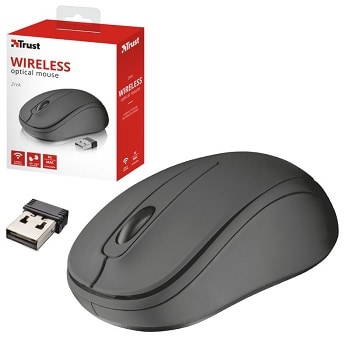
Trust is one of the world's best-known brands of electronic accessories. One of the most common problems with their accessories is that the Trust wireless mouse doesn't work , so here's what you can do about it.
A mouse, whether wireless or not, is indispensable for desktop computers, and most people even use it on their laptops.
You'll rarely find a wireless mouse in a gamer's gear inventory. Compared to a wired mouse, it has a slower response time, so most people rule them out.
However, other types of users prefer wireless mice for casual PC activities, internet browsing, streaming, and work. As a result, they have been in high demand in the market, with Trust being one of the leading brands, especially in Europe.
Trust Wireless Mouse Not Working
Mouse functionality problems can occur regardless of the brand. So, rule out Trust as the cause of the problem; many things can happen with your computer that can cause the mouse to malfunction, whether it's a Trust mouse or any other brand.
And that's where we want to focus our efforts. We want to give you a list of possible causes of the failure, and possible solutions so that you can solve the problem.
All the causes and solutions are explained, based on the Windows operating system and a Trust wireless mouse . However, as we mentioned, it is applicable to any other brand.
Cause 1: System Blocked
Start by checking if your entire operating system is frozen, as your Trust mouse might be working fine. The easiest way to do this is to check your keyboard. If the system is frozen or locked, the keyboard won't work either.
If your keyboard has LED lights, press Num Lock or Caps Lock to see if they illuminate. Otherwise, press Ctrl+Alt+Delete to see if your screen turns blue and displays the power options and Task Manager.
If you find that the system is still working normally, but the Trust mouse is still not responding, proceed to the next step.
Cause 2: Mouse “Hung” or “Frozen”
We know it sounds obvious, but restarting your computer may be enough to reset your Trust Wireless Mouse, and get it working properly again.
It's possible that your services and drivers are blocked due to other processes running, so restarting Windows should do the trick. Try it out, and if it doesn't improve, move on to the next step.
Cause 3: Trust mouse incompatible with the system
If you recently purchased a new Trust mouse , it may not be compatible with your operating system, especially if you are using an older version of Windows.
This is rare these days, as Trust wireless mice are compatible with Windows 10 and some earlier versions. But it can still happen.
In this case, simply visit the Trust website , or contact customer service to confirm that the USB mouse is compatible with your system.
Cause 4: Trust mouse battery is dead
Turn the Trust mouse over to check if the light is on. If the light is blinking or off, it means the battery is low or dead, so you should replace or charge it.
Trust wireless mice are rechargeable, with a mini-USB port and included cable. So, one reason your mouse isn't working could be that the battery is depleted and needs charging. After charging it, make sure your wireless mouse is working properly.
Cause 5: Too much distance between the mouse and the receiver
Some users connect their laptops to smart TVs via an HDMI cable and try to navigate their computers with a mouse from a long distance.
However, wireless mice, whether Trust or another brand, are not designed for long range, so you need to move closer to the USB receiver to get a better signal.
Additionally, you should make sure that the mouse's USB receiver is not obstructed by any objects or near other devices, such as a microwave oven or smartphone, as interference may cause the wireless mouse to stop working properly.
Cause 6: Problems with your machine's port
There may be a problem with your USB port , not the Trust wireless mouse . Unplug the USB receiver from your desktop or laptop computer and try a different, identical port.
On desktop computers, you can also try the front or back of the computer drive.
In case your laptop doesn't have many ports, connect a multiport USB hub and plug the USB receiver into the hub to see if the wireless mouse works now.
Often, the physical port, the hardware , has problems, and we blame the mouse. From a bad connection and lack of maintenance to a completely detached port, you can't overlook checking your USB ports.
Cause 7: Problems with your computer configuration
Your mouse might not be working correctly, but there could be a problem with your computer's configuration. One of the easiest ways to test this is to connect the Trust mouse 's USB receiver to another computer to see if it works there.
If the Trust mouse is working without problems, you should check your machine's settings.
Cause 8: Problems with the installation of Mouse Trust and its USB device
It's possible that the Trust mouse and its USB adapter weren't installed correctly on your computer. But you can quickly fix this in Device Manager.
It should be noted that, to do what we will explain below, you will need to use another mouse.
- Enter the Windows menu, located in the lower left corner, the Windows logo.
- In the drop-down menu, look for the “ folder ” in the list that appears.Windows system".
- Now search for “Control panel” and click it.
- A new window opens. Go to “Device administrator".
- Now, click on “Mouse and other pointing devices".
- A sub-section will open, where you can see the device with the problem, and also the one you are using. Right-click on the device with the problem and then click on “Uninstall device".
- Then check the box “Remove the driver software for this device".
- Click on "uninstall".
- Now go back to the main window of the “Device administrator” and click on “Universal series bus controllers".
- Identify the driver assigned to the mouse and right-click on it.
- Then click on “Uninstall the device".
- Now, in the same window, click on “AGENDA”, in the main menu.
- From the drop-down menu, select “Check for hardware changes".
- Next, restart your computer. Windows will automatically reinstall the missing devices.
- Check your mouse trust, it should activate without any problems.
Cause 9: Resource-intensive applications on your PC
If you have resource-intensive applications or games, it's no wonder that your Trust USB mouse freezes from time to time. But you can fix this problem by closing all the programs you're not using at the moment.
The best way to do this is to end the task in the Task Manager.
- Right click on the icon Home.
- In the drop-down menu, look for “Task Manager” and click it.
- Now, go to the “ tabProcesses".
- Select an unused application and click “Finish homework".
- Do this for all the apps you don't recognize or use
- Try using your wireless mouse now.
It may be necessary to restart your computer after quitting all applications. However, if all or part of these programs are scheduled to run automatically when Windows starts up, then your work will have been in vain.
In that case, you need to go back to Task Manager to disable startup applications. To disable startup applications, proceed as follows:
- Right click on the button Home.
- In the drop-down menu, look for “Task Manager” and click it.
- Now, go to the “ tabHome".
- Select an application and click “Deactivate".
- Do this for all startup applications with enabled status, that you think you are not using.
- Restart your computer and check if you can use your Trust USB mouse.
Cause 10: Corrupted file affects Trust mouse functionality
Any corrupted files on your operating system could be causing device functionality issues, including with the mouse. However, you should be able to repair the corrupted files by resorting to an internal Windows utility called SFC.
- Press Windows key + R.
- Then write cmd and press “Ctrl + Shift + Enter” to open the symbol of the system as administrator.
- Now write sfc / scannow and press “Enter".
- Wait patiently while SFC does its job. Once it finishes performing the repair, you should restart your machine.
- Check if you can use your mouse trust
Cause 11: Incompatible mouse driver issues
If you installed an incompatible mouse driver during the update, you should immediately remove it from your computer and revert to the previous version. Here's what to do:
It should be noted that, to do what we will explain below, you will need to use another mouse.
- Enter the Windows menu, located in the lower left corner, the Windows logo.
- In the drop-down menu, look for the “ folder ” in the list that appears.Windows system".
- Now search for “Control panel” and click it.
- A new window opens. Go to “Device administrator".
- Now, click on “Mouse and other pointing devices".
- A sub-section will open, where you can see the device with the problem, and also the one you are using. Right-click on the device with the problem and then click on “Properties".
- Now click on the “ tabController".
- Click on the button "Revert to the previous controller".
- Wait for the system to roll back and restart your Windows PC.
- If the button “Revert to the previous controller” is grayed out, it means you can’t roll back because there is no older version of the driver on your PC.
Cause 12: Interference from other peripheral devices
Your Trust wireless mouse may be interfering with other external devices currently connected to your computer. If you recently purchased a new accessory with a Wi-Fi adapter, try unplugging it from your PC to see if this resolves the mouse issue.
If you have multiple wireless devices and you're not sure which one is causing the interference, unplug everything except the mouse and keyboard. Then, shut down your computer, start Windows again, and inspect the results.
If your wireless mouse is working now, start connecting your devices one at a time until your mouse starts to fail again.
Once you detect the problem, you can reinstall the device, repair it, or replace it.
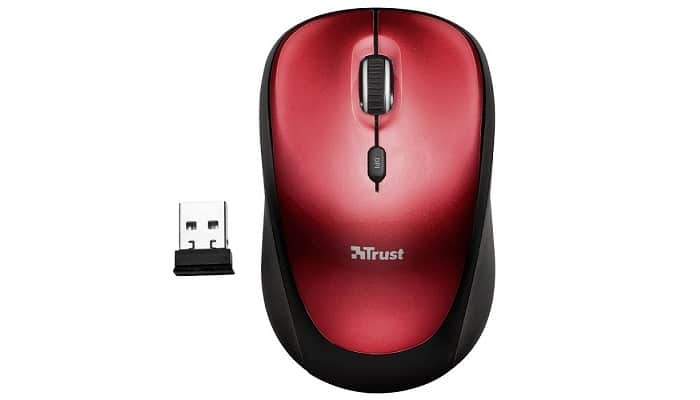
Cause 13: Problems with updating mouse and USB drivers
If reinstalling the devices doesn't solve the USB mouse problem, the drivers might not be up to date. You can also troubleshoot this issue using Device Manager.
It should be noted that, to do what we will explain below, you will need to use another mouse.
- Enter the Windows menu, located in the lower left corner, the Windows logo.
- In the drop-down menu, look for the “ folder ” in the list that appears.Windows system".
- Now search for “Control panel” and click it.
- A new window opens. Go to “Device administrator".
- Now, click on “Mouse and other pointing devices".
- A sub-section will open, where you can see the device with the problem, and also the one you are using. Right-click on the device with the problem and then click on “Update Driver".
- Then click on "Search for drivers automatically".
- If you receive the message “The best drivers for your device are already installed”, Click on“Check for updated drivers on Windows Update” in the same window.
- Once you open the settings Windows Update, your operating system should start searching for updates immediately. If it doesn't, go to “Search for updates".
- Wait patiently while Windows searches for updates. If there is something pending, click “Install Now".
- After the update is complete, restart your Windows PC.
Unfortunately, Windows is not that efficient when it comes to tracking down drivers using Windows Update. There are two solutions here: you can either download and install the driver yourself or access a driver updater app.
To obtain manual updates, you must visit the Trust website to search for and download a newer driver that is compatible with your operating system.
However, if you don't want to risk getting an incompatible driver and causing further damage, you can turn to a specialized application that detects and updates all your drivers automatically.
Cause 14: Problems with Windows fast startup
Fast startup is a feature of Windows 10 that ensures that not all processes and services are shut down, so the operating system starts up faster after a shutdown.
However, Fast Startup is known to have caused several problems for Windows users, including blue screen of death errors and some issues with accessories.
This means that Fast Startup might be preventing your Trust wireless mouse from working properly. You can easily fix this by disabling Fast Startup in Windows. Here's what to do:
- Make sure you log into Windows 10 with an administrator account.
- Enter the Windows menu, located in the lower left corner, the Windows logo.
- In the drop-down menu, look for the “ folder ” in the list that appears.Windows system".
- Now search for “Control panel” and click it.
- Click on "Energy options".
- In the side menu, click on “Choose the behavior of the power button".
- Now, click on “Change currently unavailable settings".
- Now, disable “Activate fast startup".
- Click on "Save Changes".
- Restart your computer and try using Your Trust Wireless Mouse now.
Cause 15: Problems with USB power management settings
Incorrect USB port settings can be another reason why your wireless mouse is not working on your Windows computer. By default, your operating system may keep USB ports disabled when not in use, to save power.
But it becomes problematic when the ports don't activate when you connect your Trust mouse 's USB receiver . Here's how to address this issue:
- Enter the Windows menu, located in the lower left corner, the Windows logo.
- In the drop-down menu, look for the “ folder ” in the list that appears.Windows system".
- Now search for “Control panel” and click it.
- A new window opens. Go to “Device administrator".
- Now, click on “Universal series bus controllers".
- Select your USB device, right click and go to “Properties".
- Now switch to the “ sectionPower management".
- Uncheck ““Allow the computer to turn off this device to save power.”
- Then click on "Accept".
- Now restart your PC and check if the Trust Mouse is working.
Cause 16: Your PC has a virus
If your computer has a virus and if the critical files in charge of your mouse device are infected, it is no wonder that your wireless mouse no longer works in Windows.
If you don't have a third-party security solution installed, you can use Windows Defender.
- Press the Windows key.
- Writes "Windows security” and press “Enter” to open this program.
- A new window opens. In the side menu, click on “Antivirus and threat protection".
- Click on "Exam options".
- Now select “Quick Test” and click on “Analyze now".
- If the search is not successful, run another scan by selecting “Microsoft Defender Offline Scan".
- Wait patiently for the scan to complete and allow Windows to delete the infected files.
- Restart your computer and check if your mouse Trust works now.
Cause 17: Missing mouhid.sys file
The mouhid.sys (Mouse HID Driver) file is the kernel device driver responsible for your mouse interface. Without this file, you can't use any mouse, no matter what you do. Let's check it.
Where to find mouhid.sys:
- Press the key of Windows + R to open the File Browser.
- Navigate to the address bar by pressing “Tab".
- Press the key Enter and paste the following location:
%SystemRoot%\System32\drivers\
- Press "Enter".
- Now, find the file sys in this list.
- If you find it, press Windows key + R again.
- Write cmd and press “Ctrl + Shift + Enter” to start the command prompt as administrator.
- Now write the following:
sc config mouhid start=demand
- Press Enter to restore the settings of mouhid.sys to the default.
- If the file is not there or if it has changed or been damaged, you must create a Windows installation media disc and restore it from there.
Cause 18: You do not directly identify the problem with your Trust mouse
Windows 10 has built-in troubleshooters for all critical parts of the system, including hardware and devices. It can help you fix common issues that may be preventing your mouse or USB ports from working properly, so it's worth a try.
- Enter the Windows menu, located in the lower left corner, the Windows logo.
- In the drop-down menu, look for the “ folder ” in the list that appears.Windows system".
- Now search for “Control panel” and click it.
- A new window opens. Click on the “Problem solving".
- Now, click on “Hardware and sound".
- In the section "Windows”, click on “Mouse".
- The Troubleshooter wizard will be activated. Follow the steps in the wizard and apply any available fixes.
- Then restart your operating system and try using your mouse. Trust.
Can you fix a Trust wireless mouse that's not working?
You might also be interested in How to Change Mouse Sensitivity in Windows 10
If you have done all this and the problem still persists, the problem is probably with the device itself. It could be a problem with the accessory, a bad contact, or problems with the dongle.
If you're still under warranty, you can upgrade straight away. If not, you're left with a new mouse. The good news is that you've given your machine a good once-over, and any new accessories you buy should connect to your PC without any issues.
Table of Contents
- 1 Trust Wireless Mouse Not Working
- 1.1 Cause 1: System Blocked
- 1.2 Cause 2: Mouse “Hung” or “Frozen”
- 1.3 Cause 3: Trust mouse incompatible with the system
- 1.4 Cause 4: Trust mouse battery is dead
- 1.5 Cause 5: Too much distance between the mouse and the receiver
- 1.6 Cause 6: Problems with your machine's port
- 1.7 Cause 7: Problems with your computer configuration
- 1.8 Cause 8: Problems with the installation of Mouse Trust and its USB device
- 1.9 Cause 9: Resource-intensive applications on your PC
- 1.10 Cause 10: Corrupted file affects Trust mouse functionality
- 1.11 Cause 11: Incompatible mouse driver issues
- 1.12 Cause 12: Interference from other peripheral devices
- 1.13 Cause 13: Problems with updating mouse and USB drivers
- 1.14 Cause 14: Problems with Windows fast startup
- 1.15 Cause 15: Problems with USB power management settings
- 1.16 Cause 16: Your PC has a virus
- 1.17 Cause 17: Missing mouhid.sys file
- 1.18 Cause 18: You do not directly identify the problem with your Trust mouse
- 2 Can you fix a Trust wireless mouse that's not working?

Comments are closed.