
The Windows 10 " thread stuck in device driver" error actually means that some device driver is corrupted or a rare hardware problem caused the computer to get stuck in an endless loop while waiting for the device to enter an idle state.
It is widely reported that the causes of this problem can range from incompatibility between driver software to physical damage to specific devices. For example: update the driver for an AMD graphics card.
What causes the error thread stuck in device driver?

Some computer users complain that they encounter the thread stuck in device driver error when they boot their computers. Generally, the stop code thread stuck in device driver can be caused by a faulty or misconfigured device driver.
How to fix thread stuck in device driver error
To help you fix the thread stuck in device driver error on your Windows 10 computer, we have put together a number of methods you can try to restore your device:
Solution 1: Check your hardware
Believe it or not, faulty hardware in your system will trigger the "thread stuck in device driver" error . Often, when users replace any hardware component, whether it's a hard drive, RAM, or graphics card, they don't make secure connections.
So, if you've recently added new hardware to your PC, make sure to check if everything is connected firmly. For example, if you replaced the hard drive, take a look at the SATA cables and make sure they're connected properly.
In case all the connections are tight, try replacing the hardware component with the old one. This will help you identify if there is a problem with your new hardware equipment and whether it needs to be replaced or not.
Solution 2: Reset hardware acceleration
For many users, resetting the video card hardware acceleration helped fix the thread stuck in device driver error. However, this would degrade the performance of the video card and may not provide you with the desired functionality.
This is how you can do it:
- Right click on the desktop and tap «Nvidia Control Panel»
- In the left menu bar, click «Set PhysX Configuration».
- Under “Select PhysX Processor”, click the dropdown menu and select CPU.
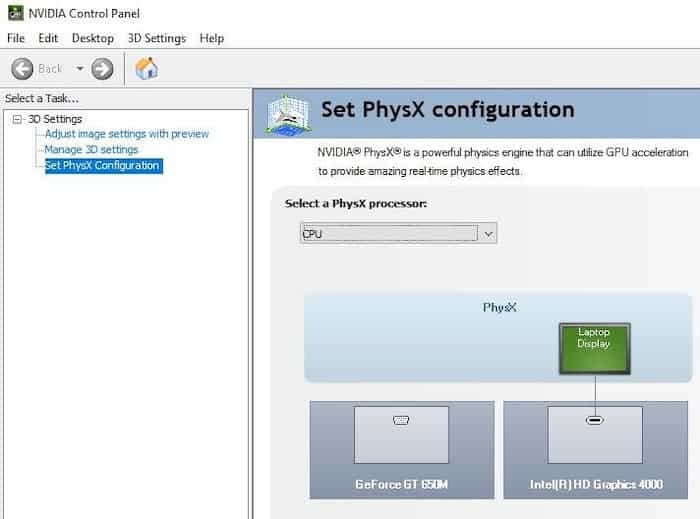
- Esto will disable GPU acceleration Nvidia on your system. Now, simply restart your PC and see if the error is gone or not.
Solution 3: Install the latest Windows updates
An outdated Windows installation is one of the most common reasons users encounter various BSOD errors , such as "thread stuck in device driver." If it's been a while since you last updated Windows, be sure to download and install any pending updates.
Follow these instructions:
- Go to Configuring Windows and touches "Update and security".
- Click on the "Search for updates" to see if you have any pending updates.
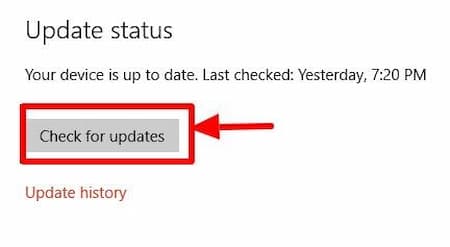
- Install pending updates and restart your pc.
Solution 4: Update drivers
Among all the reasons, outdated video card drivers are the most common cause of the thread stuck in device driver error. In this situation, the most effective solution would be to update the video card drivers. Here is how to do it:
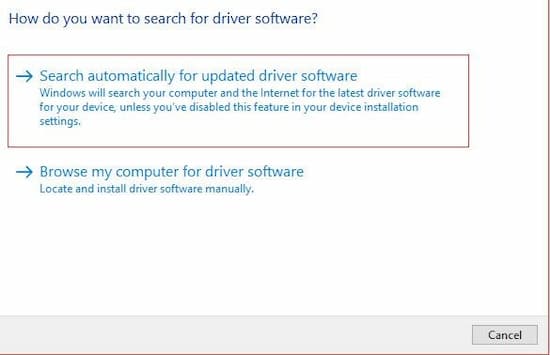
- Press "Windows + X" and click "Device administrator".
- Expand the tab «Display Controller» and right click on the video card you are using in your system. Now, choose the option "Update drivers".
- Click on "Search automatically for updated driver software" and let your system automatically search for the most suitable drivers.
Solution 5: Run the BSOD troubleshooter
The BSOD troubleshooter is a built-in Windows 10 feature that allows you to fix various BSOD errors, including "thread stuck in device driver." If none of the methods mentioned above work, you can run the BSOD troubleshooter, and it will most likely resolve the error.
- Opens "Windows Settings" and click "Update and security".
- Click on the tab "Solve problems" in the left sidebar.
- Choose the blue screen and tap the button "Run the troubleshooter".
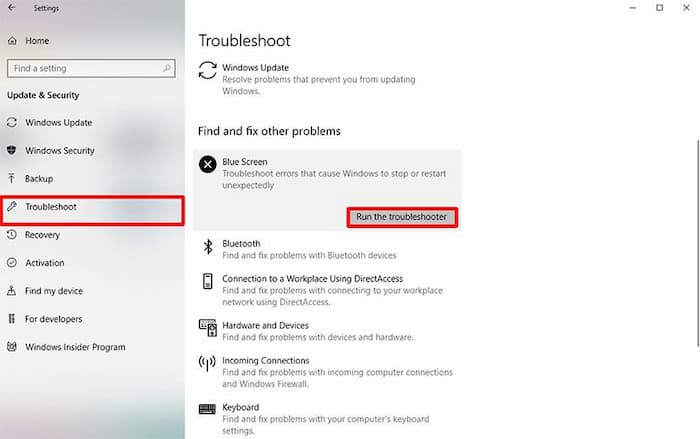
- Follow the on-screen instructions to start troubleshooting and let it fix the error automatically.
Solution 6: Run SFC scan
The SFC scan is a built-in Windows utility that is extremely useful for fixing various BSOD errors, such as "thread stuck in device driver." If the error is caused by a corrupted system file, running the SFC scan will help you fix it immediately.
To put it in simple words, SFC scan will identify all the corrupted system files and repair them automatically. It means that if a corrupted system file is causing the error, SFC scan will help you fix it.
Here’s how you can use “SFC Scan” to fix the thread_stuck_in_device_driver stop code.
- Start the symbol of the system as an administrator on your PC.
- Now, run SFC / scannow.
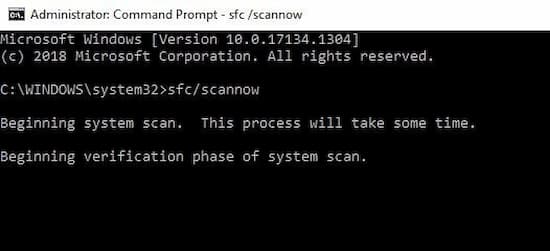
- The utility will begin scanning for corrupted system files and replace them with the locally stored recovery images. Please be patient as this process usually takes a couple of minutes to complete.
Solution 7: Run DISM
DISM (Deployment Image Servicing and Management) is another built-in system utility that is specifically designed to repair system images, such as recovery images (used by SFC to replace corrupted system files).
DISM can be used in situations where SFC fails to replace corrupted files with recovery images. In this case, DISM will download the online recovery images and use them to replace the corrupted system files.
- Start the symbol of the system as administrator.
- Run the following command to run the “DISM” utility.
- DISM /Online /Cleanup-Image /RestoreHealth
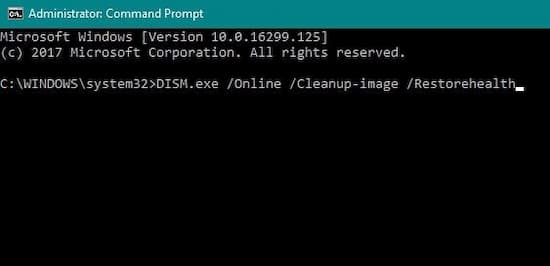
- Again, the scan may take several minutes to complete. Once the scan is complete, restart your PC and see if the BSOD error greets you again or not.
Solution 8: Remove your antivirus and problematic applications
While antivirus software protects your system from potential malware, it can also disrupt your PC's normal functionality . Over the years, many users have reported that uninstalling their antivirus program helped them fix the "Thread stuck in device driver" error in Windows. In many cases, this error can also be triggered by a faulty third-party application.
So, if you are also using a third-party antivirus program or have recently installed an application, make sure to uninstall it to see if the problem persists or not.
Here's how to remove a third-party app from your system.
- Go to "Windows Settings" and select "System".
- Click on «Applications and functions» in the menu bar on the left.
- Choose the particular antivirus software or third-party application and click on "Uninstall" to delete the app
- Once the app is uninstalled, simply restart your pc and see if the error is gone or not.
Solution 9: Update your BIOS
Updating your BIOS is one solution that will likely help you fix the BSOD error. However, it's an extremely critical process, and even a small mistake can damage your entire system. If you plan to update your BIOS, be sure to consult an expert and let them do the job.
You might be interested in: 11 Programs to Repair Windows 10
Solution 10: Remove overclock settings
While an overclocked CPU can help improve your system's performance, it can also trigger the "thread stuck in device driver" error. If you intentionally overclocked your CPU for better performance, be sure to reset it to its default clock speed . Although this might not provide the desired performance, you'll no longer encounter the frequent BSOD crashes.
Solution 11: System Restore
If you've recently started experiencing the "thread stuck in device driver" error on your system, you can also use System Restore to fix it. Performing a System Restore will help you restore your PC to a stable version from the past.
Final words
The " thread stuck in device driver" error can be quite annoying and can cause serious problems if it persists on your system. Therefore, we've prepared this guide to help you easily resolve this issue.
Table of Contents
- 1 What causes the error thread stuck in device driver?
- 2 How to fix thread stuck in device driver error
- 2.1 Solution 1: Check your hardware
- 2.2 Solution 2: Reset hardware acceleration
- 2.3 Solution 3: Install the latest Windows updates
- 2.4 Solution 4: Update drivers
- 2.5 Solution 5: Run the BSOD troubleshooter
- 2.6 Solution 6: Run SFC scan
- 2.7 Solution 7: Run DISM
- 2.8 Solution 8: Remove your antivirus and problematic applications
- 2.9 Solution 9: Update your BIOS
- 2.10 Solution 10: Remove overclock settings
- 2.11 Solution 11: System Restore
- 3 Final words
