- La IA It consolidates its position as the central focus of CES 2026, with key announcements from Samsung, NVIDIA and other major technology companies.
- The connected home and domestic robotics are gaining traction: smart appliances, advanced locks, and robots assistants.
- Physical AI-based robotics takes an industrial leap with NVIDIA's strategy and new open models for humanoids.
- Training, digital health, and accessibility rely on connected ecosystems and cloud services, with clear implications for Europe.
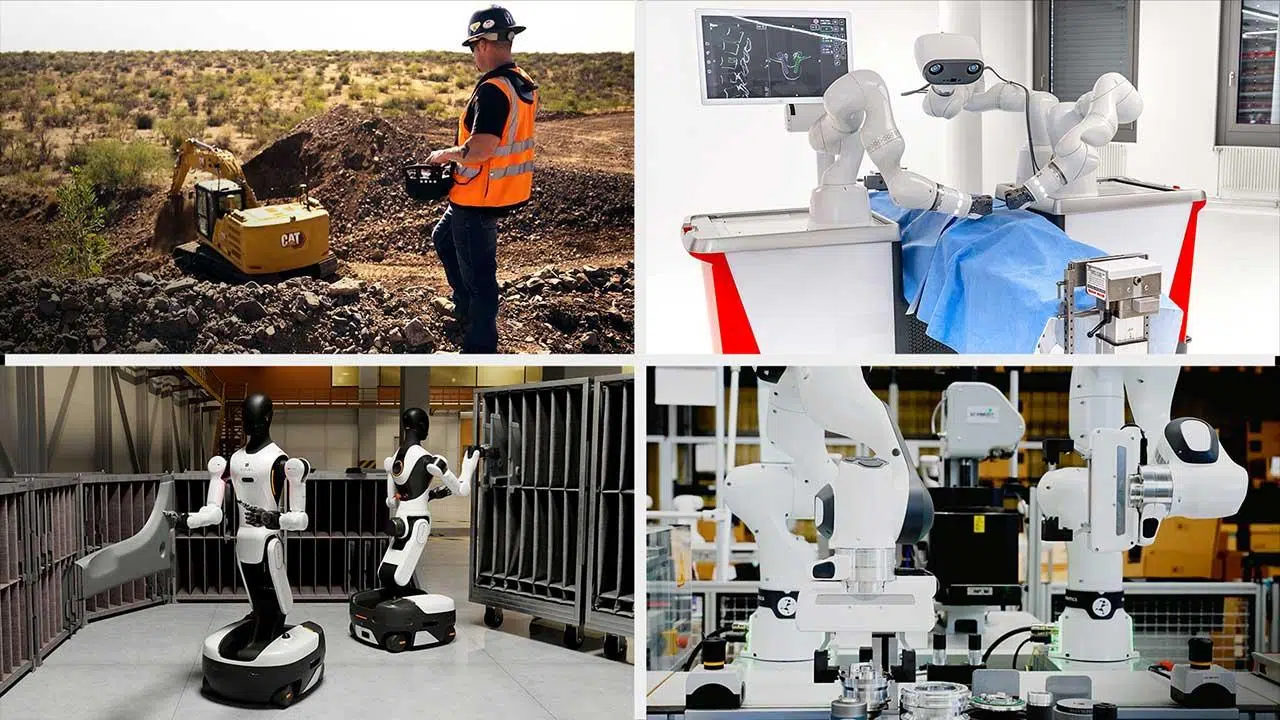
The start of the year once again features CES 2026 in Las Vegas as a major technology showcase , an event where the industry displays the products and services that will be arriving in homes and offices over the coming months. This year, the focus has clearly shifted towards artificial intelligence applied to everyday life , with announcements ranging from advanced robotics to connected appliances and smart fitness equipment.
Major brands have used the event to outline their roadmaps for AI, robotics, and the connected home , shaping a landscape where televisions, mobile phones, locks, robots, and fitness machines are beginning to speak the same digital language. With an eye on demanding markets like Europe , where privacy and regulation are paramount, the debate is no longer just about which device is the most eye-catching, but how they all integrate into a coherent and sustainable ecosystem.
AI as the common thread of CES 2026
This year's trade show places AI at the heart of its narrative . The organizer, the Consumer Technology Association (CTA), has gathered thousands of exhibitors and expects to repeat the figures of previous years, with over 140.000 attendees and companies from more than 150 countries represented. Humanoid robots, medical devices, connected cars, and wearables —almost all incorporating some form of artificial intelligence—are on display throughout the venue.
The organization emphasizes that AI has evolved from a marketing gimmick to a cross-cutting element in health, mobility, entertainment, and accessibility . CTA CEO Gary Shapiro has noted that many proposals focus on practical applications: robots for household chores, tools for people with disabilities, solutions for improving energy efficiency, and healthcare.
The conference program reinforces this idea. Figures like Jensen Huang (NVIDIA) , Lisa Su (AMD) , and Yuanqing Yang ( Lenovo ) offer their vision on how AI will redefine hardware , data centers, and consumer devices. Among the underlying concerns is a less glamorous but crucial issue: how to ensure sufficient clean energy to fuel the growth of AI computing on a global scale.
For the European public, CES also serves as a barometer to anticipate which technologies will arrive in the region and which will remain, at least for the time being, in markets such as North America or Asia, whether for regulatory, privacy or business model reasons.
Samsung: an "AI Living" ecosystem that aspires to be ubiquitous
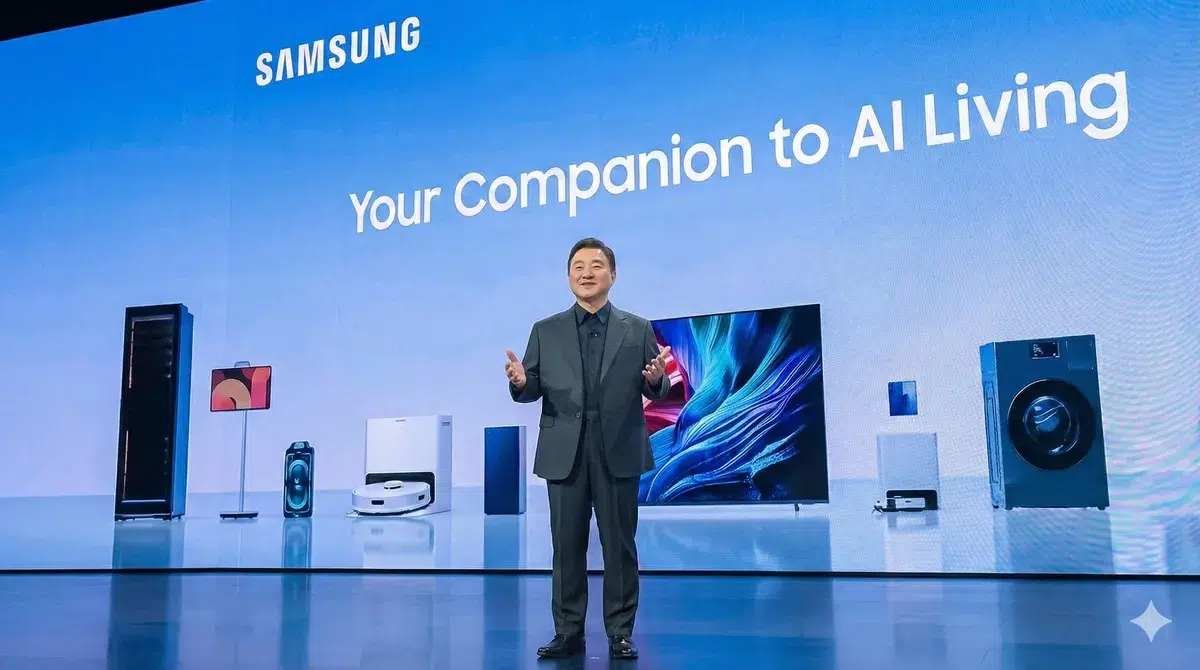
In this context, one of the most notable moves has been that of Samsung Electronics , which used its pre-event , The First Look , to frame its launches under the slogan "Your Companion to AI Living ." Rather than showcasing a single flagship product, the South Korean company is positioning AI as the backbone of mobile phones, televisions, home appliances, and services.
TM Roh, head of the Device eXperience division, has argued that AI should no longer be presented as an isolated function but rather become a common nervous system that runs through the entire range of devices. According to forecasts cited by the company, Samsung plans to double the number of mobile devices with Galaxy AI features to 800 million by 2026 , leveraging both Google Gemini models and its Bixby assistant.
This move comes at a time when the smartphone and television markets are showing signs of maturity , especially in Europe, where consumers carefully compare options before upgrading. To differentiate itself from rivals like Apple or Chinese manufacturers, Samsung is trying to make the entire ecosystem—and not just a single device—the differentiator.
In parallel, the company promises a long-term commitment to software updates , with Tizen OS as the foundation for its televisions and increasingly tight integration with cloud services. All of this is being done while keeping a close eye on regulations such as the European AI Regulation and data protection laws, which require greater transparency regarding how usage data is processed and shared in the connected home.
Beyond home appliances and televisions, Samsung is strengthening its mobile device offering with AI features that aim to integrate into the brand's ecosystem.
Smart TVs as the core of the digital home
One of the key elements of Samsung's presentation at CES 2026 was the new generation of televisions with integrated AI , among which a 130-inch Micro RGB model stands out. This model is designed to offer independent control of the red, green, and blue LEDs, thus improving image quality . Beyond the technical specifications, the brand's message is that the television is once again becoming the emotional and functional center of the home.
Built upon this hardware foundation is Vision AI Companion , a system that acts as a digital companion: it suggests content, adjusts sound in layers, proposes recipes based on what's happening on screen, and coordinates these decisions with other connected home devices. The idea is to move from a simple interface to an agent that understands the context , although this opens up debates about the level of automation the user is willing to accept.
The manufacturer has reinforced this approach with specific features such as AI Soccer Mode Pro , designed for soccer fans, and AI Sound Controller Pro , which adapts the audio experience based on the content. These kinds of improvements rely on local processing and integrated sensors, reducing the exclusive dependence on the cloud and potentially aligning better with privacy requirements in Europe.
In terms of software, Samsung is once again putting Tizen OS at the forefront and promising up to seven years of updates for its TVs , an unusual figure that could be particularly appealing in markets where device durability is valued. It remains to be seen whether this commitment will translate into consistent improvements and a stable service catalog in the long term.
In any case, the company positions the television as the main interface of the home for entertainment, information and control of other devices, an approach that could coexist with smart speakers and third-party assistants if relevant interoperability agreements are reached for European households.
Connected appliances and the home as an "operating system"
Samsung's connected home strategy relies on its SmartThings platform , which, according to the company, already has over 430 million users . This vast number of devices and accounts represents a significant source of usage data, which the company intends to leverage to move from traditional remote control to more proactive and personalized services.
The Family Hub refrigerator , now with AI Vision features based on Google Gemini , is one of the most visible examples. In addition to recognizing food and suggesting recipes, the system aims to generate weekly consumption reports, shopping lists, and recommendations that connect with other kitchen appliances. The brand admits, however, that a certain level of human oversight is still necessary to avoid errors in such delicate tasks as food management.
Other appliances, such as the Bespoke AI Laundry Combo or solutions like AirDresser , are designed to automate washing, drying, and garment care, emphasizing energy efficiency and resource optimization . For consumers in the European Union, this product line aligns with the growing demands regarding electricity consumption and sustainability.
Even the Jet Bot Steam Ultra robot vacuum cleaner incorporates home monitoring functions, illustrating the extent to which cleaning devices are transforming into mobile sensor platforms . However, this type of development raises questions about home network security, remote access, and the processing of images and maps of the home, issues that are particularly sensitive under European regulations.
The result is a home where connected appliances function almost like a domestic operating system , capable of collecting usage information, anticipating certain needs and, in some cases, proposing economic decisions related to consumption or maintenance.
Data, insurance, and new economic models linked to AI
Among the less flashy, but potentially more significant, announcements is the expansion of Samsung's agreement with Hartford Steam Boiler , a specialized insurer with which the company had already launched a pilot program in the United States. The proposal involves linking the use of connected devices to discounts on home insurance policies , provided that certain operational data is shared.
This approach opens the door for AI to not only save time and energy, but also reduce costs in associated services such as insurance. In return, the user accepts that information from their appliances or sensors may be analyzed by third parties to assess risks. In markets like Europe, where the regulatory framework for privacy is particularly strict , it will be crucial to see how transparency and consent are addressed.
During the presentation, Samsung emphasized the role of its Knox and Knox Matrix security platforms as the foundation for these types of connected services. However, the company avoided going into excessive detail on aspects such as data retention or anonymization, issues that are expected to be central to the discussion when these models are formally presented in the EU.
Meanwhile, CES organizers have focused on the potential of AI to improve accessibility , with dedicated spaces showcasing solutions for seniors and people with disabilities. Operators like Verizon are presenting specific areas where they are demonstrating technologies designed to facilitate communication, mobility, and access to content for these groups.
All of this points to an evolution in which the AI economy extends beyond the direct sale of devices, towards recurring services, agreements with insurers and hybrid models that mix subscriptions, maintenance and savings linked to the actual use of the connected home.
Digital health and well-being: from reaction to prevention
Health and wellness constitute another major theme at CES 2026. Samsung, for example, is strengthening its ecosystem of wearables, mobile devices, and services geared toward continuous monitoring and early detection of risk patterns. The company is exploring how to cross-reference data on sleep, activity, daily habits, and potentially, information collected by connected appliances.
Work is underway on integrations with platforms like Xealth , which would allow for the sharing of certain parameters with medical professionals under specific agreements. The ambition is to move towards a data-driven model of preventative healthcare , although its actual implementation will depend largely on how each healthcare system integrates it and on the legal requirements of each European country.
Among the research areas mentioned are projects dedicated to the early detection of dementia and cognitive decline , using subtle changes in mobility or language to generate early warnings. This type of development requires high accuracy and a robust ethical framework, since a false positive or misinterpretation could lead to anxiety or inappropriate medical decisions.
Beyond Samsung, other companies at CES are addressing very specific health problems using AI, from jaw disorders to the lack of data on breast milk production . The overall trend points to the intensive use of models that help both patients and specialists make evidence-based decisions.
In European markets, accustomed to public or mixed healthcare frameworks, the key will be how these solutions integrate with existing systems and to what extent the interoperability of medical data with national and community standards is guaranteed.
SwitchBot: smart locks, memory assistants and home robots
Beyond the giants, specialized companies have also used CES 2026 to strengthen their presence in the smart home market. This is the case with SwitchBot , which presented five products focused on security, automation, and digital wellbeing , with some attention to regional availability, including the European market.
Among the new products are the Lock Vista and Lock Vista Pro deadbolts , which feature advanced authentication systems. The more advanced version incorporates 3D facial recognition with over 20.000 infrared points , capable of identifying the user even with glasses, a wig, or makeup, and adds vein scanning and fingerprint recognition . All biometric information is stored locally, a particularly relevant aspect for European privacy standards.
These locks include a 10.000 mAh rechargeable battery with an approximate six-month lifespan, backed up by an additional CR123A battery designed for emergency unlocking over several years. Recharging is done via USB Type-C without needing to disassemble the device, and a millimeter-wave radar activates the system only when it detects movement, reducing power consumption.
In terms of connectivity, the new range uses Wi-Fi to integrate into the home network and is compatible with Matter without the need for an additional hub , as well as offering support for Apple Home. This opens the door to a high degree of interoperability with other home automation systems, something many users in Europe value when trying to avoid closed ecosystems.
The manufacturer is considering multiple unlocking methods: from biometric recognition to numeric codes, NFC, geolocation, or the SwitchBot mobile app itself. However, the company has clarified that the Pro model may not be released in the European market and will instead focus on North America, a decision that would leave the standard model as the primary option for the region.
New sensors, smart lighting, and AI-assisted memory
SwitchBot also showcased a weather station at CES featuring a 7,5-inch e-ink display , designed to provide detailed information while consuming minimal power. The device displays dates, sunrise and sunset times, indoor temperature and humidity, air quality, forecasts for up to six days, and weather summaries geared towards daily planning.
The base model is geared towards indoor monitoring thanks to its integrated sensors, although the company plans to launch an external wireless sensor that will expand the metrics to include outdoor temperature, humidity, wind speed, and rainfall. In addition, the station integrates with schedules and automated scenes, allowing the data to be used to activate other smart home devices.
In the lighting sector, the manufacturer has unveiled OBBOTO , a globe-shaped desk lamp with 2.900 RGB LEDs capable of displaying dynamic animations and responding to presence via a motion sensor. Through the mobile app, users can select from up to 100 predefined animations or send custom GIFs , transforming the lamp into a kind of visual notification panel.
Perhaps one of the most striking proposals is AI MindClip , a small device that clips onto clothing and captures and organizes spoken information from meetings, classes, or professional conversations. Supporting over 100 languages and featuring end-to-end encryption, the device creates a kind of private digital memory accessible through natural language searches.
The cloud-based subscription feature allows users to ask the AI for details of past conversations or request automatic summaries, which could be appealing to professionals and students. In Europe, the key will be how recordings are managed in work environments and under what circumstances explicit consent from all parties involved is required.
Humanoid robots and advanced home automation
Rounding out the lineup of announcements, SwitchBot unveiled the H1 , a humanoid robot designed for household tasks . The device incorporates multiple cameras distributed across its head, arms, hands, and abdomen, enabling it to quickly and accurately perceive its surroundings. With 22 degrees of freedom in its structure , it promises more natural and adaptable movements in various home environments.
The system's brain is based on a proprietary AI model called OmniSens VLA , designed by the company to offer stability and responsiveness in changing environments. While no specific prices or release dates have been revealed yet, this offering aligns with a general trend at CES: increasingly versatile robots that aspire to go beyond simple functions like vacuuming or mopping.
The organizers of the fair, for their part, emphasize that interest in humanoid robots has skyrocketed , both in demonstrations for the general public and in industrial and logistical applications. However, the event organizers acknowledge that their deployment in homes will still be gradual, conditioned by factors such as cost, reliability , and social acceptance.
In the European context, where home automation is combined with homes of widely varying sizes and layouts, adapting these robots will require a particularly flexible design and careful management of the data captured by cameras and sensors . The coming years will be crucial in determining which business models ultimately become established.
Meanwhile, simpler service robots, vacuum cleaners, and home surveillance devices remain the gateway to this new generation of autonomous machines that are gradually becoming integrated into everyday life.
NVIDIA: Physical AI-based robotics leaps from theory to market
While the connected home has garnered much of the media attention, CES 2026 has also served as a platform for NVIDIA to unveil the next step in its strategy: robotics based on physical AI . Following its push for open models like Rubin, the company has used the trade show to group its new products around a clear idea: robots are beginning to become a natural extension of its AI ecosystem.
Mobile robots, industrial manipulators, and humanoids developed by partners such as Boston Dynamics, Caterpillar, Franka Robotics, NEURA Robotics, Humanoid, and LG Electronics appeared on stage . The presentation aimed to demonstrate that these are no longer isolated laboratory prototypes, but platforms beginning to be deployed in real-world environments , from factories to assistance tasks.
Jensen Huang, NVIDIA's CEO, went so far as to say that "the ChatGPT moment for robotics is here ," referring to the convergence of foundational models, massive simulation, and high-performance hardware. The company maintains that this combination allows for a shift from hyper-programmed robots designed for a single task to more generalist systems capable of learning and adapting rapidly.
For Europe, where industrial automation and collaborative robotics are key sectors, this announcement implies that regulatory frameworks and training strategies will need to evolve in parallel, with attention to safety and the retraining of certain job profiles.
Open models for robots to understand and act in the physical world
At the heart of NVIDIA's proposal are new open models geared towards robotics . The company has expanded its Cosmos family with versions such as Cosmos Transfer 2.5 and Cosmos Predict 2.5 , designed to generate physically plausible synthetic data and evaluate robotic policies in simulated environments.
In addition, there's Cosmos Reason 2 , a vision-language model designed to help machines interpret physical scenes with greater accuracy. The goal is for a robot not only to see, but also to understand the relationships between objects, actions, and context —essential for operating in uncontrolled environments like homes, warehouses, or streets.
Isaac GR00T N1.6 , an open VLA (vision, language, and action) model for humanoid robots, is based on this foundation . In contrast to traditional approaches based on completely pre-programmed movements , GR00T combines contextual reasoning with full-body control, enabling the system to learn new tasks without starting from scratch each time.
Manufacturers like Franka Robotics, NEURA Robotics, and Humanoid already use these workflows to simulate, train, and validate behaviors before transferring them to real hardware. This aims to reduce costs and accelerate development by limiting the need for intensive, expensive, and potentially risky physical testing.
For European research centers and companies, the open nature of these models could facilitate the creation of solutions adapted to specific sectors, from urban logistics to care for the elderly, without being entirely dependent on closed developments.
Massive simulation and orchestration: Isaac Lab-Arena and OSMO
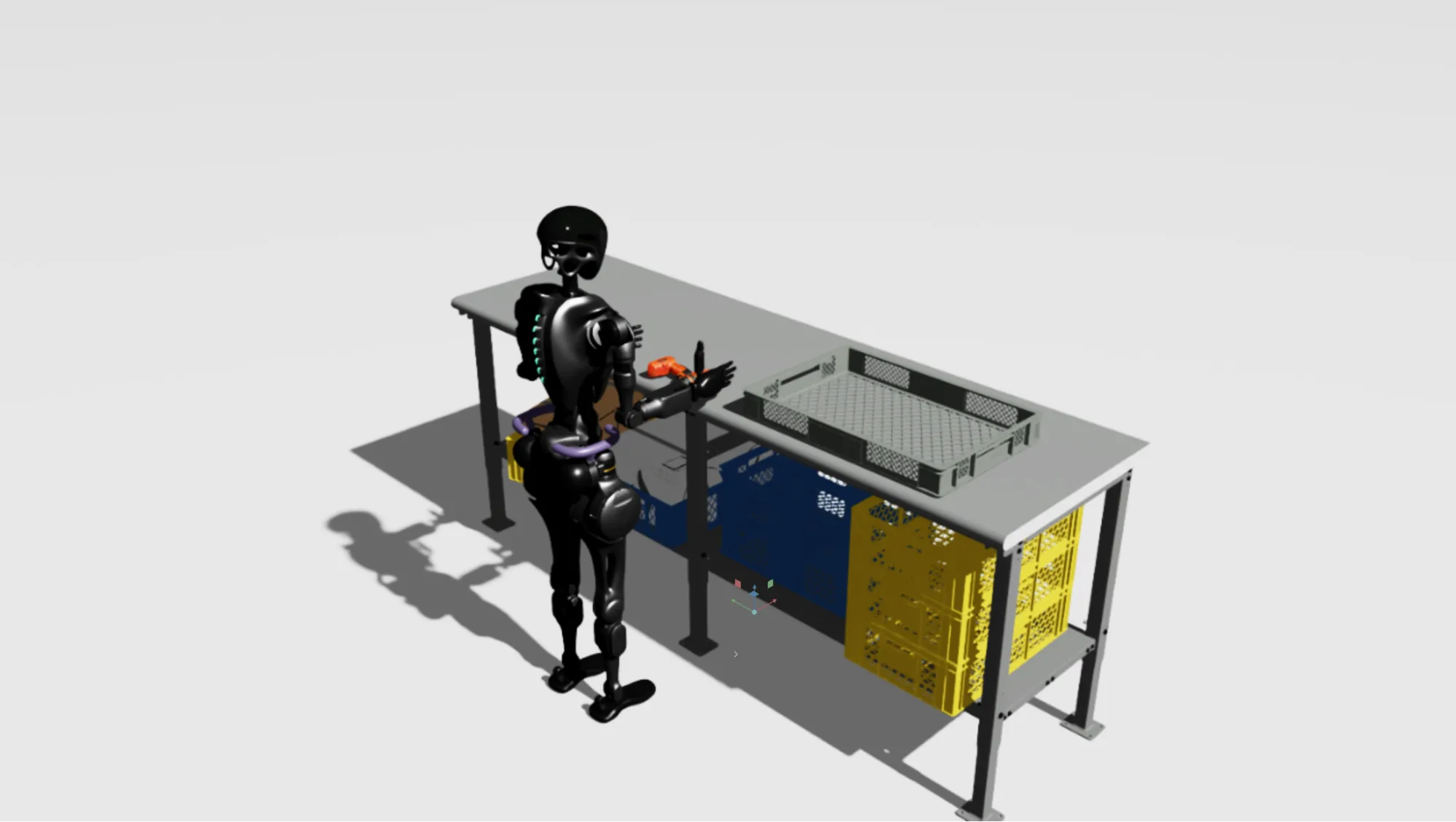
One of the historical bottlenecks in robotics has been the fragmentation of tools and processes . NVIDIA is attempting to address this with new open frameworks that aim to standardize the simulation and evaluation of robots on a large scale.
Isaac Lab-Arena presents itself as a collaborative environment for evaluating and benchmarking robotic policies in simulation, connecting with initiatives such as Libero and Robocasa. The idea is to have a common language for measuring capabilities and comparing solutions, something that has been lacking until now in a very fragmented sector.
Furthermore, OSMO functions as a cloud-native orchestration system that unifies the entire development lifecycle: from synthetic data generation to software-in-the-loop training and testing . This allows workloads to be moved between on-premises machines and hybrid clouds without having to redesign the workflow each time.
Companies like Microsoft , through its Azure Robotics Accelerator program, are already integrating these components into their toolchains. For the European ecosystem, accustomed to combining public and private clouds for data sovereignty reasons, this type of solution could be a good fit for projects requiring high computing power without sacrificing local control.
If these frameworks are consolidated, they could facilitate the emergence of a kind of "de facto standard" in robotic simulation , with direct implications for universities, laboratories and technology SMEs on the continent.
Open Robotics: Collaboration with Hugging Face and Expansion to the Edge
NVIDIA's commitment to open source is also reflected in its collaboration with Hugging Face , a platform that has seen robotics become one of its fastest-growing categories. Integration with the LeRobot framework allows models like GR00T, tools from Isaac Lab-Arena, and other resources to be available for community tuning and evaluation.
This collaboration connects over two million robotics developers partnered with NVIDIA to a base of thirteen million AI creators on Hugging Face . For many European teams with limited resources, this openness means access to high-level models and workflows without the need for expensive licenses.
On the hardware front, the company unveiled Jetson Thor , a platform designed for humanoids and robots with reasoning capabilities that need to run complex models in real time near the device itself, without constantly relying on the cloud. Manufacturers such as NEURA Robotics, Richtech Robotics, and LG showcased robots integrated with this system at CES.
As a complement, the new Jetson T4000 , based on the Blackwell architecture, offers an upgrade option for Jetson Orin customers with up to four times the performance while consuming only 70 watts . Its focus is clear: bringing advanced AI to autonomous machines in environments where cost and energy are critical factors , from production lines to delivery vehicles.
These proposals reinforce the idea that robotics is, for NVIDIA, a natural extension of its AI ecosystem , which ranges from data centers to the edge, encompassing development tools and open models. In a context where Europe is pushing for strategic autonomy in semiconductors and computing, this evolution will be closely watched.
Smart fitness and connected well-being: the Speediance case
CES also showcased solutions focused on connected fitness and wellness , a segment that is gaining traction as home workouts are combined with data tracking and digital services. Speediance took advantage of the show to present the evolution of its smart training ecosystem, aimed at a global audience, with Europe representing one of the markets with the greatest interest in home fitness solutions.
The brand has unveiled two key new products: Gym Nano , a compact strength training system with motorized cables designed to fit in small spaces, and Speediance Strap , a wearable prototype designed to continuously collect physiological and behavioral data . Both products integrate with the existing catalog, which includes the all-in-one smart gym Gym Monster 2 and the VeloNix connected indoor bike.
The company envisions a transition from standalone fitness devices to a connected ecosystem , where hardware, software, and data analytics work together to deliver personalized training and recovery recommendations . This approach is supported by the Wellness+ platform , an AI-powered service that aims to translate complex metrics into practical advice on exercise, rest, and daily habits.
Among the new software features is the addition of Pilates workouts using the Speediance Pilates set in Gym Monster 2, broadening the user base to include those seeking low-impact sessions focused on mobility and stability. With this, the company aims to demonstrate that it's not limited to strength and cardio, but rather combines different methodologies in a single environment.
According to its founder and CEO, Liu Tao , the goal is for all these elements to function as a unified system that adapts to people's real lives , going beyond one-off workouts. The underlying idea is for home fitness to evolve from isolated equipment to more cohesive, sustainable, and data-driven experiences—a trend that could resonate with European users concerned about long-term health monitoring.
Although the company has not yet detailed specific regional launch plans or subscription fees, its presence at CES reinforces the perception that AI-connected training will solidify as one of the most active lines of innovation in the coming years.
CES 2026 reveals a technology sector moving towards more integrated ecosystems, where artificial intelligence and robotics are found in living rooms, kitchens, home gyms, and factories . From televisions acting as the home's brain to humanoid robots trained in large-scale simulators, advanced locks, and devices that help remind users of meetings, the general feeling is that technology is becoming increasingly integrated into daily life. The challenge, especially in Europe, will be to fit these innovations into a framework of privacy, security, and sustainability that allows us to reap their benefits without losing sight of the boundaries citizens expect to maintain.


Passionate writer about the world of bytes and technology in general. I love sharing my knowledge through writing, and that's what I'll do on this blog, show you all the most interesting things about gadgets, software, hardware, tech trends, and more. My goal is to help you navigate the digital world in a simple and entertaining way.