- New image engine with Content Intelligence to adapt brightness, color, and contrast based on content and environment.
- Precision Black and Light Sense enhance dark scenes and adjust the image to match ambient light; bi-directional tone mapping.
- Authentic Motion gives you creative control over movement without the soap opera effect.
- Hisense and CANAL+ lead adoption; first hardware with MediaTek Pentonic 800 and gradual deployment.
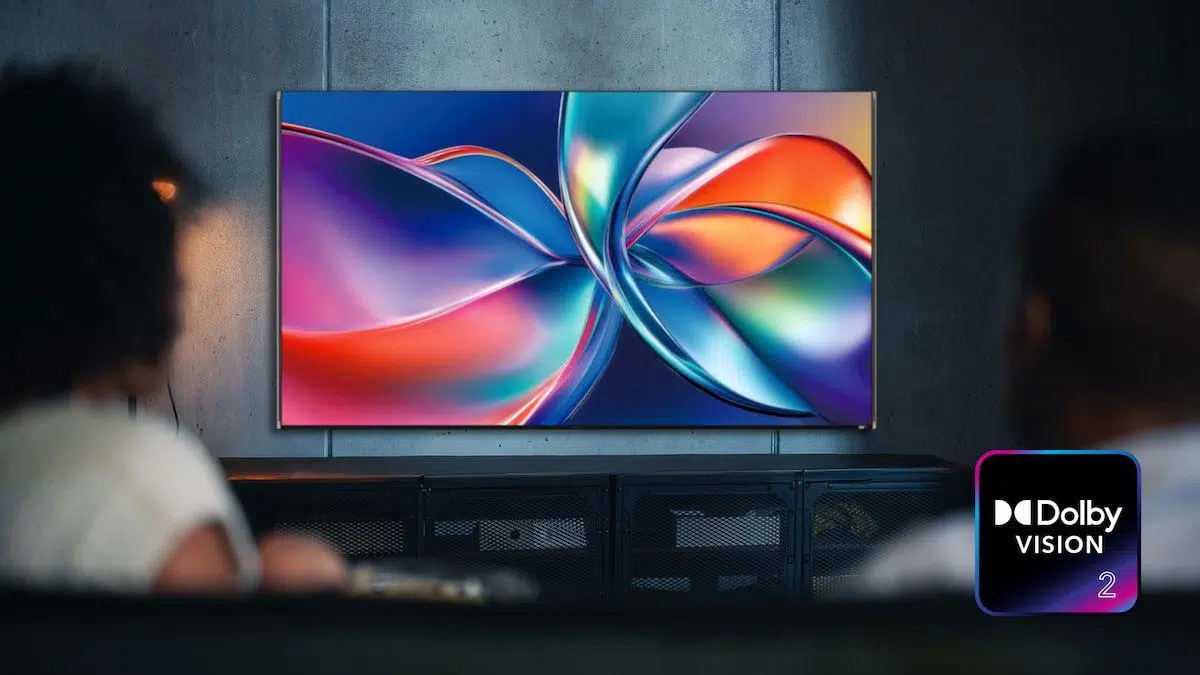
Dolby used IFA Berlin to unveil Dolby Vision 2 , an evolution of its HDR technology that aims to improve how content looks on modern televisions, mobile devices, and other screens, including compatibility with smart TV codecs . The innovation goes beyond simply increasing brightness: it introduces a revamped image engine and a smarter approach that adapts playback to each situation.
In the industrial sector, Hisense will be the first manufacturer to implement it in its premium ranges with the MediaTek Pentonic 800 chip, while CANAL+ has confirmed support for compatible content. Other brands with traditional Dolby Vision, such as LG and Sony, could join later; however, Samsung maintains HDR10+ as its own alternative.
What Dolby Vision 2 really brings
At the heart of the system is a completely redesigned image engine that adjusts parameters in real time to get the most out of the brightness, contrast, and color of current panels and HDR signals . This technical layer is supported by Content Intelligence , a suite of AI- powered tools that takes into account the type of content, the TV's capabilities, and the ambient lighting.
With this approach, the technology aims to maintain the creative intent of the image while making it more visible in less favorable environments, such as brightly lit rooms or high-contrast scenes. Furthermore, the new architecture incorporates bidirectional tone mapping to better match HDR signals with the actual capabilities of each screen.
Precision Black, Light Sense, and sports and gaming modes
Within Content Intelligence, three modules stand out that bring order to the most common situations. Precision Black attempts to improve visibility in very dark scenes without crushing detail or altering deep blacks, something that often generates complaints in HDR in well-lit rooms.
Light Sense , meanwhile, combines ambient light detection with data from the content itself to automatically adjust the image to the surroundings. The third component is optimization for video games , which tweaks white balance, color, and motion handling during live gameplay or quick matches.
- Precision Black: greater clarity in shadows without sacrificing blacks.
- Light Sense: adaptation to the room light with reference data from the master.
- Sports/gaming optimization: color and movement adjusted to the action.
- Bidirectional tone mapping: better use of brightness and color volume.
Authentic Motion: plane-to-plane motion control
Another notable new feature is Authentic Motion , a tool that provides creative control over frame-by-frame motion to reduce judder and other artifacts without resorting to the familiar soap opera effect. The idea is that each scene can be managed with a more cinematic approach, aligned with the director's vision.
This fine control is not intended to impose a global smoothing, but to facilitate a selective treatment of the movement that fits with the genre, the speed of the action and the original cadence of the content.
Two variants and the hardware requirements
Dolby will offer two levels of implementation : the standard version, with essential improvements, and Dolby Vision 2 Max , aimed at high-end televisions with additional features that take full advantage of very bright panels with greater color volume.
To enable the full package, compatible chips and image engines are required . The first confirmed combination is the MediaTek Pentonic 800 paired with MiraVision (PQ Engine) , which will form the basis of the first commercial televisions. Although the format maintains compatibility with existing Dolby Vision content, many of the new capabilities will only be activated on compatible hardware.
Who adopts it: manufacturers and platforms
Hisense will lead the rollout with RGB-MiniLED models featuring Pentonic 800 technology, and CANAL+ has confirmed the arrival of movies, series, and sports on the new channel. In the current ecosystem, there are already hundreds of televisions with "classic" Dolby Vision from brands like LG, Sony, and TCL, so the transition is expected to be gradual.
Meanwhile, Samsung will continue to focus on HDR10+ and its smart adjustment solutions, so unless there's a change in strategy, it won't offer native support for Dolby Vision 2 on Samsung Smart Tizen TVs.
Availability and planned schedule
Dolby has not provided firm release dates , and there is no confirmation of updates for televisions already sold. Industry signals suggest that the first fully featured commercial models could arrive in the high-end range starting in 2026 , with wider adoption in the mid-range beginning in 2027 if adoption progresses as expected.
Dolby Vision 2 combines a more powerful image engine with AI modules to adapt playback to the content and environment, adds creative motion control, and offers two versions depending on the TV's price point. Adoption will be phased in, with Hisense and CANAL+ leading the way, and a schedule that, while not yet official, suggests a gradual rollout to living rooms.


Passionate writer about the world of bytes and technology in general. I love sharing my knowledge through writing, and that's what I'll do on this blog, show you all the most interesting things about gadgets, software, hardware, tech trends, and more. My goal is to help you navigate the digital world in a simple and entertaining way.