
The world of technology is full of units of measurement that often seem difficult to understand. While most of us are familiar with terms like kilobyte (KB), megabyte (MB), or gigabyte (GB), things get much more serious when we scale up to measurements like the exabyte (EB). However, understanding what an exabyte entails can help us gain a better understanding of the digital world, especially in areas like big data or cloud storage .
An exabyte is a unit of digital information equivalent to massive amounts of data. It's not something commonplace for home users, but it's essential when dealing with large volumes of information handled by businesses, cloud service providers, or in scientific research. In this article, we'll explain in detail what an exabyte is, how it compares to other storage units, and why its use is becoming increasingly common.
What is a byte and how does it work?
To understand an exabyte, it's first necessary to understand what a byte is . A byte is the basic unit of data in computing and is composed of 8 bits. The bit is the smallest unit of storage and can have two possible values: 0 or 1. By combining 8 bits, a byte is formed, which can represent a wide range of information, such as letters, numbers, and special characters.
Thanks to this binary structure, bytes are the foundation of all data processing in computers and other electronic devices. As bytes are grouped into larger quantities, we obtain other units of storage such as kilobytes, megabytes, and gigabytes, which are more practical for measuring data. Each of these units is a multiple of the previous one; that is, 1 kilobyte (KB) equals 1024 bytes, 1 megabyte (MB) equals 1024 kilobytes, and so on.
What is an exabyte and how does it compare to other storage units?
An exabyte (EB) is a unit of storage equivalent to one billion gigabytes (GB) or one thousand petabytes (PB). More precisely, one exabyte represents 1,000,000,000,000,000,000 bytes . To put this into perspective, if we were to store information on DVDs, we would need approximately 212 million discs to equal the capacity of a single exabyte.
Given its size, an exabyte is primarily used in contexts where data amounts are extremely large, such as in the case of information storage by tech giants like Google , Amazon, or Facebook . For example, it is estimated that Google alone stores around 15 exabytes of data on its servers distributed around the world. This gigantic volume of data includes images, videos, emails , and the searches of billions of daily users.
To better understand how an exabyte compares to other units, let's take a look at this scale of storage measurements:
- 1 kilobyte = 1024 bytes
- 1 megabyte = 1024 kilobytes
- 1 gigabyte = 1024 megabytes
- 1 terabyte = 1024 gigabytes
- 1 petabyte = 1024 terabytes
- 1 exabyte = 1024 petabytes
The use of exabytes in today's world
Although the term exabyte may seem distant to the average user, we are actually generating and handling considerable amounts of information that approach this level of storage. One of the clearest examples is internet traffic. In 2007, global internet traffic was estimated at between 5 and 9 exabytes annually. By 2021, this traffic had reached 2021 exabytes. This growth reflects how the increase in multimedia content (high-definition videos, live streams, etc.) has driven the need for greater storage capacity.
Another relevant example is that of certain scientific fields, such as astronomy and genomics. It is estimated that astronomy needs around 1 exabyte of storage per year to process the enormous amount of data generated by telescopes and satellites. Genomics, for its part, may require between 2 and 40 exabytes per year to store the information derived from genetic sequencing.
The challenges of exabyte-level storage
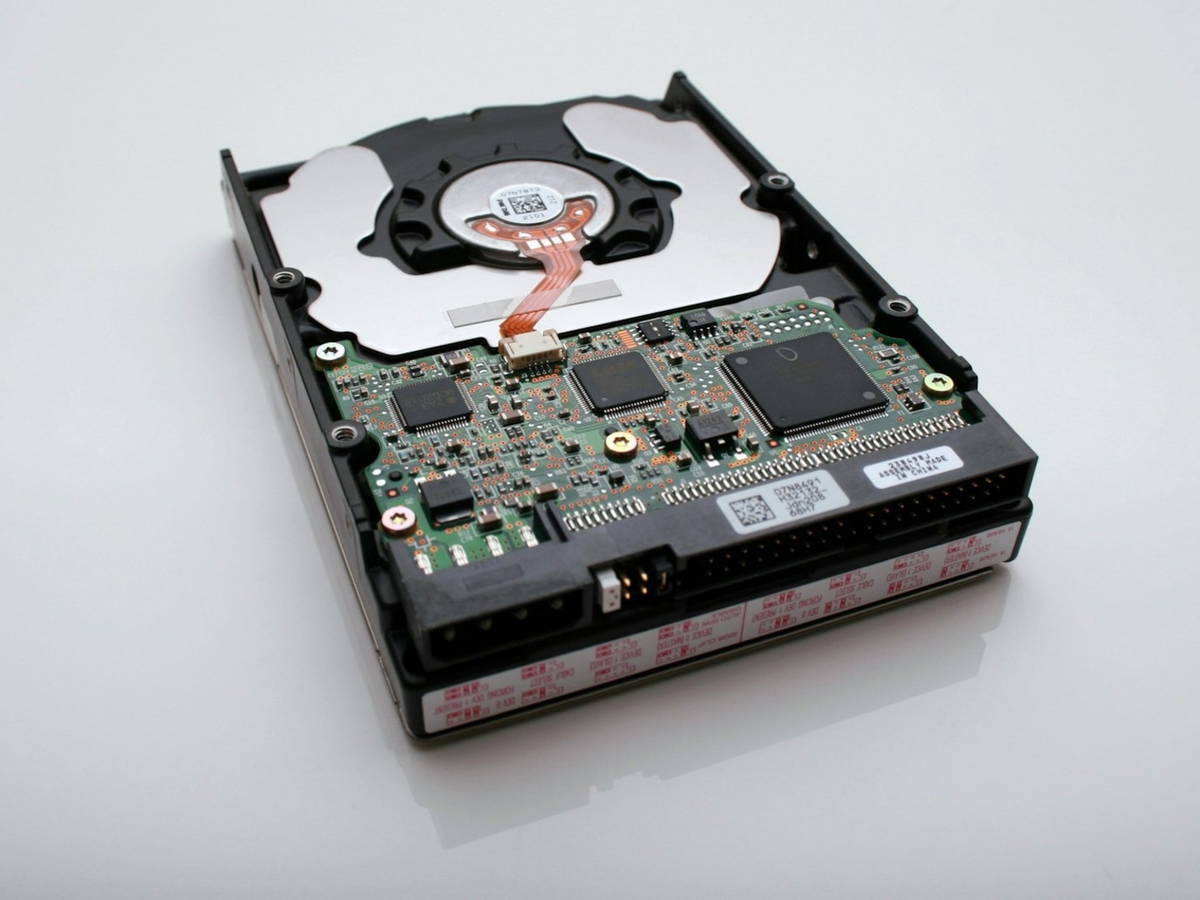
Handling such colossal volumes of information presents significant challenges in terms of management, security, and accessibility . Companies operating at this level must implement advanced systems that optimize data center efficiency and ensure that data is quickly accessible to users and other applications.
Furthermore, managing exabyte storage requires a suitable infrastructure, such as cloud storage systems , that allows for scalability and redundancy to prevent data loss. Maintenance and management costs for exabyte-level systems are high, and companies must balance storage needs with operating costs.
Exabyte vs. Other Storage Units: Petabyte, Terabyte, and More
As we move up the storage scales, we find that larger units of measurement, such as the zettabyte (ZB) and the yottabyte (YB), also begin to gain relevance. One zettabyte is equal to 1024 exabytes , and one yottabyte to 1024 zettabytes . Although these amounts of data seem like science fiction, large technology companies are already handling data volumes approaching zettabytes.
For reference, storing one zettabyte of data would be equivalent to approximately 250 billion DVDs . Imagine the amount of information that represents. However, currently, the exabyte remains the most practical and manageable unit for describing the storage of large volumes of data in enterprise, scientific, and government systems.
In terms of everyday storage, most of us fall within the gigabyte and terabyte ranges. For example, an external hard drive commonly used to store photos and videos at home might have a capacity of 1 or 2 terabytes . However, as the amount of data continues to grow, especially with the rise of Internet of Things ( IoT ) devices , the use of higher-capacity drives like petabytes and exabytes will become more common.
The future of storage is intimately tied to the efficient handling of such large units. In the meantime, the exabyte remains a measurement that defies our imagination and represents the vast growth of information in our digital age.

I'm Alberto Navarro and I'm passionate about everything related to technology, from cutting-edge gadgets to software and video games of all kinds. My interest in digital began with video games and continued in the world of digital marketing. I have been writing about the digital world on different platforms since 2019, sharing the latest news in the sector. I also try to write in an original way so that you can stay up to date while having fun.
I studied Sociology at university and completed my studies with a Master's in Digital Marketing. So if you have any questions, I'll share with you all my experience in the world of digital marketing, technology and video games.