- Motion sensors allow you to automate lights, climate control, ventilation and security, adapting the house to your actual presence.
- There are different technologies (PIR, ultrasound, high frequency, dual and with camera) that are chosen according to the room and the level of security required.
- A good configuration of range, time and brightness maximizes energy savings and reduces false alarms.
- Due to their low cost and versatility, deploying several quality sensors at home is a simple way to improve comfort and security.
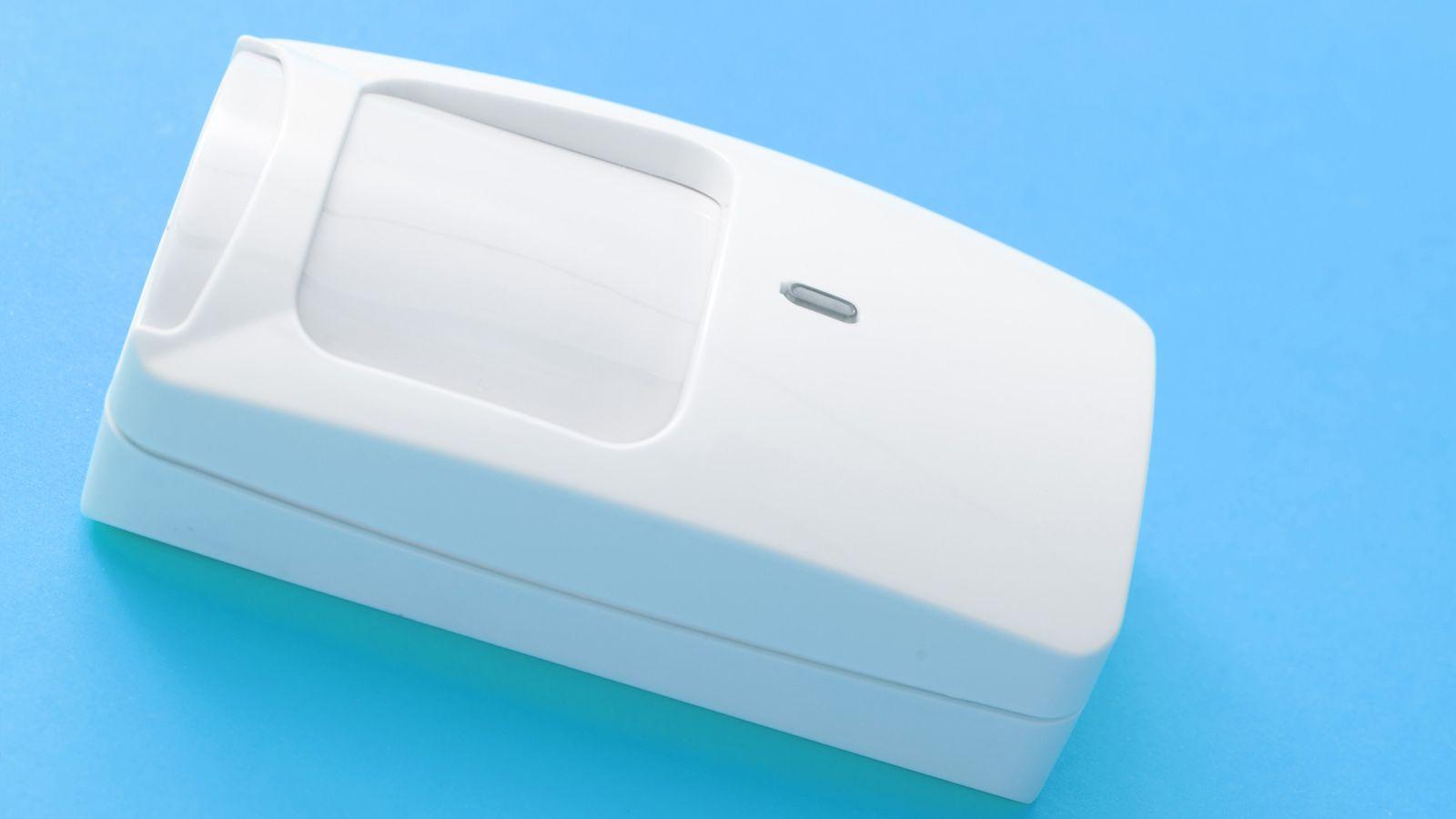
If you think about home automation, you probably think of... smart bulbs, WiFi plugs or speakers with voice assistantHowever, there's a very inexpensive and versatile device that almost no one talks about: the motion sensor. With it, you can turn on lights, start the heating, activate alarms, or even know when the mail carrier has delivered a letter, all without touching a button.
A good, well-placed motion sensor is capable of detect presence or activity in an area and trigger an automatic action: turn on a lamp, start an extractor fan, send a notification to your phone, or record a video. Throughout this article, you'll see this explained in detail. What types of sensors exist, how are they regulated, and what practical uses do they have in the home?from lighting to security or energy saving.
What is a motion sensor and how does it work?
A motion sensor or detector is a electronic device capable of perceiving changes in its environment (movement, presence, temperature, wave variations, etc.) and, when certain conditions are met, activate or deactivate another system: a light, an alarm, a fan, an air conditioner, a camera…
In a domestic setting they are mainly used for automate lighting, ventilation and air conditioningIn addition to being part of security systems, they can be installed on ceilings, walls, corners, inside furniture, or even outdoors to monitor the perimeter of the home.
Its basic operation is usually this: when the detector senses presence or movement and the configured conditions are met (for example, low ambient light and someone walking by), closes the circuit and turns on the associated equipment. If it does not detect any further movement for a certain period of time, it automatically turns off that equipment.
This automated logic allows for something very powerful: not depending on switches or remembering to turn things offThe sensor "decides" for you when each device should turn on and off, according to how you have programmed it.
Main types of motion sensors in the home
There are several detection technologies on the market, each designed to different situations and environmentsKnowing them helps you choose the right sensor for each room in your house.
Ultrasonic presence sensors
Ultrasonic sensors emit high-frequency sound waves imperceptible to the human earThese waves bounce off the surfaces in the room and return to the sensor, which analyzes the received echo. If it detects a change in the distance or in the return pattern of the waves, it interprets this as a new object appearing or something moving.
This technology allows to capture very subtle movementsTherefore, they are useful in areas where you need precise detection of both people and objects. They can work well both indoors and outdoors, although their cost and complexity are usually somewhat higher than other basic types.
Infrared (PIR) sensors
PIR (Passive Infrared) sensors are probably the most common in homes. They work by detecting changes in the infrared radiation emitted by bodies (people, animals…) and, in many models, also variations in ambient temperature.
When a hot body enters the sensor's field of view, it perceives a alteration in the relative temperature of the environment and activates the circuit: it turns on the light, triggers an alarm, starts the fan, etc. Once the person leaves the detection zone and the programmed time has passed, the system deactivates.
These sensors are very widespread because they are economical, reliable and accurate indoorsHowever, outdoors they can lose effectiveness if exposed to direct sunlight, sudden temperature changes, or extreme heat and cold conditions.
High-frequency sensors or radar
Another type widely used in lighting and occupancy control is the high-frequency sensor, also known as a radar sensor. In this case, the detector emits high-frequency electromagnetic waves that are reflected in people and objects nearby.
The device measures the time it takes for those waves to return. If that time shortens, it understands that Something has approached or moved in the surroundings and activates the lighting or other associated system. When the movement ceases and the return times return to normal, it deactivates.
Its biggest advantage is the extremely high sensitivity...to the point of being able to detect very small movements. They are very useful in areas where it is important that no one goes undetected, both indoors and in protected outdoor areas.
Dual sensors
Dual sensors combine two technologies, typically infrared and ultrasoundThe goal is to improve detection accuracy and reduce false alarms, requiring, for example, that both technologies be activated to validate presence.
They are used in spaces where a high level of security and reliability, such as critical passageways, exteriors with a risk of intrusion, or rooms where the system is not intended to fail or activate unnecessarily.
Video sensors or motion-activated cameras
These devices integrate a camera with a detection system who, upon noticing movement, Start recording video or taking screenshotsThey are very common in domestic and commercial video surveillance systems.
In addition to detecting presence, they provide visual evidence of what happened, something key in security: they allow you to identify people, see where they have entered from or what exactly happened when the activation occurred.
Motion sensors with camera for alarms
In the field of home security, motion sensors with integrated cameras are very common. They are usually based on Passive infrared PIR technology to detect presence And, as soon as it is activated, it starts recording or taking photos.
The images are sent to the alarm panel or the central receiving station, which can verify if it is a real intruder and activate the emergency protocol: notify the owner, notify the police, trigger the siren, etc. This type of detector greatly reduces false alarms and increases reaction time.
Outdoor motion sensors
Perimeter or outdoor sensors operate on a similar logic to indoor sensors, but are designed to withstand rain, sun, sudden temperature changes and dirtThey usually include filters to prevent accidental triggering by wind-blown vegetation or small animals.
In security, they form a first line of defenseThey detect intruders before they reach doors or windows. They are also widely used to illuminate entrances, patios, walkways, or outdoor garages by detecting approach.
Ways to regulate a motion sensor
Almost all domestic motion sensors allow you to adjust various parameters, so that adapt better to each room and useThe three most common settings are range, activation time, and brightness.
On one hand, the range in meters This allows you to limit how far the sensor "sees." This prevents, for example, a hallway detector from triggering when someone passes through another room or outside the house. By adjusting this parameter, you define the actual detection range.
El activation time It measures how long the connected device (light, fan, extractor fan, etc.) remains on after the last motion detection. If someone moves again before that time is up, the timer resets and starts counting from zero.
Finally, many sensors include a regulation of luminosity or twilight thresholdThis allows the detector to activate only in low natural light, such as at night or in dim conditions. If the room is well-lit naturally, the sensor can ignore the movement and save energy.
Uses of a motion sensor for lighting
The most immediate and well-known application of these devices is the automatic on/off lightsProperly configured, they allow your home's lighting to adapt automatically to your presence and the amount of available light.
Lights in garage, basement and storage room
Garages, basements, storage rooms, or any room without natural light are perfect candidates for installing a sensor. Upon entering, the detector senses movement and Turn on the lights without having to search for the switch in the darkWhen you leave and there's no activity, turn off the light automatically.
This prevents lights from being left on for hours due to absentmindedness and provides convenience, since You never need to remember to turn it offIn transit areas where you enter and exit quickly, the savings can be considerable.
Lighting at the front door and exterior entrances
If your front door is poorly lit or there are no streetlights nearby, an outdoor spotlight with a motion sensor is a simple solution. When you approach the door, the detector activates and Turn on the light just enough so you can open the door, look for keys, or see who's there..
In addition to comfort, this type of lighting provides a deterrent effect against unwanted visitsbecause the entrance area lights up suddenly when someone approaches. Many sensors allow you to adjust the sensitivity and the duration the light stays on.
Automatic lighting in your work area
Placing a motion sensor in your work area is a very practical idea, especially if you work remotely. You can position it in front of the keyboard or facing where you usually sit so that Detect the movement of your hands or torso while you work.
It can be configured to only act when there is low ambient light And you're at the table. That way, the desk lamp or flexible arm lamp turns on automatically when you need it and turns off when you get up and a while has passed. Less worry and less wasted energy.
Kitchen countertop lighting
The countertop is one of those places where there always seems to be a lack of light. If you install an LED strip or spotlights under the upper cabinets and connect them to a sensor, you can achieve that They only turn on when you're working at the countertop.
This way, while you clean, cut, or cook, you'll have Boost your lighting right where you need itWhen you move away, the system detects the absence of movement in the area and automatically turns off the auxiliary lights.
Interior lighting for wardrobes and storage areas
How many times have you opened a built-in wardrobe or a deep cabinet and had to rummage around in the dark? With a small motion sensor and an LED light inside, every time you open the door or look inside, The lights turn on by themselves and then turn off after a while..
There are kits that already integrate the light and sensor into a single adhesive piece, but you can also assemble it yourself with a separate detector. It's an ideal solution for closets, shoe racks, pantries or small rooms without wiring.
Night light in the bedroom and bathroom
Getting up in the middle of the night to go to the bathroom has two typical problems: either you go in the dark, risking tripping, or you turn on a very bright light that wakes you up. With a sensor set to low intensity, you can have soft lighting that activates when it detects your footsteps.
A popular idea is to place a sensor under the bed or on the nightstand, so that when you put your feet on the floor, a soft light turns on in the floor or on an auxiliary lamp. The same can be done in the bathroom, with a low-power courtesy light that only turns on at night.
Lighting for hallways and stairwells
Hallways and staircases often have little natural light and are areas where Any fall can be dangerous.Especially for the elderly or children. A sensor that activates LED strips in the baseboard or recessed lights in the wall or steps greatly improves safety.
The system can be configured so that, as soon as it detects someone approaching the stairwell or hallway, A light guide turns on and then turns off after a few seconds.It's functional and also gives the house an almost cinematic feel.
Decorative lights and Christmas tree
Christmas lights, like those on Christmas trees or garlands, are often left on for many hours without anyone enjoying them. If you connect them to a sensor, you can make them... They only light up when someone is in the room..
This way you maintain the festive atmosphere when you're actually in the living room or dining room, but You avoid having lights on all dayThis logic can be applied to any type of seasonal decorative lighting.
General lighting without traditional switches
If you want to take it a step further, you could consider an installation where almost all the lighting in the house relies on motion sensors. The idea is forget about classic switches and that the lights turn on and off as you pass by.
In this scenario, you adjust each sensor to take into account the ambient lightSo, if enough natural light comes in through the windows, the lamps won't turn on even if there's movement. They'll only start working when it gets dark or there's twilight, always linked to your presence.
Uses of motion sensors in security
Besides providing light, motion detectors are one of the first security barriers of a homeThey function both as a deterrent and as an early warning mechanism.
Detectors for indoor alarm systems
You'll find several motion sensors in virtually every home alarm kit. Their main function is monitor strategic locations: entrances, hallways, lounges or any area of mandatory passage.
When one of these detectors senses an unauthorized presence while the system is armed, it sends a signal to the control panel. This, in turn, notifies the user via mobile phone and the central receiving station If one exists, it will initiate the corresponding protocol within seconds: verification, call, notification to the police, etc.
Types of detectors used in security
In home security, several types of detectors are commonly used, often in combination:
- Passive PIR sensorsThey detect movement by temperature and infrared radiation. They are easy to install, inexpensive, and have a good field of view indoors. If a person passes in front of them, the alarm is triggered.
- Ultrasound sensors: more advanced, capable of detecting very slight movements of both people and objects, even in large spaces.
- Dual technology sensorsThey combine infrared and ultrasound to minimize false alarms, requiring both to "see" something to trigger the signal.
- Sensors with integrated cameraUpon detecting a presence, they activate the camera and send the images to the central station, facilitating the identification of the intruder.
- Outdoor detectors: prepared to work outdoors, with filters to ignore animals or plants moved by the wind and weather-resistant casings.
They all form the backbone of any modern home security system, as it is almost impossible to... pass through the house without being detected by any detector. well placed.
Sensors to detect if someone is at the door
Installing a motion sensor facing the front door lets you know at all times when someone is approaching. You can configure it so that, upon detecting movement, You will receive a notification on your mobile phone.a light turns on inside or even a camera is activated.
Some more advanced systems can use that same sensor to simulate presence at home, turning on interior lights when someone approaches the door, even if no one is inside, to deter potential robbery attempts.
Notifications for children and pets
Beyond intrusion detection, motion sensors can help you keep an eye on where the children or pets go.For example, by placing them on doors that lead to stairwells, patios, garages, or potentially dangerous areas.
This way, if your child opens a door they shouldn't or the dog sneaks into a room you don't want them in, the sensor sends an alert and You can act immediatelyIt is important to choose models with adequate sensitivity to detect animals if that is the goal.
Mailbox control and secondary access
One curious and practical use is to place a small sensor inside the mailbox. If oriented correctly, when the mail carrier inserts letters or packages, the device detects movement in the slot and sends you a notification.
The same can be done in secondary access points, such as back doors, meter rooms or storage roomswhere you might not be interested in setting up a complete alarm system, but you do want to know when doors open or cross paths.
Automation of air conditioning, ventilation and other equipment
Another major advantage of motion sensors is that they allow automate many household appliances Beyond the lights: air conditioning, ventilation, purifiers, fans, televisions or sound equipment.
Smart heating and air conditioning control
If you have a heating or air conditioning system that can be managed independently by room, you can use sensors to A room is only heated when someone is in it..
For example, radiators or split air conditioning units could automatically turn on when the sensor detects presence and turn off when it detects prolonged absence. This, along with time-based programming, allows significantly reduce energy consumption without sacrificing comfort.
Bathroom ventilation with extractors
In the field of ventilation, one of the most frequent uses is installing sensors in bathrooms to activate exhaust fans. Typically, the exhaust fan is linked to the light switch, but this requires... Turn on the light even if there's a window and light comes in.
With a motion sensor, you can have the extractor fan turn on every time someone enters the bathroom and continue running for a while after they leave, without needing to touch anything. This helps to Eliminate moisture and bad odors more efficiently and without wasting money on lighting.
Demand-controlled ventilation systems
In multi-zone Demand Controlled Ventilation (DCV) systems, presence sensors are key to activating dual-flow gates or inletsThe principle is simple: if there are people in a room, the ventilation flow rate is increased; if not, it is reduced.
This allows for an ON/OFF or MIN/MAX system based on actual occupancy, instead of having maximum ventilation in all areas all the time, which translates into greater energy efficiency and better indoor air quality.
Fans that only work when there are people around
A classic fan connected to a smart plug and linked to a motion sensor can be transformed into a low-cost “smart” fanYou can program it to turn on when someone enters the living room or bedroom and turn off a certain time after the room is empty.
This improves thermal comfort without having an appliance left on for hours on end when no one is using it. The combination of smart plugs, sensors, and some automation provides Lots of gameplay without the need for large investments.
Automatic shut-off of TV and entertainment equipment
Another very useful automation feature is turning off televisions, soundbars, game consoles, or other entertainment equipment. If you connect these devices to a smart plug and control it via a sensor, you can make them automatically turn off. They disconnect when there is no movement in the room for a certain amount of time..
This is ideal for avoiding leaving the TV on when you fall asleep on the sofa or when you leave home in a hurry. This reduces phantom power consumption and extends the useful life of the appliances.
Activating air purifiers and other curious devices
Sensors also lend themselves to more original uses. A very concrete example is linking a detector to a air purifier located next to the cat's litter boxEvery time the cat approaches and relieves itself, the sensor detects it and the purifier activates automatically for a few minutes.
This configuration allows the device to work only when it is really necessary to control odors or particlesreducing noise and energy consumption the rest of the time. The same can be applied to dehumidifiers, ionizers, or other small appliances.
Energy savings, comfort and personalization
All these uses have a clear common thread: reduce unnecessary consumption, increase comfort and adapt the house to your routinesThat is the essence of well-designed home automation.
Thanks to the fact that the lights, air conditioning, and ventilation turn on and off automatically, you avoid having too many light bulbs left on or equipment running without anyone using itThroughout the year, this automatic behavior can result in significant savings on your electricity bill.
From a comfort standpoint, living in a house that anticipate your moves It's surprising at first, but once you get used to it, it's hard to go back. You arrive at the entrance hall carrying your things and the light comes on; you cross the corridor and your path is illuminated; you enter the bathroom at night and a soft light guides you without disturbing your sleep.
In addition, many current sensors They integrate with other smart devices and with voice assistants, allowing to fully customize usage scenarios: different times for day and night, different light intensities, scenes combined with blinds, etc.
Price and deployment of home motion sensors
One clear advantage of these devices is that They're not expensiveBasic motion sensor models are available starting at around €10, for both indoor and outdoor use. From there, the price increases depending on the technology (ultrasound, dual technology, high frequency), the range, and integration with alarm and home automation systems.
There's no problem installing several sensors distributed throughout the houseEntrance hall, corridors, bathrooms, bedrooms, closets, exterior facade… In fact, the better you plan their location, the more you will benefit from them in terms of security, comfort and savings.
However, it's advisable to opt for quality devices and reputable brands, as this will determine whether Avoid false alarms and constant failuresAn unreliable sensor can end up being more of a nuisance than a help if it triggers for no reason or stops detecting movement when it should.
Given the wide variety of technologies and uses, it's clear that a simple motion sensor can become a key component of your connected home, helping you to Better lighting, less spending, cleaner air, and a more peaceful life with a relatively small investment.


Passionate writer about the world of bytes and technology in general. I love sharing my knowledge through writing, and that's what I'll do on this blog, show you all the most interesting things about gadgets, software, hardware, tech trends, and more. My goal is to help you navigate the digital world in a simple and entertaining way.