- Steam stands out for its comprehensive ecosystem, regional pricing, and refund system, at the cost of relying on its client and, often, DRM.
- GOG focuses on DRM-free games and standalone installers, with a special emphasis on classics and adaptation to modern systems.
- Humble Bundle focuses on cheap bundles and supporting NGOs, combining keys for other platforms with some DRM-free versions.
- The choice between Steam, GOG, and Humble Bundle depends on whether you prioritize convenience, actual ownership of the game, bargains, or a mix of everything by using multiple stores.
If you've been playing on PC for a while, you've probably wondered more than once whether it's better to buy online. Steam, GOG or Humble BundleSometimes the price is almost the same, other times there are regional differences or an additional key for another platform is included, and in the end you end up wondering where it's more worthwhile to spend your money.
In this analysis we are going to put on the table all the advantages, disadvantages, nuances and oddities These are the opinions that have been circulating for years among real users: from those who prioritize price and convenience to those who only buy DRM-free games and scrutinize aspects like languages, patches, and refund policies. The idea is that, by the time you finish reading, you'll have a clear understanding of what each of these stores offers based on your gaming style.
Steam: Convenience above all else
For many people, Having a PC without Steam installed is almost unthinkable.Valve has turned its client into the nerve center of PC gaming: store, community, achievements, chat, streaming, mod workshop... everything goes through there, and that has a huge impact when deciding where to buy.
One of the reasons many gamers remain loyal to Steam is that It adapts quite well to a global audience.It offers less common local currencies and regional pricing, crucial in markets like Asia, where spending $20 plus conversion fees can be a major expense compared to a fair price in the local currency. For those living in countries with uncommon currencies, this difference is so significant that any benefit from another store pales in comparison.
In day-to-day use, Steam's biggest advantage is the convenience and ease of useYou buy, install with a couple of clicks, and have your entire catalog centralized. Furthermore, their refund system is quite straightforward: if you're not convinced by the game or it doesn't work properly, you can request a refund within certain time and playtime limits. For many users, knowing they can "try it out" and get their money back if something goes wrong is a deciding factor.
Another important factor is that, although the Steam client is not exactly modern in terms of technology, It remains more polished and complete than other launchers that have arrived later. Some players consider alternative clients to be more cumbersome or intrusive, and compare having to use them to going to the local Walmart because Amazon doesn't have exactly what you're looking for: it's not the end of the world, but you'd prefer to stay where you already have everything set up.
However, it's not all perfect. Many users complain that Client and game updates can be large.Especially if they don't launch Steam daily. Every time they open the program after a period of inactivity, the infamous "updating Steam" message appears, delaying the moment they can start playing. For offline gaming, Steam does have an offline mode, but the experience isn't as straightforward as with a DRM-free executable: you have to install it, launch it online at least once, and then deal with the client if you're offline.
Regarding DRM, Steam's stance is peculiar: It does not force developers to use its protection system (Steamworks CEG), and even allows the integration of third-party DRM. This is, in part, a strategy to attract as many studios and publishers as possible. The result is that you have everything: completely unprotected games that launch without a client, and others that are completely tied to Steam and require updates.
Over the years, many people perceive that Steam has perfected a “lock-in” model or closed ecosystemThe more achievements, friends, library, mods, and purchases you have there, the less inclined you are to leave for another store, even if you theoretically could. It's a philosophy similar to that of giants like Microsoft or Oracle, where leaving the walled garden comes at a cost in convenience, features, and habit.
GOG: the realm of DRM-free games and classics
GOG was born with a very different proposition: DRM-free games and special attention to PC classicsBehind it is CD Projekt, the Polish studio famous for The Witcher, Baldur's Gate, and Icewind Dale, which decided rescue old titlesfix them to work on modern systems and sell them unencumbered.
GOG's defining characteristic is that All their games are offered without DRMThis means you can download standalone installers, create backups, install them offline, and run them without a client. For those who value being able to archive their collection and not depend on servers or policy changes, this philosophy is pure gold.
Another strong point is the care they put into adapting old games for current systemsMany classic releases come pre-patched, configured, and ready to run on recent versions of Windows, without the need for special clients or struggling with compatibility settings. This makes GOG a paradise for nostalgic gamers and anyone wanting to replay past gems without any hassle.
For years they also offered the GOG Connect service, which allowed Link your GOG account to your Steam account to get DRM-free copies of games you already owned in the Valve store, provided those titles were participating in the campaign. It wasn't active for the entire catalog or permanently, but it was an important nod to those who wanted to "free up" part of their library.
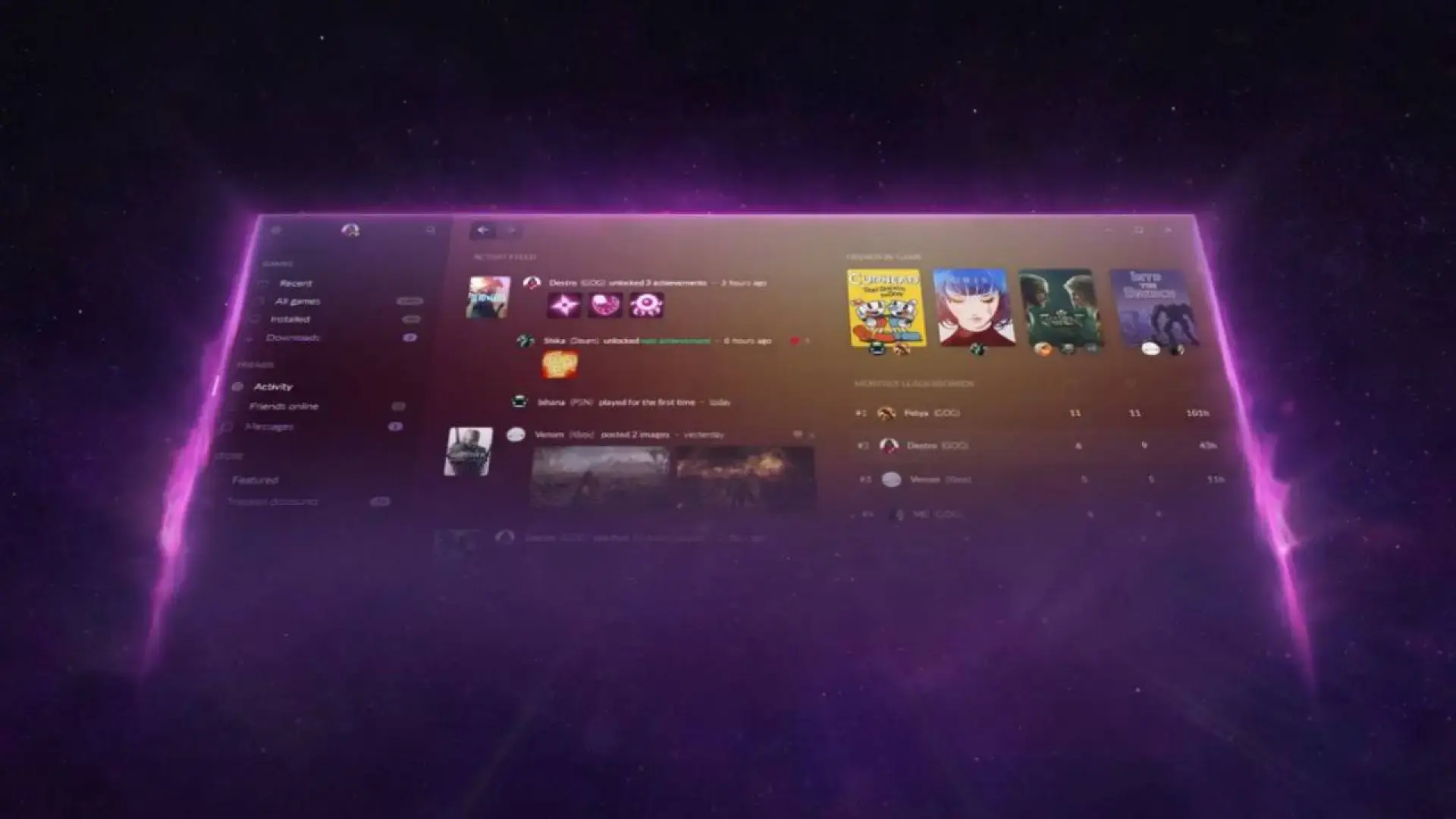
To facilitate collection management, GOG launched its own client, GOG Galaxywhich aims to be a DRM-free alternative to the Steam model. With Galaxy you can Download, update and organize your games, add friends and use social featuresHowever, you can always skip the client and use separate installers if you prefer. Currently, Galaxy is still a bit behind Steam in features, but for many, it's the best option if you don't want DRM.
Regarding product information, many buyers appreciate that GOG It makes a deliberate effort to detail languages and featuresThey usually clearly indicate which voices and texts each version includes, something that isn't always so well controlled in other stores. There are even curious cases of "hidden Spanish": games that include Spanish but, due to rights issues, don't advertise it on the product page, and you find the language inside as a pleasant little surprise.
Another sensitive issue is that of patches and update speed. GOG usually applies a process of more controlled QA (quality control) Before a patch is released, GOG may experience a delay compared to Steam, where developers manage updates directly. There have been instances where a GOG title has taken longer to receive an update or a "Deluxe" edition than its Steam counterpart, to the point that some users have compiled lists of games where the DRM-free version lags behind.
In response, the community has created informal tools, such as GOGmixes or compilations of “games that treat GOG customers as second-class citizens,” to warn about titles whose versions are missing certain patches or content. If you buy a game on GOG from a developer you don't know, Reviewing these lists can save you trouble..
In terms of pricing, GOG also offers competitive regional rates at select storesFor example, in the Russian market, there was a time when regional versions were extremely cheap, which boosted sales there during certain promotions. Generally, it doesn't reach the level of price adjustments seen on Steam in all countries, but there are some very interesting bargains to be found.
Humble Bundle: deals, charity, and a mixed ecosystem
Humble Bundle was born with a groundbreakingly simple idea: "pay what you want" game bundlesDRM-free and supporting charitable causes. During the early years, many players became hooked on their bundles of high-quality indie games, with DRM-free versions along with bonus keys, all at ridiculously low prices.
Over time, the model changed and became more widespread. Little by little, Humble began to increasingly introduce DRM and keys for various platformsFirst Steam, then Origin, Uplay, and finally their own Humble Store. These days, it's common to receive Steam keys in the store and in many bundles, sometimes accompanied by additional DRM-free versions.
One of the biggest problems for the discerning buyer is that Humble doesn't always provide clear information about the languages and content of the DRM-free versions.The product listing may indicate languages for the Steam edition, but not specify what's included in the DRM-free executable that's provided separately. This can lead to unpleasant surprises, such as finding a game that's in Spanish on Steam but whose DRM-free version on Humble only includes English.
There are also reverse cases, in which you discover DRM-free versions with a better selection of languages than GOG'sFor example, some titles on Humble were listed with full multilingual support (English, French, German, Spanish, and Italian), while on GOG their listing indicated fewer languages. The problem is that, without clear information beforehand, you often end up taking a chance without knowing what you'll receive until after you've bought it.
Because of these uncertainties, some users have opted to restrict your purchases on Humble to very cheap bundleswhere the risk of disappointment outweighs the price paid, and you primarily use the store to "accumulate" secondary games. This has another consequence: you end up with huge shelves full of titles you're not particularly interested in, turning managing your collection into a bit of a mess.
The way Humble delivers DRM-free files also varies greatly: sometimes you get well-trained installersSome offer similar games to those from a traditional store, while others simply provide a ZIP file containing the game, leaving you to figure it out on your own. Some players find this very unprofessional, while others prefer the simplicity of unzipping and playing. The problem is that there's no reliable way to know beforehand what format you'll receive from the website.
Humble does not have a A dedicated PC client for managing and launching games Similar to Steam or GOG Galaxy, the entire experience revolves around the web: you make purchases, collect keys, download executables or ZIP files, and manage them yourself. This has the advantage of not adding another launcher to your system, but it also leaves you without a centralized tool for organizing your DRM-free library.
Where Humble particularly shines is in the concept of “Pay what you want” and support for charitable causesIn many of their bundles, you can decide what percentage of your purchase goes to the developers, what portion Humble keeps, and what portion is donated to organizations like the Red Cross, WWF, and other NGOs. Many gamers appreciate being able to get good games at a very low cost and, at the same time, contribute to charitable projects.
Furthermore, Humble has become a recurring option for buying games that, in reality, are They activate on Steam at the same or a similar price.In these cases, the question is usually: what do I gain by buying on Humble if the price is the same as on Valve's store? The answer often lies in small extras (some additional DRM-free content, extra digital content) and the personal satisfaction of supporting a charitable cause or the platform itself.
Steam vs GOG vs Humble Bundle: Key factors to consider when deciding
When comparing these platforms, it's important to understand that they don't compete on exactly the same playing field, even though they share many games. Steam emphasizes convenience and ecosystem; GOG focuses on DRM-free games and classics; Humble revolves around deals and its charitable component.From there, your personal priorities come into play.
If what matters most to you is the Price adjusted according to your region and the set of features in one placeSteam is usually the dominant option. The combination of great discounts (especially during its summer and holiday sales), integrated library, active community, achievements, workshop, cloud saves, and a functional refund system makes it difficult for the average user to justify going elsewhere except for very specific reasons.
On the other hand, if you are one of those who wants games that you can keep and run without depending on a platformGOG scores big points. You download your installers, save them wherever you want, install them offline, and if the store disappears tomorrow or the rules change, you still have your copies. The DRM-free approach is especially valuable for those who don't trust tying their entire collection to a single company.
Humble occupies an intermediate position, attractive especially to those They look for bargains and don't mind accumulating games.Their well-chosen bundles allow you to build a huge library for very little money, and the added bonus of being able to donate part of your purchase to NGOs gives it a unique touch that many other stores lack. However, if you're obsessed with languages, organization, and meticulous control of your collection, the lack of clarity can be frustrating.
Another aspect to consider is the treatment that each platform gives to games and updatesOn Steam, developers have direct control over patches, and users usually receive them immediately (with all the advantages and disadvantages that entails). GOG has an additional filter, resulting in somewhat more controlled patches, but sometimes slower ones. Humble, often acting only as an intermediary distributing keys or executables, is entirely dependent on what the studio decides to upload.
In terms of catalog availability, Steam is clearly the giant: The vast majority of PC releases go through thatincluding major AAA titles and numerous indie games. GOG, despite having significantly expanded its offerings in recent years, still falls short compared to Steam, especially for very new titles or those with mandatory DRM. Humble works with the catalog they manage to license for their bundles and store, so it's also more limited and subject to change.
Real-world experiences: 100% DRM-free buyers and flexible users
Among those who prioritize DRM-free access above all else, there are very clear profiles. Some users have decided Do not buy anything that requires customers, online activations, or protections.They primarily shop at GOG, Humble (only when DRM-free executables are available), and other smaller stores. For this group, Steam only comes into play as a "container" for keys that accompany a DRM-free version, not as their main purchasing platform.
Those who follow this philosophy tend to view Humble Bundle with a mixture of affection and distrust. On the one hand, They value the initial stage of bundles full of DRM-free indie gamesThey are very well-maintained and have ridiculously low prices. On the other hand, they criticize the shift towards a model much more focused on keys for DRM-enabled platforms and a store that is less transparent in terms of languages and executable formats.
On the GOG side, this type of buyer highlights clear advantages: More rigorous language control, support that understands the particularities of DRM-freeDecent installers, efforts to fix compatibility issues, and a client (Galaxy) that, while still in its infancy compared to Steam, is very much geared towards respecting the DRM-free philosophy. The main complaint is usually that, in some cases, the GOG version lags behind Steam in patches or content, or certain games are simply not available.
There are also those who broaden their horizons to other smaller stores that offer DRM-free gamesas was the case with DotEmu. For those who only buy DRM-free games, every additional option is a small treasure, even if it doesn't have nearly the showcase of the big players. Many of these players also consult guides on how to play retro games to get the most out of your classic collection.
At the other extreme are the more pragmatic users, who have no problem in Use multiple launchers and deal with DRM if the offer is worth it for youTheir reasoning is usually that if they can tinker with Linux distributions, wrappers, and other tools to run games, having two or three clients installed isn't such a big deal. For them, the focus is more on price, convenience, and being able to play right away, rather than principles like preservation or strict ownership of the game.
Whatever your profile, one idea is repeated: to know exactly what each platform offers in each specific game It's crucial. There's no universal "always buy here" answer, because details like languages, DRM, update frequency, return policies, regional pricing, and included extras can all influence your choice from one title to another.
Ultimately, choosing between Steam, GOG, and Humble Bundle isn't just about where it's cheaper by a euro, but about how you want to organize your library, how much you value owning your games without restrictions, how much customer convenience matters to you, and whether you're motivated by the fact that part of your purchase ends up supporting charitable causes or certain business models. With all this in mind, it becomes much easier to decide in each case whether prioritizing one option is worthwhile. the convenience of Steam, the freedom of GOG, or the charitable offers of Humble.
- Steam offers the most complete ecosystem in features, community and catalog, with good regional prices and returns, in exchange for betting on a model focused on its customer and, in many cases, on DRM.
- GOG specializes in DRM-free games and in classics adapted to modern systems, with independent installers, better language control and an optional client (Galaxy), although sometimes it receives patches later or runs out of some titles.
- Humble Bundle revolves around bundles and charityIt mixes keys for platforms like Steam with some DRM-free versions, but with less clear information about languages and formats, making it ideal for bargains and less so for highly controlled collections.
- The best platform depends on your priorities: convenience, actual ownership of the games, aggressive offers, support for NGOs, or a combination of all of these using various stores as the case may be.

Passionate writer about the world of bytes and technology in general. I love sharing my knowledge through writing, and that's what I'll do on this blog, show you all the most interesting things about gadgets, software, hardware, tech trends, and more. My goal is to help you navigate the digital world in a simple and entertaining way.