- It includes categories (open, specific, certified) and classes C0–C6 to help you know what training and equipment you need.
- Register as an operator with AESA, identify your drone and use the ENAIRE map to plan areas and altitudes.
- For sensitive operations (night, BVLOS, crowds, CTR) assess authorization, SORA and extra requirements.
- Please note RD 517/2024: CE marking, Electronic ID in C1–C3 and changes in UAS Geographical Zones.
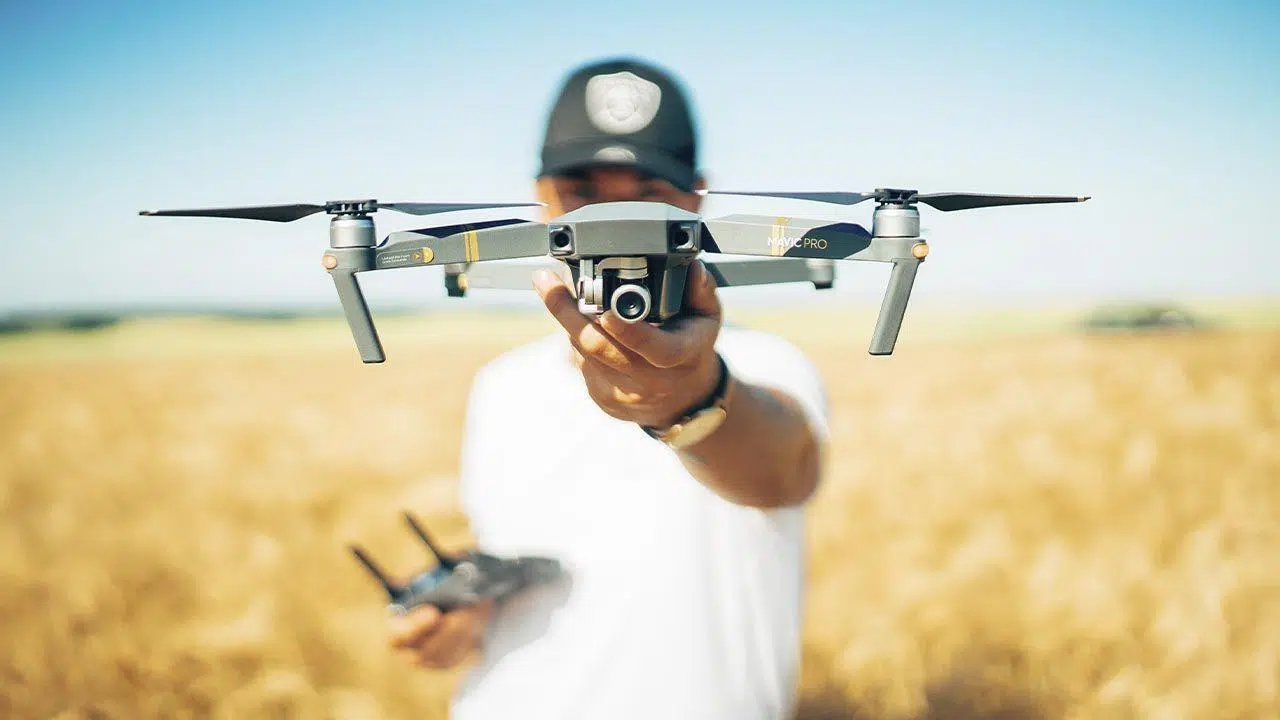
If you're thinking about flying a drone in Spain, it's important to understand the regulations to avoid problems and enjoy flying responsibly. European and Spanish regulations have evolved in recent years and now focus on the operational risks, the weight of the drone, and the geographical area where you'll be flying, rather than whether the use is recreational or professional.
First of all, a practical note: the AESA website also offers information in English through the European Commission's eTranslation service, and they themselves warn that the automatic translation may not be perfect . Stick to the official Spanish version and, if you have any serious doubts, it's best to consult the current regulations or ask the Spanish State Aviation Safety Agency (AESA) directly.
Who can fly and minimum ages
Almost anyone can fly a drone, but there are some nuances: some models and operations require training and registration, while others don't. In the open category, the typical minimum age to pilot is between 12 and 14 years old , depending on the type and subcategory, and there is no minimum age under adult supervision. To act as a UAS operator (managing aircraft and operations), the general minimum age is 16. And for licenses in scenarios that require it, the age of majority is required.
Operational categories: open, specific, and certified
European regulations (Regulations (EU) 2019/947 and 2019/945) organize operations into three categories based on risk. The open category includes low-risk flights: no overflights of crowded areas, no transport of dangerous goods, and no autonomous flights. No prior authorization or operator declaration is required, but there are clear requirements.
Typical requirements for open category: pilot ≥16 years old (or direct supervision), UAS operator registration where applicable , training or exam depending on subcategory, VLOS (visual line of sight) flight, maximum altitude 120 m AGL and MTOM less than 25 kg. Within open category there are subcategories A1, A2 and A3 which adjust distances to people and training requirements.
The specific category covers high-risk operations that don't fit into the general category: BVLOS (beyond visual line of sight), altitudes above 120 m, UAS weighing more than 25 kg, urban flights with specific requirements (e.g., without CE marking or weighing more than 4 kg, with limits), or flights over gatherings of people, among other scenarios. These typically require operator registration, advanced training, and a SORA study by the operator. In standard European scenarios, STS-01 (VLOS in urban environments, with a C5 label) and STS-02 (BVLOS in sparsely populated environments, with a C6 label) apply.
The certified category , on the other hand, encompasses high-risk operations (e.g., over crowds of people with aircraft of 3 meters or more, transport of people or dangerous goods). It requires certified UAS, a licensed pilot , a certified operator, and, in general, authorization from AESA, in addition to SORA when required. This framework is still evolving at the European level.
UAS classes by weight and marking
The maximum take-off mass (MTOM) classification defines classes C0, C1, C2, C3, C4, C5, and C6 . Since January 1, 2023, only models with a class label are sold. In general terms: C0 (less than 250 g), C1 (≥250 and <900 g), C2 (up to 4 kg), and C3/C4/C5/C6 (more than 4 kg up to 25 kg, depending on the specific aircraft and its intended use). This class label is crucial for knowing where and how you can fly.
Weight is important: stricter requirements apply to drones weighing over 250g, as a heavier UAS can pose a greater danger to others in the event of a crash. A lighter drone is generally easier to fly, but may offer less flight time or wind resistance. The balance between weight, battery, and rotors affects overall performance.
EASA Transitional Provision: From 1 January 2024 , in the open category, UAS with class C0-C4 or privately built UAS must be used (according to Appendix 2019/947). Specifically, declarations for European standard scenarios require class C5 (STS-01) or C6 (STS-02) UAS ; in other cases, operational authorization in accordance with Article 12 of 2019/947.
Operator registration, license and insurance
Registration as a UAS operator is processed at the headquarters of the Spanish State Aviation Safety Agency (AESA) . Operators register in their Member State of residence or main center of activity and must keep their information up to date. Registration in more than one Member State is not permitted at the same time. The registration is valid for five years and is recognized in all EASA countries. If the UAS is a toy as defined by Directive 2009/48/EC, registration is not required.
For identification purposes, drones weighing 250 g or more must have a visible fireproof plate displaying: manufacturer, type, model, serial number, operator's name, and contact information . The marking must be indelible and legible using approved methods (chemical etching, stamping, die-cutting, or indelible ink).
Are you sure? There are some nuances. For recreational use with UAS weighing less than 250g, liability insurance is not usually mandatory, but it is highly recommended . If the drone requires a license or exceeds certain weight limits, and especially if used professionally, liability insurance becomes essential or even mandatory. Some operating guidelines consider it mandatory for UAS weighing more than 250g, with coverage limits of €265.000 (less than 20kg) and €350.000 (more than 20kg). In any case, the insurance covers the operator , not the device, and a single policy can cover multiple aircraft.
Do I need a license or an exam?
Under the current framework, it is no longer sufficient to distinguish between "recreational" and "professional." In the open category, passing the AESA exam (Level 1 or 2 depending on the subcategory) is mandatory. For the specific category, additional training is required, and to operate in standard scenarios, passing the Level 3 exam is necessary. The certified category entails a pilot's license, operator and UAS certificates, and even an Air Operator Certificate (AOC) where applicable.
No license is required for UAS weighing less than 250g, but it's advisable to read the manual, get trained, and fly cautiously. Although not mandatory, taking the course and exam may be worthwhile as it opens the door to heavier UAS and operations with greater requirements. Remember that training/certification is required for UAS weighing 250g and above.
Medical certificate? Generally, for open and specific categories, an aeronautical medical certificate is not required. For "certified" operations , it may be required, with LAPL being the minimum in some cases (and Class II for certain weights), especially in more demanding or higher-risk contexts.
Where you can fly: zones, permits and best practices
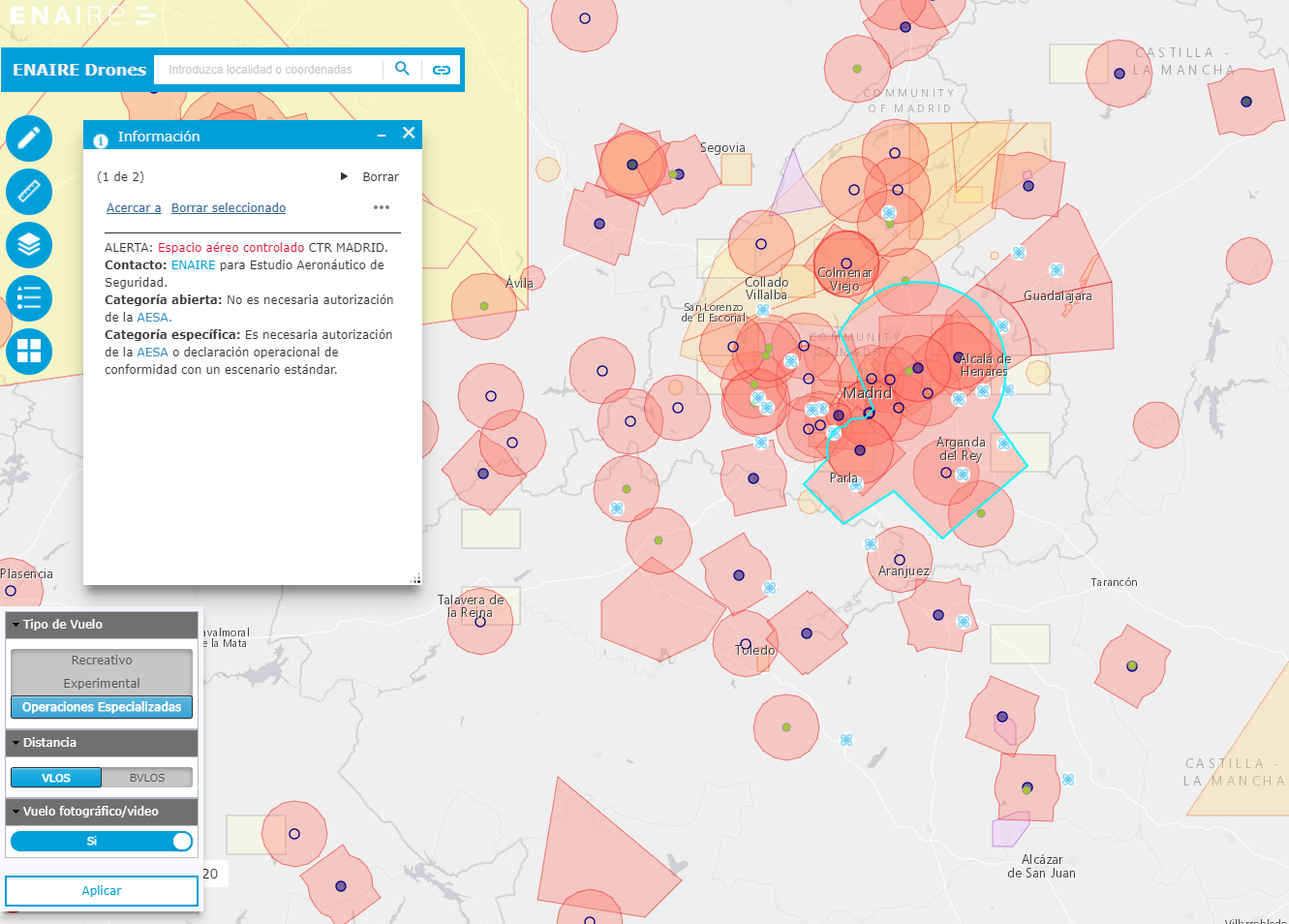
You can't fly just anywhere. There are prohibited, restricted, or conditional zones, and other unrestricted areas (gray areas on the maps). In Spain, the ENAIRE DRONES map is the reference tool for planning: https://drones.enaire.es/ . Although a recreational map exists, it's recommended to use the professional map , as the zoning no longer distinguishes between recreational and professional use. Gray areas = no restrictions; colored polygons = limitations/conditions.
ENAIRE updates frequently and offers a mobile app. Before each flight, you can complete a simple questionnaire with the type of drone and the purpose of the flight, and the system returns information tailored to your operation . It allows you to draw routes, measure distances, identify areas, search by coordinates (latitude, longitude), and consult NOTAMs. A NOTAM is a "notice distributed by telecommunications containing information about the establishment or modification of aeronautical facilities ."
Flying at night? It's possible, but according to the information gathered, it requires authorization from AESA (Spanish Aviation Safety Agency) and a specific safety study demonstrating its feasibility. The UAS (Unmanned Aerial Vehicle) must be visible (with lights or appropriate paint) and it's advisable to apply well in advance, as the response can take months.
Regarding concerts, weddings, or gatherings? With UAS weighing ≤250 g, it could be permitted outdoors, staying below 20 m in altitude, avoiding disturbances and complying with all other regulations. With UAS weighing >250 g, flying over gatherings of people or crowds is prohibited . Furthermore, if recording, comply with data protection regulations, the right to honor, privacy, and image rights, and restrictions on the capture and dissemination of aerial images.
On the beach? It depends on the area. It's best to look for less crowded areas (early morning) and avoid national parks or protected natural areas , where it's usually prohibited. If there are signs prohibiting it, respect them.
Indoors? An enclosed space (warehouse, pavilion, sports facility, house, etc.) is not part of the airspace and is not under the jurisdiction of AESA (Spanish Aviation Safety Agency). Authorization is granted by the owner/manager of the space (municipal councils, etc.). If you are not an expert, be careful of obstacles and GPS signal loss : fly slowly and with manual control.
Operations that require authorization and examples of zones
Request authorization with margin when: specialized air operations and experimental flights with UAS >25 kg (except specialized up to 50 kg with distance limits ≤500 m and height ≤120 m above terrain or obstacle at 150 m); specialized BVLOS operations with aircraft >2 kg MTOM; night operations or experimental flights; over agglomerations of buildings in cities or gatherings of people outdoors; and in controlled airspace or flight information zone (including aerodrome traffic zone).
As flight field ideas, the gray areas on the ENAIRE DRONES map are good candidates, meeting basic open category rules . In large cities like Madrid, there are iconic urban areas (El Retiro, Madrid Río, Casa de Campo, historic center) where you cannot fly without specific permits. On the other hand, outlying towns or clear peri-urban areas may be more suitable.
Key regulatory updates
Royal Decree 517/2024, in force since June 25, 2024, aligns Spanish law with the European framework and incorporates significant changes: mandatory CE marking on drones operated and sold in Spain; elimination of the recreational/professional distinction in the use of airspace, with unified requirements in UAS Geographical Zones and single digital publication of said zones.
Zoning is adjusted to allow operations in controlled airspace without coordination with ATS service providers when outside aerodrome environments and at altitudes below 60 meters . Furthermore, a framework is established for category-specific training under operational authorization: designated entities for practical instruction and new roles (instructors, examiners, evaluators), including aeronautical radio communication training for UAS pilots.
For non-EASA civilian operations (customs, police, search and rescue, firefighting, etc.), a separate regime is defined, distinguishing between direct operations (public entities) and indirect operations (contract operators), with differentiated requirements . In U-Space, CIDETRA will designate zones, while AESA will supervise and certify service providers.
As of August 30, 2024, declarations of conformity for STS-ES are no longer accepted, and those flying in open and specific categories with classes C1, C2, or C3 will be required to have an Electronic ID . In short, the modifications affect all unmanned aircraft (remotely operated or autonomous), with exceptions for law enforcement and emergency services.
Training, exams and documentation
For open certification, pass the corresponding exam (Level 1 or 2) on the official platform. Specifically, add Level 3 training for standard scenarios and SORA developed by the operator . For certified certification, we're talking about licenses, certificates (operator and UAS), and possible additional approvals (such as AOC) depending on the mission.
When your UAS has a camera or you plan to use it for more than just as a toy, register as an operator and display the operator's license number on the drone. Carry all required documentation: registration, training certificates, insurance policy (if applicable), and procedures and risk assessments when required.
How to report irregular flights
If you detect a suspected illegal flight that puts people or property at risk, you can report it. AESA investigates all reports. Provide as much information as possible: date , area overflown and conditions (day/night), details of the individual or legal entity being reported and the pilot if known, identification of the UAS (if possible), and any relevant documentation.
Channels: electronically through the AESA website, at the AESA General Registry (C/ General Perón 40, 1st floor, Madrid), at any of the locations specified in Article 16.4 of Law 39/2015, or before law enforcement agencies (who will notify AESA). Identify yourself with your name and ID number when submitting the complaint.
Sanctioning regime: fines for violating regulations
The penalties depend on the offender's profile and the severity of the offense. For individuals without aeronautical knowledge: minor offenses range from €60 to €45.000, serious offenses from €45.001 to €90.000, and very serious offenses from €90.001 to €225.000 . If you are a company, professional, or possess aeronautical knowledge: minor offenses range from €4.500 to €70.000, serious offenses from €70.001 to €250.000, and very serious offenses from €250.001 to €4,5 million.
Beyond the financial implications, your responsibility as a pilot is to avoid endangering anyone, maintain visual line of sight (VLOS) of the drone, and avoid prohibited areas such as airport environments or low-altitude areas with other aircraft (airfields, heliports, paragliding, or skydiving). The general altitude limit is 120 m AGL unless specifically authorized.
Essential rules and safety tips
Although some classic guidelines were written before the European framework, they remain valid as best practices: keep the drone in sight, do not fly over crowded areas, avoid urban areas unless permitted by zoning regulations, do not fly at night without permission , respect safe distances from airports, and do not compromise the safety of others. For FPV (First-Person Viewing), having an observer is recommended.
If you use the drone for professional purposes, you'll need the training and documentation applicable to your operation (including licenses or permits where required). If you're just going to film your family or practice flying a microdrone in an open field, the paperwork is minimal, but safety and privacy regulations still apply.
Finally, the official AESA UAS Geographic Zones guide helps you understand the limitations by operating location: UAS Geographic Zones Guide . Combine it with the ENAIRE map and remember that the regulations apply in Spain ; if you are traveling with your drone, check the rules of your destination country.
With all this information, you now have the complete picture: who can fly, what each category requires, how CE marking and drone class affect regulations, where you can fly, what permits you need for sensitive operations (nighttime, BVLOS, overcrowded areas, controlled airspace), how to report irregularities, and what penalties exist. Flying legally is easier than it seems when you use the ENAIRE DRONES map, register with AESA , and respect altitude, distance, and privacy limits; this way, your experience will be safe, legal, and much more enjoyable for everyone.


Passionate writer about the world of bytes and technology in general. I love sharing my knowledge through writing, and that's what I'll do on this blog, show you all the most interesting things about gadgets, software, hardware, tech trends, and more. My goal is to help you navigate the digital world in a simple and entertaining way.