- High-energy lasers allow drones to be shot down with great precision and at a cost per shot of just a few euros or even cents.
- DragonFire (UK) and Apollo (Australia) are leading the development of naval and land-based laser systems to stop swarms of drones.
- The effectiveness of these laser cannons depends on the weather and range, so they complement, but do not replace, missiles and other defenses.
- Spain is making progress with the CLPU in "light bullet" technologies, positioning itself at the forefront of European directed energy weapons.
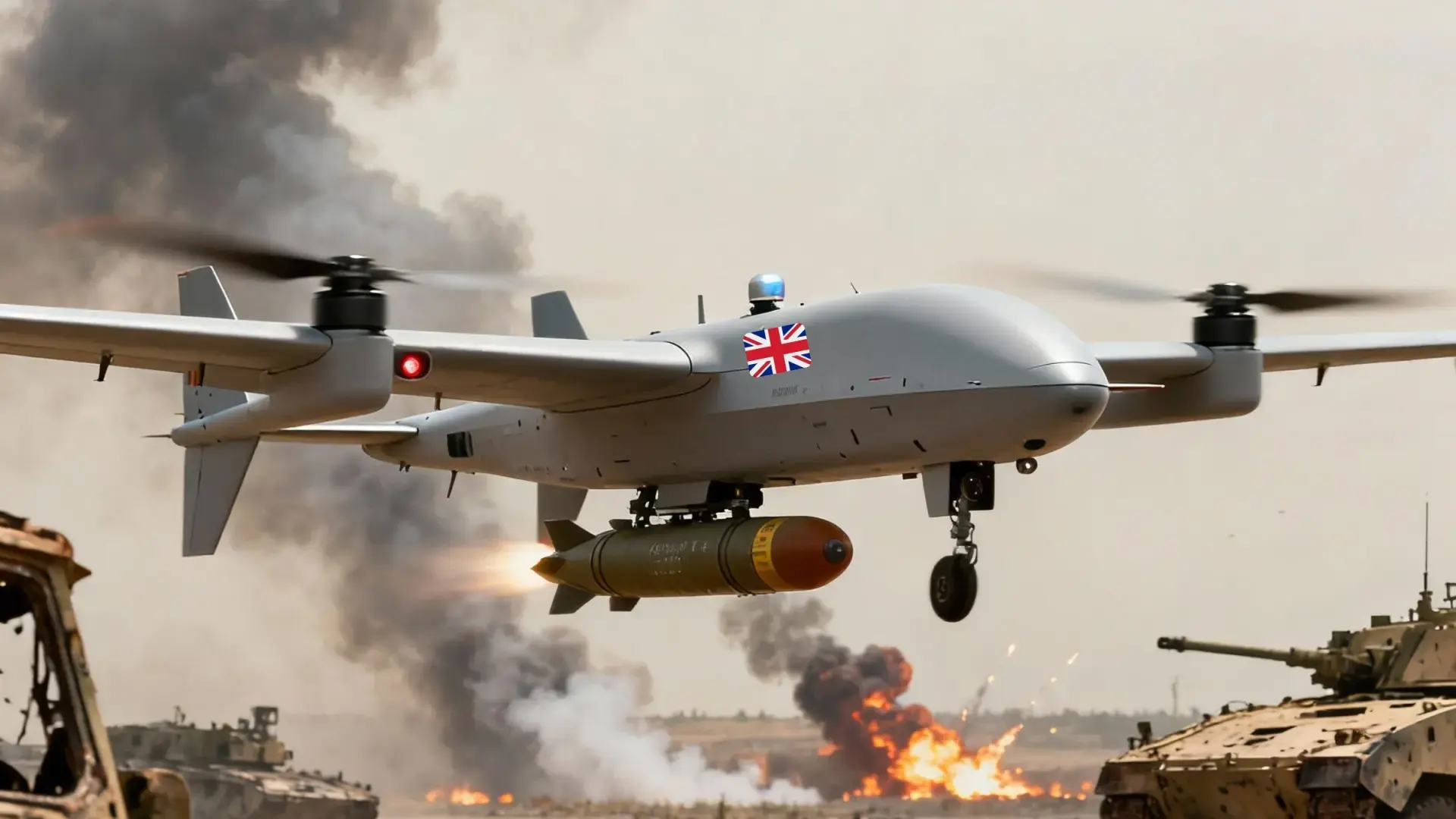
The massive influx of drones into modern conflicts has dramatically altered the way wars are fought. Ukraine, Gaza, and the Red Sea are now a war laboratory where, on a daily basis, small unmanned aerial vehicles, many of them inexpensive and almost homemade, are seen putting millions of dollars' worth of defensive systems on the ropes.
Faced with this situation, militaries around the world have launched a technological race to find weapons capable of shooting down drones quickly, accurately, and cheaply . And that's where directed energy systems, especially high-power lasers, come into play, promising to turn what once seemed like science fiction into a very real game-changer on the battlefield.
Why lasers have become the new anti-drone obsession
In recent years it has become clear that kamikaze and reconnaissance drones are a constant threat . They fly low, maneuver quickly, can operate in swarms, and, most worryingly, cost a fraction of what a modern anti-aircraft missile is worth.
Meanwhile, many countries continue to use traditional defense systems, such as guided missiles or anti-aircraft artillery. The problem is that launching a missile costing hundreds of thousands or even millions of dollars against a very inexpensive drone is simply unsustainable . The U.S. Navy, for example, has spent nearly $1.000 billion on missiles to intercept threats in areas like the Red Sea, at an approximate cost of $2,1 million per launch—a truly absurd amount compared to devices that sometimes cost less than a car.
High-energy lasers are presented as the logical alternative: each shot costs only a few euros or even cents , they don't use physical ammunition, and they can attack multiple targets in a matter of seconds. Furthermore, they offer a very clear strategic advantage: they don't generate explosions or fragments, they reduce collateral damage, and they operate with almost surgical precision.
Because they are beams of light, lasers travel in a straight line at the speed of light, which means that once emitted, there is no way to intercept or deflect them in flight . If the targeting system is able to track the target, the laser can concentrate energy on a tiny point and disable its sensors, motors, or electronic systems without causing a dramatic destruction.
This combination of low cost per shot, pinpoint accuracy and minimal collateral damage has made laser weapons the major focus of investment for military powers, who are rushing to take them out of the laboratory and into the sea, onto land and even, in the future, into the air.
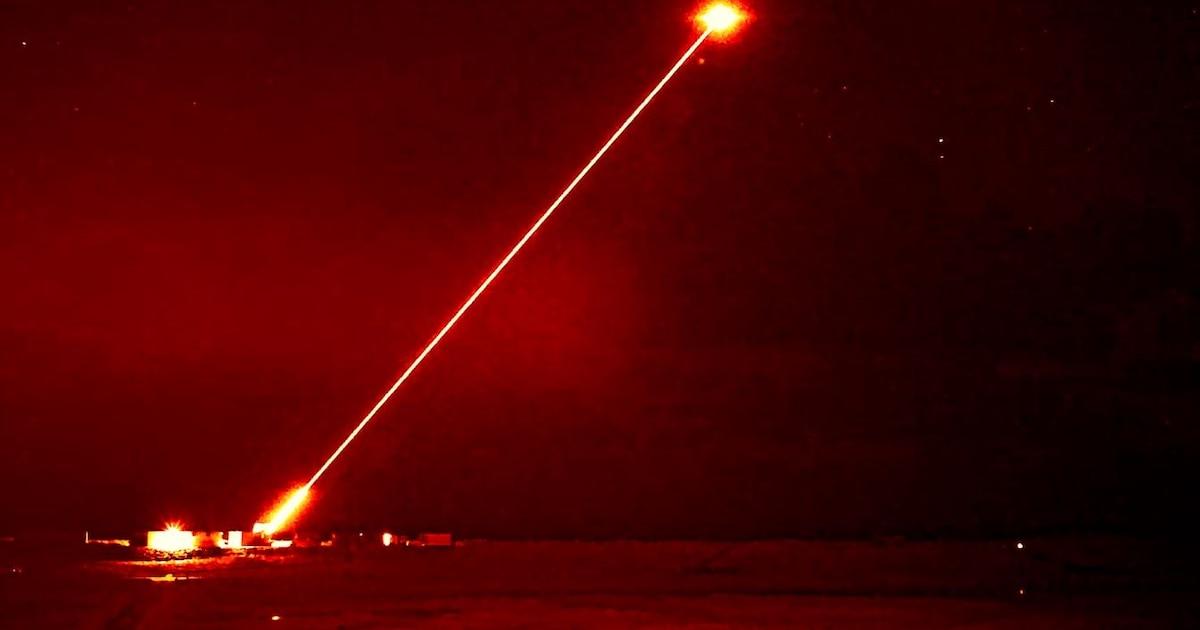
DragonFire: the British laser that boasts precision and low cost
One of the most ambitious projects in this field is DragonFire, the high-energy laser system developed in the UK . This program, launched in 2017 with an initial budget of approximately $38 million, involves the Defence Science and Technology Laboratory (DSTL), the missile company MBDA, Leonardo UK, and the defense technology firm QinetiQ.
The British Ministry of Defence has conducted tests at military installations in Scotland, including the Hebrides Islands firing range, with remarkable results. DragonFire successfully tracked and shot down high-speed drones reaching speeds of up to 650 km/h, roughly twice the top speed of a Formula 1 car, and did so even beyond the system's horizon, a highly significant capability in naval scenarios.
According to the military personnel who participated in the demonstrations, the laser beam's accuracy is literally lightning-fast . It has even been claimed that the system can hit a one-pound coin from a kilometer away—a very graphic way of explaining the degree to which it can concentrate energy into a tiny point on the structure of a drone or other type of aerial threat.
DragonFire combines a powerful laser beam with an advanced tracking and fire control system. Its mission isn't always to blow the drone to smithereens , but rather to damage its critical components: optical sensors, navigation electronics, communication links, or key surfaces. By disabling these components, the device loses control and crashes without the need for large explosions.
This system, developed by MBDA and its partners, was initially designed for the Royal Navy, where it will be installed on Type 45 destroyers starting in 2027 , five years ahead of the original plan. However, the British Ministry of Defence does not rule out the possibility of adapting the same technology later for armored vehicles or other land platforms.
The contract signed with MBDA UK is worth around 316 million pounds sterling (about 358-360 million euros), reflecting the long-term commitment to incorporating directed-energy weapons into the country's defense and placing the United Kingdom at the technological forefront within NATO.
The key to DragonFire: taking down drones for less than the cost of a meal
Beyond its futuristic appearance, DragonFire truly sets itself apart in the economics of combat. Each laser shot costs approximately 10 pounds , just over 11 euros, and the British Ministry of Defence estimates the cost of using the laser at less than 12 euros per shot.
To give you an idea: turning on DragonFire for ten seconds costs the same as running your home heating for an hour . Compared to the hundreds of thousands (or millions) of euros it costs to launch a guided missile, the savings are staggering, especially if the enemy uses cheap drones in industrial quantities.
The war in Ukraine and drone attacks in areas like the Red Sea have demonstrated that traditional defense systems can become a bottomless pit of money. If a multi-million dollar missile is used to shoot down a drone made of wood, polystyrene, and off-the-shelf electronics, the attacker has already won the economic battle , even if they lose the drone itself.
With DragonFire, the logic is reversed: the cost per kill drops dramatically , making continuous defensive patrols feasible without fear of depleting the ammunition budget. This opens the door to deploying it on the front line of defense against kamikaze drones and other small targets, reserving expensive missiles for larger threats.
Furthermore, the use of a laser beam eliminates the problem of shrapnel fragments and projectiles that miss their target. If the laser misses, it simply continues traveling until the atmosphere absorbs and disperses the energy , without causing random explosions on land or at sea. This feature is well-suited to scenarios with nearby civilian infrastructure or busy shipping lanes.
Military advantages of laser weapons over conventional missiles
Lasers like DragonFire or Apollo are considered the quintessential defensive weapons . They can respond immediately to a threat, but by their very nature, they are not suitable for bombing cities or causing large-scale damage far from the battlefield.
Among its clearest advantages is its response speed. A laser doesn't need to accelerate or follow a curved trajectory : it impacts the target almost instantly. In situations where a drone is approaching at high speed, those few seconds of margin can mean the difference between intercepting it or watching it reach its target.
The cross-section of the beam is usually minuscule, on the order of a few square millimeters. This allows it to behave almost like a scalpel in the hands of a surgeon : a part of the drone is selected (for example, an optical sensor, a wing, or the communications antenna) and the energy is concentrated there until it dissipates. Everything happens cleanly, without a large detonation or the shower of fragments that usually accompanies missile destruction.
Another important aspect is that lasers are extremely difficult to counter. Traditional countermeasures, such as launching decoys or attempting to deceive the missile's guidance system, become ineffective when the "projectile" is a beam of pure light. The only real recourse is to take cover (for example, behind dense smoke or in bad weather) or try to overwhelm the system with a massive number of targets.
Historically, lasers have been used on the battlefield for tasks such as target designation, rangefinding, and observation. What's new now is that their effectiveness as a direct weapon is being demonstrated , capable of damaging or destroying enemy systems without the need for a physical projectile. It's the leap from being "the eyes of the system" to also becoming its "fist."
Technical limitations: the Achilles' heel of laser cannons
Despite all the enthusiasm, high-energy lasers are far from perfect. Their performance depends critically on atmospheric conditions . Fog, rain, high humidity, or even air turbulence can absorb, scatter, or distort the beam, reducing its effective range and the amount of energy that reaches the target.
Furthermore, when working with very high power levels, the beam itself can interact with the air, heating it and generating phenomena that affect its propagation. Finding the right balance between power, wavelength, beam shape, and exposure time is both a scientific and engineering challenge.
Another serious problem arises when the system is installed on moving platforms, such as a ship in rough seas or a vehicle traveling over uneven terrain. Stabilizing a small, fast drone from a moving surface is much like trying to hit a target while standing on a balance board: any slight swaying results in beam deviations.
To mitigate this, developers incorporate advanced stabilization systems, gyroscopes, and control software that compensate for platform movements. Even so, keeping the laser dot locked onto the target long enough to damage it remains one of the biggest challenges, especially at long distances.
Finally, it is essential to thoroughly train the crews. Operating a laser weapon is not simply a matter of pulling a trigger : it involves understanding how weather affects performance, how to prioritize targets, how to coordinate with other defense systems, and how to manage available power to avoid running out of power at the worst possible moment.
Apollo: the Australian laser cannon designed for swarms of drones
While the UK is accelerating its DragonFire program, Australia has made a strong entrance thanks to Apollo, the high-energy laser weapon developed by Electro Optic Systems (EOS) . This system was designed from the outset to address a very specific threat: swarms of low-cost drones attacking in waves.
Apollo can reach a power output of up to 150 kilowatts and, according to the company, is capable of neutralizing up to 20 drones per minute . The most striking aspect is the operating cost: each shot is estimated to cost less than 10 cents, an almost symbolic figure compared to traditional ammunition.
In terms of range, the system can destroy drones at a distance of approximately 3 kilometers and blind or disable optical sensors at a distance of approximately 15 kilometers . Furthermore, its 360-degree coverage and ability to acquire targets in about 700 milliseconds make it an ideal candidate for covering large areas against sudden attacks.
Another of its strengths is its modularity. Apollo can be installed in a standard 6-meter container or on vehicles , facilitating flexible deployment and integration into layered air defense systems. This allows it to be positioned near critical infrastructure, bases, vehicle convoys, or strategic points without requiring major construction work.
NATO has already made its move and finalized the purchase of the system, with the first deliveries scheduled for 2028. The complete package—which includes maintenance, training, and associated components—is valued at approximately $83 million. Conflicts such as those in Ukraine and Gaza have served as a catalyst, pushing policymakers to demand solutions ready for immediate deployment, without being bogged down in endless testing phases.
Operational limitations of Apollo and its role in air defense
As with DragonFire, Apollo isn't a magic wand that completely replaces other defensive systems. Its effectiveness is heavily influenced by the weather : rain, fog, or dust significantly reduce its range and energy concentration capacity.
Its operating range of between 1,6 and 4,8 kilometers under ideal conditions makes it perfect against drones and other relatively close targets, but it is not the ideal tool to deal with ballistic missiles or conventional aircraft that operate at much greater distances or altitudes.
Therefore, experts agree that laser cannons will not replace missiles or anti-aircraft artillery in the short term . Rather, they will be integrated as an essential complement to deal with low-cost, high-volume threats, freeing up more expensive systems for truly strategic objectives.
Even with these limitations, investment remains strong. The Pentagon, for example, allocates around $1.000 billion annually to research on directed-energy weapons , while Israel plans to incorporate its own laser system, the Iron Beam, starting in 2025. All indications are that lasers will be a key piece of the global defense puzzle.
Spain and the “bullets of light”: the CLPU project
Spain is also joining the laser defense movement. For about five years, the Pulsed Laser Center (CLPU) at the University of Salamanca has been working on the development of a pulsed laser prototype designed to neutralize drones and other aerial threats.
According to Roberto Lera, a specialist scientist at CLPU, the goal is to demonstrate that this type of technology is viable for defense applications . In other words, the aim is to create a kind of "light bullet" capable of damaging a drone using extremely intense and brief laser pulses.
Interest in this project has surged in the wake of the war in Ukraine and the proliferation of drone attacks in various locations. The arms industry has set its sights on this research , aware that it could place Spain in a very advantageous position within the directed-energy weapons sector.
Not all the technical details have been made public yet, but the pulsed laser approach opens the door to new ways of neutralizing targets, different from the continuous laser used in systems like DragonFire or Apollo. If the CLPU manages to produce a reliable demonstrator , Spain could play a much more significant role in European laser defense developments.
All this work puts the country on a clear path: not to limit itself to buying foreign solutions, but to actively participate in the creation of its own technologies that can be integrated into national or multinational defense systems.
With all these projects underway, the general feeling is that lasers for shooting down drones have gone from being science fiction to a very serious tool, increasingly close to large-scale operational deployment. Now the challenge lies in refining their weaknesses, integrating them effectively with other defensive systems, and training armed forces to make the most of them.

Passionate writer about the world of bytes and technology in general. I love sharing my knowledge through writing, and that's what I'll do on this blog, show you all the most interesting things about gadgets, software, hardware, tech trends, and more. My goal is to help you navigate the digital world in a simple and entertaining way.