- Australian scientists have developed a cryogenic chip capable of operating alongside qubits at temperatures close to absolute zero.
- This breakthrough makes it possible to control millions of qubits in a stable manner without degrading their delicate quantum state.
- The chip significantly reduces power consumption, making it viable for real-world and scalable applications.
- It opens the door to practical applications in areas such as cryptography, logistics optimization, and materials simulation.
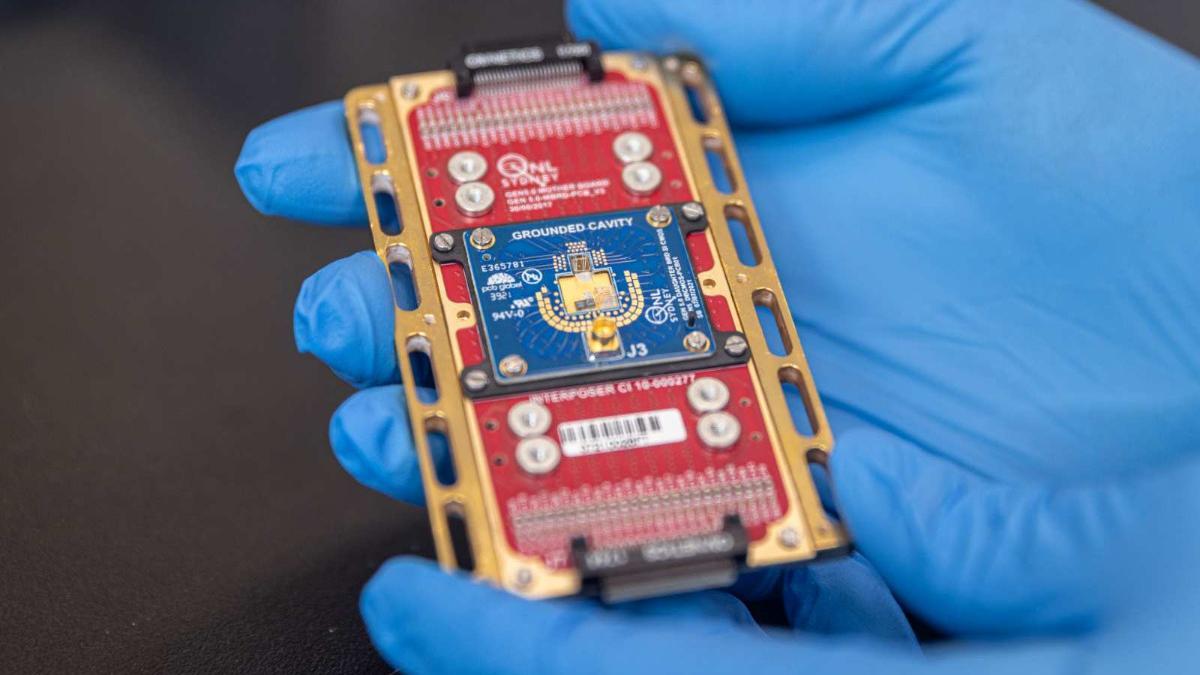
Cryogenic quantum computing is experiencing a major leap forward, thanks to a new chip developed by a group of Australian scientists. These researchers have, for the first time, succeeded in handling and stabilizing delicate quantum information at extremely low temperatures, close to absolute zero , thus taking a crucial step towards creating quantum computers useful for the real world.
For years, one of the biggest hurdles has been getting the electronics that control qubits—the building blocks of quantum computing—to work alongside them without disturbing their state or generating interference that destroys quantum coherence . The solutions presented so far have been insufficient to scale the number of qubits beyond a few dozen, which has limited the practical possibilities of this type of technology.
A chip capable of working near absolute zero
A team from the University of Sydney has presented in the journal Nature a proposal for cryogenic control electronics that can operate alongside spin qubits on a silicon chip even at millikelvin temperatures, that is, a few thousandths of a degree above absolute zero ( -273,15 °C ). This advance allows for an increase in the number of qubits on a single chip, from the current hundreds to the millions, an essential requirement for quantum computing to be truly functional.
The key to this development has been in designing control circuits with minimal energy consumption and excellent electromagnetic protection, eliminating the problem of interference and internal heat, factors that until now hindered the viability of large-scale quantum systems.
Practical advantages and potential for expansion
CMOS technology—traditionally used in the manufacture of classical processors—has been leveraged to build these new quantum chips, facilitating their potential integration into industry and enabling much faster development . The cryogenic chip consumes so little energy that even if a very large number of qubits are controlled, the increase in total power consumption would be minimal.
This allows us to overcome one of the sector's main bottlenecks, enabling practical applications in areas such as cryptography, logistics optimization, advanced meteorology, and pharmaceutical design . The power of a quantum computer can make a tangible difference compared to current solutions in these fields.
Laboratory tests have shown that classical control systems can be placed less than a millimeter from qubits without causing appreciable losses in coherence or fidelity of operations. This level of integration and isolation lays the foundation for large-scale qubit control in real-world environments, moving beyond mere laboratory curiosity to address everyday problems.


Passionate writer about the world of bytes and technology in general. I love sharing my knowledge through writing, and that's what I'll do on this blog, show you all the most interesting things about gadgets, software, hardware, tech trends, and more. My goal is to help you navigate the digital world in a simple and entertaining way.