- AI acts as support for triage and decision-making, without replacing the healthcare professional or the human operator.
- Projects such as Triage, SAVE-EM and the 112 initiatives show improvements in call prioritization and response times.
- The benefits of AI are only acceptable if they outweigh, with evidence, the risks, biases, and limitations detected in real-world practice.
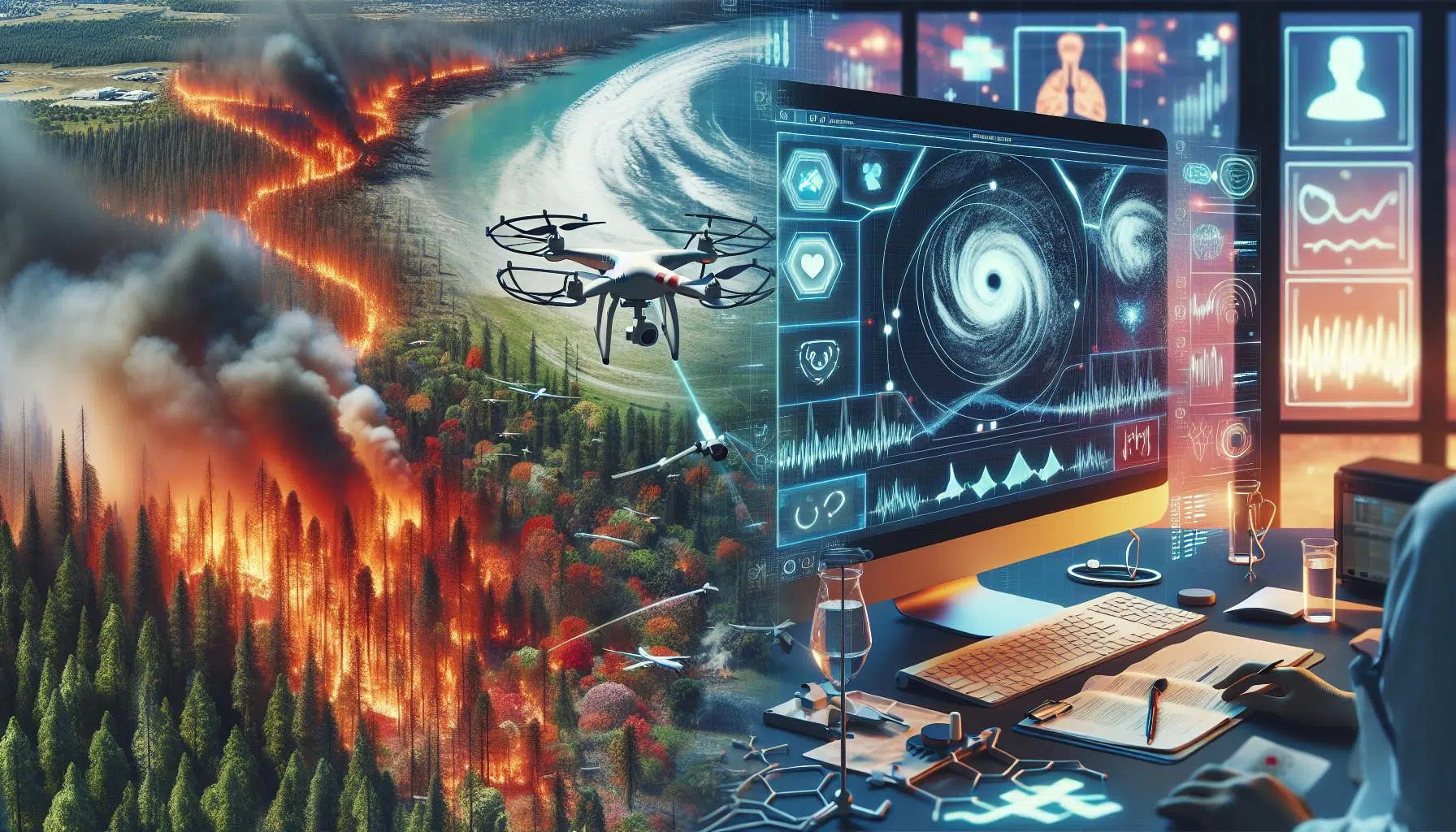
The role of the artificial intelligence operator in emergency services is becoming increasingly important within coordination centers, hospital emergency departments, and the 112 and 061 emergency systems. It's not just about implementing trendy technology, but about integrating solutions that truly improve response times, case prioritization, and patient safety in critical situations.
In this context, AI is being applied to triage, demand forecasting, call management, and clinical decision-making , always with a very clear message from the emergency services themselves: it can be a powerful co-pilot, but never a substitute for the healthcare professional or the human operator. From here, we will examine in detail what is happening in Spain and internationally with this technology and what role the AI specialist plays.
What is an artificial intelligence operator in emergency services?
When we talk about an AI operator in emergency response, we're not referring to a robot, but to a professional who works closely with artificial intelligence systems in coordination centers (112, 061, hospital emergency rooms, city halls, etc.). This role relies on algorithms to prioritize calls, classify urgency levels, and facilitate the best possible response in the shortest time.
In practice, this operator sits in the same workstation as a telephone manager or a medical coordinator, but has advanced AI tools that process data in real time : information provided by the caller, vital signs, medical history, geographical location, call history, system saturation, or risk of multiple events.
Its main mission is to interpret the recommendations generated by AI, compare them with the reality of the case and decide which resources are activated : emergency health teams, advanced life support ambulances, medical helicopters, police, firefighters or municipal services, among others.
Furthermore, the AI operator usually plays a key role in the validation, monitoring, and continuous improvement of the algorithms themselves , as they are the one who detects when the suggestions do not fit the real situation, warns of possible biases, and reports incidents that then serve to adjust the models.
Emergency room triage and how AI comes into play
When a person arrives at an emergency department, the first point of contact is usually triage, a process in which nursing or medical staff classify the patient's level of clinical priority. It's not about making a diagnosis, but about deciding who should be seen first, who can wait a few minutes, and who requires immediate attention.
At this point, AI has begun to be used as a “second pair of eyes,” suggesting a level of urgency based on vital signs, described symptoms, age, medical history, and other structured or unstructured data. The automated suggestion does not replace professional judgment, but it helps to reinforce the decision, detect inconsistencies, and reduce minor oversights in overwhelmed situations.
Studies analyzed by various authors indicate that AI can improve patient flow efficiency, reduce waiting times, and decrease administrative errors in triage level recording. However, they also highlight that, in many scenarios, doctors and nurses still clearly outperform algorithms when it comes to correctly classifying the most critically ill patients.
It is particularly striking that several studies have detected tendencies to "undertriage" in some AI models , meaning they underestimate the true severity of urgent cases. This is critical because even a small deviation at the highest priority levels can impact survival or lead to serious long-term consequences.
Therefore, operators working with AI in emergency services must understand that the algorithm is an aid, never the final word . In-person assessment of the patient, observation of their general condition, expressions of pain, anxiety, or subtle changes in appearance remain irreplaceable.
Real contributions of AI to triage and emergency management
The introduction of AI systems in triage and coordination centers is providing very concrete benefits. One of the clearest is the direct support for healthcare professionals and operators . The models act as a reinforcement, suggesting possible priority levels, clinical patterns, or risks to consider—something especially useful during periods of high demand.
Another important impact is the reduction of administrative errors and repetitive tasks . Automatic data entry, suggested categories, and standardized urgency levels decrease the bureaucratic burden, minimize duplication, and prevent minor errors that, when accumulated, can slow down emergency services.
On the organizational front, AI is proving its value in resource optimization and the simulation of complex scenarios . Through predictive models, it is possible to anticipate demand peaks, adjust team sizes, plan special coverage (holidays, extreme weather events, major sporting events), and analyze the impact of changes in response protocols.
The use of AI has also been explored to support the search for diagnoses or pre-diagnoses in emergency departments based on symptoms and rapid test results. However, it is strongly emphasized that medical diagnosis, as such, is not part of triage and should not be confused with simple emergency classification. Here, the role of the AI operator is to clearly distinguish between tools that prioritize and tools that suggest clinical diagnoses.
The key, according to the sources consulted, is that implementing AI only makes sense when it demonstrates clear and measurable improvements over standard practices assisted by traditional computerized systems. If its performance doesn't surpass previous methods with solid evidence, its use risks becoming merely a marketing ploy.
Limitations, risks and biases of AI in triage and emergency
Although AI has enormous potential, it also carries technical limitations and ethical risks that cannot be ignored . Algorithms cannot perceive the pain, fear, anguish, or fragility that a nurse detects in a matter of seconds simply by looking at the patient. These human nuances remain crucial in emergency care.
Furthermore, AI is not infallible and can incorporate biases stemming from the data used to train it. If the datasets are not representative of the entire population (for example, if certain ages, geographic areas, or socioeconomic groups are underrepresented), the models will tend to make more errors precisely with those groups.
Research showing instances of under-triage at the most critical levels serves as a serious warning: an algorithm that performs well in classifying minor emergencies but fails significantly in life-threatening ones cannot be considered a reliable tool. Therefore, rigorous clinical validation and continuous monitoring are essential before relying on these solutions.
Another sensitive issue is the management of data privacy and security . For AI to function, it needs large volumes of clinical and operational information; its use must be transparent, with legal, technical, and organizational safeguards that protect patient privacy and the integrity of the system.
Finally, it is essential to prevent the fascination with technology from leading to the acceptance of less stringent reliability standards for AI than for other clinical systems . AI-assisted triage cannot be held to a lower standard than professional triage based on traditional computerized protocols that have already demonstrated their accuracy and safety through robust scientific studies.
Experiences in Spain: CES-061, Triage project and SAVE-EM
In Spain, one of the leading examples of AI integration in emergency healthcare is the 061 Emergency Medical Center (CES-061) in Andalusia . The Andalusian Regional Government has announced a specific artificial intelligence initiative focused on triage, demand prediction, and clinical decision-making, positioning it as a strategic component of the new healthcare model.
Within this initiative, the Triage project stands out , focusing on improving resource allocation and significantly reducing response times. The idea is to use data entered by the call center operator (061, 112, or other lines) and the caller's responses to enable AI to quickly assess whether a life-threatening emergency requires immediate attention.
The project has an initial duration of three years, enough time to evaluate whether AI truly streamlines the handling of urgent and emergency requests . If the results are as positive as expected, it will become a valuable tool for the coordinating physician, who will be able to confirm or adjust the algorithm's recommendation more quickly and confidently.
In parallel, CES-061 has promoted the development of SAVE-EM (Support Assistant for Vital Emergencies – Enhanced Memory) , a generative AI-based virtual assistant that has received recognition from the Unicaja Foundation in the field of biomedicine. This system integrates updated medical protocols and clinical guidelines to offer real-time suggestions to professionals in emergency situations.
SAVE-EM's main contribution is acting as an intelligent copilot, helping to follow proper protocols, reducing human error , and shortening decision-making times. Its continuous learning capability allows it to adapt to usage patterns and team needs, improving with each new case it processes.
Activity and organization of CES-061 in Andalusia
The activity data from CES-061 shows the scale of the environment where AI is being implemented. Between January and October of a recent year, the 061 emergency coordination centers in Andalusia handled more than 2,5 million calls , a figure that represents a daily average of 8.262 calls managed through different channels (061, 112, provincial lines, Telecare, Health Response, etc.).
Of all these interactions, approximately 1,16 million assistance cases or requests for help were handled . About 6% were emergencies, 43,3% were urgent and non-deferrable cases, and the remainder were urgent cases and home visits, which translates to an average of 3.825 requests per day in this autonomous community alone.
Emergency medical teams from the 061 service reached the scene in under 15 minutes in over 90% of cases , a figure that underscores the importance of any further improvements in prediction, call triage, and resource allocation. When response times are already at such a high level, even small AI-driven advancements can make a significant difference.
To cope with this workload, the system has had to activate emergency and urgent healthcare teams on more than half a million occasions . In just over 469.000 cases, mobile primary care resources (comprising a doctor, nurse, and technician) were mobilized, while the dedicated 061 emergency teams, including medical helicopters, were activated in more than 54.000 situations, many of them on-site emergencies.
One key finding is that 32% of requests were resolved directly from the coordinating centers , without the need to mobilize physical resources. This is where AI applied to telephone decision-making, risk stratification, and care recommendations becomes particularly valuable for improving the overall efficiency of the system.
Air ambulance service, TREX project and mobile digital medical records
The organization of health emergencies in Andalusia includes a robust air ambulance component . The region has five medical helicopters strategically located (Seville, Cadiz, Malaga, Baza, and Cordoba) that serve as a secondary level of care when urgent transfers or rapid intervention are required in remote areas.
The deployment of these helicopters is managed from a centralized "flight control center ," staffed by professionals responsible for coordinating departures, optimizing routes, and maintaining communication with healthcare facilities. In this scenario, AI can help analyze flight times, weather conditions, resource availability, and clinical priority to suggest the best transport option in each case.
Furthermore, the TREX project is underway to equip air ambulance teams with the capability to perform red blood cell transfusions in out-of-hospital emergencies. The project began in Málaga and has since expanded to teams in Baza and Seville, with dozens of transfusions already performed outside of hospitals. Training has also been completed for its implementation in Córdoba and Cádiz.
In parallel, the community has launched a mobile digital medical record system , a pioneering application in Spain that allows emergency personnel to access relevant patient data remotely from mobile devices. This streamlines the initial assessment, improves medication safety, and facilitates continuity of care with receiving hospital services.
This entire ecosystem of transportation, mobile medical records, and advanced protocols is the ideal terrain for the AI operator to cross-reference clinical, geographical, and logistical information , helping the coordinator to better prioritize resources and choose the most appropriate device for each critical situation.
AI in municipal emergency and disaster management
Beyond the health emergency, city councils and local governments are beginning to use AI to manage emergencies of all kinds: natural disasters, infrastructure crises, and major events . Prevention has become the first line of defense, and predictive models play a fundamental role here.
Machine learning algorithms, fed with large volumes of historical and real-time data, allow for more accurate predictions of the probability and impact of earthquakes, floods, wildfires, heat waves, and storms . This information is used to activate emergency plans, reinforce services, prepare shelters, and issue early warnings to the public.
The deployment of IoT sensors and drones equipped with cameras and environmental sensors adds another layer of information. The combination of aerial images, temperature readings, humidity, and ground movement data with AI algorithms facilitates early risk detection and continuous monitoring of vulnerable areas.
Furthermore, neural networks can learn complex patterns of climatic and geological behavior that escape direct human analysis, offering highly realistic simulation models with which municipal officials rehearse responses to different scenarios.
In this field, the AI operator in emergency services usually works in municipal command centers, coordinating with civil protection, local police, firefighters and health services, and using the outputs of these models to make operational decisions in real time.
Logistics management, real-time data, and communication with citizens
AI is not only useful for anticipating problems, it is also crucial when an emergency is already underway. One of its most useful applications is logistical optimization during a crisis : deciding where emergency vehicles should go, how to distribute food or medicine, or which roads to avoid because they are blocked.
The algorithms can calculate optimal routes taking into account traffic, road conditions, weather, and available resources —essential when it's necessary to reach isolated or congested areas on time. This type of support is invaluable for operators who manage multiple incidents simultaneously from coordination centers.
Dynamic staff allocation is another area where AI makes a difference. By analyzing team availability, skills, and historical workload, systems can suggest more efficient deployments , both during emergencies and when planning shifts and on-call duties.
In parallel, AI facilitates the massive analysis of real-time data from social media, IoT sensors, and other open sources. This makes it possible to detect areas of concern, fake news, specific needs in certain neighborhoods, or requests for help that haven't been received through the usual channels.
In the realm of direct communication with the public, AI-powered chatbots are becoming a fast track for citizens to obtain accurate information about the state of the emergency, evacuation points, safety recommendations, and available resources , 24 hours a day. At the same time, these assistants can collect structured data that is then integrated into operators' dashboards.
The 112 of the future: automated call triage and mass processing
In 112 emergency call centers, one of the biggest challenges arises during call surges : large-scale fires, storms, earthquakes, or incidents with multiple victims. In these situations, switchboards can easily become overwhelmed, leading to long queues where it's very difficult to determine which pending calls are truly the most urgent.
To address this problem, some services, such as 112 Canarias, are developing AI projects that will allow them to automatically and simultaneously handle all calls in the queue during peak hours. The idea is that the system will use voice recognition, natural language processing, device emergency modes , and other parameters to identify which calls describe the most critical situations.
Once this analysis is complete, the AI prioritizes and routes the most urgent calls to human operators , ensuring that the most serious cases are handled first. The remaining calls are stored in a priority-ordered log for later processing.
This type of solution is also being tested within the framework of European projects coordinated by organizations such as EENA, where functionalities such as automated call triage, real-time transcription and translation , AI-guided telecare, crisis management, and data-driven strategic planning are being studied.
Pilot tests have shown that combining AI with experienced operators allows for handling much higher call volumes without losing the ability to discern which incidents are truly time-dependent . Even so, experts emphasize the need to properly train operators and ensure they feel comfortable and confident working with these tools.
Quality of care, emergency department overcrowding, and the role of AI
Hospital Emergency Departments (UEH) face a well-known problem: chronic overcrowding in many services . The causes are varied: a high volume of patients with non-urgent conditions, an aging population with multiple pathologies, a lack of beds for admission, and, in general, increasing pressure on healthcare services.
This situation can lead to diagnostic and therapeutic delays , longer stays in emergency departments, and, in extreme cases, worsening clinical outcomes. Therefore, organizational and structural measures are being proposed to improve efficiency while safeguarding patients' rights, clinical safety, and quality of care.
AI is presented here as an ally, not a magic bullet. Applied appropriately, it can help better manage demand, identify bottlenecks, and redistribute resources , but always within the framework of a comprehensive service improvement strategy. Simply installing an intelligent system is insufficient without accompanying changes to care pathways and improved coordination between levels of care.
Coordination between primary care, out-of-hospital emergency services, and specialized hospital units is vital in time-sensitive conditions such as stroke, acute coronary syndrome, or polytrauma . In these cases, the interconnection of AI systems that securely share data can help ensure that all those involved have the same key information at the right time.
Ultimately, AI will only deliver real value if it's integrated into a patient-centered emergency care model with updated protocols, trained teams, and continuous outcome assessment . Otherwise, there's a risk of adding technological complexity without translating it into tangible improvements.
The integration of artificial intelligence into emergency services, both healthcare and municipal, is demonstrating that the best possible combination is one that unites technology and humanity . Algorithms that prioritize calls, anticipate disasters, optimize routes, or suggest protocols can make significant differences in response times and safety, but always under the supervision of operators and professionals who know the terrain, interpret nuances, and assume ultimate responsibility for each decision. When AI is used as a demanding co-pilot, subjected to rigorous validations and measured by real clinical and operational results, it ceases to be a mere claim of innovation and becomes a tool that supports teams and truly improves care in the most critical moments.


Table of Contents
- 1 What is an artificial intelligence operator in emergency services?
- 2 Emergency room triage and how AI comes into play
- 3 Real contributions of AI to triage and emergency management
- 4 Limitations, risks and biases of AI in triage and emergency
- 5 Experiences in Spain: CES-061, Triage project and SAVE-EM
- 6 Activity and organization of CES-061 in Andalusia
- 7 Air ambulance service, TREX project and mobile digital medical records
- 8 AI in municipal emergency and disaster management
- 9 Logistics management, real-time data, and communication with citizens
- 10 The 112 of the future: automated call triage and mass processing
- 11 Quality of care, emergency department overcrowding, and the role of AI