- 5G NTN expands connectivity through low-, medium-, and high-orbit satellite networks.
- It offers global coverage, low latency and greater communication resilience.
- It will be applied in IoT, transportation, emergencies and smart cities.
- It faces challenges such as spectrum optimization and cost reduction.

Global connectivity is constantly evolving, and 5G NTN (Non-Terrestrial Networks) plays a crucial role in this revolution. This technology aims to extend coverage beyond terrestrial networks, reaching remote locations where traditional mobile signals are unavailable.
Thanks to the combination of terrestrial and satellite networks, 5G NTN will enable a more reliable connection experience , even in rural, maritime, and aerial areas. But how exactly does it work, and what are its main applications? Let's find out in detail.
What is 5G NTN?
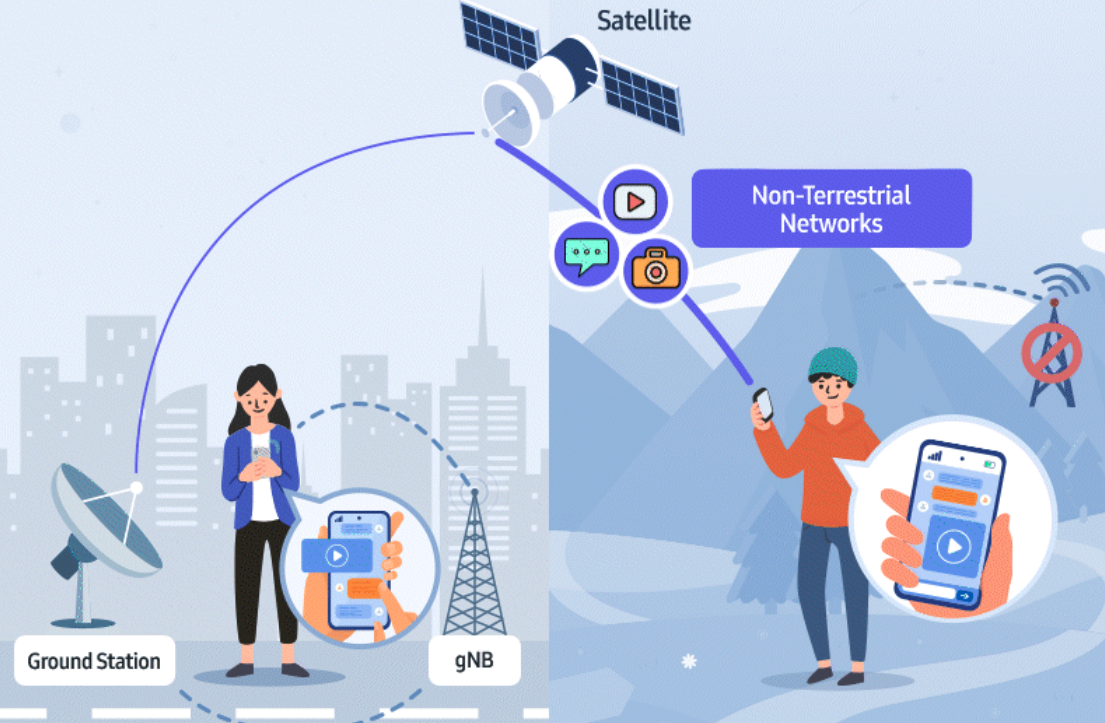
The term NTN (Non-Terrestrial Networks) refers to telecommunications networks that operate beyond the Earth's surface. This includes the use of satellites in low Earth orbit (LEO), medium Earth orbit (MEO), and geostationary orbit (GEO), as well as high altitude stations (HAPS) and drones.
The 3GPP (the organization that defines mobile communications standards) has worked on integrating 5G NTN to make it compatible with conventional devices, so that mobile phones can connect directly to satellites without the need for additional hardware .
Advantages of 5G NTN
The use of non-terrestrial networks offers multiple benefits that will impact both individual users and industrial sectors.
- Global coverage: It will enable connection at any point on the planet, including rural, maritime and air regions.
- Low latency: Thanks to low orbit satellites (LEO), latency is drastically reduced compared to traditional satellites.
- Greater resilience: It complements terrestrial networks, ensuring connectivity in the event of natural disasters or failures in terrestrial infrastructure.
5G NTN Use Cases
5G NTN technology will transform various industries. Some of the most prominent applications include:
- IoT and smart cities: Constant connectivity for sensors and IoT devices anywhere.
- Transport connectivity: Crucial for aviation, maritime navigation and autonomous vehicles.
- Emergency management: Communication guaranteed in natural disasters and hard-to-reach areas.
5G NTN Challenges
Despite its advantages, this technology faces significant challenges:
Radio spectrum optimization: The availability of suitable frequency bands is key to efficient operation.
Cost reduction: Manufacturing and launching satellites remains expensive, which may affect their widespread adoption.
Interoperability: Full compatibility between terrestrial and satellite networks is required to ensure uninterrupted connectivity.
Everything indicates that the commercial deployment of 5G NTN will become a reality in the coming years, improving global connectivity and expanding communication possibilities in key sectors.


Passionate writer about the world of bytes and technology in general. I love sharing my knowledge through writing, and that's what I'll do on this blog, show you all the most interesting things about gadgets, software, hardware, tech trends, and more. My goal is to help you navigate the digital world in a simple and entertaining way.