- APT 3.0 introduces a line interface commands clearer and with colors to facilitate reading.
- A new package resolver improves dependency management thanks to its backtracking algorithm.
- Includes new tools for advanced users, such as history comments and support for modernizing fonts.
- It is available in the unstable branch of Debian and will be part of Debian 13 and Ubuntu 25.04.

APT 3.0 is now a reality. The preferred package manager in Debian systems and its derivatives (such as Ubuntu and Linux Mint) has received a major update that modernizes both its appearance and internal workings.
While its use remains primarily terminal- based , this new version promises to make life easier for both experienced users and system administrators who interact with the command line daily. Let's take a closer look at what this update brings. Additionally, if you'd like to improve your console skills, you can find out how to use Termux.
A clearer and more user-friendly command interface

One of the most noticeable changes in APT 3.0 is the redesigned output . Information is now displayed in aligned columns, making it easy to distinguish the different fields that make up the package list. If you're interested in improving your terminal skills, feel free to read about printing from the Linux terminal.
In addition, a color-coded system has been implemented to quickly identify the actions the manager is performing. For example, installations are highlighted in green, while deletions are marked in red. This improvement is not only aesthetic but also enhances the immediate understanding of what is happening within the system.
The progress bar has also been tweaked, using Unicode blocks that smooth the visualization of progress during tasks like downloading or installing packages. And to maintain clarity, the default output is less verbose , showing only the essentials.
Smarter dependency solving with Solver3

APT 3.0 introduces a new engine for resolving software dependencies known as Solver3. This component works with a backtracking algorithm , allowing it to evaluate multiple possible combinations when installing or updating software.
Thanks to this advanced architecture, it can make more informed decisions, even resorting to versions not considered candidates if doing so resolves a conflict more effectively. This reduces the need for user intervention and improves operational stability. If you'd like to learn more about removing unnecessary packages, you can research effective uninstallation methods in Linux.
The command autoremove It has also been modified with a more decisive behavior. Now more forcefully removes packages that are no longer needed, preventing the system from accumulating residual software.
New tools for experienced users
Designed for those who manage complex environments, APT 3.0 integrates advanced options that expand control over the manager's behavior.
- Added the ability to filter package listings by specific version of the system using
--target-release. - Now you can add comments to the actions performed by option
--comment, making it easier to track changes in controlled environments. - Long listings are automatically paginate Git-style, making it easier to navigate between them from the terminal.
- Information about priorities is displayed pinning directly from
apt show --full, allowing you to fine-tune the installation of packages.
With these additions, APT is better suited to the needs of those seeking detailed control over their operations. If you'd like to learn more about managing sessions in the terminal , you can check out our complete Tmux guide.
Internal improvements and modernized compatibility
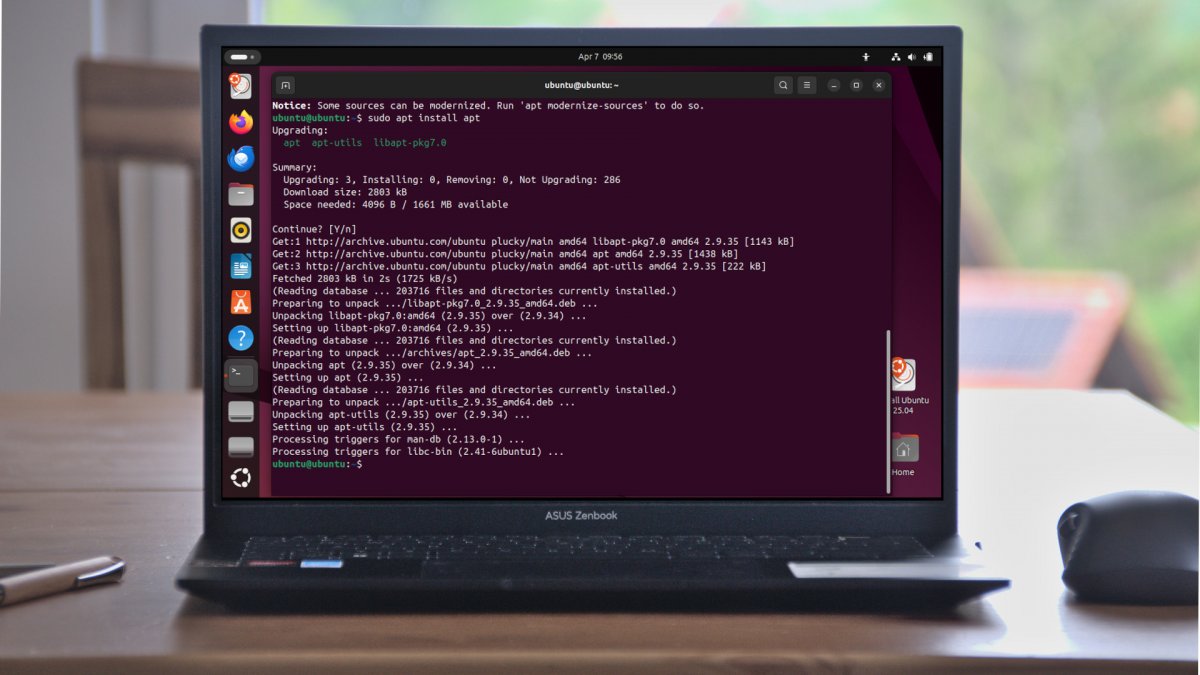
APT 3.0 doesn't just bring visible improvements. It also includes significant changes that affect performance and security:
- Manager Leave GnuTLS and gcrypt behind and switch to OpenSSL, which improves cryptographic support and simplifies maintenance.
- GnuPG has been replaced by Sequoia, a more modern and compatible alternative.
- There is a new order called
modernize-sourcesthat automatically updates repository files to use the most recent recommended formats. - Removing obsolete remote methods such as FTP, RSH and direct use of SSH during source management.
- There is now support for uncompressed indexes on local mirrors (using
file:/), which can improve access speed on internal networks. - The calculation of the space used by the cores has been improved
/boot, a valuable point in systems with limits of storage.
These advancements solidify APT's position as a manager prepared for the current and future demands of the Linux ecosystem. You can also learn how Wine 10.1 has improved gaming on Linux , reflecting the ongoing effort to modernize this environment.
More complete documentation and translations
The project has strengthened its commitment to the community by adding improvements in accessibility and understanding:
- Updated translations in several languages, including Spanish, Dutch, Catalan, French, German, Romanian, and Brazilian Portuguese.
- Internal documentation has been polished to improve understanding of each option and behavior, both by developers and users.
This makes APT more useful in multicultural contexts, better adapting to a global user base. If you're interested in distributions, you can read about how Pop!_OS is based on Ubuntu.
Current availability and compatible systems
APT 3.0 is now available in the Debian unstable (Sid) branch , accessible to those who wish to try it without waiting for the stable version. As usual, caution is advised when installing this type of package on production systems.
It is planned to be the default desktop environment in Debian 13 “Trixie” and Ubuntu 25.04, which is scheduled for release throughout 2025. The first versions already include this edition or variants derived from its development phase.
The release of APT 3.0 has been dedicated posthumously to Steve Langasek , a developer with a long career in Debian and Ubuntu, recognized for his work on fundamental system tools.
With this new version, APT positions itself as a renewed and robust part of the package management system for DEB-based systems. Visual improvements, along with technical advancements and features tailored to current needs, aim to make APT more accessible and flexible for use in both personal and corporate environments.

Table of Contents
