- IoT Edge brings processing closer to the source, and Azure IoT Edge implements it with modules, runtime, and cloud management.
- Allows IA Local, low-latency decisions and bandwidth savings with Docker containers.
- Enhanced security through data minimization and edge controls, complementing the cloud.
- Use cases: industry, mobility, buildings; edge-cloud balance strategy.
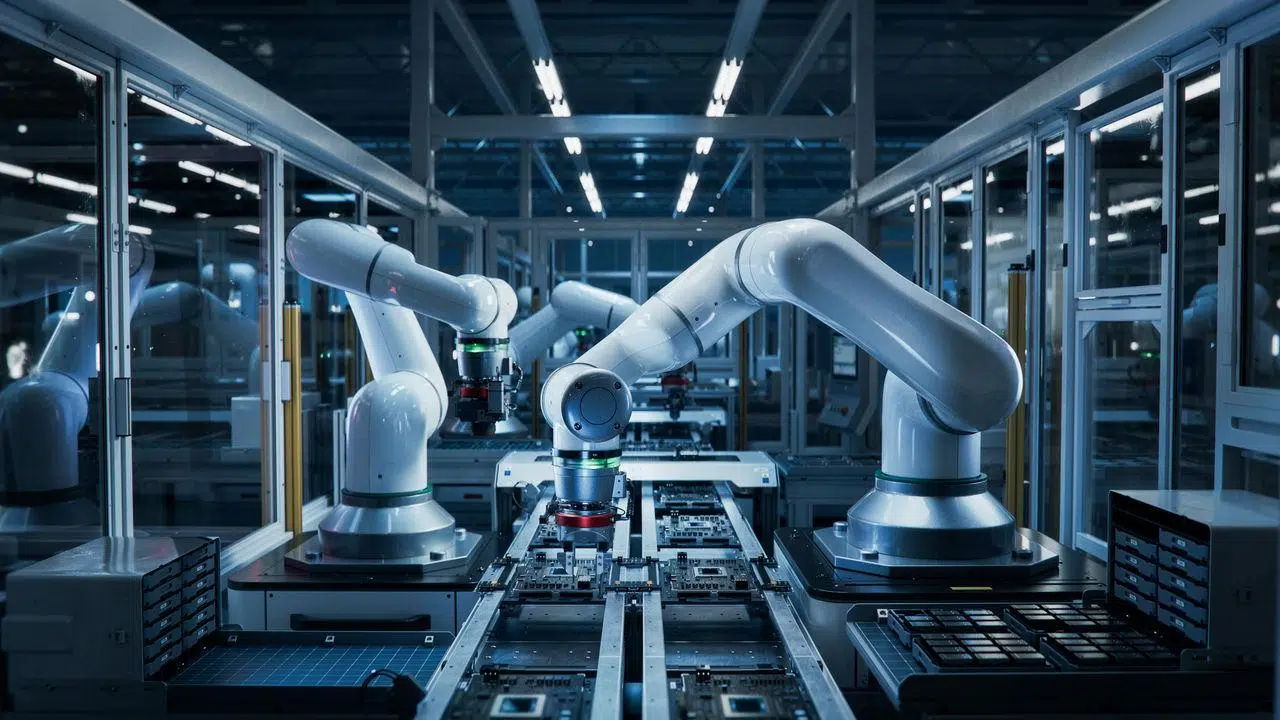
If you've ever wondered what's behind bringing processing closer to the source of your data, here's the straightforward answer: IoT Edge is the idea of moving computing out of the cloud and onto the device itself or a nearby gateway. This reduces wait times, saves bandwidth, and allows for decision-making even without a connection. In the Microsoft ecosystem, Azure IoT Edge is the platform that embodies this vision, and its current version (IoT Edge 1.5) brings analytics and logic that previously resided exclusively in the cloud to the ground.
In short, devices generate a flood of information that doesn't always make sense to upload raw to the internet. By running containers at the edge, data is cleaned and aggregated, AI is run locally, and only what provides real value is sent to the cloud. This results in very low latency, reduced bandwidth consumption , and operational resilience that's invaluable when working in remote areas or with intermittent connectivity.
What is IoT Edge and how does Azure IoT Edge fit in?
IoT Edge is a form of edge computing designed to process information close to its source: sensors, machines, cameras, or any other device. In this context, Azure IoT Edge is a device-centric runtime environment that allows you to deploy, run, and control Linux workloads (and also custom code) within containers. Its mission is clear: to bring analytics and decision-making to the factory floor, the street, or the vehicle, instead of always relying on the cloud.
Furthermore, Azure IoT Edge is a capability of Azure IoT Hub, so it inherits its scalability and integration with native Azure services . This means you can centralize control from the cloud while distributing execution to thousands of devices deployed worldwide without losing visibility or traceability.
Main components of Azure IoT Edge
To understand how Azure IoT Edge works, it's helpful to break it down into three parts. Together, they form a coherent system for orchestrating complex solutions without overwhelming you. These parts are: modules, runtime, and a cloud management interface.
- IoT Edge ModulesDocker-compatible containers that can include Azure services, third-party software, or your own code. They are the deployment unit and where your business logic, AI, flow analysis, or whatever you need runs.
- IoT Edge RuntimeThe engine that resides within the device and installs, updates, monitors, and maintains the modules. It also manages local and cloud communication.
- Cloud-based interface: the control plane (via Azure IoT Hub and integration with Azure IoT Central) to configure loads, push them to groups of devices, and monitor their status from a single location.
A key advantage is that the logic is packaged as standard containers, which facilitates portability and repeatability. In addition, there are pre-built module images from partners and the Microsoft Artifact Registry that allow you to accelerate development and deployment without starting from scratch.
IoT Edge modules and data pipelines
Modules are small pieces of software that work as a team. You can chain several together to create a processing pipeline : one ingests and normalizes data, another detects anomalies, another groups data, and finally, one publishes only what's relevant. Because they're containerized, they're updated with version control, and you can revert to the previous version in case of problems, which adds a layer of reliability.
One particularly powerful aspect is edge AI: services like Azure Stream Analytics or Azure Machine Learning can be run locally using IoT Edge modules, with the advantage of operating offline for extended periods. And if you prefer not to rely on Azure services, that's fine too: the platform allows anyone to create their own AI modules for specific uses.
Want to bring your code to the devices? You're covered. Azure IoT Edge uses the same programming model as the rest of Azure IoT, so you can reuse logic across the cloud and the edge. Windows and Linux (including Windows 11 IoT ) are supported, along with languages like Java, .NET Core 3.1, Node.js, C, and Python , so teams work with familiar tools and accelerate delivery.
IoT Edge runtime: features and hardware options
The runtime system residing on the device is responsible for ensuring everything runs smoothly. It handles installing and updating modules, maintaining security standards, automatically starting necessary processes, and reporting status to the cloud so you can see what's happening in the field without having to travel.
- Install and update workloads directly on the device.
- It maintains the platform's safety principles at the edge.
- Ensure that the modules are running and healthy.
- It reports to the cloud for remote monitoring and alerts.
- The Orchestra communication between modules, between lower-level devices and between the device and the cloud.
Another of its strengths is its flexibility. It works on a huge range of hardware : from modest Raspberry Pi 3-class devices or even smaller ones , if the data volume is low, to industrial servers for very demanding workloads. This way you don't oversize or undersize.
Cloud-based management and monitoring
Managing millions of different devices, scattered across geographical locations and with varying lifecycles, can be a real headache. That's why the Azure IoT Edge cloud interface, integrated with Azure IoT Central, acts as a scalable control plan to orchestrate everything with consistent templates and rules.
- Define and parameterize a specific load for a type of device.
- Deploy that load to a set of devices with dynamic criteria.
- Monitor behavior in the field and detect deviations early.
Remote administration includes update policies, version control, environment segmentation, and metrics collection, reducing on-site visits and accelerating incident resolution without disrupting operations.
The goal of IoT Edge: proximity, responsiveness, and reliability
The goal of IoT Edge is simple: to bring computing power and storage to data sources to improve response times and reduce latency. Edge devices reside close to the user or sensor, minimizing network traffic and improving the user experience with fewer waits and interruptions.
In scenarios where the IoT device has limited resources, an edge node takes over processing and returns results instantly. This way, the end device doesn't need to compute everything itself, yet fast , local decisions are still made that make a real difference.
IoT vs. IoT Edge: What does each one do?
It's important to distinguish between the IoT device that captures data and the edge device that processes it. If the former lacks sufficient processing power, it sends information to a nearby edge node for processing and timely response. In this case, IoT and IoT Edge share the workload.
There are times, however, when the IoT device itself can do everything locally: then the “edge” and the “device” are the same thing, and the terms are used interchangeably. It all depends on the computing capabilities and latency requirements of the use case.
Why is it important to adopt IoT Edge?
Many processes require near-instantaneous response. If you wait to send data to the cloud and receive a response, you're already too late. Edge devices meet the demands of low latency , operate on-site, and remain operational even if the connection fails for hours or days.
Furthermore, by preprocessing and compressing data at the edge, you reduce traffic to the cloud and pay less for storage and data output. This intelligent filtering prioritizes what truly matters and lowers operating costs without sacrificing analytical capabilities.
Classic IoT architecture and the role of the edge
Traditional IoT architecture is typically described in four distinct layers. IoT Edge fits particularly well into the preprocessing layer, where decisions are made about what data is retained, what is aggregated, and what is uploaded to the cloud for further analysis. This separation of responsibilities simplifies end-to-end scalability .
- Sensor layer: where the source data is captured, a typical mission of the IoT device.
- Data acquisition layerIt aggregates information from multiple sources and securely transfers it to the processor. This is where DAS and gateways typically shine.
- Preprocessing layerBasic data is cleaned, transformed, and analyzed to reduce its volume. It's the natural place for IoT Edge devices.
- Cloud or application analytics layerThe cloud delves deeper into complex models, offers storage, and makes results available to apps and users.
IoT Edge Security: Side Effects and How to Address Them
Moving processing to the edge impacts security in several ways. On the positive side, local preprocessing allows for data minimization : less sensitive information leaves the network, reducing the risk of data leaks. Furthermore, filtering at the source reduces the exposure of unnecessary data.
Decentralization also spreads the risk: if one node fails, the others continue to function. The downside is that protecting many dispersed devices is more complex, because a traditional perimeter is insufficient . Strong identities, encryption, secure modules, and robust update policies are essential.
To compensate, IoT gateways and edge security solutions bring protective capabilities to the device itself: inspection, access control, anomaly detection, and local response. This identifies and blocks threats close to the source , improving the overall security posture.
Machine learning at the edge: from pattern to decision
Machine learning (ML) has become fully integrated into edge runtimes and modern IoT apps. An ML API or model can observe data from an edge device, recognize patterns in inputs, usage habits, or environmental conditions, and thereby anticipate the next action . This speeds up the response because it allocates resources in advance.
Imagine a factory with hazardous areas. If a set of sensors detects that, statistically, when someone passes within a certain critical distance, they are very likely to enter the risk zone, the model can prepare the machine to stop before it happens. Using reference values (for example, safety radii and activation thresholds), the system adjusts the sequence of alerts and stops to minimize accidents without unnecessarily slowing down production.
Featured Use Cases
Residential communities and connected buildings
Edge computing also has an impact on everyday life. Solutions like Link IoT Edge help with smart parking, access control, and surveillance. Residents and administrators can control devices from an app, improving the experience and efficiency of facility management.
- Connection to local systemsEdge nodes communicate with existing subsystems and enable custom integrations.
- Highly customizableEach neighbor adapts the indoor and outdoor preferences to their liking.
- AI-powered securityFacial recognition and video analytics running at the edge for faster responses.
Industry (IIoT) and predictive maintenance
In industrial environments, sensors placed at critical points on heavy machinery provide data to predict failures and plan maintenance. The edge filters and evaluates signals on-site, and the cloud trains models with extensive historical data, closing the loop of continuous improvement.
Autonomous vehicles and mobility
An autonomous car can't wait for the cloud to tell it whether to brake or turn. It needs its own reflexes: on-board computing that combines sensor data and makes immediate decisions . The cloud provides the "big brain" to train models; the edge, the reflexes to drive safely.
Cloud and edge: complementary, not rivals
It's not about choosing between cloud and edge. The cloud is ideal for training complex models, storing large volumes of data, and orchestrating fleets. The edge, on the other hand, provides fast responses and robustness in the field. Think of the cloud as a high-capacity brain and the edge as reflexes that act in milliseconds.
Strategy and practical balance
A good IoT Edge strategy seeks the optimal balance between what runs on the device and what is left to the cloud (public or private). It makes sense when you need to make decisions at the source , want to optimize data flows to the cloud, and require autonomy in locations without reliable coverage.
- Make fast decisions as close to the source as possible to avoid network latency.
- Optimize the upload sending only aggregated and contextualized data.
- Having offline analytics available when connectivity is irregular or non-existent.
- Better manage the lifecycle with secure remote updates at the edge.
There are countless real-world examples. In onshore oil and gas, IoT Edge gateways allow for remote monitoring and adjustment of pumps, dispatching technicians only when the system indicates it's necessary. Solutions like Schneider Electric's Realift, powered by Microsoft Machine Learning , have demonstrated clear improvements in efficiency and travel costs.
In terms of sustainability, microgrids rely on local analytics to balance generation, storage, and consumption. Devices like Smart Panels facilitate distributed energy management and make buildings more efficient. Implementations in corporate headquarters and cities like Milford, Connecticut, demonstrate how EcoStruxure™ microgrids support critical infrastructure and save energy.
Even in distributed manufacturing, companies like Entrade are building micro-plants that convert biomass into clean energy and managing their assets with edge tools and centralized monitoring, combining the best of the edge and the cloud.
Market and trends: why this is getting bigger
The number of connected devices continues to grow. Recent reports point to figures of around 18.000 billion IoT devices in the short term, which demands significantly more processing at the edge to avoid overloading networks and internet backbones with unnecessary traffic.
The edge computing market is also taking off: analyses from firms like Fortune Business Insights estimate that it will grow from just over ten billion dollars a few years ago to much higher figures in the medium term, with remarkable compound annual growth rates. This is further supported by the forecast from consulting firms like Gartner , which have long anticipated that most data will be processed at the edge.
Local implementation and operation at scale
Deploying Azure IoT Edge on-premises helps break down silos and consolidate operational data at scale in Azure, without sacrificing local sovereignty when needed. You can publish and manage cloud-native workloads (AI, Azure services, or your own software) to run on devices, with secure, remote control.
This approach allows you to reduce cloud spending by sending smaller volumes of higher-quality data, while simultaneously enabling devices to react faster to local changes and remain operational even during extended periods of offline activity . Combining these two approaches maximizes the return on your technology investment.


Passionate writer about the world of bytes and technology in general. I love sharing my knowledge through writing, and that's what I'll do on this blog, show you all the most interesting things about gadgets, software, hardware, tech trends, and more. My goal is to help you navigate the digital world in a simple and entertaining way.