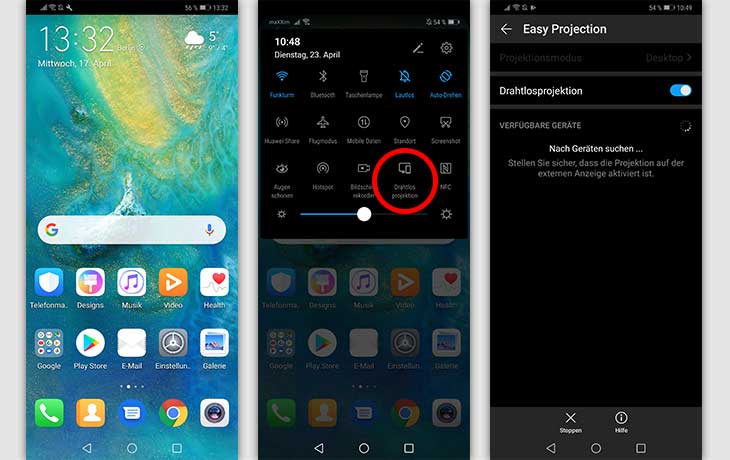
Mirroring your Android device's screen is possible from many sources, such as Google smart speakers , Nest Wifi, and Chromecast devices. If you're looking for an app that can mirror your Android phone's screen without a cable or other hardware , this is the app for you. The following article will explain the differences between screen mirroring methods on Android. This is the simplest and most straightforward option.
Google Home is a third option for mirroring your TV screen. Google Home works on Android phones to mirror your content. There isn't one app that's perfect for all purposes. Google Home is a great option if you want to easily mirror your Android phone's screen. The Google Home app is compatible with Android TVs . It will allow you to view your smartphone screen on a larger display.
Mobizen is a great alternative to set up another screen. Mobizen will display your Android screen on your TV or computer. A Chromecast is required to use Mobizen with external displays. Screen mirroring is similar on all Android devices. Wi-Fi must be enabled at the top.
Smart Mirroring: What is it for?
You may have heard of Android Smart Mirroring if you have an Android phone. This technology lets you stream content directly from your smartphone to a TV. You can view pictures, videos, and download movies. Mobile games can also be played on your TV using an Android phone. For those who like to share the latest TikTok trends with their friends, this feature can be very useful.
This feature can be used on many other devices, such as Blu-ray players and cable/satellite boxes, media streamers (laptops , PCs), or even laptops. Android phones can wirelessly display presentations saved on them. You can't use your Android device for other tasks, but you can share the screen. When you touch the screen, the screen mirroring function will automatically stop. If you want to share the screen with other devices, you can download the ApowerMirror app from the Play Store.
Another great feature is screen mirroring. You can project your smartphone screen onto a larger screen using this technology. Screen mirroring can be used to view what is on your smartphone. You can connect your Samsung smart TV to your phone using Wi-Fi, HDMI, and Bluetooth. Samsung 2020 models have screen mirroring built-in. All you need to do is simply tap your smartphone on your TV to view the content.
Samsung Android Smart Mirroring: What does it mean?
Samsung touchscreens do not have the Smart Mirroring feature. Instead, Samsung has renamed Smart View to this feature. This feature is located in the notifications menu. To access Smart View, open the expanded notifications menu from the home screen. To activate Smart Mirroring, tap the icon. You can now view your PC on your Samsung TV. On both your Samsung TV and PC, you will be able to see notifications. You will then be able to view your TV screen.
To begin, you need a compatible Smart TV . Smart View lets you check your TV's compatibility. Smart View will automatically mirror your screen if it's compatible with the TV. If Smart View doesn't work with your TV, ApowerMirror, another screen mirroring program, is available. This app lets you display your Android smartphone's screen on your TV. It also supports files and videos. This function can be performed from a computer.
Is it possible for someone to mirror my screen?
A screen sharing app, such as Inkwire, is a good way to share your screen with others. You can see your friend's phone and theirs on this app. Each device must be connected to the same Wi-Fi network. You can start seeing your friend once you have the app downloaded. You need two Android phones connected to the same Wi-Fi network to be able to share your screen.
You can prevent someone from taking screenshots of your phone by going to the Control Center. Select the “Never” option. Then, click on the “Don’t take screenshots” option to disable it. You can also disable remote screen mirroring features by clicking the “Don’t mirror” button in the Control Center. You should disable the screen mirroring feature on your phone when you are not using it.
What exactly is smart screen mirroring?
Android users will soon have the ability to share their screen as an added feature. Samsung has made it easy to share content from its smartphones and TVs. Samsung tablets and smartphones can mirror your TV screen to watch movies and TV shows. Simply select Smart View in your settings and pair your Samsung TV with it. This will allow you to watch content directly on your TV, without the need for a cable.
First, connect your Android smartphone to the Samsung TV to mirror content. If your TV supports Wi-Fi Mirroring, this is possible. Also, the Samsung phone and the TV must be connected to exactly the same Wi-Fi network. Simply open Quick Settings on your smartphone and click on the Smart View tab.
Is screen mirroring possible without Wi-Fi?
Screen Mirroring works without Wi-Fi for TVs. Yes, it can, as long as the receiving device is compatible with Miracast technology. Miracast technology is an alternative that allows two-way communication between the sending and receiving devices. Miracast may eventually replace Wi-Fi and other wired connections. Until then, it will only work with compatible TVs. This technology is compatible with most smart TVs.
Some TVs support AirPlay in peer-to-peer mode. But not all. Apple AirPlay is supported on all devices. However, not all Roku and Apple TVs support it. Use an Apple Lightning connector for best results. You can use this technology on many other displays. Screen Mirroring can also be used on some other devices.
To connect to your TV, you can use a USB dongle . This can be especially useful for those who need faster internet. You should also make sure your TV has a USB port. Mirroring will work if your TV has one. You can also connect an Android device's charging cable to the TV. If you don't have Wi-Fi, this is an excellent solution.
Is screen-mirroring possible via Bluetooth?
Would you like to be able to view your Android phone's screen from another device? If you answered yes, then your Android device may be Bluetooth enabled. Screen mirroring can be a wonderful way to share content, but there are some limitations. Your Android device may not be able to be configured to communicate with another Android device. There are many ways to get the most out of your Android device.
Make sure that both your tablet and phone support Bluetooth. Next, turn on Bluetooth on your Android tablet and TV. You can then pair your devices by following the on-screen prompts. An older device may not support Airplay Peer to Peer. You will need to connect to a Wi-Fi network to use it. Once the device is paired, mirror the content to your TV.
To share your phone's screen with your TV, you need to mirror your Android screen. An HDMI cable is required to connect your phone to your TV. Screen mirroring may vary by device. On some devices, you can mirror your phone's screen in landscape mode. You can also mirror your phone's screen in portrait mode. If you want to connect two devices with an HDMI cable, make sure both are enabled in your phone's settings.
Screen mirroring is possible with the Google Home app. The Google Home app is free and compatible with all Google devices. Google Home can be installed on Android devices and used to stream to your TV if you don't have a Chromecast. While it's not a replacement for the Chromecast, it's worth the money. While testing both the Chromecast and Google Home, we didn't experience any significant issues.
Find out more about this:
3.) Android versions
4.) Android Guides

My name is Javier Chirinos and I am passionate about technology. Ever since I can remember, I have been interested in computers and video games, and that passion has turned into a job.
I have been publishing about technology and gadgets on the Internet for over 15 years, especially in mundobytes.com
I am also an expert in online marketing and communication and have knowledge in WordPress development.