- Managing multiple Java versions in parallel allows each application to adapt to its own pace without blocking modernization.
- The key to avoiding compatibility errors is to properly manage dependencies: use BOMs, analyze trees, and apply shading when necessary.
- Specific tools (such as those in the Azure SDK) and fat JARs help resolve conflicts in managed environments like Spark or Functions.
- Solutions like Webswing allow you to modernize legacy Java desktop applications without rewriting them from scratch, reducing technology debt.
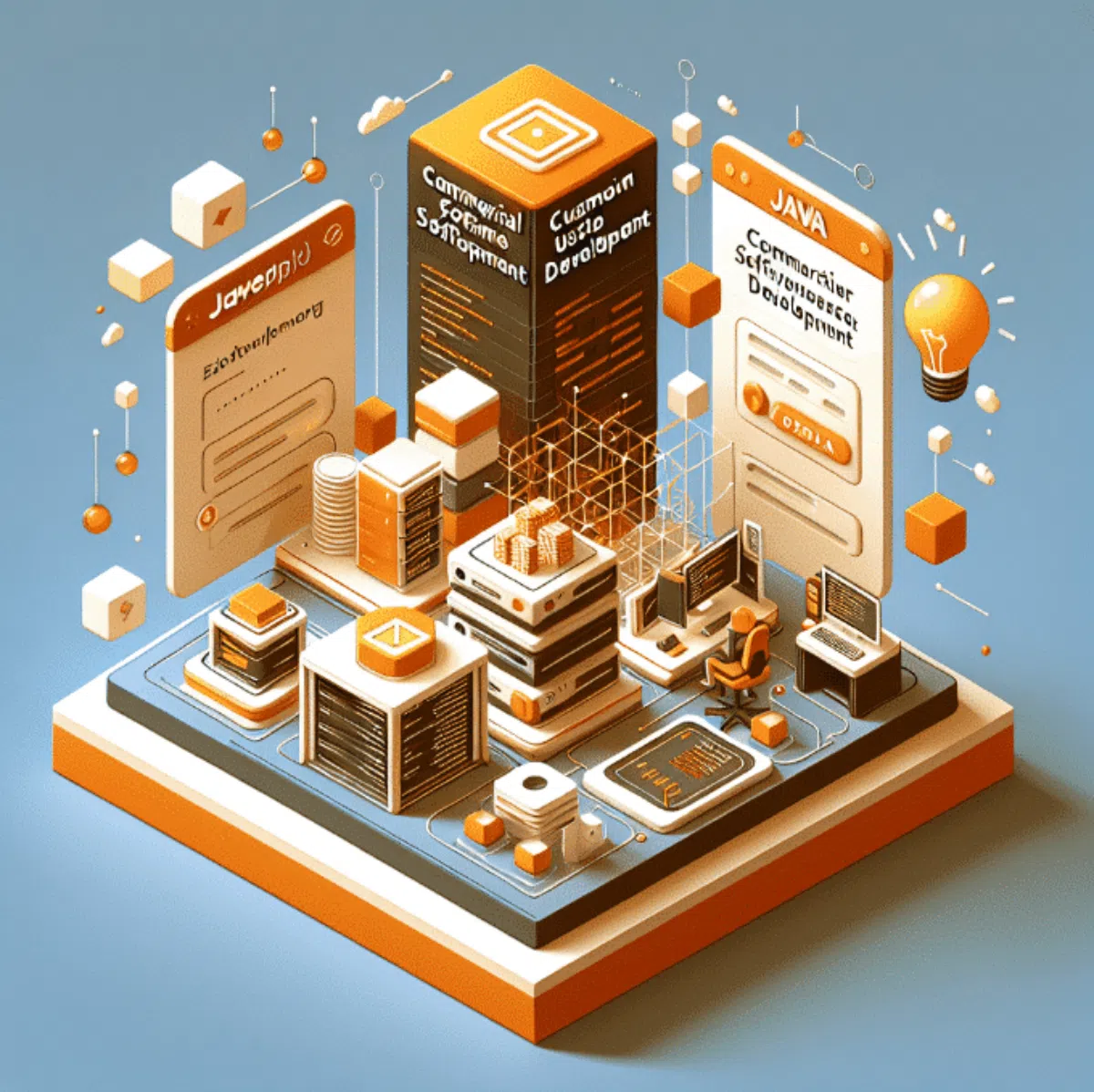
If you've been maintaining enterprise applications in Java for years, this situation will surely sound familiar: projects stuck on Java 8, outdated libraries, and the fear of breaking everything during an upgrade . Meanwhile, modern versions of Java and new frameworks continue to evolve, stricter security requirements emerge, and integrations with cloud services become increasingly complex.
The result is a perfect storm of compatibility issues between Java versions and enterprise applications : runtime errors, dependency conflicts, environments where multiple JDKs coexist, business-critical Swing desktop applications, and teams unsure whether to upgrade, migrate, or leave things as they are. In this comprehensive guide, we'll calmly break down, with practical examples, how to strategically address this scenario.
Why sticking with Java 8 can be costly
In many corporate environments, the mindset has taken hold that Java SE 8 is "sufficient" because it's an LTS release and "works." New projects are even launched with Java 8, ignoring the fact that Java 11, 17, and 21 also have long-term support and offer significant improvements in performance, security, and productivity for developers. It's also important to know how to install the Java Runtime, JRE, and JDK on your systems to plan migrations with confidence.
The problem is that this initial convenience eventually turns into a technological debt that's difficult to repay . The longer you delay migrating to a modern version, the more complex and costly it becomes: you accumulate outdated APIs, frameworks that stop supporting Java 8, DevOps tools that no longer test with that JDK, and an ecosystem that evolves without you.
It's not just about having an "old" version; you're missing out on security patches, performance improvements, and new language features that greatly simplify your code (vars, records, garbage collection improvements, new concurrency APIs, etc.). Leaving a critical platform unupdated for years is like neglecting to take your car to the mechanic: it might work, but you're taking on increasing risk each time.
Furthermore, new applications that start on Java 8 inherit that burden from the very beginning: when you want to make the leap in a few years, the impact will be greater , and you will probably have to consider a much more aggressive modernization than you would have needed today.

Upgrade vs. Migration: Two Types of Changes in Java
To fully understand compatibility decisions, it's important to distinguish between updating and migrating in the Java world. Installing a patch is not the same as jumping from one major version to another, and conflating these two concepts often leads to confusion in businesses.
When we talk about updating , we mean moving, for example, from Java 17.0.1 to 17.0.2, or to a Java 8 security update. It's a minor change, focused on security patches, bug fixes, and small improvements . You should always perform this type of update as soon as the vendor releases it, because it reduces risk without introducing significant breaking changes.
In contrast, a migration involves a major version upgrade: for example, from Java 8 to 11, from 11 to 17, and so on. These upgrades bring new language features, revised APIs, significant performance improvements, and important internal changes. However, they also mean the removal of older functionalities, changes in the support for certain tools, and a loss of compatibility with some components . This carries a higher risk and requires careful planning.
The key for businesses is to define a clear strategy for when to update and when to migrate , based on the type of application, its criticality, and the pace of development. A legacy app that hasn't changed in five years is not the same as a platform that is constantly evolving.
Multiple runtime environment strategy: each app with its own JDK
For a long time, it was thought that a server could only have one version of Java for everything . This led to rigid policies of "either all applications migrate at once, or none migrate." Today, this mindset no longer makes technical sense.
Modern servers have more than enough memory and storage, containers simplify isolation, and tools like JLink or Java Packager allow you to package a Java runtime with each application . In other words, each service can have its own version of Java without causing operational problems, or you can even choose to virtualize enterprise applications when needed.
This opens up a much more flexible scenario: you can have a legacy application in Java 8, another stable one in the latest LTS version, and a new project in the most recent version , all coexisting in the same physical or virtual environment. The important thing is to ensure that all the versions you use have active support and security patches.
This multi-runtime approach makes it easier to balance two seemingly opposing goals: maximizing the lifespan of existing applications and allowing development teams to leverage new language features for new developments. There's no longer a need to migrate the entire application portfolio to each new JDK version at once.
Which version of Java to choose depending on the type of project
Once you understand that you can use multiple JDKs simultaneously, the next step is to decide which version best suits each type of application . Here you can follow some sensible practical guidelines, especially for enterprise environments with many systems.
For new, long-term projects (those not expected to go into production for a year or more), it usually makes sense to use the latest available version of Java, even if it's not an LTS release . By the time the project reaches production, there will likely be a new LTS release to align with. However, it's advisable to verify beforehand that the libraries and tools you intend to use are compatible with that version of the JDK.
For smaller, newer projects or those with a quick launch , it's advisable to choose the latest LTS version that has been on the market for at least a few months . This way, third-party libraries and commonly used frameworks will have had time to adapt, and you'll have fewer compatibility surprises.
For applications under active development , which receive new features continuously, it makes sense to plan the migration to each new LTS within two years of its release . This allows you to take advantage of performance improvements and new capabilities without accumulating too much debt between versions.
In stable production applications with minimal changes, the approach can be more conservative: keeping them on a supported LTS, updating only within the same version (patches and updates), and considering a major migration when the current version approaches the end of support or when strong security or performance requirements arise.
Typical compatibility issues: beyond the JVM version
Not all compatibility issues in enterprise Java applications stem from the JDK version. Often, the real pain arises from dependency conflicts between third-party libraries , especially in large projects that use many frameworks and SDKs (e.g., Azure SDK, cloud frameworks, logging libraries, etc.).
Build tools like Maven or Gradle resolve transitive dependencies so that there's only one version of each library in the classpath. The problem is that they don't guarantee that the chosen version will be compatible with all the modules that use it . If one framework requires a newer version and another an older one, it's enough to cause difficult-to-diagnose errors.
Incompatibilities can manifest in two ways: at compilation (missing classes or methods, and the code fails to compile) or, worse, at runtime with errors such as NoClassDefFoundError, NoSuchMethodError, or various LinkageError variants. Not all libraries strictly adhere to semantic versioning, and it's common to find incompatible changes even within the same major version.
In the context of the Azure SDK for Java , for example, problems are frequent with widely used libraries such as Jackson, Netty or Reactor, since many other parts of the ecosystem also use them directly or indirectly, generating veritable "diamonds" of dependencies.
How to diagnose dependency version conflicts
Before attempting to fix anything, it's essential to properly diagnose which libraries are causing the conflict . This is where the tools within the Java ecosystem itself make things much easier, provided you use them correctly.
A very useful first step is view the complete dependency tree of your application. In Maven you can use mvn dependency:tree (with the option -Dverbose for more details), and in Gradle the command gradle dependencies --scanThis will show you which version of each library is ultimately being included and which modules are pulling it.
For each suspect library, it's important to identify exactly which versions are being resolved and which components depend on them . In scenarios involving Spark, Flink, Databricks, or even IDEs, dependency resolution in development and production can differ, and some environments bring their own versions of certain SDKs or common libraries, adding another layer of complexity.
In the case of Azure, there is also a specific Azure SDK tool for Java build which integrates with Maven (objective azure:runand helps proactively detect common dependency conflicts. Including it in the build process allows you to catch these problems before they occur in production.
Finally, for key libraries like Jackson, Azure Core incorporates runtime detection mechanisms that throw errors like JacksonVersionMismatchError, including the actual versions being loaded into the classpath in the message. Reviewing these logs (for example, through the com.azure.core.implementation.jackson.JacksonVersion log) provides valuable insights.
Special configurations: Azure Functions, Spark, and other environments
There are platforms where compatibility depends not only on your pom.xml or build.gradle file, but also on how the environment itself manages its internal dependencies . This is the case with Azure Functions, Apache Spark, Databricks, and other systems where the runtime already includes certain libraries.
In Azure Functions with Java 8 , for example, the version of some internal dependencies (such as Jackson, Netty, or Reactor) can take precedence over those you declare . This causes version conflicts that are difficult to understand if you are not familiar with the platform's internal workings.
To minimize this problem, Microsoft recommends activate the environment variable FUNCTIONS_WORKER_JAVA_LOAD_APP_LIBS a true o 1This prioritizes your application's libraries. At the same time, it's important to keep your Azure Functions tools updated to the latest version to ensure you have access to the most recent bug fixes.
In Apache Spark (from version 3.0.0 onwards) , the framework itself includes a specific version of Jackson (for example, 2.10). Although the Azure SDK for Java supports a wide range of versions, it's relatively common for a different version of Jackson (newer or older) to be included due to the dependency resolution order, breaking that compatibility.
The strategy in these cases usually involves explicitly setting the version of Jackson compatible with Spark (and the Azure SDK) in your dependency configuration, ensuring that all relevant modules use the same version. If you're using very old versions of Spark, you might even need more advanced techniques like library shadowing.
Mitigating dependency incompatibilities: from BOM to shading
Once the version conflict has been identified, it's time to develop concrete strategies to mitigate it . In the world of Azure SDKs for Java, there are several clear recommendations that, in reality, apply generically to many enterprise projects.
The first is to leverage a Bill of Materials (BOM) from the Azure SDK . By importing the latest stable version of the BOM into your POM and eliminating the need to manually define Azure module versions, you benefit from a combination of dependencies that has already been extensively tested to avoid conflicts.
Another simple and often undervalued measure is to eliminate unnecessary dependencies . Many applications carry libraries that duplicate functionality (multiple libraries for JSON, multiple HTTP clients, etc.) without a clear reason. The more components you introduce, the greater the conflict surface, potential vulnerabilities, and support and maintenance costs.
When the problem lies with a specific library, updating it to a newer version compatible with the rest of the ecosystem can help. This not only resolves the conflict but also provides security and performance improvements, as well as bug fixes. What you should avoid, as much as possible, is downgrading the Azure SDK or other key components , because you could uninstall important fixes.
If after all this you still can't find a version set that works for everyone, then it's time to bring out the big guns: shaded libraries . This technique, supported by plugins like Maven Shade, involves including a copy of the conflicting dependency within your JAR and relocating its packages . This allows two versions of the same library to coexist without interfering with each other.
Fat JAR, shading, and compatibility with managed environments
In environments like Databricks, Spark, or some managed platforms, it makes a lot of sense to consider creating a fat JAR ; that is, an artifact that includes all (or almost all) of the dependencies that your application needs.
With a well-constructed fat JAR, you reduce your dependence on the library versions that the environment provides on its own, and you can better control which exact versions are loaded at runtimeThe Maven Shade Plugin allows you to both bundle all dependencies and relocate certain conflicting packages, for example, all com.fasterxml.jackson.
In some extreme cases, it is even necessary relocate namespaces from the Azure SDK itself (as com.azure) if the environment already includes a different version of the SDKs. It's not the ideal solution, but it may be the only way when you can't change the managed environment's configuration.
Shadowing is also useful in transitive dependency conflicts: for example, if a third-party library requires a version of Jackson that your SDK doesn't support and you can't update it, you can create a module that includes that library and shadows its Jackson so that it doesn't interfere with the rest of your application.
Another option: if your own application directly uses an older version of Jackson that you can't immediately refactor, you can shade that old version and place it under another package , while you progressively migrate the code to the modern version.
Supported versions of key dependencies: Jackson, Reactor, Netty…
To avoid surprises, it's a good idea to know which versions of critical dependencies your SDKs and frameworks support . For example, in the case of the Azure SDK for Java's azure-core module, there's a detailed compatibility table in the Maven central repository.
In general, Jackson is compatible from version 2.10.0 onwards, with several minor versions supported. For SLF4J, branches 1.7.* are usually recommended; for netty-common and netty-tcnative-boringssl-static, the 4.1.* and 2.0.* families respectively; and for Reactor, the 3.x.* family, requiring that the major and minor version numbers match those on which the specific Azure Core version you are using depends.
A highly recommended practice when working with Jackson is to consistently pin the version in all relevant modules : jackson-core, jackson-annotations, jackson-databind, jackson-dataformat-xml, and jackson-datatype-jsr310. Leaving any of them unsupported by a different version is a sure recipe for runtime problems.
In addition, many Azure SDKs are in the process of Migrate from Jackson to Azure-JSONAzure JSON is a proprietary library that doesn't rely on external components for JSON handling. This reduces conflicts but introduces a new potential error: if your environment uses an older version of Azure Core that doesn't recognize Azure JSON, using newer versions of other modules can lead to errors such as NoClassDefFoundError: com/azure/json/JsonSerializablewhich are resolved by explicitly adding the dependency to azure-json.
Understanding this compatibility map allows you to make more confident upgrade decisions and react faster when a strange runtime error appears.
Legacy Java desktop applications: Swing, JavaFX and the leap to the web
A separate chapter within Java compatibility in companies is led by legacy desktop applications based on Swing, JavaFX or applets , which many organizations continue to use for critical processes despite their age.
During Java's golden age on the desktop, numerous companies invested fortunes in graphically rich applications , deeply integrated into their internal processes. This worked very well for a while, but with the explosion of the web and mobile devices, these same applications came to be seen as a heavy burden.
Modernizing or rewriting these solutions from scratch is often expensive and risky because they embody years of business logic and know-how . At the same time, maintaining them as is means dealing with Java version compatibility issues, installation requirements on each workstation, browser security blocks , and a user experience stuck in another era.
In this context, solutions like Webswing have emerged , offering a different approach: instead of rewriting the application, it runs your Swing, JavaFX, NetBeans Platform app or even applets on a server and exposes it as a web application , without modifying a single line of the original Java code.
The immediate benefit is that users no longer need to have Java installed on their computers , nor struggle with plugins or version compatibility issues. They access it via a browser, from any device and location, while your Java business logic remains intact on the server.
Webswing versus RDP: more than just a remote window
When considering providing remote access to desktop applications, many companies turn to traditional solutions based on RDP or Citrix . These tools work, but they tend to require complex infrastructures, expensive licenses, and considerable administrative effort.
Furthermore, these remote desktop approaches do not solve the underlying problem of modernization : they simply open a window to the old application, without truly integrating the app into the modern web ecosystem or facilitating its future evolution.
Webswing takes a more modern approach to development: it transforms the desktop application into a web application accessible via HTTP , reducing operational overhead and delivering a smoother, more native browser experience. From the user's perspective, it feels much more like a modern website than a remote desktop.
Furthermore, being based on standard web technologies, it facilitates integration with other services, REST APIs, and modern JavaScript frameworks . While RDP is a "window to the past," Webswing can be the gateway to a gradual modernization strategy for your desktop Java applications.
The direct consequence is a reduction in the technological debt associated with those legacy solutions, while improving accessibility, security, and maintenance without assuming the cost of a complete rewrite from day one.
Integration with modern JavaScript frameworks and progressive modernization
Another interesting point about technologies like Webswing is that they don't just "paint" the old app in the browser , but provide a migration framework that allows you to incorporate modern web components around your legacy Java application.
This means you can combine your existing Swing/JavaFX backend and logic with a frontend in React, Vue, Angular, or Svelte , and gradually replace parts of the old interface with modern components, without a total "shutdown" or a big bang of rewriting.
In this way, your Java desktop applications not only survive in today's web ecosystem, but can evolve and thrive , integrating with the rest of your digital architecture: APIs, microservices, centralized authentication, analytics, etc.
For the company, this translates into a more reasonable route to cutting technological debt : instead of a massive and one-off investment, progress is made in phases, maintaining the value of legacy code while incorporating modern technology where it has the greatest impact (user interface, integration with other systems, mobility, etc.).
The end result is that the historical investment in Java continues to generate value in the web era, while paving the way so that, if in the future it is decided to completely rewrite some modules, the transition will be much less traumatic.
Java in modern business projects: strategy beyond the language
All of the above points to a very clear reality: Java remains one of the cornerstones of enterprise development . Large companies like Google, Amazon, Netflix, and many others use it for mission-critical applications because of its combination of robustness, performance, portability, and a vast ecosystem of libraries.
Among its most valued advantages in corporate environments are true portability (“write once, run anywhere” on the JVM) , a very active community that guarantees constant updates, and integrated security features (automatic memory management, exception handling, analysis tools, etc.).
However, in today's environment, simply choosing Java as your technology is no longer enough: defining your development, maintenance, and update strategy is equally important . Factors such as JDK version selection, dependency management, QA practices, agile methodologies, and scalability planning have a direct impact on the compatibility and lifespan of your applications.
That's why many business leaders choose to work with agencies or teams specializing in Java , with real experience in large projects, who master not only the language but also design patterns, best practices, DevOps culture and software lifecycle management in regulated and demanding environments.
An illustrative example is that of a large European energy provider who, upon discovering that its gas management system was slowing down critical operations, decided to invest in a new web platform and mobile app integrated with its subsystems . By modernizing its architecture, automating processes, and improving the accuracy of gas accounting, they achieved a 60% increase in operational efficiency and a 25% reduction in costs , in addition to gaining real-time visibility and control over their distribution.
These kinds of results depend not only on the chosen language, but also on how solutions are designed, how dependencies are managed, and how migrations and version updates are planned . Java provides a solid foundation, but strategy is what makes the difference.
Looking at the big picture, it's clear that addressing compatibility issues between Java versions and enterprise applications requires combining several elements: carefully selecting the JDK version for each project, using multiple runtimes as needed, mastering dependency management (BOM, trees, shading, fat JARs), leveraging specific tools like those in the Azure SDK, and having a clear path to modernize legacy applications, both server-side and desktop-side . With this approach, organizations can keep their mission-critical systems stable and secure while taking advantage of innovations in the Java ecosystem to continue growing and competing in an increasingly digital environment.

Passionate writer about the world of bytes and technology in general. I love sharing my knowledge through writing, and that's what I'll do on this blog, show you all the most interesting things about gadgets, software, hardware, tech trends, and more. My goal is to help you navigate the digital world in a simple and entertaining way.