- The Renfe error G001-V506 is due to an internal failure in their servers, not to the connection or the user's device.
- The issue affects the website, the app and, in many cases, also third-party platforms connected to the Renfe API.
- Official communication is scarce and unclear, while discontent grows over the duration of the fall.
- While the problem persists, the most reliable options are physical ticket offices, self-service machines and, with some nuances, alternative websites.
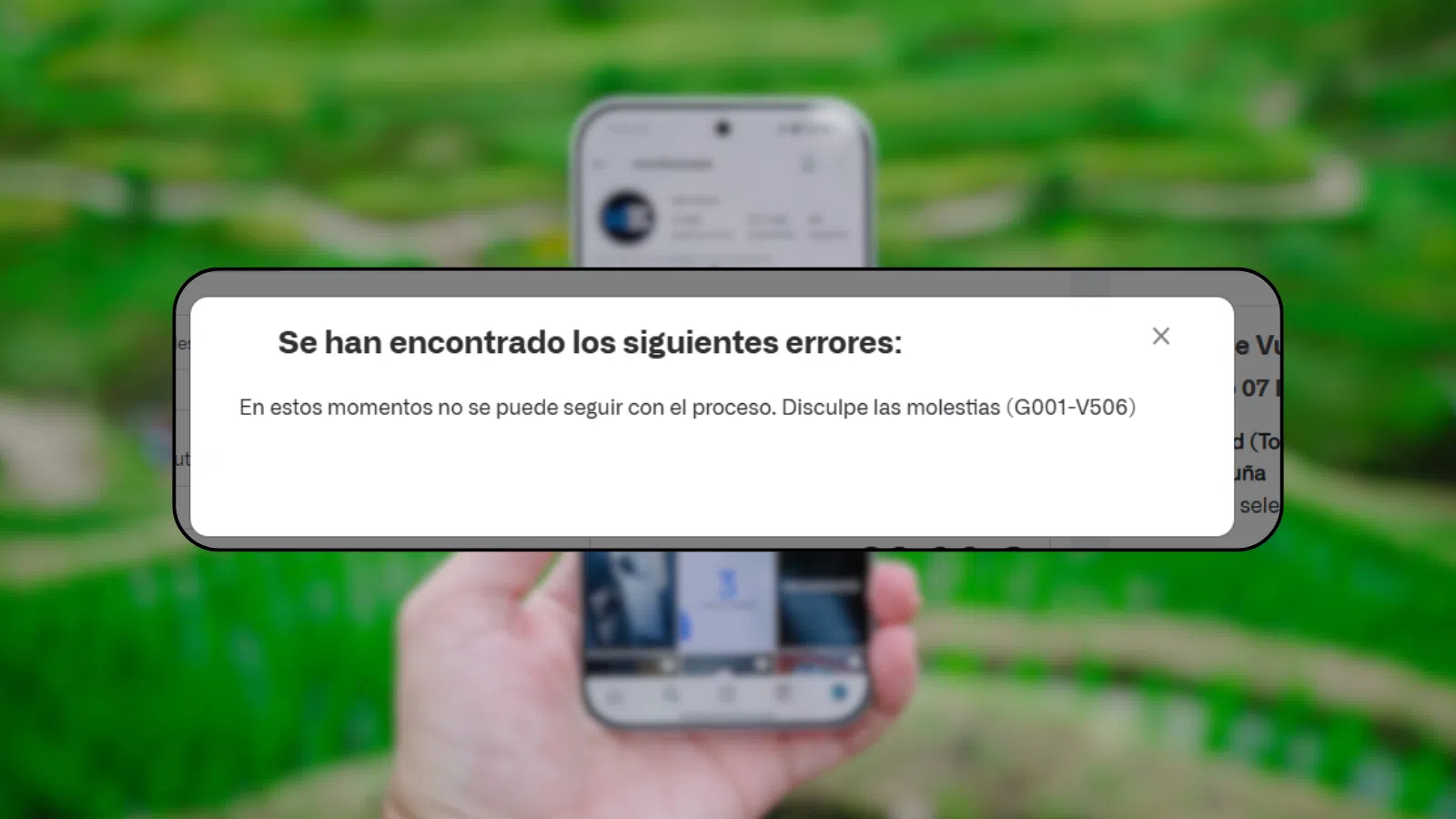
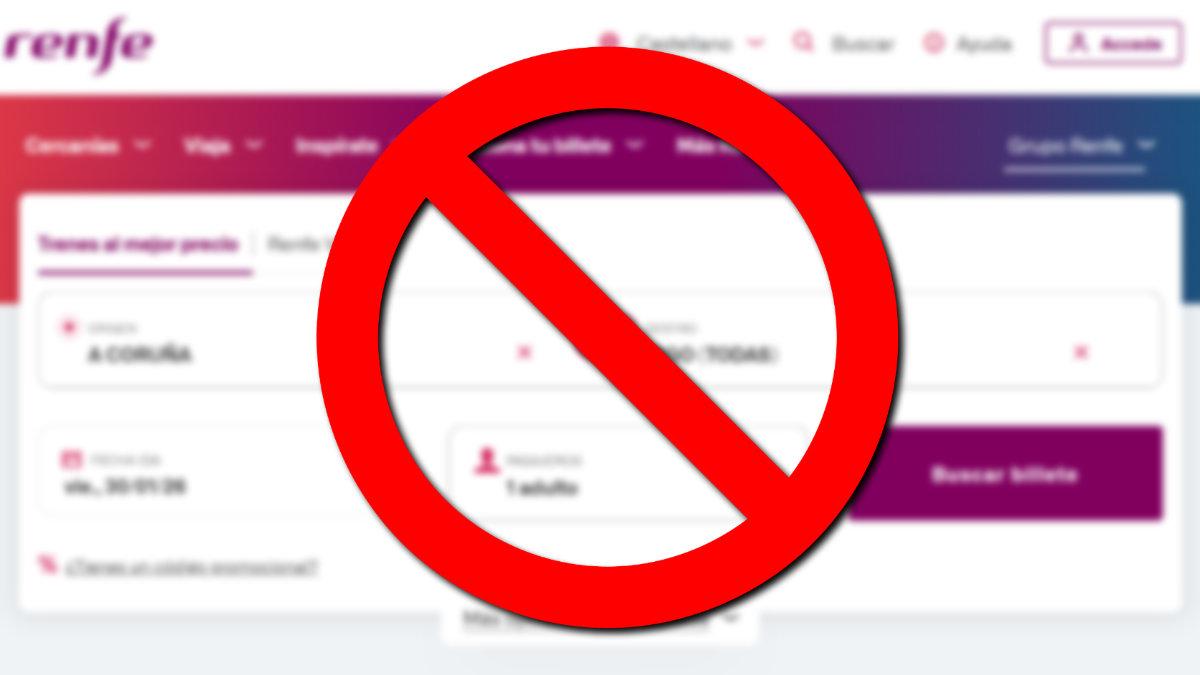
If you've tried to book a ticket on the Renfe website or app in the last few hours and received the error message G001-V506 just as you were about to pay , you're not alone. Thousands of travelers across Spain are encountering the same digital wall, wasting time and patience without anyone clearly explaining what's happening.
Far from being a problem with your mobile phone, computer, or internet connection, everything points to a serious failure in Renfe's online sales systems . While the operator provides little information and limits itself to generic responses like "clear the cache" or "reinstall the app," people are still unable to plan their trips normally.
What is the Renfe error G001-V506 and when does it appear?
The code G001-V506 is the message displayed by Renfe when, after completing the entire purchase process, the system is unable to continue the transaction . The message may vary slightly in wording, but it usually includes phrases such as: “An unexpected error has occurred. Please try again later (G001-V506)” or “The process cannot be continued at this time. We apologize for the inconvenience (G001-V506).”
The most frustrating thing is that the error doesn't appear at the beginning, but right at the end, during the payment or confirmation stage . In other words, you choose your origin, destination, date, outbound and return trains, select seats, enter passenger details, and just when you're ready to pay, the website or app crashes and the dreaded error code appears.
This means that all the time spent on the purchase is wasted, as the process isn't saved or completed, and the user is forced to start from scratch again and again . Many people are in a hurry, need to finalize a trip urgently, and find themselves stuck in the same place for hours.
Sometimes the error appears even before the traveler's data is entered, but the most common experience is that it occurs at the critical moment, when the system should connect to the payment gateway and confirm the booking . That's when, for some internal reason, Renfe's infrastructure fails.
It's not your connection: it's a problem with the Renfe servers
The evidence and user testimonials make it quite clear that the problem isn't on the customer's end. People who have tried to buy tickets from their mobile phones, computers, using different browsers and networks continue to receive the same error, G001-V506, consistently.
On Twitter (formerly X) and other social media platforms, you can read messages from travelers who claim to have tried everything: clearing cache and cookies, changing browsers, restarting routers , accessing the system via mobile data and Wi-Fi, and reinstalling the official Renfe app on iOS and Android . The result is always the same: the system crashes and displays error code G001-V506.
This behavior corresponds to what, technically, would be a communication failure between the user interface and Renfe's central servers, where seat availability, prices, and payment are managed. The request arrives, but the server either doesn't respond in time or returns an error and terminates the transaction.
A key indication of the scale of the problem is that the error occurs on virtually every device and platform . Users of Chrome, Firefox, Edge, Safari, as well as the Android and iOS apps, are reporting the same issue. Given that it's a cross-platform failure, it's reasonable to assume a core flaw in the sales system, rather than an isolated issue with a specific browser.
Furthermore, services like DownDetector have shown a sharp spike in reports that began around 10:00 AM the previous day and remained high throughout the day, only dipping in the early hours of the morning when almost no one tries to buy tickets. As normal activity resumes in the morning, complaints surge again, indicating that the outage has not been resolved.
Duration of the fall and actual extent of the incident
According to collected data and user feedback, the Renfe online ticketing system outage has now lasted more than 24 hours with no solution in sight . What initially seemed like a simple maintenance task or a minor hiccup has turned into a serious, prolonged breakdown with nationwide impact.
During this period, people from different parts of the country have reported being unable to complete purchases, check schedules, or view real-time train locations normally . In many cases, searches appear to work, trains are displayed, and seats can be selected, but the system is blocked when it comes to confirming the purchase and making the payment.
There are reports describing hundreds of attempts over the past few hours, all with the same error message, G001-V506, repeated over and over . Other users say that, after giving up with the official platform, they've had to resort to alternatives like Trainline, Omio, or Trenes.com to finally book a ticket.
The outage appears to be particularly affecting Renfe's main sales platform . This means that not only are the corporate website and official app impacted, but also any third-party systems that rely on the same API or underlying infrastructure to access ticket inventory.
In fact, some travelers explain that, although certain external platforms have worked for a while, at other times they have also started to throw errors because the origin of the problem remains the same: Renfe's central infrastructure is failing and that drags down anyone who connects to it.
Renfe's reaction: generic answers and lack of information
One of the aspects generating the most anger among travelers is not just the breakdown itself, but Renfe's handling of the communication . While the online sales service is struggling, neither the website nor the app displays a clear notification acknowledging that there is a significant technical issue.
There are no banners, pop-up messages, or visible alerts indicating that the booking system is experiencing problems. The user arrives, selects their trip as usual, and only discovers the problem when they receive error G001-V506 while trying to pay . This lack of warning leads many people to waste time thinking the problem is temporary or even attributing it to their internet connection.
On social media, the situation isn't much better. Renfe's official account has barely published any specific information about the error and, in many cases, simply responds with standard messages recommending deleting the app, changing browsers, or clearing cookies. These "solutions" have proven useless time and again.
Complaints about the X line are multiplying, with users criticizing the lack of information and the feeling that Renfe is trying to downplay the problem . By not openly acknowledging the outage or offering estimated recovery times, uncertainty is growing among those who need to organize urgent trips, medical appointments, work commutes, or planned getaways.
In some cases, customer service calls indicate that "technical work is underway" to resolve the issue, but without providing any specific details. For many travelers, it's difficult to understand how such a critical system can be down for so many hours without transparent and consistent communication about the status of the repair.
Probable technical causes of error G001-V506
Although Renfe has not published a detailed technical explanation, the system's behavior and the type of error provide a rough idea of what might be happening behind the scenes. Everything indicates that error G001-V506 is related to a communication failure between the web layer and the internal services that manage inventory, payments, and confirmations.
In this type of architecture, when a user searches for a ticket, the information is requested from a central server, which responds with available seats, fares, and restrictions . As the user proceeds with the purchase, the system must temporarily block those seats and then coordinate with the payment gateway to collect payment and generate the final ticket.
If the server's response is significantly delayed at any of these steps, or if the transaction fails due to an internal problem, the system may return a generic message such as G001-V506 indicating that the process cannot continue . Sometimes this is due to a temporary overload, but in this case, the duration and scale of the failure suggest a more serious issue.
Factors involved could include a faulty update of the booking system , a recent change in the payment gateway, errors in the management of user sessions, or even a temporary incompatibility with the new framework of fees and passes (for example, the integration of new policies such as the Single Pass approved by the Government).
Whatever the exact cause, the consequence is the same for the traveler: it's impossible to complete the purchase of certain tickets , especially when trying to book a round trip in the same process. In some cases, users have found they can purchase a one-way ticket, but as soon as the return date is entered, error G001-V506 appears and blocks the entire transaction.
Special impact on return tickets and season tickets
Several accounts agree on one striking detail: the system seems to behave differently depending on the type of ticket being purchased. Some people claim to have been able to book one-way tickets without problems , while when attempting to book a round trip, the error inevitably occurs.
This has a direct impact on your wallet, because Renfe's fare system offers specific discounts when you buy a round trip ticket together . If only one-way tickets are allowed, you may be forced to pay more, losing the economic advantages of purchasing the entire trip in a single transaction.
Furthermore, the current context of season tickets and additional discounts for certain groups means that any error in price calculations or validation of terms and conditions could trigger a chain reaction of problems. Although there is no official confirmation that the issue is linked to the Single Season Ticket or similar measures, some analysts have pointed to this possibility given the timing and recent changes.
In practice, the system failure leaves those who rely on Renfe for medium-distance journeys, Avant trains, or services where there is no direct competition particularly vulnerable . In these cases, switching to another operator like Ouigo or Iryo is not always an option, so the room for maneuver is reduced to a minimum.
Meanwhile, stations are starting to notice an increase in people at ticket offices and self-service machines, seeking physical alternatives to overcome a digital failure that, at this point, has made it clear that it is neither isolated nor minor.
Alternatives for buying tickets while the error persists
Until Renfe manages to stabilize its system, passengers who need to travel are forced to use alternative routes to avoid being stranded . These aren't perfect solutions, and many have their drawbacks, but at least they can help alleviate the situation for the duration of the disruption.
One option is to use third-party platforms that sell Renfe tickets . Apps and websites like Trainline, Omio, or Trenes.com allow access to a large part of the operator's offerings through different interfaces, and have sometimes managed to complete purchases that failed on the official website.
The drawback is that these intermediaries usually add a management fee to the final price , and if the outage affects Renfe's general API, they too may be blocked and end up displaying similar errors. Even so, it's worth trying, especially in urgent cases or when there's only one reasonably priced train available.
Another, somewhat more "analog" option is to go to a train station in person and buy the ticket at the staffed ticket windows or from self-service machines. These sales systems generally operate on internal networks that don't always depend on the same web infrastructure, so they can remain operational even when the online store is down.
However, you'll likely find longer queues than usual at the larger stations , precisely because so many people are traveling this way. It's advisable to allow extra time, especially if you're traveling that same day or during peak hours.
What can you do if you need to travel urgently?
If you have an unavoidable trip, the priority is securing a seat, even if the process isn't as convenient as it should be. Faced with a persistent error like G001-V506, it can be more effective to plan ahead and combine different booking strategies.
First, it's reasonable to try the online purchase for a few minutes, but don't drag it out. If after several controlled attempts (not dozens) you continue to receive the error, the sensible thing to do is stop trying and move on to another channel , saving yourself the frustration of repeating the same process over and over.
At the same time, you can check if there are any competitive alternatives for your specific route, such as Ouigo or Iryo , especially on long-distance and high-speed routes where several companies already operate. In some cases, you might even find similar or better prices and an online booking system that is functioning normally.
If there are no viable private alternatives (as is often the case with medium-distance or Avant trains), the best course of action is to head to a station with an open ticket office as soon as possible. Inquire there about availability at the ticket window or from self-service machines, and, if necessary, call Renfe's customer service line beforehand to confirm which services are running.
It can also be helpful to coordinate with other affected people, especially if you're traveling in a group. Sometimes, while one person is queuing at the ticket office, another tries using third-party apps on their phone , increasing the chances that at least one method will work and the booking can be finalized.
Why doesn't clearing the cache, cookies, or the app solve anything?
One of the most criticized points on social media is Renfe's repeated recommendation to clear the cache, delete cookies, or reinstall the app . These are standard responses used for many minor issues, but in this case, they don't address the root of the problem at all.
When the problem lies on the server side, clearing local browser data only serves, at best, to force the renewal of some static files . However, error G001-V506 appears when the website attempts to communicate with the central booking system or the payment gateway, something that is independent of what you have stored on your device.
The same applies to the recommendation to change browsers or use a different device. The fact that people with very different mobile phones and computers experience the same error demonstrates that it's not a one-off compatibility issue, but rather a failure or malfunction on Renfe's end.
That's why many users have expressed frustration when, after following all those generic instructions to the letter, the system continues to respond with the same message. The general feeling is that these instructions only waste travelers' time , diverting attention from the real source of the problem.
Ideally, the company should clearly state that this is an internal issue, indicating that local actions by the user will not resolve it and offering alternative purchase options in the meantime. This transparency, more than any technical trick, would alleviate some of the frustration.

The prolonged outage of Renfe's online ticketing system and the widespread appearance of error G001-V506 highlight the extent to which a deficient digital service can disrupt the daily commutes of thousands of people . While the company works behind the scenes to fix the problem, users are forced to fend for themselves using third-party apps , physical ticket offices, and phone calls, often with little to no official information. Knowing that the problem lies with Renfe's servers, understanding that it's not the fault of your device, and having a clear understanding of the available alternatives allows you to make quicker decisions and reduce the time wasted staring at a screen that, for now, continues to display a message that says the process cannot be completed.

Passionate writer about the world of bytes and technology in general. I love sharing my knowledge through writing, and that's what I'll do on this blog, show you all the most interesting things about gadgets, software, hardware, tech trends, and more. My goal is to help you navigate the digital world in a simple and entertaining way.