- OpenAI confirms the closure of Sora, its generative video platform, including the app and API
- The company is reallocating resources from video to productivity tools, programming, and robotics.
- The end of Sora derails the planned licensing and investment agreement with Disney and exacerbates the copyright debate
- The closure is due to high costs, risks of deepfakes, and doubts about the viability of a mass consumption model.
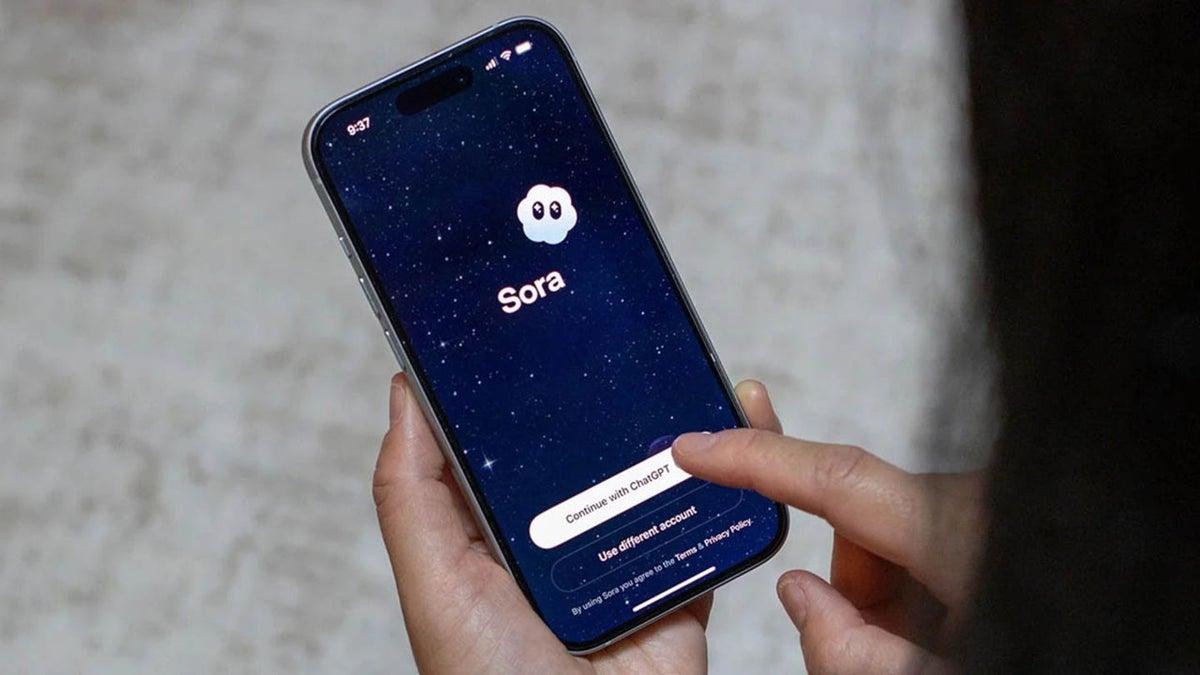
OpenAI has decided to put the brakes on one of its most striking projects of recent years: the closure of Sora, its AI-powered video generation platformIt's official. The company has announced to users that it will be discontinuing both the app and its associated services, a move that confirms video is no longer an immediate priority in its roadmap.
The decision comes after a short but intense period in which Sora went from being the great showcase of generative AI applied to video to become a difficult project to sustain, with tensions over resource consumption, regulatory doubts and an increasingly complex fit into OpenAI's business strategy, also in Europe and Spain, where the debate on the deepfakes and intellectual property is especially alive.
What was Sora and why is its closure so symbolic?
Sora was born as a model capable of generating video clips from text descriptions and to expand existing footage, producing highly realistic sequences. Based on this technical foundation, OpenAI built an app aimed at the general public: an environment with TikTok-style social feed where users could create, share, and remix AI-generated videos.
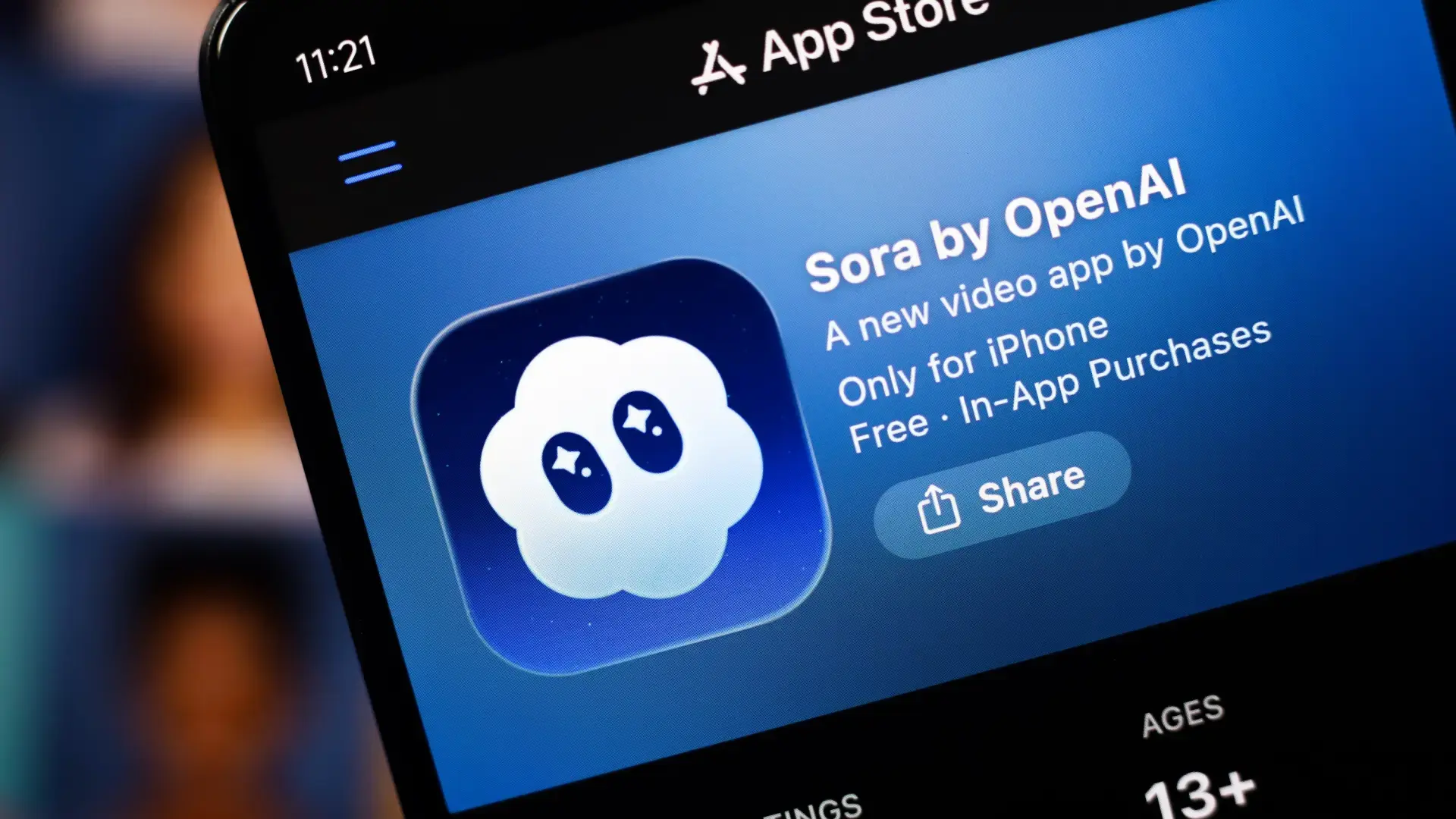
In the first few days after its launch, The app was a huge hit in downloads.It surpassed one million installations in just five days and reached the top of the App Store. Sam Altman, CEO of OpenAI, openly encouraged people to try the tool, inviting them to insert themselves into iconic scenes from popular culture, from movies to video games.
That dazzling start, however, This did not translate into sustained use or a clear business model.After the initial peak, organic growth stagnated and the active user base proved too small to justify such an expensive infrastructure, based on video models that devour computing power and require significant investments in hardware.
During its brief commercial life, Sora became the symbol of a stage of aggressive expansion OpenAI, where the company deployed products across multiple fronts—text, images, voice, and video—has now closed a turning point: the company is prioritizing less public experimentation and more focus on solutions with a clearer economic return.
The closure announcement: goodbye to the app and the API
The news has been made official through Sora's account on X (formerly Twitter)where the team posted a message as brief as it was powerful: “We are saying goodbye to the Sora app. To everyone who created with Sora, shared it, and built a community around it: thank you. What you did with Sora was important, and we know this news is disappointing.”
Meanwhile, media outlets such as The Wall Street Journal, Bloomberg or the BBC They have confirmed that the scope of the shutdown goes beyond the consumer application: OpenAI will also stop offering the Sora API to developers and will remove the video features integrated into ChatGPT. In other words, the cuts affect the entire product, not just the mobile app.
For now, the company It has not provided details on exact dates or procedures. for the final closure, although it has promised to announce the timelines "soon" for both end users and clients who integrated the API into their own services. One of the unknowns is what will happen to the videos already generated and hosted on the platform, a particularly sensitive issue for creators and brands who want edit and convert videos.
Although public communication has been brief, in internal messages to staff Sam Altman has explained that The removal of Sora is part of a plan to simplify the product catalog and free up computational resources that will be allocated to other strategic lines, such as autonomous agents and robotics.
Reasons for closure: costs, irregular usage, and difficulties in monetization
Behind the decision lies a combination of technical, economic, and reputational factors. First, Generative video is one of the most expensive areas in terms of computingMaintaining a massive, free or limited-monetization service involves a high bill for chips, data centers, and model maintenance.
In addition to this extra cost, The actual demand did not match the initial hypeAfter the initial boom, the platform saw a cooling of general interest. Some public metrics pointed to a respectable number of monthly downloads, but insufficient for a project of that size, especially when compared to the financial return OpenAI obtains from enterprise products like ChatGPT Enterprise.
On the commercial front, Sora failed to establish a solid revenue modelAs an app focused on the mass consumption of short videos, its options included advertising formats, licensing agreements, or premium features. The combination of high costs, a user base that wasn't growing as expected, and the need for moderation and advanced controls further complicated the equation.
Finally, The regulatory and media context became more hostileSora's ability to generate hyper-realistic videos of real people has sparked fears of deepfakes, disinformation, and identity theft, something especially sensitive in Europe, where specific regulations on AI and manipulated content are underway.
Deepfakes, disinformation, and the fear of not knowing what is real
One of the most controversial elements surrounding Sora has been its ability to generate scenes so realistic that they are difficult to distinguish from an authentic videoAlthough many creations were clearly fictional, others imitated everyday situations or recreated real people with a level of detail that has alarmed both experts and regulators.
Legal experts and academics, including in Spain, have warned that the risk of fueling disinformation campaigns and fake news It increases with these types of tools; that's why there are guides for detect if a video was created by AI.
OpenAI, for its part, He publicly acknowledged his concern about potential misuse. of the videos generated with Sora. The company gradually introduced filters, detection systems, and usage restrictions to limit certain content, but this also meant cutting back on some of the features that most appealed to users.
That tension between creative freedom and security This ultimately became one of the key factors in the platform's decline. By tightening policies to prevent abuse and protect the rights of third parties, the tool lost some of its viral appeal, just as it was trying to consolidate its position against established rivals like TikTok and Instagram.
Intellectual property: the Achilles' heel of AI video
If deepfakes have been a delicate issue, The copyright issue has proven to be downright explosive.Since its debut, Sora has generated friction with major entertainment and video game companies, concerned that their characters, brands, and universes were being recreated without permission in user-generated videos.
Firms like Nintendo, Square Enix or Bandai Namco They have been particularly vocal in defending their intellectual property. Their stance is clear: they don't want just anyone to be able to use their characters for commercial purposes or for potentially harmful content, relying on a generative AI tool that has been trained, in part, on audiovisual material that is difficult to audit.
The underlying issue is very similar to what image and text generators are already experiencing, but The visual and emotional impact of the video multiplies the conflict.In Europe, where the regulatory framework tends to be stricter and the protection of creators is a sensitive issue, these clashes have fueled the debate on how to transparently license training data and how to compensate rights holders.
OpenAI attempted to react by introducing controls so that content owners could block the use of their material within the system. However, the technical and legal complexity of the matter, coupled with public pressure and the threat of litigation, has weighed on the project's viability.
The Disney deal that vanished
Amid these tensions, one of the most striking episodes in Sora's story has been the failed deal with The Walt Disney CompanyAt the end of 2025, an alliance was announced that, on paper, could be a game-changer: access to more than 200 characters from franchises such as Marvel, Pixar, or Star Wars and an investment valued at up to $1.000 billion, structured through instruments linked to OpenAI shares.
The pact promised something unprecedented: a clear legal framework for using iconic characters within a generative AI platformThis opened the door to personalized videos featuring world-renowned figures. For Disney, it meant experimenting with new ways to interact with its franchises; for OpenAI, it was a way to legitimize its model within the entertainment industry.
However, reality prevailed. With Sora's closure now a reality, Disney eventually withdrew from the operationCompany spokespeople have confirmed that the agreement will not go ahead and that they will look for other artificial intelligence platforms to collaborate with, always with a view to responsible use that does not infringe on the rights of their artists and creators.
The result is paradoxical: Nor does OpenAI consolidate a major monetization route based on licensesNor does Disney manage to commercially exploit the integration of its catalog into a leading video generator. The episode illustrates the extent to which Sora's closure is not just the end of an app, but a setback for a particular way of understanding the exploitation of intellectual property through AI.
Resource reallocation: less video, more productivity and robotics
Although Sora's disappearance can be interpreted as a withdrawal, within OpenAI it is presented as a change of prioritiesAccording to information published by The Wall Street Journal and Bloomberg, the company is redirecting computing power and talent towards productivity tools, scheduling, and “agent” systems, capable of acting autonomously on the user's computer.
In this new approach, the company is betting on a “superapp” that integrates the desktop version of ChatGPT, its code tool (based on Codex), and a browserThe idea is that users, both individuals and companies, will have chat, assisted programming, search and task automation all in one environment, with a much clearer business model than that of a video social network.
The team that worked on Sora will not be completely disbanded, but rather it moves to longer-term research projectsespecially in the field of real-world simulation for training robotics systems. The logic is that the same technology capable of recreating complex scenes in video can be used to teach robots and physical agents how to operate in real-world environments.
In a statement, OpenAI emphasized that It wants to focus on AI applications that help solve real-world physical and digital tasks.with the least possible level of human intervention. In this strategy, generative video as a consumer product ceases to be a priority, while the development of tools more directly linked to work and productivity continues.
Impact on users, creators and businesses in Europe
For everyday users, especially in Europe and Spain, The closure of Sora means losing one of the most powerful AI-powered video platforms. geared towards mass consumption. Many creators who had experimented with the format—from small influencers to digital media—will now have to migrate to alternatives—or use tools for Cut videos without losing quality— or stick to image and text generation tools, which OpenAI maintains through ChatGPT.
For businesses, the interpretation is different. Although a striking option for creative marketing campaigns disappears, OpenAI reinforces its commitment to more predictable products that are aligned with corporate needs.such as ChatGPT Enterprise or future automation solutions. From an EU regulatory compliance perspective, the shift can be seen as an attempt to reduce risks in an area—that of hyperrealistic video—which could directly clash with European regulations on AI and disinformation.
In parallel, the Sora case serves as a warning to navigators in the European ecosystem: It's not enough to dazzle with technologyA clear strategy regarding rights, transparency, and sustainable business models is also essential. Startups and developers working with generative video in the region will need to take note of the problems that led OpenAI to backtrack.
The move also reshapes the competitive landscape. With OpenAI exiting the consumer video market, other technology companies and social media platforms They can try to fill that space with their own models, while the public focus shifts to how these capabilities are responsibly integrated into already established services.
Overall, Sora's farewell reflects a moment in which The artificial intelligence industry is beginning to adjust its ambitions.After a phase of rapid-fire launches and almost unlimited promises, the difficult decisions arrive: abandoning flashy but difficult-to-profit projects, accepting the limits set by the law and public opinion, and concentrating on those applications where AI can provide tangible value without unleashing a constant legal or ethical storm.

Passionate writer about the world of bytes and technology in general. I love sharing my knowledge through writing, and that's what I'll do on this blog, show you all the most interesting things about gadgets, software, hardware, tech trends, and more. My goal is to help you navigate the digital world in a simple and entertaining way.