- Omarchy offers Arch Linux + Hyprland preconfigured, ready to work and fully customizable.
- It includes key tools (Neovim, Chromium, Alacritty, LibreOffice, Zoom) and a cohesive visual approach.
- The Omarchy-Chromium-BIN microfork in the AUR allows for instant browser-wide themeing.
- 37signals will migrate to Omarchy in three years; performance and control drive the decision.
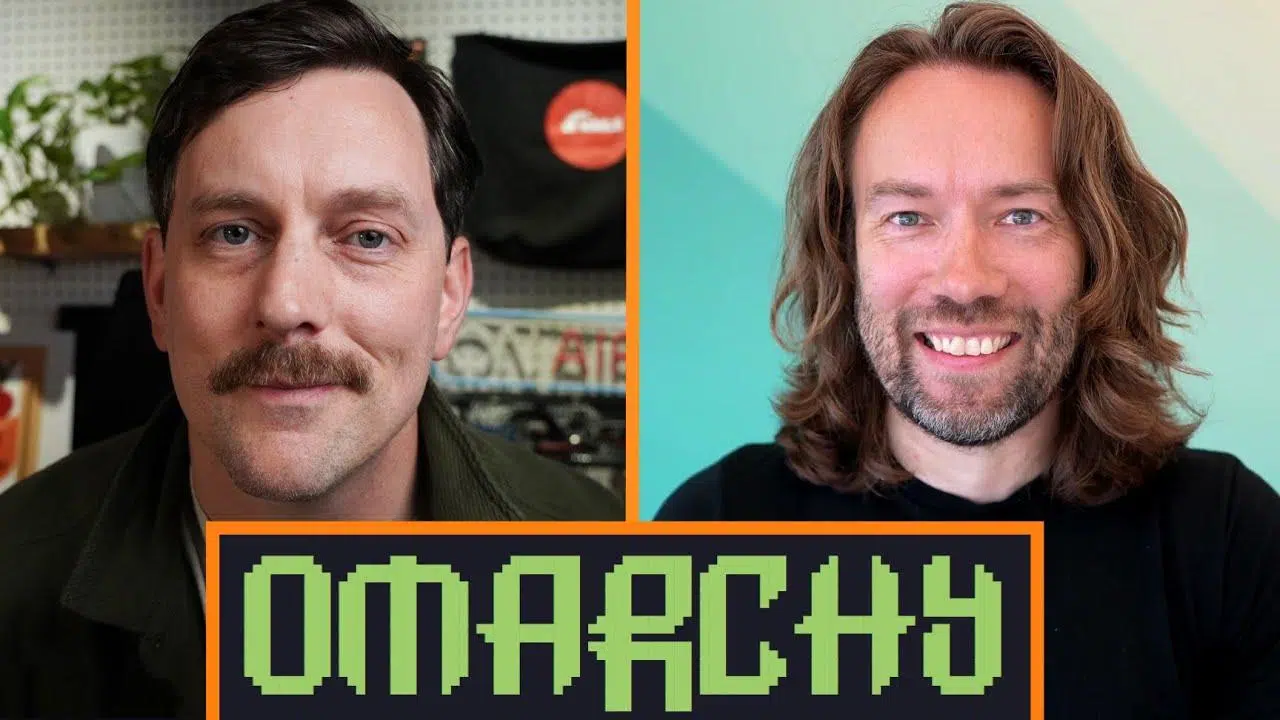
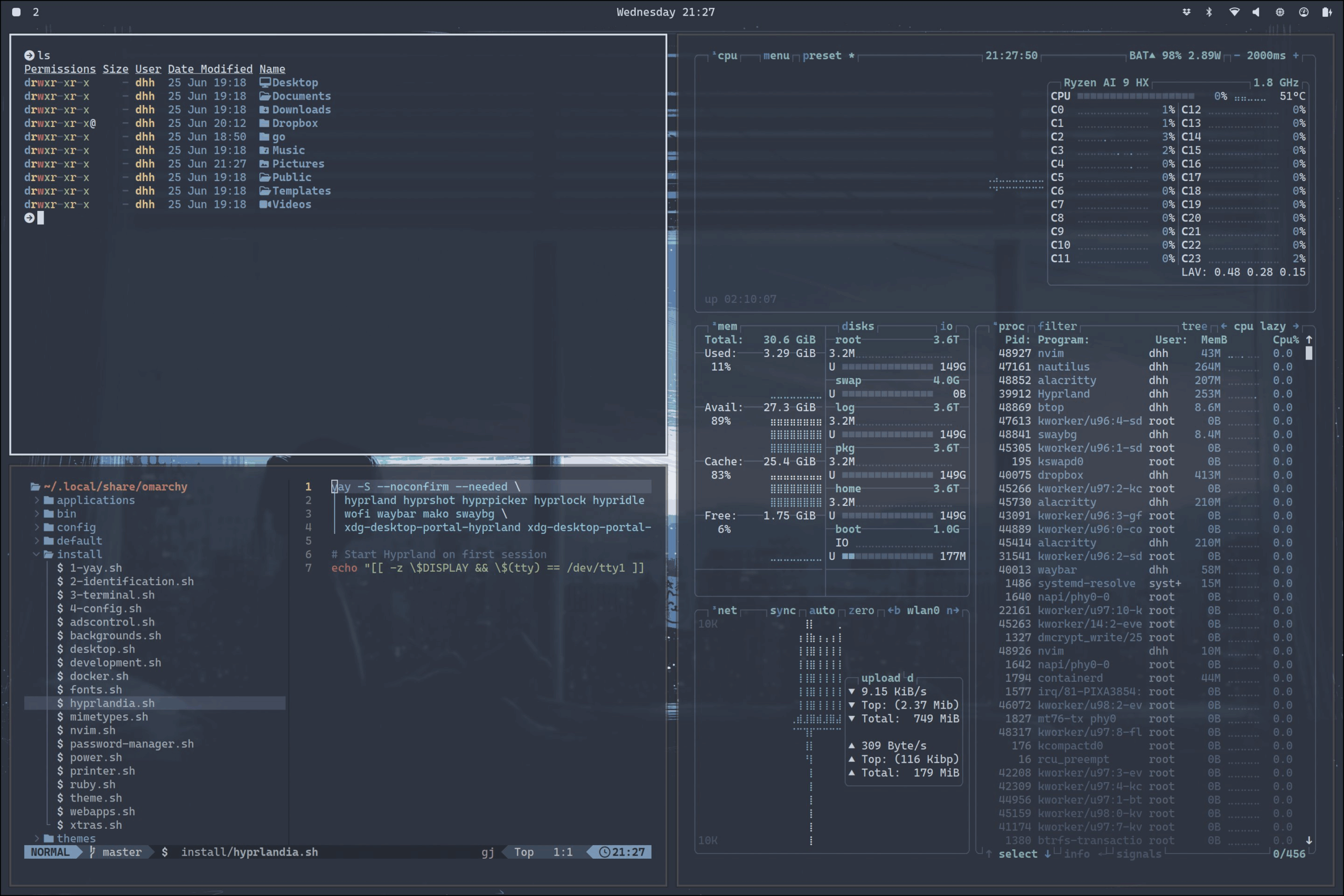
The arrival of Omarchy has set off alarm bells in the developer community: David Heinemeier Hansson (DHH), creator of Ruby on Rails, has launched his own Linux distribution . This offering is based on Arch Linux and integrates Hyprland as its tiling window manager, aiming to provide a sharp and user-friendly experience right out of the box , without sacrificing the fine-tuning that appeals to tech enthusiasts.
This move didn't come out of nowhere. After more than a year distancing himself from macOS due to disagreements with Apple's corporate direction , DHH first devised Omakub to facilitate the switch to Ubuntu with a single command. Now, that stage has been the prologue: with Omarchy, he raises the stakes towards a fully curated Arch + Hyprland environment that retains the extreme flexibility of Linux but is ready to use in minutes.
Because right now?
According to DHH, something has changed in the air: more and more developers are looking at Linux on the desktop with genuine curiosity, not just as a weekend experiment. Arch Linux isn't new (it's been around since 2003), but the user base it's reaching is, thanks to new tools, active communities, and influential figures who amplify its message through social media and content.
In this shift, free software once again takes center stage: Linux emerges as the open and durable alternative that has been ready for decades, waiting for disillusionment with Apple and Microsoft to push more users to try it. The idea is no longer to imitate macOS or Windows , but to offer something distinct and elegant within its own tradition.
It also helps that the Arch ecosystem is much less harsh today than it was a few years ago. The guided installer archinstall has significantly lowered the barrier to entry , and the AUR (the enormous community repository) means that almost all software is available, usually in its latest version, reducing the need for third-party scripts and repositories that are unavoidable in other distributions.
In this context, DHH sees fertile ground for a well-thought-out proposal: a factory-prepared Arch, without diluting its philosophy . Hence the birth of Omarchy, as a way to channel the current momentum towards a polished experience from the very beginning.
From Omakub to Omarchy
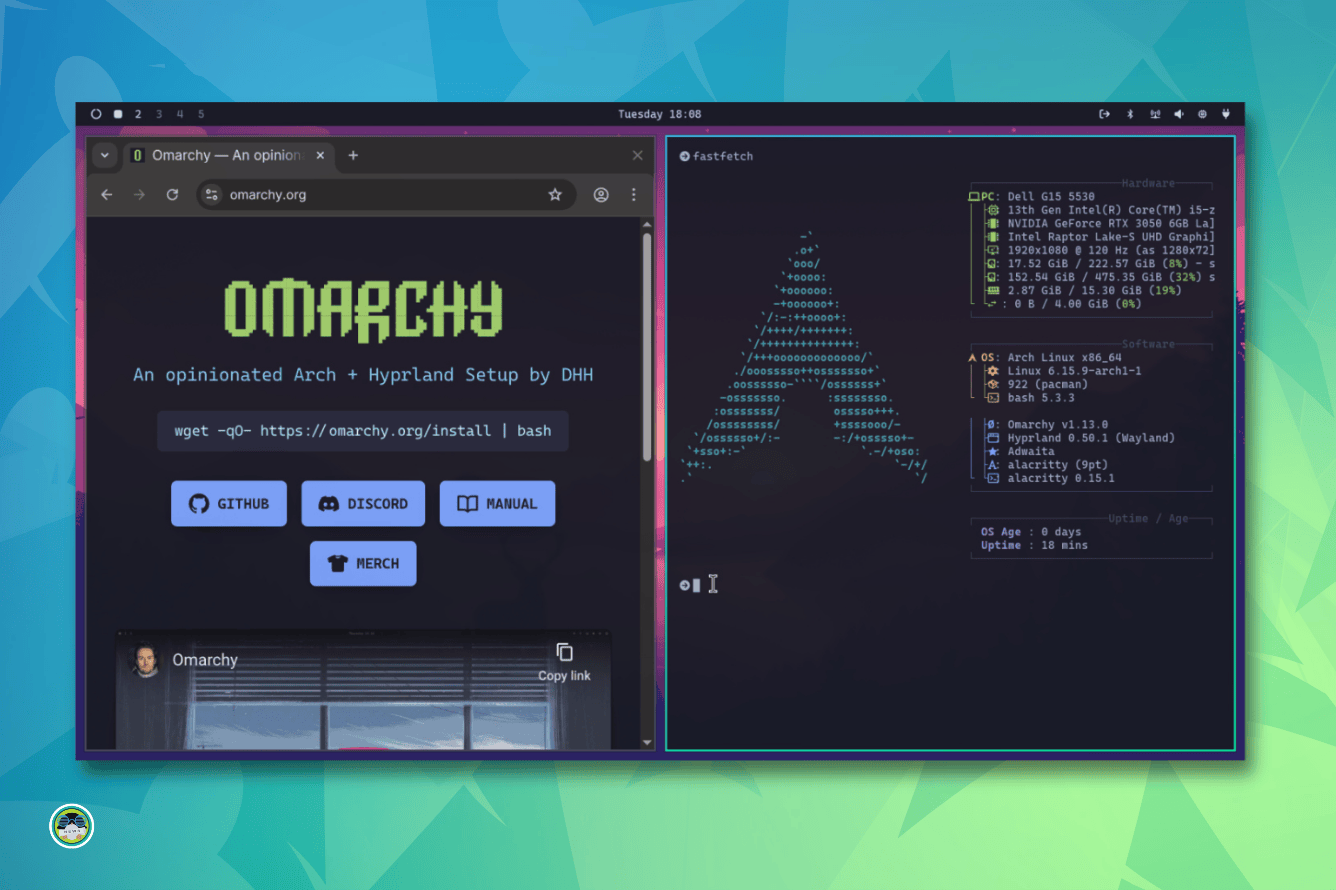
Omakub was the ideal landing pad for those migrating from macOS or Windows: an Ubuntu installation that, with a single command, was ready for modern web development , maintaining a smooth aesthetic and familiar interface to ensure a seamless transition. This approach greatly simplified life for new users without forcing them to piece together countless components.
But DHH was ultimately won over by the combination of Arch Linux and Hyprland . He describes it bluntly: it's Linux "in hardcore mode." An Arch ISO leaves you with a bare-bones terminal , and even connecting to Wi-Fi might require dealing with text-based utilities like iwctl . Hyprland, on the other hand, comes "atomized": no greeter, no menu bar, no notifications, no file manager. You choose each component , configure it with your files, and build your own desktop.
The result can be stunning, but getting there takes hours of assembly if you're starting from scratch. That's where Omarchy comes in without betraying Arch's spirit : they package the selection of parts and settings that DHH uses daily, so more people can enjoy the setup without investing an initial 10–20 hours in fine wiring.
Compared to Omakub's Ubuntu era, Omarchy targets an audience that values meticulous attention to detail and is willing to learn, but wants to be productive from the very first boot . Same underlying vision, different technical foundation, and a fast, aesthetically pleasing, and highly configurable tiled desktop.
What exactly does Omarchy offer?
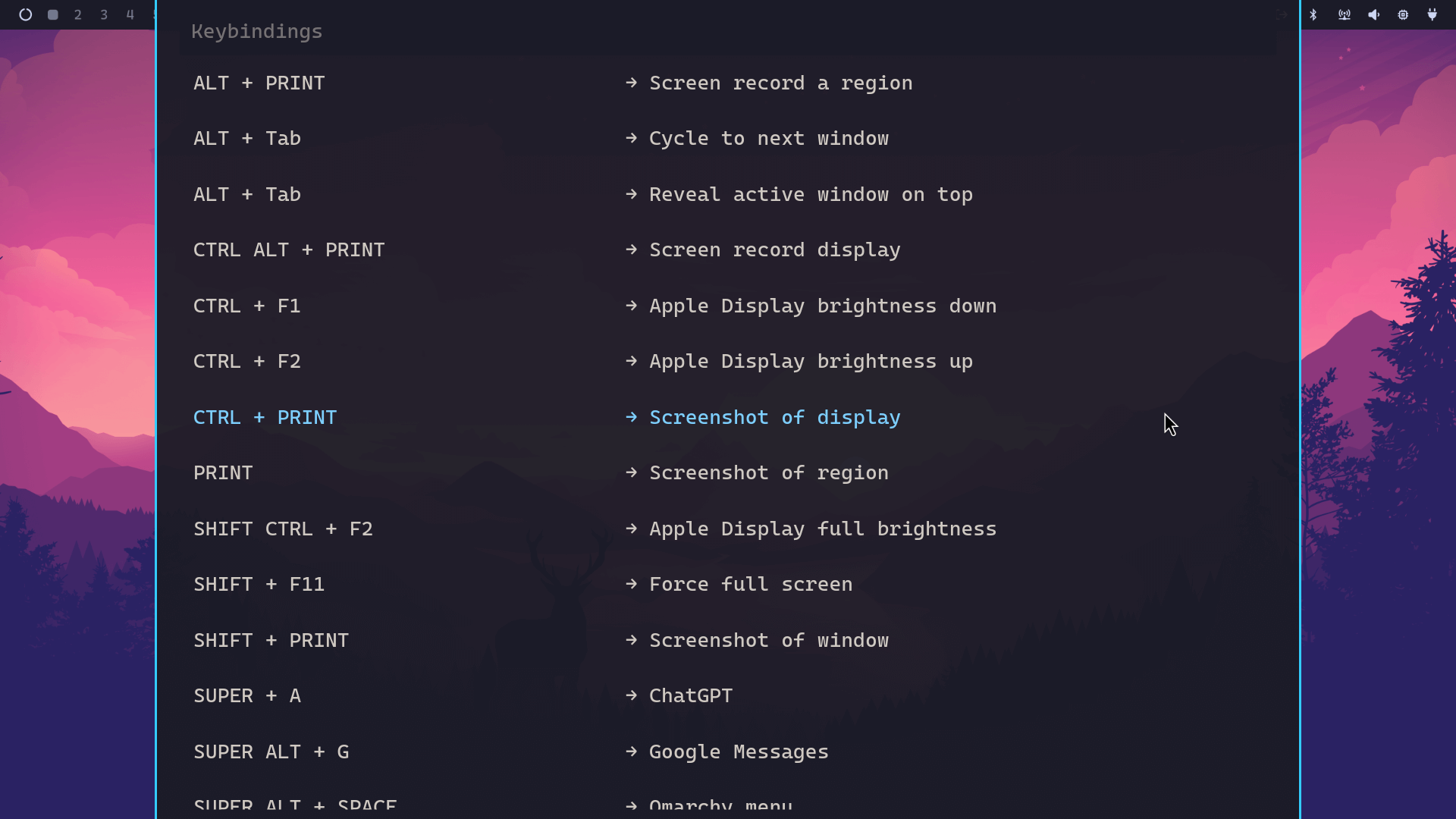
Omarchy isn't Arch's "Hello World": it's a carefully crafted selection and configuration of Arch Linux + Hyprland , based on what its author runs daily. It includes the components that Hyprland doesn't provide by default ( lock screen , toolbar, widgets, notifications, file utilities, etc.) and a consistent visual style, so that installing without any modifications gives you the exact same DHH environment.
It doesn't aim to imitate Windows or macOS. Its philosophy is different: to be elegant and better on its own terms , embracing the essence of Linux. It doesn't strive to be the most familiar, but rather to enhance productivity and attention to detail in daily use, with a design that supports the workflow instead of hindering it.
DHH presents it as a "ready-to-be-productive" system: it includes virtually everything a modern developer needs to get started. Among the tools mentioned are names like Neovim, Spotify , Chromium, Typora, Alacritty, and LibreOffice, and even Zoom is included. All this without resorting to "just a list of packages": the intention is a complete system designed for both aesthetics and productivity.
Those who prefer minimal customization can use Omarchy as is and get to work; those who want to personalize have a paved path to changing themes, adjusting shortcuts, modifying window behavior, and expanding the system as they wish with the AUR. The approach doesn't standardize: it simplifies and accelerates.
In practice, the promise is to "plug and play" in minutes on Arch + Hyprland, avoiding the driest part of the initial assembly, but preserving the control and closeness to the physical hardware that so many people seek when making the switch to Linux.
Who is Omarchy for?
It's not for everyone, and its creator acknowledges that. If you're looking for an "appliance" that doesn't require you to lift the hood , you'll probably feel more comfortable with Apple or Microsoft systems, where the priority is not to touch anything.
Omarchy is aimed at those who enjoy fine-tuning their environment, value speed, visual clarity, and a vast ecosystem of packages , and are willing to invest some time in learning in exchange for years of comfortable work. It's ideal for people who want the granularity of Arch and the fluid aesthetics of Hyprland, without having to configure everything from scratch.
That audience exists, and today it's larger than ever: developers, content creators, and technical teams seeking control, performance, and a sustainable foundation for their workflows. Omarchy leans toward them, not toward absolute familiarity.
DHH's message is clear: if you're drawn to the idea of a polished yet customizable Linux , Omarchy can be a powerful entry point. If you prefer a "no-touch" desktop environment, there are better options.
How to get started (without messing up)
To avoid breaking anything during the move, DHH itself suggests a progressive route, avoiding unnecessary risks and maximizing useful learning during the trial.
- First, test on hardware secondary to experiment without compromising your main equipment.
- Install with archinstall to solve Arch's base in no time; then add Omarchy on top and you'll have Complete Hyprland in minutes.
- If you decide to stay, it's time to learn: You'll master shortcuts, themes, settings, and polish a flow that's totally yours.
This plan reduces friction, avoids surprises, and allows you to assess whether the proposal is right for you. The reward is a lightweight, beautiful, and incredibly fast desk , built to your specifications and equipped with a modern toolbox from day one.
An anecdote: the browser challenge and a patch-based solution
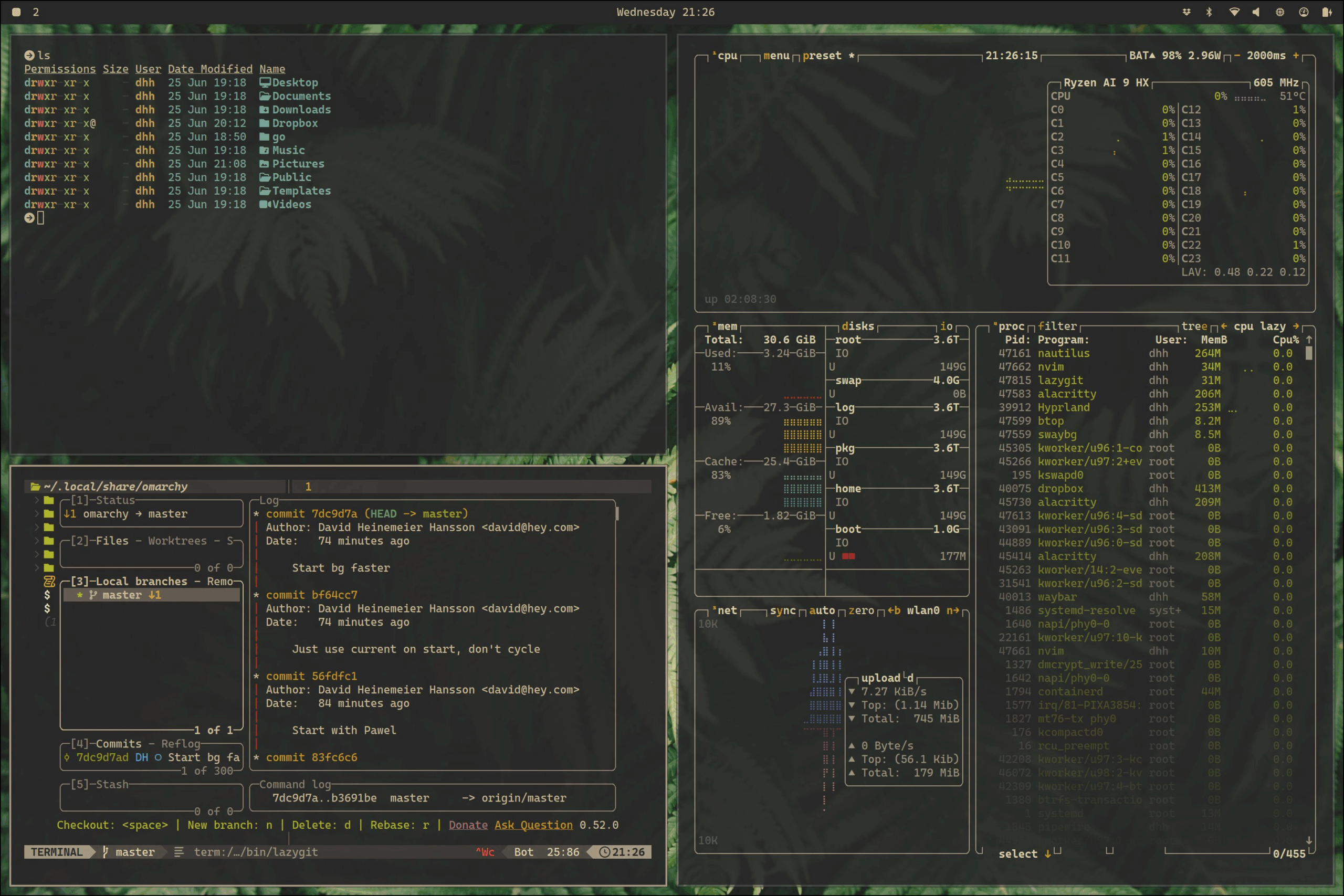
One of DHH's obsessions is that when changing the theme in Omarchy, all applications instantly reflect the new color scheme . This already worked well across almost the entire desktop, except for one key player: Chrome/Chromium.
Chromium allows you to adjust its appearance to match the Linux GTK theme, but the process is slow: you have to tweak settings, apply changes, and close/reopen windows . None of that fits with the idea of a smooth theme change . What can you do if you want it to be immediate?
The response was pragmatic: DHH, via 37signals, offered a $5.000 reward to whoever could solve the problem technically and in a way that could be implemented in the Chromium project. Contributor Helmud Yanuka accepted the challenge and, in just four days, prepared a patch that allows users to change the theme from the terminal and instantly apply it to all open windows.
To avoid being at the mercy of Google 's release schedule , Omarchy-Chromium-BIN was created —a micro-fork with that minimum patch, now available in the AUR . It's not a new browser: it updates automatically every night, inherits the security improvements from the main branch , and only adds that much-requested feature for theme integration.
The corporate bet: 37signals jumps on the bandwagon
Omarchy isn't staying confined to its creator's desktop. DHH has announced that 37signals will migrate Omarchy to its Operations and Ruby development teams over the next three years, aligning with the natural hardware upgrade cycle. This demonstrates a commitment to the platform and reflects the current state of Linux.
The decision comes shortly after the company announced it would begin phasing out Macs in favor of Windows PCs. Now the pendulum swings back: DHH's reasoning is that with Linux you have much better control over your destiny than with closed systems, and that performance matters—a lot.
In the day-to-day use of products like Basecamp or HEY, the difference is noticeable. DHH maintains that with native Docker on Linux, Rails tests run incredibly fast . And in specific comparisons, he asserts that, in his HEY app, even a Mac with M4 Max is almost twice as slow compared to an equivalent Linux desktop framework.
The change also entails hardware decisions: goodbye MacBook; hello Framework and Beelink . Modular laptops and desktops, efficient mini-PCs, and a diverse offering where Linux performs at its full potential. The idea is to combine powerful, repairable machines with an open platform under your control.
Beyond the niche: signs of a change of era
DHH doesn't claim that "the year of Linux on the desktop"—that eternal meme—has arrived, but he perceives conditions aligning in a way not seen for a long time . Valve is promoting Linux with Steam Deck (which runs Arch), popular content creators are sharing their migrations, and projects like Hyprland aren't copying others: they're offering different experiences.
At least among developers, DHH sees room for a significant leap forward. Whether or not mass adoption materializes, for him the matter is settled: he has found in Linux an environment that excites him . Omarchy is his way of turning that enthusiasm into a product usable by anyone willing to take the plunge.
The rise of the AUR, the maturity of modern tools, and the reduced installation friction with ArchInstall have created a unique combination that didn't exist before. Added to this is a well-curated selection of components , and the result can convince professionals who wouldn't have even considered it two years ago.
Is it for everyone? No. Can it redefine the standard of how an "out-of-the-box" Arch is presented without losing its soul? That is precisely the promise of Omarchy.
The technical ingredients that eliminate tolls
One of the strengths of this approach is how it reduces typical overhead: network configuration from the terminal, composer selection, panels, notifications , file managers… All of that comes pre-integrated and coordinated. And if you want, you can replace it with alternative components in just a few commands.
The AUR repository multiplies possibilities: "It seems to have all the Linux software , and almost always in its latest version." For those coming from environments where you have to add PPAs, scripts, or unofficial repositories to use modern utilities, this is a breath of fresh air.
The visual aspect is also impressive. Hyprland allows for fluid animations, highly responsive tiled layouts , and meticulous control of shortcuts and window rules. Omarchy overlays this with a cohesive theme and mechanisms for seamless color scheme changes across the entire desktop.
And then there are the small but important details that make up the day-to-day experience: well-chosen fonts and italics , clean integration of terminals like Alacritty, careful selection of GUI and CLI applications, and a dotfile structure that doesn't force you to dismantle the whole thing to change a wall.
Community and early traction
Beyond the 37signals team, DHH notes that there are already around 50 external contributors to Omarchy, while the potential reach within the Rails ecosystem is in the thousands. This fertile ground can accelerate improvements, documentation, and practical examples.
The presence of influential figures—and corporate decisions like the gradual relocation of a well-known company—helps to build trust. Community engagement is key in any project of this kind, and here there are signs that interest is translating into concrete contributions.
Who is DHH: two brushstrokes to understand the author
DHH's profile is not that of a typical developer. Born in Copenhagen in 1979 , he co-founded 37signals and created the Ruby on Rails framework and the Instiki wiki. He is the co-author, with Jason Fried, of Agile Web Development with Rails, Getting Real, and Rework .
Personally, he is known for his direct and unfiltered opinions, which have garnered both support and criticism . In 2005, he received the O'Reilly Open Source Award ; he has also appeared on the covers and influence lists of technical publications. He has vehemently defended his vision of "software with opinions" and the value of productive simplicity.
He also has a remarkable sporting career: a semi-professional endurance driver , he participated in the 24 Hours of Le Mans regularly between 2012 and 2019 (and again in 2022), alternating between LMP2 and LMGTE Am categories with teams such as OAK Racing, Aston Martin Racing, and Rebellion. In 2014, he was crowned LMGTE Am champion with four wins and four second-place finishes, including a class victory at Le Mans, sharing driving duties with Kristian Poulsen and Nicki Thiim.
This background helps explain why his projects are rarely lukewarm: they prioritize performance, control, and aesthetic sensibility . Omarchy fits this pattern : he doesn't seek to please everyone, but rather to satisfy those who share his technical sensibility.
Without resorting to hagiographies, it serves to contextualize why a leader with an audience, a company behind him, and a culture of "optimizing what's important" can catalyze a highly polished Arch + Hyprland that others can adopt in their daily work.
Omarchy brings together several trends that are currently booming: the popularity of Arch and Hyprland, the simplified installation process with archinstall, the wealth of the AUR , and a curated approach that reduces costs without overtaxing the system. If you're drawn to a fast, beautiful, and highly customizable Linux distribution, this is a solution that gets straight to the point from the very first boot.

Passionate writer about the world of bytes and technology in general. I love sharing my knowledge through writing, and that's what I'll do on this blog, show you all the most interesting things about gadgets, software, hardware, tech trends, and more. My goal is to help you navigate the digital world in a simple and entertaining way.