- Razer Controller Setup for Xbox allows you to update firmware and adjust buttons, sticks and triggers in Windows 11.
- Razer Synapse brings independent modules, a streamlined interface, and performance improvements with multi-threaded architecture.
- Calibration and energy USB: Adjusting dead zones and disabling selective suspension prevents detection failures.
If you're using Windows 11 and fancy playing with a Razer controller, you've come to the right place: with the right tools, setup is quick, stable, and incredibly convenient. This guide covers everything you need to get your computer to recognize the controller, customize it to your liking, and, if something goes wrong, find practical solutions. The goal is for you to connect, configure, and play without any headaches.
In addition to the basic steps, we explain how to leverage Razer's official software and native Windows 11 options to fine-tune details like dead zones, triggers, and profiles. We also cover key information about the performance of the new generation of Razer Synapse and the role of the Razer Controller Setup for Xbox app, as well as a troubleshooting section based on real-world issues. All of this is presented in a clear and concise way with tips that work in everyday use.
What do you need before you start
The essentials are an updated Windows 11 system, a reliable USB port, and a compatible Razer controller. Beyond that, the rest is just software tools that make things easier. The more up-to-date your system is, the less chance of errors.
- Razer Controller Setup for Xbox: The official Windows app available for free on the Microsoft Store. It detects compatible Razer controllers, updates firmware, remaps buttons, adjusts triggers, and, on supported models, manages Chroma lighting.
- Next-generation Razer Synapse: Razer's ecosystem for centralizing peripheral settings. The latest evolution features a multi-threaded architecture that Razer claims offers up to 30% more speed than Synapse 3, with a more streamlined interface, independent installation modules, and precision tuning. This modularity allows you to install only what you need, which translates into a lighter and more fluid system.
Razer complements its peripherals with software platforms designed for a complete experience. In addition to drivers and settings, the brand offers solutions for lower latency gaming, streaming with custom Chroma effects, and enhanced audio for competitive play. Over 100 million users take advantage of these tools , demonstrating the reach of the ecosystem.
Download and install Razer Controller Setup for Xbox
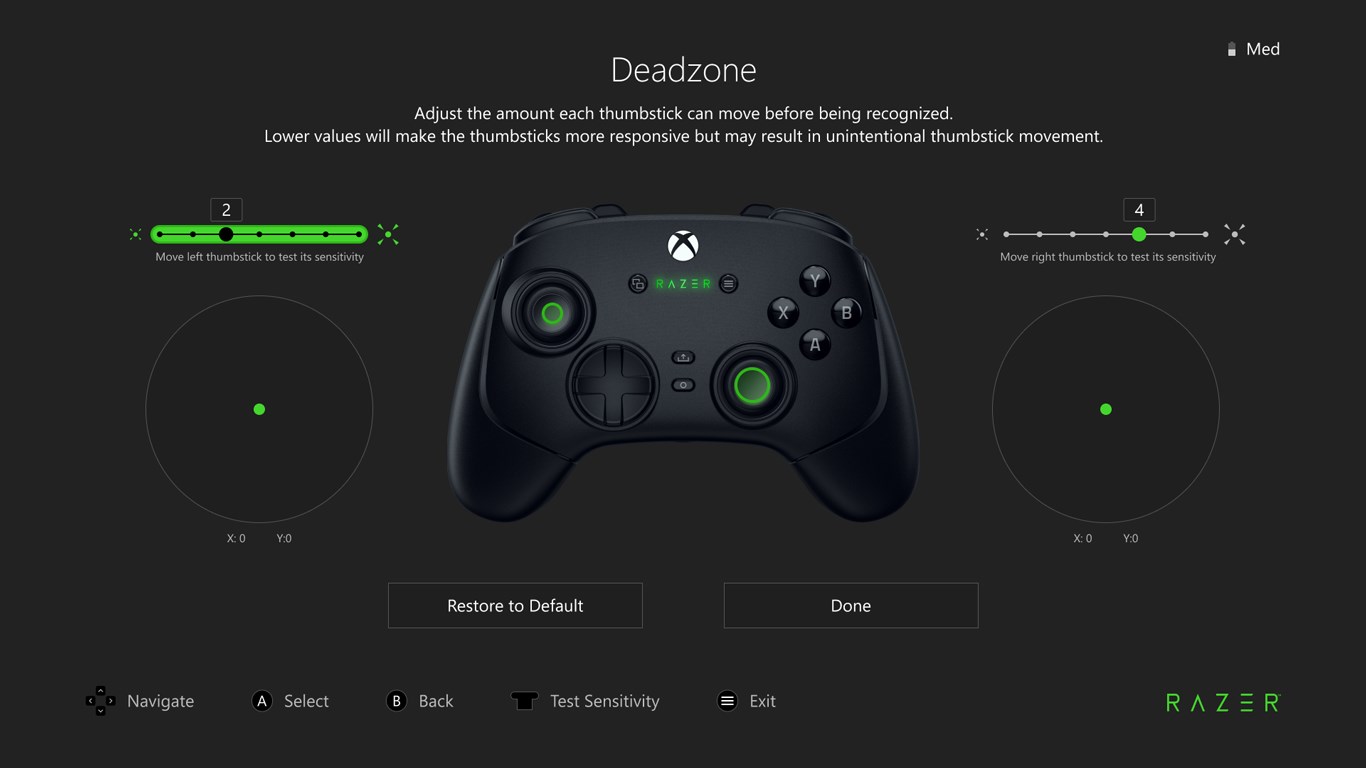
This utility is the direct way to manage Razer controllers for Xbox and PC. It's lightweight, installs from the Store in seconds, and usually detects the controller as soon as you connect it via cable. Using it is as simple as searching for it, installing it, and following the wizard.
- Open Microsoft Store and search Razer Controller Setup for XboxYou'll find that downloading and installing is free on Windows.
- Install the app and, once complete, connect it to your account if prompted to do so to sync profiles to the cloud. This synchronization helps keep your settings if you change PC.
- Connect the Razer controller to your PC using a direct-to-board USB cable, preferably an official one or a quality one. The app should recognize it instantly.
- Apply firmware updates if available. Keeping the firmware up to date prevents many failures. compatibility with Windows 11.
- Explore the settings tabs: button remapping, stick sensitivity, trigger curve, vibration, and, on supported models, Chroma effects.
Once configured, you can create profiles for different games and switch between them easily. If you enjoy competitive play, adjust the trigger response and stick curve to improve aiming control. Profiles save you time and ensure consistency between matches.
Razer Synapse: Performance, Modules, and Fine-Tuning
The latest generation of Razer Synapse has been redesigned with a multi-threaded approach that reduces load times and improves overall smoothness. Razer claims up to 30% better performance than Synapse 3, with a streamlined interface for lightning-fast navigation, independent module installations, and more precise tuning. In practice, this translates to faster and more stable software.
It's important to put these figures into context: internal testing was conducted in July 2023 on a desktop PC with an Intel i5 8600K CPU, 8GB of RAM, and an NVIDIA GeForce GTX 1060 GPU under standard conditions. In real-world use, performance improvements may vary depending on your usage, background software, power settings, and other PC factors. Keep this in mind when adjusting your expectations.
If you use other Razer peripherals besides the controller, Synapse centralizes everything and reduces friction: coordinated lighting effects, macros, game profiles, and advanced settings. Its modular architecture lets you install only the components you need, minimizing system impact. Less bloat and more control over what runs on your PC.
Configure the controller from Windows 11 without additional software
While Razer's software is highly recommended, Windows 11 has built-in controls for recognizing and calibrating controllers. This is a good option if you prefer a simpler approach or if you're troubleshooting a problem. The system's built-in tools provide a foundation for getting it up and running.
- Connect the controller via USB and wait a few seconds for Windows to install generic drivers. If everything goes well, you will see the device ready in the Bluetooth and devices section.
- Open the Legacy Game Controllers options by searching for them in the start menu. From there, you can test buttons, sticks, and vibration.
- Go to Calibrate to adjust stick dead zones and trigger response. This step is key to accuracy in shooters and racing games.
- Check that the remote control works like XInput in your games. Most modern titles integrate better with XInput, ensuring full compatibility on Windows 11.
If an application isn't recognizing the controller, check its input settings and prioritize XInput over DirectInput whenever possible. In some cases, closing and reopening the game after the controller's initial connection can prevent erratic detection. A quick game restart often resolves the issue.
Calibration and Accuracy: Key Concepts to Understand
Razer offers advanced calibration features in its peripherals. For mice, there's a feature designed to adapt to the surface being used: the sensor registers properties like the color and topography of the material and, as you move, continuously compares what it sees with a reference pattern. This contrast allows for faster and more accurate reactions to detect subtle variations.
The idea behind controllers is similar in spirit, but different in practice: you adjust the dead zones and linearity of the analog sticks, the trigger response curve, and the vibration intensity. Properly calibrating these parameters prevents drift, improves fine camera control, and ensures consistency between games. A few millimeters less dead zone can make all the difference in precision.
We recommend calibrating after installing the firmware, when using a new controller, or if you notice any changes in behavior. And if you alternate between competitive and more relaxed games, create profiles with different sensitivities and trigger points. With two clicks, you can switch from a tactical profile to an arcade profile.
Troubleshooting common problems
It's common to read in forums about cases where the controller doesn't appear when the PC starts up and only works after unplugging and plugging it back in. This is typical behavior when certain USB ports don't receive power when cold or when Windows manages power aggressively. The good news is that it can usually be fixed through the system itself.
- Removes power saving from USB ports: open the Device administrator, search for USB Root Hubs and related HID devices, go to Properties and uncheck Allow the computer to turn off this device to save power.
- Disable USB selective suspend: In Advanced Power Options, under USB, set Selective Suspend to Disabled on both AC power and battery if using a laptop.
- Check the BIOS or UEFI: Look for options like ErP, USB power on in S4/S5 or Always On USB and configure them to keep power on ports during BootOn some boards, disabling ErP allows the USB to receive power during standby.
- Try another port and cable- Connect the controller directly to a USB port on the backplane and avoid hubs. Replace the cable if you suspect intermittent dropouts. A poor-quality cable can simulate disconnections.
- Update firmware and drivers: Use Razer Controller Setup for Xbox for the controller firmware and run Windows Update for drivers. Sometimes a micropatch fixes cold detection.
- Turn off the Quick start Windows 11: In Power Options, uncheck Enable fast startup. Some USB devices boot better without this mode.
If the Store app doesn't detect the controller even though Windows does, reinstall Razer Controller Setup for Xbox and run the app with sufficient permissions. Uninstalling from Applications, restarting, and reinstalling often cleans up corrupted installations. Don't forget to restart between uninstalling and reinstalling.
For issues with random disconnections during gameplay, temporarily disable any software that might interfere with input devices and check for duplicate mapping tools. It's also a good idea to close background applications that control vibration or lighting for other peripherals if you suspect conflicts. The golden rule: fewer layers, fewer problems.


Passionate writer about the world of bytes and technology in general. I love sharing my knowledge through writing, and that's what I'll do on this blog, show you all the most interesting things about gadgets, software, hardware, tech trends, and more. My goal is to help you navigate the digital world in a simple and entertaining way.
Table of Contents
- 1 What do you need before you start
- 2 Download and install Razer Controller Setup for Xbox
- 3 Razer Synapse: Performance, Modules, and Fine-Tuning
- 4 Configure the controller from Windows 11 without additional software
- 5 Calibration and Accuracy: Key Concepts to Understand
- 6 Troubleshooting common problems