- Two ports for MSX; Electric Software's was the first, with the role of developer and editor.
- There is a Sega arcade cartridge in the US, different from the UK disk version.
- Isometric shooter with three stages, simulator-type height control, and fuel that is replenished by destroying barrels.
- Three levels of difficulty and a more demanding loop after beating the Zaxxon system.
The name Inkbox Software and its Zaxxon (bare metal game) are generating a lot of buzz, and it's the perfect excuse to take a closer look at a long-established classic that left its mark on arcades and microcomputers. What makes this universe so special is its blend of isometric perspective, frenetic shooting, and controls with "simulator" elements that, even today, remain challenging and captivating. In this article, we'll review key versions, developers, and the gameplay that cemented its fame, always focusing on what we know about its most representative adaptations, without losing sight of the arcade's DNA.
Although we're talking about the release itself, Zaxxon's significance predates it: we're talking about a shoot 'em up that originated in arcades and transitioned to various formats with notable variations. Among these, the Sega arcade cartridge distributed in the United States stands out, an edition that is distinct from the UK disk version. Also noteworthy is its move to the Microsoft MSX platform, where there were two adaptations; one of them, developed by Electric Software, was the first and has become a key reference point when discussing the series on that system. Below, we organize all this information and cross-reference it with the key aspects of its gameplay, levels, and controls.
Context, versions and authors
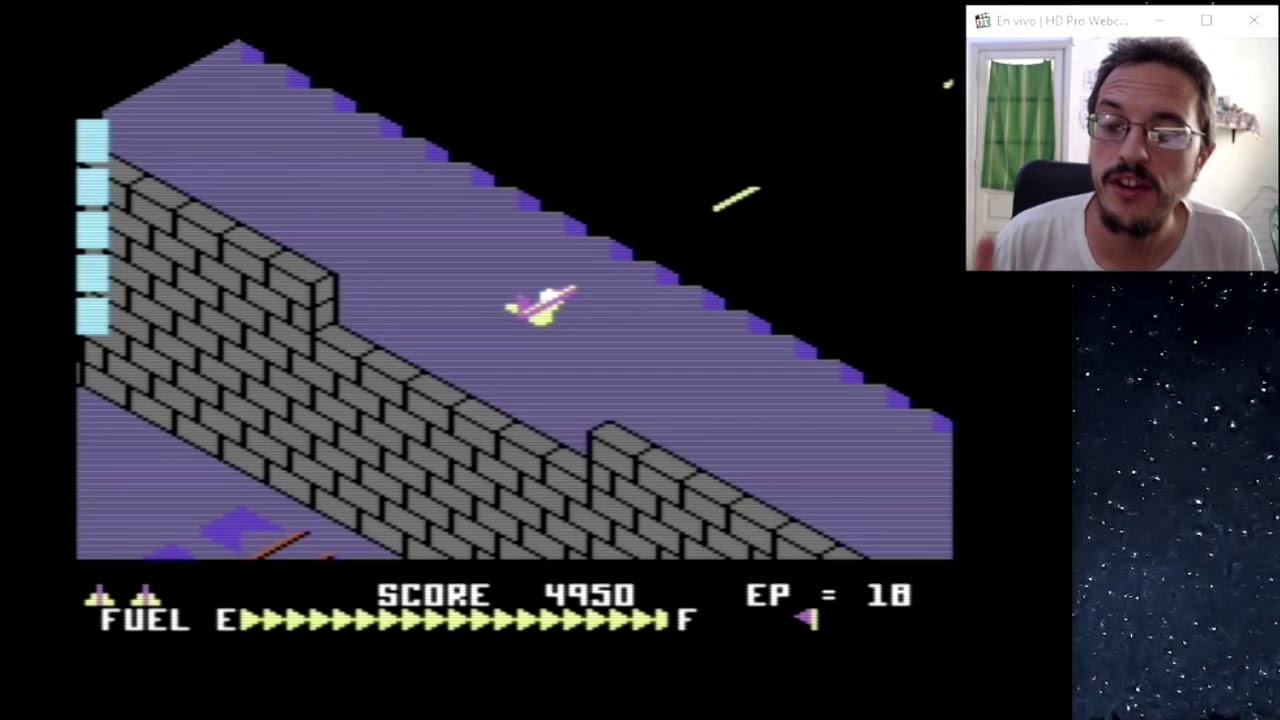
In the 8-bit microcomputer ecosystem, Zaxxon experienced a particularly interesting period. There were two different conversions for the Microsoft MSX , and the one developed by Electric Software was the first to be released. This detail is significant: being the first gave it visibility and cemented its place in the memory of MSX enthusiasts, especially those looking to bring the arcade experience home.
The details of that conversion are clear: developer and publisher, Electric Software . It wasn't always the case that the same company assumed both roles, but in this instance, it simplified creative and commercial decisions surrounding the project. All of this under the label of a genre that leaves no room for doubt: Shooter, with a style that combines direct action and precise controls.
Regarding nomenclature, the record is sparse. There are no alternative names for this specific adaptation, and when searching for publicly available reference windows, no information appears on Wikipedia , nor is there any officially associated video material. This lack of documentation contrasts sharply with the arcade game's fame, but it underscores the extent to which some conversions of the era relied more on their popularity among players than on publicly available archives.
It's worth highlighting another key edition: the Sega arcade cartridge released in the United States , explicitly noted as different from the British disc version. Detailed changes aren't specified, so the prudent conclusion is that there were technical or content differences that make the two versions not equivalent. For collectors, this means we're not talking about simple different packaging , but rather variants with their own distinct character.
Amidst these catalog nuances, what remains unchanged is the core of the game. Zaxxon challenges players to choose the sky as their battlefield, traverse a fortress riddled with defenses, and bring down the defense system that gives the game its name, the "Zaxxon defense system ." This objective, already present in the arcade version, was reflected in the home versions, including the MSX version by Electric Software, which maintained the spirit of sustained progress and calculated risk.
Electric Software's port for Microsoft MSX
We're talking about an adaptation that fits the standard's philosophy: leveraging the MSX hardware to bring home an experience as close as possible to the arcade version, with the necessary technical compromises. The key fact is that, of the two existing ports for the machine, this was the first to be released . This historical "pole position" gives it significance and explains why it's frequently mentioned when listing the system's most representative versions.
The fact that Electric Software is listed as both developer and publisher helps explain the product's cohesion. End-to-end control facilitates design decisions more aligned with the original vision, which is critical when the goal is to bring a demanding arcade feel to the living room. Although the public documentation lacks links to Wikipedia or official videos, its impact on the MSX remains vivid in the minds of those who experienced the 8-bit era.
Sega arcade cartridge in the US vs. UK disc
The explicit mention of the US cartridge edition and its difference from the British disc version serves as a reminder of the realities of the regional market. Arcade games and their ports could vary due to regulations, distribution agreements, or technical decisions. The main takeaway here is that these two releases are not identical; the observant player will know that, depending on the edition, details can change that affect the overall experience.
Beyond the format, the arcade feel remains: an isometric approach with layers of depth, precisely adjusted trajectories, and a rhythm that forces you to look both ahead and to the sides simultaneously. This continuity between the arcade original and ports is the reason why, when discussing new developments that revive the Zaxxon brand—such as the buzz surrounding Inkbox Software —the core gameplay that made it great is once again highlighted.
Gameplay, levels and controls
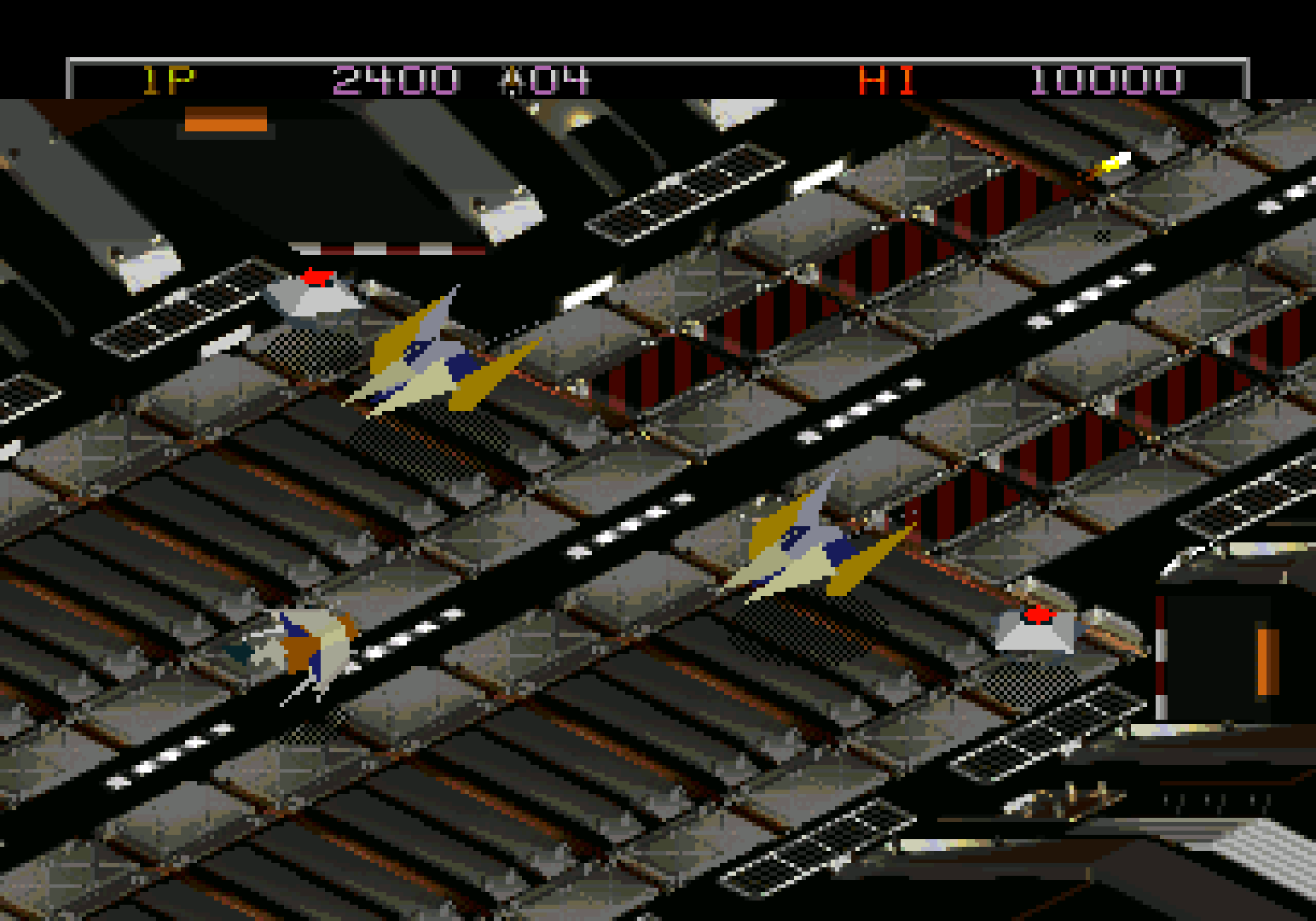
The core concept is best understood by describing what happens on screen, step by step. At the controls of a combat ship, the player traverses a fortress and battles a wide array of threats: missiles, enemy artillery, and bursts that demand lightning-fast reflexes. It's not enough to simply shoot at everything that moves; you have to maintain the correct altitude, calculate your trajectory, and keep your energy levels safe.
The fuel system is, in fact, one of the game's most talked-about features. If your tank runs dry, you're done for; the delightful paradox is that you can refuel by detonating fuel barrels. This mechanic, as simple as it is ingenious, forces you to prioritize targets that aren't always your direct enemies. Going around with a heavy trigger finger, without keeping an eye on your fuel reserves, will eventually take its toll on longer stretches.
Visually, Zaxxon uses an isometric perspective that adds complexity to navigation. The depth isn't just for show: it forces you to read your ship's relative position to platforms, walls, and defenses. A wall might seem far away, but suddenly it's right on top of you if you don't time your ascents and descents with surgical precision.
One defining characteristic of the controls is their reversal from what you'd expect in a side-scrolling view: pushing forward causes the ship to lose altitude (it dives) ; pulling back makes it ascend. This scheme, reminiscent of a flight simulator, changes how you think about each maneuver. It's not arbitrary: in Zaxxon, mastering altitude is just as important as accurate aiming.
The game unfolds in three distinct stages. First, you traverse a heavily defended Asteroid City , with fighters, anti-aircraft batteries, and missiles constantly targeting your flanks. Next, you engage in a duel in open space against waves of aircraft, a sort of rematch with any that escaped you in the first part. Finally, you face off against Zaxxon, the fortress's main defense, which will put everything you've learned to the test.
In the first phase, the asteroid city feels like a trap-filled, overhead labyrinth. Alarm-activated barriers severely restrict the passage, so every gap becomes a needle to thread the ship through. It's a short-fuse section: if you hesitate, enemy cover and crossfire will surround you before you know it.
The second section changes the pace. In deep space, with no walls to confine you, the combat is a barrage of ranged engagements with squads that, in part, represent the enemies you failed to defeat during the first act. Here, altitude control is once again crucial: positioning yourself correctly makes the difference between a shot that takes out the enemy and one that misses.
The third stage is the ultimate challenge. Facing the Zaxxon system itself involves managing your attack pattern, conserving fuel, and keeping your cool when the screen fills with threats. It's not a final stage you simply "beat" and that's it: once you overcome it, the game loops with increasing difficulty , escalating the challenge and demanding ever greater precision.
It's not all about skill; the challenge you choose also plays a role. The game features three distinct difficulty levels , which adjust the entry bar. This invites both novices and veterans to try their luck on the same playing field, with the reward of mastering the controls without feeling like the game will kick you out at the first hurdle.
To internalize the rules of handling the subject, it's helpful to think in layers: height, horizontal position, and rate of fire. Moving up and down according to the isometric perspective requires careful reading of objects and their shadows. If a projectile is coming toward your plane, moving along the vertical axis can save you faster than a simple lateral movement.
With fuel, discipline is everything. When you see jerrycans, think tactically: knocking them down isn't just a useful move, it's a safety valve for the next section . If you reach the space section with the indicator in the red, the chances of falling skyrocket, no matter how good your aim is. The balance between attack and logistics is key to long runs.
Another important point to remember is how Zaxxon integrates alarmed obstacles. It's not just about avoiding collisions; some barriers react and narrow the clearance, so approaching them with an incorrectly calibrated height almost guarantees an impact. Visualize the opening in advance and plan your maneuver a step ahead.
The game's pace encourages a combination of memory and reflexes. Knowing what's coming next is as advantageous as keeping a loose wrist to correct unexpected events. The isometric perspective—once a groundbreaking innovation—still provides an extra layer of spatial awareness that sets Zaxxon apart from other, more linear shooters.
If you want to mentally structure the challenge, here's a quick guide to its playable skeleton:
- Stage 1: Asteroid City with dense defenses, missiles, artillery, and alarm barriers that narrow the passage.
- Stage 2: Space Duel against waves of aircraft, many of which escaped in the first segment.
- Stage 3: Battle with Zaxxon, after which the game continues in a loop with increased difficulty.
- Height control Simulator type: forward to descend, backward to ascend.
In each of these layers, the "forward to dive, backward to climb" control requires an adjustment period. Change your mindset and you'll see that, once internalized, it becomes an ally for refining your aim at different heights. The key is to harmonize height and shot as if they were a single action.
The game rewards observation. The platforms, their shadows, and the angle at which they face your ship are constant clues. Learning to read them transforms Zaxxon into a ballet of coordinates where every movement is intentional . When that happens, the three difficulty levels cease to be a barrier and become a ladder of improvement.
It's important to remember that the goal is to break down the Zaxxon defense system . This idea—that the fortress isn't infinite; it has a heart—helps you manage risk: sometimes it's wise to conserve resources for the key confrontation, especially leaving yourself some fuel to face the final stretch with confidence.
A practical recommendation is to alternate "safe" routes with moments of controlled aggression. In Asteroid City, draw clean lines, avoiding risks for a couple of extra points; in space, increase the pressure to clear waves and reach the battle with Zaxxon with positive momentum. The alternation between caution and bravery is part of the design's charm.
For those approaching the game for the first time from a keyboard or gamepad, spending a few minutes training your altitude control makes a world of difference. Practice smooth descents, short ascents, and shots at varying heights. You'll be surprised how much your performance improves when altitude control becomes instinctive and no longer requires conscious thought in the heat of battle.
Finally, it's worth emphasizing that what's described here applies to the aforementioned variants: Electric Software's adaptation for Microsoft MSX —the first of the system's two versions—and the Sega arcade version distributed on cartridge in the United States, which is distinct from the British disk edition. Underlying all of them is the same core gameplay: that unmistakable blend of isometric gameplay, simulation-like controls, and three stages that alternate between maze, space, and boss battles.
Few games so seamlessly blend arcade heritage with a sense of depth. Zaxxon achieves this by employing an elegant—isometric and demanding—design, a cleverly designed fuel system, and a three-dimensional height perception system . Therefore, any new developments from the brand spark curiosity: its style has earned it a place on the fans' radar.


Passionate writer about the world of bytes and technology in general. I love sharing my knowledge through writing, and that's what I'll do on this blog, show you all the most interesting things about gadgets, software, hardware, tech trends, and more. My goal is to help you navigate the digital world in a simple and entertaining way.