
It's important to understand which applications or processes are running on your Mac , because some of these applications can significantly slow it down. Below are four more ways to see all the applications and processes running on your Mac.
Why you should see all the apps and processes running on your Mac
If you're coming from a PC with Home Windows at home, you should be used to opening the Activity Monitor on your Home Windows PC to see all the applications and processes running on your PC.
In the case of a Mac, there are several methods to see all the applications that are running, from the easy use of the Dock to the use of the Terminal command.
Basically, the goal of displaying all the applications that are running on your Mac is to get an idea of what applications are actively running on your Mac, what fonts they are using, and to rule out the possibility of unnecessary applications running in the background and using fonts on your computer.
Show all the apps and processes running on your Mac using Mac Fitness Monitor
Activity Monitor can be described as the Mac equivalent of Activity Monitor on a Windows PC. Activity Monitor provides an excellent overview of the applications and processes running on your Mac and the amount of resources used by those applications and processes.
1. Press the Search button located in the left corner of the Dock (See image below)

2. On the next screen, click on Lenses in the left menu, and then click on File Utilities.
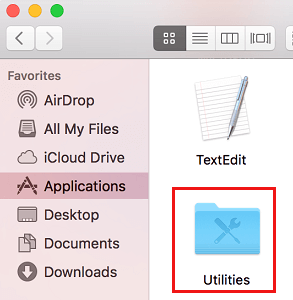
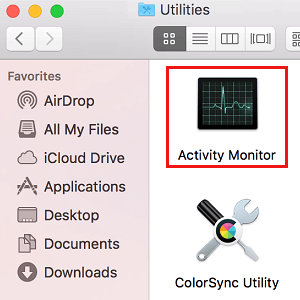
3. In the Utilities folder, click on Exercise Monitor , which should be the first item in the Utilities folder (see image below).
4. Once the Exercise Monitor opens, you can see a list of all the processes or goals that are currently running on your Mac (See image below)
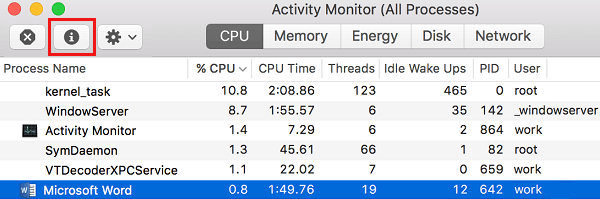
As you can see in the image above, there are 5 completely different tabs in Activity Monitor -> CPU, Memory, Power, Disk and Community.
If you click on each tab, you'll get additional information. For example, if you click on the Reminiscence tab it will tell you how much Reminiscence is being used by each course. Similarly, if you click on the CPU tab, you'll see how much CPU each of the apps and processes running on your Mac is using.
5. To see additional information about a specific course or program, simply click on the Software program/Course you press i located in the upper left corner of the screen (see image below).
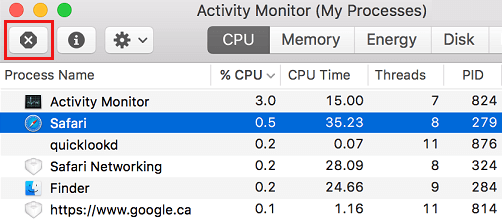
6. To stop a program or course through the Exercise Monitor, simply click on the device you want to stop managing, and then click on the x located in the upper left of your screen (see image below).
Display all applications running on the Mac using the shutdown monitor
Another method to check all the applications that are running on your Mac is to use the Power Application Monitor on Mac.
1. Press the Apple button in the top menu bar of your Mac, and then click Software Program for Power Abandonment in the drop-down menu (see image below).
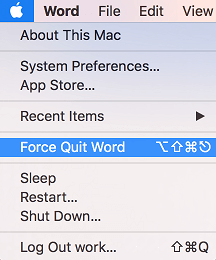
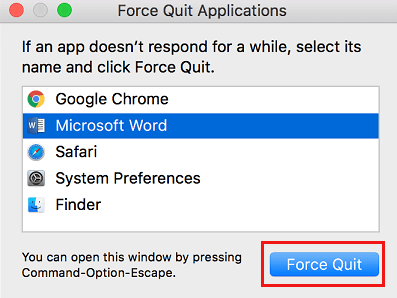
2. This can open the Purpose Energy Monitor, which can show you all the applications that are running on your Mac.
3. To stop driving as one of these goals, simply click on the device in the list and click the Abandon Power button.
Display running applications and processes on Mac using Terminal command
Terminal also allows you to get an in-depth look at the applications and processes running on your Mac, as well as how much CPU each of these applications/processes is using.
1. To open Terminal on your Mac, search for Terminal by pressing Command + Key Zone on your Mac keyboard and try to find Terminal in the Featured Search (see image below)
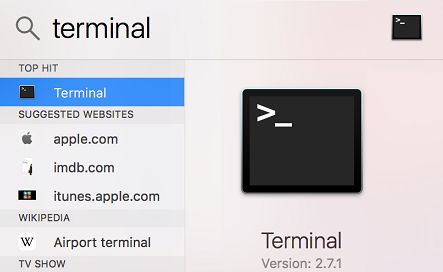
2. Next, double-click on the Terminal option or press the Enter key on your Mac keyboard to open Terminal.
3. In the terminal, select high -o cpu and press enter on your keyboard

This can present you with a list of all the applications and processes that are running, with the applications that are likely to consume the most CPU at the top of the list.
4. To reorder this list, close Terminal and reopen it. Once Terminal reopens, type size -o rsize height and press Enter on your keyboard.

Now, devices or processes that are likely to use the most reminiscence will appear at the top of the list, and devices or processes that use the least reminiscence will appear at the bottom of the list.
Display work applications through the Dock
The best strategy to show the applications that are running on your Mac is to simply look at your dock.
All operational applications may have a black dot under the goals icon (See image below)

While this methodology is easy to observe, it usually doesn't show you all the applications running in the background and it doesn't even show you the processes running in the background.
This methodology also doesn't give you much information, such as how much memory each application is using or how much CPU each application is using.
- How to Recover Lost Apps from Launchpad on Mac
