- YAML is an easy-to-read and write data serialization format.
- It is widely used in system configuration and automation.
- It has a clear syntax based on indentations without the need for braces or brackets.
- It supports JSON and allows you to represent complex data structures.

In the world of systems development and management, YAML has become a widely adopted standard for data serialization. Its intuitive syntax and ability to clearly structure information have made it popular in software configuration, especially in DevOps and programming environments.
If you've ever come across files with the .yaml or .yml extension and been curious about their function, this article will give you a complete overview of what YAML is, how it works, and what it's used for.
What is YAML?
YAML is an acronym for Yet Another Markup Language , or more precisely, YAML Ain't Markup Language . It is a data serialization language designed to be easy for humans to read and write. Its main goal is to offer a simple and clean syntax , without the need for unnecessary characters such as curly braces, square brackets, or closing tags.
One of YAML's most notable advantages is its ability to represent complex data structures in an understandable way, making it ideal for configuration files and scripts in various programming languages. Furthermore, its simplicity makes it comparable to other structuring techniques, such as those used in converting JSF files to PDF.
YAML Structure and Syntax
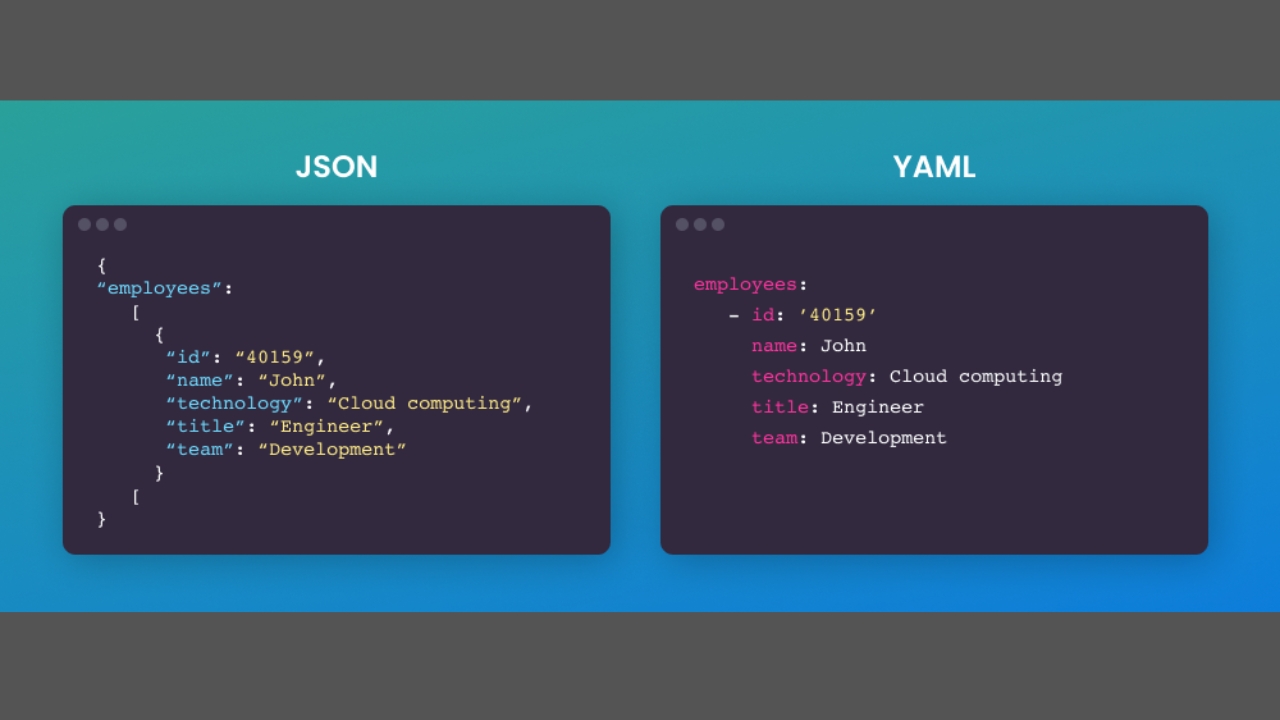
YAML syntax is based on indentation and the use of key-value pairs , which facilitates the organization and hierarchical structure of information. Unlike JSON or XML, YAML does not use quotation marks or square brackets, which improves its readability.
Some basic syntax rules include:
- YAML documents begin with three dashes (—) and end with three points (…) in some cases.
- Keys are separated from values by two points followed by a space.
- Lists are represented with hyphens (-) followed by a space.
- Spaces must be used for indentation, as tabs are not supported.
Example of a YAML file
Below is a simple example of YAML representing a shopping list:
--- food: - vegetables: tomatoes - fruits: citrus fruits: tropical oranges: bananas - nuts: almonds ...
This example demonstrates how YAML organizes data into lists, dictionaries , and scalar values . This clarity is similar to the organization you can achieve when adding an events calendar in WordPress.
Advantages of YAML
Using YAML offers several advantages over other data serialization formats , such as JSON or XML:
- Improved readability: Thanks to its indentation-based structure, it is easy to understand even for people without programming experience.
- JSON support: YAML is a superset of JSON, which means that any valid JSON file It is also valid in YAML.
- Support for complex structures: Allows you to represent lists, dictionaries and scalar values Natural way.
- Suitable for configuration files: It is widely used in tools such as Kubernetes, Ansible, and Docker Compose.
Comparison between YAML, JSON and XML

To better understand the impact of YAML, it's helpful to compare it to other popular data serialization formats . For example, YAML's readability compared to JSON and XML demonstrates its advantage in applications where comprehension is key, similar to the comprehension sought in PowerShell and CMD.
| Feature | YAML | JSON | XML |
|---|---|---|---|
| Readability | High | Media | Low |
| Use of labels | No | No | Yes |
| Comments | Yes | No | Yes |
| Support for complex structures | Yes | Limited Time | Yes |
Applications and uses of YAML
YAML is widely used in various areas of computer science ; some of the most common cases are:
- Configuration files: Kubernetes, Docker Compose, Ansible and many other tools use YAML to define configurations.
- Infrastructure as code: It is used in DevOps for automate deployments and configurations.
- Definition of APIs: OpenAPI Specification allows you to describe APIs using YAML.
- Web development and frameworks: Some frameworks like Ruby on Rails use it to define Data structures.
Thanks to its flexibility and clarity, YAML is an ideal option for structuring information in multiple contexts, proving especially useful in environments where readability and ease of editing are essential. YAML is a format that has revolutionized how we manage configurations and structured data due to its clarity and efficiency. Its growing popularity demonstrates its importance in the world of software and infrastructure. If you work in development or systems administration, learning YAML can be a significant advantage in optimizing your workflow.


Passionate writer about the world of bytes and technology in general. I love sharing my knowledge through writing, and that's what I'll do on this blog, show you all the most interesting things about gadgets, software, hardware, tech trends, and more. My goal is to help you navigate the digital world in a simple and entertaining way.