- A SIEM centralizes, normalizes, and correlates records from multiple sources to provide a comprehensive view of security.
- It combines real-time monitoring, historical analysis, threat intelligence, and automated response.
- It is key to detecting incidents early, facilitating forensic analysis, and complying with regulations such as NIS2 or ISO 27001.
- In IT and OT environments well integrated with a SOC, it allows scaling defense against complex threats with small teams.
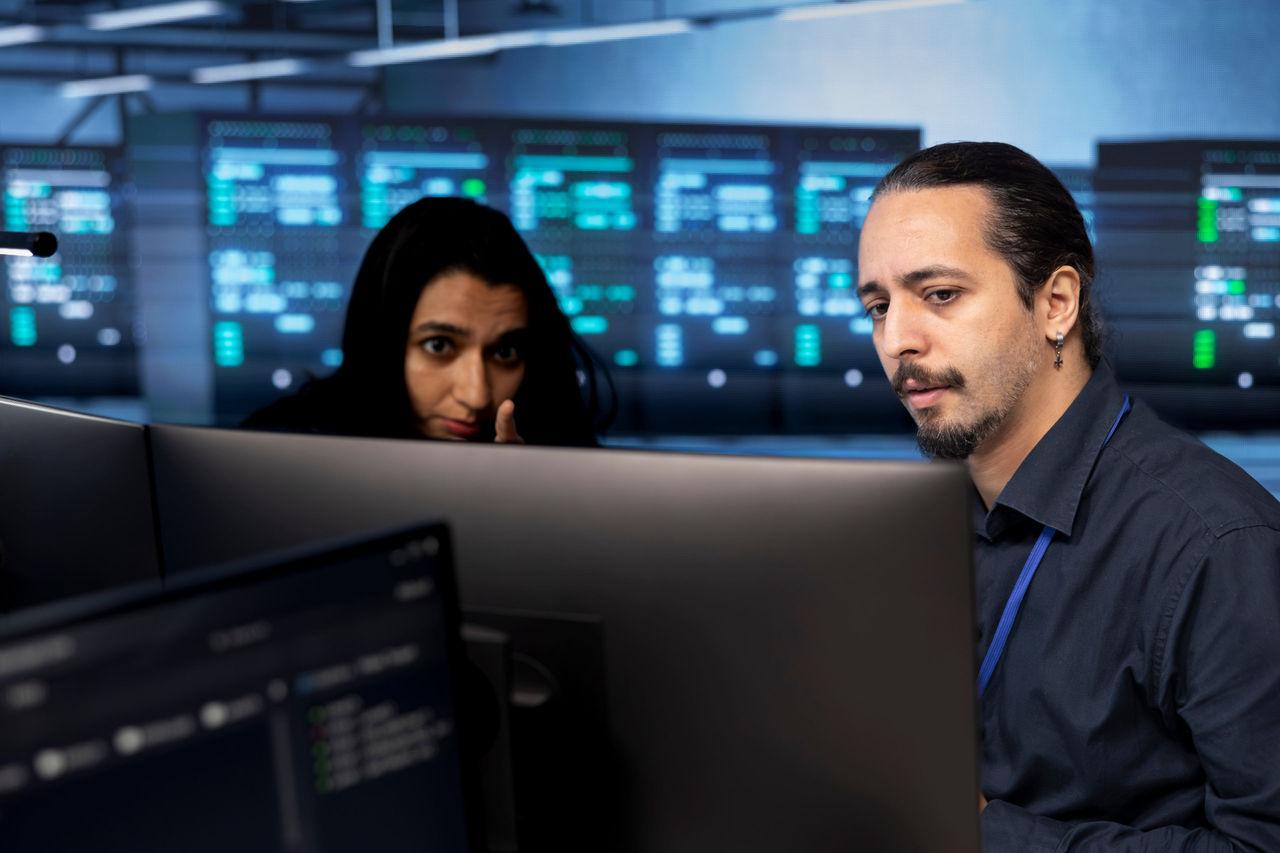
In any moderately connected company, the number of security logs and events The sheer volume of data generated every second is staggering. Without a tool to bring order to the system, it's impossible to know what's really happening on the network, detect attacks in time, or demonstrate compliance with security regulations.
That's where SIEM comes in: a technology designed to gather, correlate and analyze All that security data comes from servers, users, applications, networks, the cloud, OT devices, and much more. When properly implemented and integrated into a SOC, a SIEM becomes the central component for moving from simply putting out fires to having an organized and proactive cyber defense.
What is a SIEM and where does the concept come from?
When we talk about SIEM we are referring to Security Information and Event ManagementThat is, the management of security information and events. It is not a single new idea, but the combination of two previous approaches: SIM (Security Information Management) and SEM (Security Event Management), which historically had been treated separately.
On one hand, the part of SEM focuses on real-time monitoringThe correlation of events, alerts, and operational dashboards used daily by SOC analysts. It's the most "live" aspect, allowing you to see exactly what's happening right now in the infrastructure.
On the other hand, the SIM aspect deals with the historical management of security information: storage It offers long-term logging, advanced search capabilities, report generation, and support for forensic analysis. This component makes it possible to reconstruct what happened during an incident weeks or months later.
The modern SIEM unifies these two areas and acts as the key tool in a Security Operations Center (SOC)This applies to both traditional IT environments and industrial OT or SCI networks. From there, incidents are detected, responses are orchestrated, compliance reports are generated, and a comprehensive view of risk is maintained.
How a SIEM works: from registration to useful alert
An effective SIEM system is based on a chain of well-defined processes that transform raw records into actionable information for security teams. It's not just about storage logsbut to give them context and prioritize them.
First, the SIEM connects to a wide variety of data sources distributed throughout the IT infrastructure: servers, OSfirewalls, IDS/IPS, EDR and antivirus solutions, business applications, databasescloud services, network devices (switches, routers, load balancers), remote access tools, authentication and identity systems, etc.
In addition to classic IT assets, an advanced SIEM is capable of ingesting OT environment events and industrial workloadsThis is increasingly necessary in production plants, critical infrastructure, and industrial control networks. It can also be integrated with email security platforms, mobility solutions, virtualization systems, and containers.
During this phase, all those records are collected continuously and centrallyThis is typically achieved through agents, native connectors, syslog, APIs, or collections based on standard protocols. The goal is to have a "control tower" where all relevant security data converges.
The next step is the aggregation and normalization of the information. Each manufacturer generates its own log formats, with different fields, structures, and names, which would make it impossible to correlate them if they were left as is.
To address this, the SIEM unifies logs into a common model, aligning fields such as user, source IP, destination IP, normalized date and time, event type, severity, source device, etc. This uniformity allows for comparing what happens on a firewall with what happens on a server or in a cloud application without comparing apples and oranges.
Once the SIEM has a coherent dataset, it applies analysis policies and correlation rulesThese policies can be static rules (for example, a certain pattern of failed login attempts) or more complex logic that combines several types of seemingly isolated events.
Many SIEMs also incorporate techniques of artificial intelligence and machine learning to detect anomalous behaviors that don't fit with usual patterns. This is also where UEBA (User and Entity Behavior Analytics) comes into play, analyzing user and device activity to discover significant deviations that may suggest insider threats or account compromises.
If, as a result of all that analysis, the system detects indicators of attack or suspicious behavior, it generates alerts classified by criticality and displays them on centralized dashboards. These alerts are typically integrated with ticketing tools, corporate messaging, and automated response systems so the SOC can investigate and act quickly.
Key components and capabilities of a modern SIEM
The power of a SIEM is best understood by breaking down its main functional modules, who work together to provide the most comprehensive security coverage possible to the organization.
First is the record managementThis encompasses everything from harvesting at the source to long-term storage. Decisions are made here about what is stored, for how long, and with what level of detail, taking into account both operational needs and regulatory obligations.
Another essential piece is the correlation of eventsIt's the SIEM's ability to connect dots that, individually, might not seem significant. For example, a login from an unusual location followed shortly after by a surge in traffic to a sensitive server might appear to be unrelated events when viewed with isolated tools, but to a well-tuned SIEM, they are part of the same story.
In parallel, the SIEM relies on threat intelligence sources external (reputation feeds, indicators of compromise, blacklists of malicious IPs and domains, malware signaturesetc.). By cross-referencing internal information with these global indicators, it is able to quickly recognize patterns already categorized as malicious in other environments.
Control panels or dashboards constitute the layer of continuous visualization and monitoringThey provide executive views, compliance metrics, trend charts, and real-time technical views for SOC analysts. This allows them to monitor the security status at a glance and drill down into the details when needed.
Finally, many SIEMs integrate or connect with automated response capabilitiesIn this context, integration with SOAR platforms allows the execution of predefined playbooks: isolating compromised machines, blocking IP addresses, disabling accounts, modifying firewall rules, or activating containment tools, all in a matter of seconds and with minimal human intervention.
Advantages of deploying a SIEM in the organization
One of the great attractions of SIEM is that it allows you to achieve a global and unified visibility about what is happening in the security infrastructure. In environments where data centers, cloud computing, and remote work coexist, mobile devices and industrial networks, this visibility is almost impossible to achieve with isolated tools.
Thanks to real-time analysis and correlation, a well-tuned SIEM facilitates early incident detectionIt can identify an attack in progress while it is still in its early stages, giving you time to block it before it becomes a full-blown attack. serious gap or affects production or critical data.
In addition to live detection, the ability to store logs for months or years enables a detailed forensic analysisAfter an incident, the security team can reconstruct the chain of events, understand where the attacker entered, what lateral movements they made, and which systems were compromised, which is key to improving controls and preventing recurrences.
Another clear advantage is the centralization of security informationInstead of having to access dozens of different consoles and formats, analysts work on a single platform that consolidates relevant information. This reduces manual effort, simplifies management, and prevents important signals from being lost amidst the noise.
At an operational level, the SIEM contributes to a resource savings and greater efficiency of the security teams. Thanks to the automation of repetitive tasks, the filtering of false positives and the prioritization of alerts, analysts can dedicate more time to high-value tasks such as proactive threat hunting or improving detection rules.
SIEM in industrial and SCI environments: specific challenges
When we transfer these capabilities to the OT world or the industrial control systems (SCI)The situation becomes more complex. Operational technology networks have very different characteristics from those of a typical IT environment, and this directly impacts how a SIEM should be deployed.
One of the first challenges is the extremely long life cycle of many industrial devices. It is common to find equipment that has been in operation for decades, hardware and outdated operating systems, and in many cases, without native capability to generate or send standardized security logs.
In addition, they are devices with very limited featuresThese devices are designed to perform a specific task very well (controlling a process, a valve, a production line) and little else. Loading them with agents, scans, or intensive logging processes can negatively impact their stability, so the monitoring strategy must be extremely careful.
Another critical factor is the lack of detailed security logs in many industrial automation systems. This necessitates relying on intermediate elements (gateways, industrial firewalls, network probes) to generate the events that will feed the SIEM, or even deploying specific sensors for industrial protocols.
Finally, the need to personnel specialized in OT environments within the SOC. Interpreting events in industrial protocols, understanding the criticality of certain assets, or assessing the impact of an alert in a production plant is not something that can be learned overnight.
For a SIEM to provide real value in an industrial network, it is essential to first perform a detailed study of assets, communications and topologyIt's necessary to identify which systems are most critical to the process, which network segments are most sensitive, and which monitoring points are viable without impacting operations. From there, you define what information is sent to the SIEM and how it's normalized to be truly useful.
Integrate SIEM with IT SOC and hybrid environments
In many companies, the SOC that manages the Corporate IT security It already exists, whether it's your own or a Outsourced SOCWhen the need arises to also monitor the industrial environment, a common option is to create a "hybrid SOC" in which the SIEM receives events from both the corporate network and the OT network.
In this model, it is essential that the Industrial events should not be treated the same as IT events.The priorities, consequences, and risks associated with a PLC or an HMI are not the same as those of a mail server. Therefore, specific use cases and correlation rules must be created for the OT environment.
Likewise, it is advisable that at each level of the SOC there be staff with real knowledge of operating networksOtherwise, there is a risk of misinterpreting alerts, overreacting to normal operating events, or, conversely, minimizing incidents that in an industrial environment can have a very serious impact.
If the SOC is outsourced, the network architecture that connects the customer's infrastructure to the provider must to guarantee secure and segmented communicationsThis involves encrypted tunnels, strict access control, segmentation between IT and OT, and very clear policies on what data goes outside and for what purpose.
Beyond the industrial sector, major security platforms have evolved into ecosystems where SIEM is just one more piece within a unified SecOps environmentIntegrating XDR, endpoint agents, orchestration, and response automation, the goal is to provide analysts with a complete understanding of what's happening across endpoints, servers, email, identities, networks, cloud, OT, and global intelligence sources within a single framework.
Practical use cases and business benefits
In the day-to-day operations of a SOC, the SIEM becomes the central point of research Whenever an incident is suspected, instead of "requesting logs" from different teams, the analyst starts the investigation from the SIEM, searching for related events, filtering by user, IP, time range, or alert type.
The ability to correlate also allows detect activity that in isolation would seem harmlessFor example, a series of small authentication errors in a VPNA sudden increase in traffic to an internal server and an unexpected change in a firewall policy can be part of the same attack, something that the SIEM can automatically highlight.
Another key use case is the regulatory compliance and auditsMany regulations (such as NIS2, ISO/IEC 27001, PCI-DSS, and the GDPR in Europe) require maintaining detailed records of access, incidents, and security measures implemented. SIEM greatly facilitates the generation of reports, evidence, and documentation that demonstrate the organization is applying the required controls.
Regarding continuous improvement, the event history maintained by the SIEM is pure gold for Refine policies, adjust rules, and reduce false positivesBy reviewing patterns and results from previous incidents, detection models can be adapted to become increasingly refined and effective against advanced attacks and also against insider threats.
Finally, by combining monitoring, correlation, automation, and reporting capabilities, SIEM allows relatively small security teams to scale up your protection capacity in very complex environments, something unthinkable if they had to manually review each log source and manage each alert in isolation.
Implementing a well-sized SIEM aligned with the SOC transforms the chaos of millions of daily events into a structured, prioritized and actionable vision of the organization's security, which helps both to contain incidents in real time and to learn from them and comply with increasing regulatory demands.


Passionate writer about the world of bytes and technology in general. I love sharing my knowledge through writing, and that's what I'll do on this blog, show you all the most interesting things about gadgets, software, hardware, tech trends, and more. My goal is to help you navigate the digital world in a simple and entertaining way.