- Traditional thermal paste offers good performance, low cost and easy application, but it degrades over time and has clear limits of conductivity.
- Graphene TIMs, in the form of pastes or pads, provide much higher thermal conductivity and better mechanical stability.
- Graphene presents significant challenges: thermal anisotropy, higher price, delicate handling, and risk of short circuits due to its electrical conductivity.
- For most users, conventional thermal paste is sufficient, while graphene is reserved for high-performance equipment where every degree counts.
The world of PC cooling has become quite complex in recent years: we're no longer just talking about fans and heatsinks, but now advanced materials like graphene are also involved. For many users, the logical question is whether it's worth abandoning the old methods. traditional thermal paste and opt for graphene-based solutionseither in the form of paste or thermal pads.
What exactly is the thermal interface (TIM) and why does it matter so much?
In any PC cooling system, heat doesn't magically dissipate: it has to leave the chip and travel to the heatsink, and from there to the air or the cooling liquid. The key component at that point of contact is the thermal interface between the chip (or its IHS) and the heatsink, which is known as TIM (Thermal Interface Material).
Although at first glance both the processor's IHS and the base of the heatsink appear perfectly smooth, in reality their surfaces are covered in microscopic roughness, pores and cavitiesAir gets trapped in these micro-imperfections, and air is a very poor conductor of heat, with a thermal conductivity of around 0,026 W/m Kacting as an unwanted insulation.
These air pockets become veritable thermal barriers, slowing the flow of heat from the chip to the heatsink. Without any material in between, heat transfer is uneven and highly inefficient, which can cause the component to overheat. dangerous temperatures, performance drops, and even permanent damage if it remains like this for a long time.
To avoid these air-filled cavities, a TIM is used: a viscous or compressible material that fills all those micro-cracks and creates a high thermal conductivity “junction” between the IHS and the heatsinkIn the PC environment, that TIM is almost always the well-known thermal paste, although more exotic solutions such as graphene pastes and pads are starting to gain ground.
In everyday terms, this means that without a good TIM, the processor, which usually operates between about 45 and 60 ºC in normal use (you can measure CPU and GPU temperatureThis can cause its temperature to spike under heavy loads to levels where malfunctions, crashes, or the dreaded automatic frequency reduction (throttling) occur. Therefore, correctly applying a quality thermal interface is almost as important as installing a good heatsink.
How conventional thermal paste works
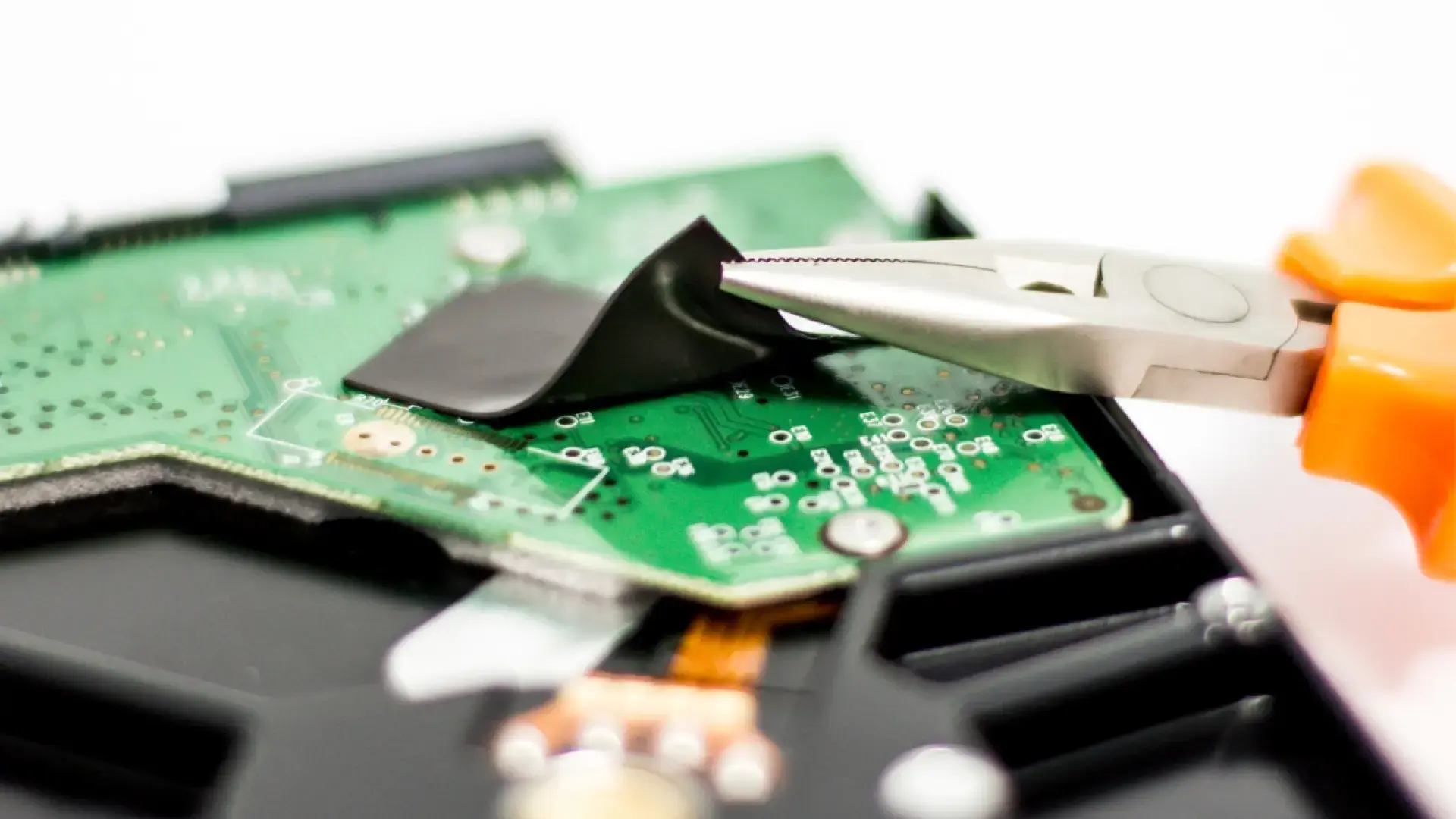
Traditional thermal paste is that viscous substance applied to the processor's IHS (or directly to the chip in some GPUs) before attaching the heatsink. Its purpose is to fill all the microscopic gaps and ensure proper heat dissipation. close and continuous contact between the hot surface and the heat sinkpreventing air from interfering.
From a chemical point of view, thermal paste is composed of a base matrix formed by synthetic oils, silicones (such as PDMS), organic esters and thermoset polymersThis matrix is responsible for the paste's moist and slightly sticky texture, and also for its ability to conform to the irregularities of both surfaces. The problem is that these components, on their own, have a fairly low thermal conductivity, in the range of 0,2 W/m Kwhich falls far short of the thermal requirements of a modern PC.
To overcome this limitation, the matrix is added fillings with high thermal conductivityThis is where ceramic particles (such as zinc oxide, aluminum oxide, or aluminum nitride) and micronized metals (for example, very fine particles of silver or copper) come into play in higher-end pastes. The better the filler and the higher its proportion, the more efficiently the paste will transfer heat.
In practice, most commercial thermal pastes offer conductivity values between 1 and 12 W/m·Kdepending on both the type of filler and the volume fraction used. Entry-level models fall at the lower end of that range, while high-performance models, especially those that include micronized metalsThey approach the higher values, but rarely exceed 15 W/m·K.
Main advantages of classic thermal paste
One of the main reasons why conventional thermal paste continues to dominate the market is that it combines a number of practical and economic advantages very difficult to match by other more advanced materials.
First of all, your application is quite simple For the average user. Being a viscous material with a certain controlled flow, it is enough to spread a small amount on the IHS so that, when the heatsink is placed and pressed, the paste distributes itself and adapts to the micro-imperfections without too much trouble.
It also works in its favor that low cost of componentsSilicones, oils, and ceramic fillers are relatively inexpensive and easy to mass-produce, which keeps thermal paste prices within a very affordable range, even for well-known, high-performing brands.
Another key point is the electrical stability of many ceramic formulationsSince they are non-conductive, if a little paste is accidentally spilled on a nearby contact, there is no risk of causing a short circuit. This provides a safety margin that is highly valued by those building their first PC or adjusting a graphics card without much experience.
Furthermore, conventional thermal paste is Extremely versatile and compatible with all types of componentsCPUs, GPUs, chipsets, ASICs, and virtually any chip requiring external cooling. It also works seamlessly with aluminum, copper, and other alloy heatsinks without significant compatibility issues.
Disadvantages and limitations of traditional thermal paste
Although conventional thermal paste performs its function adequately in most PCs, it is by no means without its drawbacks. The first major problem is that its The liquid matrix tends to degrade over timeSome of the oils and silicones slowly evaporate, especially in high-temperature environments, causing the paste to harden, lose elasticity, and potentially crack.
When this happens, the paste stops filling the microcavities correctly and they reappear. air pockets that worsen heat transferTherefore, it is recommended to replace the thermal paste periodically, usually between 1 and 3 years depending on usage, temperatures, and product quality. extend the life of your computer.
Another common phenomenon is the so-called "pump-out"With heating and cooling cycles, both the IHS and the heatsink expand and contract slightly. This difference in movement and coefficients of expansion causes the thermal paste, which is trapped between the two surfaces, to tend to shift laterally over time, pushing towards the edges of the contact area.
This pumping effect ends up reducing the effective thickness of the paste layer in the central areaThis is precisely where the most heat is generated, and it can lead to a gradual increase in temperatures if not checked. This is especially noticeable in equipment subjected to sudden and frequent temperature changes.
Finally, even the best thermal pastes on the market, with silver or copper fillers, encounter a physical limit in terms of their thermal conductivity propertiesAs mentioned before, it is rare to see values exceeding 15 W/m·K in commercial thermal pastes, which leaves room for improvement compared to more advanced materials designed for high-power applications, such as AI servers, HPC, or extreme gaming PCs with significant overclocking.
The leap to graphene: what it offers as a thermal material
In recent years, graphene has become fashionable in virtually every technological field: from medicine to transistors, and from batteries to advanced sensors. In the area of PC cooling, its enormous potential is beginning to be explored. potential as a thermal interface materialeither within pastes or in the form of solid pads and sheets.
Graphene is, essentially, a single layer of carbon atoms arranged in a two-dimensional hexagonal latticeThis structure gives it exceptional properties: extremely high mechanical strength, excellent electrical conductivity and, what is of interest here, truly impressive in-plane thermal conductivity.
In theory, a sheet of pure graphene can achieve very high thermal conductivities, far exceeding what conventional thermal pastes offer. The challenge lies in how. to bring those properties from the laboratory to a commercial product that can be used practically between a processor and a heatsink.
Producing high-quality graphene on an industrial scale is not trivial. Although carbon as an element is abundant and cheap, obtaining graphene structures with the right characteristics in large volumes remains a challenge. complex and relatively expensive processEven so, the industry has been progressing and prices have been gradually decreasing, opening the door to new thermal solutions for the end user.
That's why graphene-based products are starting to appear on the market that replace, totally or partially, the usual ones ceramic or metallic fillers of traditional thermal pasteBy doing so, they aim to significantly improve heat transfer between the chip and the cooling system.
Types of TIM with graphene: pastes, pads and hybrid materials
When we talk about graphene thermal paste or graphene pads, we're not usually using ideal, perfect graphene, but rather different types. practical forms of carbon derived from grapheneThese include multilayer structures, reduced graphene oxide (rGO), and hybrid combinations with other materials, including metals.
In a format most similar to traditional thermal paste, some TIMs incorporate graphene flakes or rGO as filler within a matrix similar to that of conventional pastesThis allows for a consistency that can be applied with a spatula or syringe, while improving thermal conductivity compared to standard ceramic fillers.
Another approach is the graphene thermal pads or cushionsInstead of a viscous fluid, these are thin, flexible, and compressible sheets placed between the chip and the heatsink. These sheets take advantage of graphene's excellent in-plane conductivity and good mechanical stability to provide highly efficient thermal contact without the need for thermal paste.
Hybrid solutions are also being investigated, in which graphene is combined with metals or other compounds to optimize both thermal conductivity and mechanical and electrical compatibility. In some cases, the graphene layers are oriented or carbon nanotubes are integrated to better utilize the heat flow in the appropriate direction.
In terms of figures, many graphene-based TIMs currently on the market fall within a range of 10 to 30 W/m·K thermal conductivitywhether in the form of advanced pastes or pads. This already represents a significant leap compared to most traditional pastes, although much higher values have been seen in very advanced prototypes, especially those geared towards data centers and HPC.
Thermal properties of graphene versus conventional paste
Directly comparing traditional thermal paste with a graphene-based TIM involves looking at several key aspects, starting with the effective thermal conductivity in practiceWhile many mid-range pastes are between 4 and 10 W/m·K, graphene solutions can easily reach ranges of 10-30 W/m·K, and even higher values in very specific products.
One particularly striking case is that of the graphene heating pads like the TG-P100 modelThese sheets are advertised with a horizontal thermal conductivity (in the plane of the sheet) of between 1500 and 1800 W/m·K, and a vertical conductivity of about 12 W/m·K. Although the horizontal figure is impressive, what really interests us between the chip and the heatsink is the vertical component, which still easily surpasses many traditional thermal pastes and even some liquid metal compounds.
Graphene's greatest strength lies in that extremely high thermal conductivity and greater uniformity of behavior when the sheets or particles are well oriented. Compared to conventional pastes, in which the conductive particles can be distributed more randomly, the use of flat graphene structures improves the formation of continuous heat bridges.
In demanding environments like HPC, data centers, or AI servers, where CPUs and GPUs with very high TDPs are used, temperature reductions of just a few degrees make a difference. That's where graphene TIMs can achieve measurable temperature reductionsThis translates into better overall cooling and, in many cases, lower long-term energy costs for the data center operator.
We must not forget either the mechanical stability of grapheneSheet structures withstand high temperatures very well without noticeable degradation, maintaining their properties for longer than many oil and silicone-based pastes, which end up drying out or pumping to the sides with thermal cycles.
Advantages of graphene-based TIMs
The first advantage that is usually mentioned is the considerably higher thermal conductivity Compared to traditional thermal pastes, in many commercial products, a graphene thermal paste can double or even exceed the conductivity value of a conventional mid-range paste, allowing for greater heat dissipation with the same contact surface area.
To this is added a greater stability at high temperaturesGraphene and its derivatives withstand thermal stress better than traditional liquid matrices, limiting degradation from oil evaporation and reducing hardening over time. This results in more consistent performance during extended use cycles.
Another interesting point is that many of these TIMs show a lower propensity for the pump-out effectBy resting on sheets or structures with better internal cohesion, the material has less tendency to shift laterally with temperature changes, better preserving the useful thickness in the area of direct contact with the chip.
In the case of heating pads, installation can be advantageous in certain scenarios, as it only requires Cut the sheet to the appropriate size and place it between the processor and the heatsink.without making a mess or having to control the exact amount of pasta. This can be especially convenient in portable, motherboard VRMs or areas where access is difficult.
Finally, in the professional sphere (HPC and AI), where systems operate virtually 24/7 and energy costs are critical, the use of more efficient thermal solutions such as those based on graphene helps to maintain slightly lower operating temperaturesThat small advantage, repeated across thousands of nodes, can result in very considerable energy and cooling cost savings for a data center.
Limitations and challenges of graphene in PCs
Despite all its virtues, graphene is not a magic bullet that solves all problems at once. One of the major technical challenges is its anisotropic conductivityIt conducts heat extremely well in the plane of the sheet, but does so worse in the perpendicular direction.
This means that if the graphene layers are not properly oriented or designed to promote vertical heat flow between the chip and the heatsink, the The actual use of that theoretical conductivity may be compromisedThat is why the use of vertically aligned structures or nanotubes that join the sheets is being investigated, to improve heat transport in the appropriate direction.
The second major obstacle is the priceAlthough it has decreased over the years, producing high-quality graphene for thermal applications remains more expensive than using traditional ceramic or metallic fillers. Furthermore, processing and blending graphene into polymer matrices requires advanced techniques and often the use of surfactants and more expensive specific processes.
On a practical level, another problem is that graphene is highly conductive of electricityIf a graphene paste or pad comes into contact with exposed traces, pads, or pins, it can cause short circuits, just like liquid metal pastes or those containing conductive metals. This necessitates extra care during assembly and application, especially in areas with a high concentration of components.
As if that were not enough, the Graphene heating pads are usually more delicate to handleIt's advisable to handle them with precision tweezers to avoid damaging them, bending them excessively, or contaminating them with finger oils. This, along with their high price, can be a barrier for users who simply want to build their PC without too much hassle.
At the research level, work continues on solutions that align graphene sheets vertically, fold structures into nanotubes, or combine different forms of carbon to Improve vertical conductivity without further increasing costsBut, for the moment, many of these proposals remain closer to the laboratory than to the typical home PC.
Thermal paste vs graphene pads: when is each one suitable?
When comparing traditional thermal paste with graphene padsIt is important to keep in mind not only thermal conductivity, but also the type of use, the budget, and the user's experience in assembling hardware.
For a standard office PC, a moderate gaming rig, or a family computer, a good quality conventional thermal paste of medium or high quality It's usually more than enough. Its performance-to-price ratio is excellent, the application is simple, and with maintenance every few years, more than acceptable thermal performance is guaranteed.
Graphene pads, on the other hand, make sense in scenarios where the goal is to... squeeze every last drop of temperature out of every degree.Aggressive overclocking, high-performance gaming PCs, intensive rendering systems, or workstations that run at 100% load all day. In these cases, the improved vertical conductivity of solutions like the TG-P100 and similar products can make a noticeable difference.
However, the switch to graphene pads involves assuming a higher cost and a more delicate installationIt is recommended to accurately measure the required thickness, cut precisely, and ensure that the fit between the chip, pad, and heatsink is perfect to avoid areas without effective contact where heat can accumulate.
It is also important to value the risk of short circuits due to graphene's electrical conductivity. On motherboards with many components very close to the socket, or on graphics cards with memory chips around the GPU, extra precautions should be taken to ensure that the sheets do not encroach on areas where they could touch exposed traces or contacts.
In professional settings, the choice involves a more objective analysis: the cost of implementing graphene TIM (including installation and potential risks) is compared against the long-term energy and cooling savingsespecially in data centers where a few watts per node end up adding up to huge figures at the end of the year.
Ultimately, both thermal paste and graphene, whether in paste or pad form, have their place. The decision depends on your priorities. ease of use and low cost or if you're looking for the maximum possible thermal efficiency assuming greater complexity and priceIdeally, you should thoroughly understand the features of each option and not be swayed solely by novelty or marketing, but rather by the actual needs of the equipment and the use you will give it.
Given all of the above, it is clear that conventional thermal paste remains the most balanced option for most users due to its good performance, simplicity and low costWhile graphene-based solutions are positioned as high-end alternatives capable of offering superior conductivity, greater stability, and less degradation over time, they come at the cost of a higher price, more delicate handling, and certain electrical risks which should be kept in mind before taking the leap.


Passionate writer about the world of bytes and technology in general. I love sharing my knowledge through writing, and that's what I'll do on this blog, show you all the most interesting things about gadgets, software, hardware, tech trends, and more. My goal is to help you navigate the digital world in a simple and entertaining way.