- openSUSE Leap offers a stable and binary-compatible SLES base, ideal for businesses and users who prioritize reliability and minimal changes.
- Tumbleweed is the rolling release option, with very recent software and more changes, suitable for advanced users and developers.
- MicroOS and Leap Micro offer an immutable approach: the former based on a rolling basis for desktop and containers, the latter based on a stable enterprise basis for edge and servers.
- The choice between these editions depends on whether desktop or server is prioritized, stability versus new features, and the need for an immutable system.
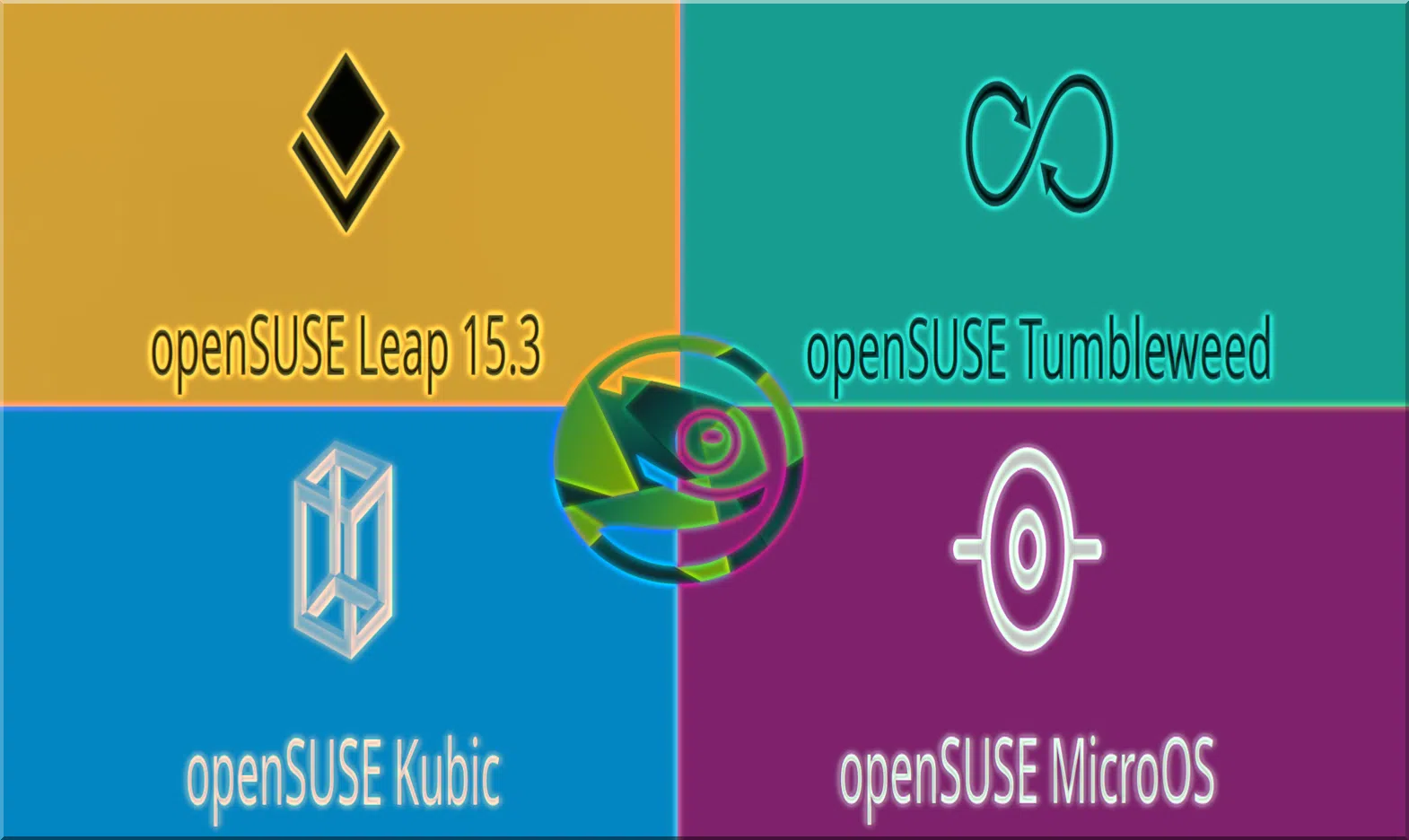
If you've gotten this far comparing openSUSE Leap, Tumbleweed, MicroOS, and Leap Micro , you're probably at that point of "I like openSUSE, but I don't know which flavor to install or which desktop environment to choose ." Don't worry, you're not alone: many users come from distributions like Linux Mint, Ubuntu, or Fedora, fall in love with openSUSE for its tools and philosophy... and then find themselves overwhelmed by so many options.
In this article we will calmly break down the real differences between Leap, Tumbleweed, MicroOS and Leap Micro , what each one brings to the table, what type of user or environment they are designed for and what implications they have in terms of stability, updates, drivers (including the eternal issue of Nvidia and its legacy drivers) and use cases for desktop as well as server, containers or edge computing.
What is openSUSE Leap and who does it make sense for?
The classic edition that many people have in mind when they hear about openSUSE is openSUSE Leap, a stable distribution based on SUSE Linux Enterprise (SLE or SLES). It's not simply a "derivative," but shares the same binary base, meaning that internally they are virtually identical in the system kernel.
This relationship makes Leap particularly attractive to businesses and professional environments that need something very similar to SLES, but without paying for support. From a technical standpoint, for many deployments, Leap is a free and functionally equivalent alternative, with the caveat that it doesn't include official SUSE support.
This close relationship with SUSE Enterprise makes Leap a fantastic choice for servers, private clouds, and deployments where stability is paramount . It's a thoroughly tested system, conservative with its package versions, and designed to minimize unpleasant surprises after an update, provided its operating rules are followed.
On the desktop, Leap is usually favored by those who prefer a slow pace of change, a system that rarely breaks , and one that doesn't require constant updates. It's the typical environment for "quiet people," as someone put it in a forum thread: users who prioritize their PC always booting the same way and don't need the very latest software.
Advantages and disadvantages of Leap in everyday use
Leap's main strength is its medium- and long-term stability . Its lifecycle is predictable, major version changes are infrequent, and updates typically focus on security patches and bug fixes, rather than introducing radically new versions of the entire ecosystem.
However, this stability comes with a catch: Leap is designed to be used almost exclusively with the official repositories (plus Packman, and little else). If you start adding third-party repositories willy-nilly, updating key libraries, or compiling half your desktop from source code to push versions, you're violating Leap's philosophy and, by definition, introducing instability.
This point is frequently raised in community discussions: if, using Leap, you need to install a program that requires much more recent versions of certain libraries , forcing those dependencies disrupts the stable and consistent environment it was designed to be. In contrast, Tumbleweed typically installs without much trouble because the software is already in recent versions.
It's also important to keep in mind that, while you can compile software manually, compilation doesn't work miracles : if the source code doesn't implement a feature, you're not going to create it out of thin air. And if you start compiling a large part of the system (like someone who compiled KDE and Qt up to version 3.5.10 back in the day), there comes a point where it almost makes no sense to keep calling that Leap "stable."
That's why the community itself emphasizes: Leap shines when used conservatively , with few additional repositories and without excessive tweaking of the base versions. When this approach is followed, it's very reliable for both servers and desktops that don't need the latest version of every application.
openSUSE Tumbleweed: rolling release for those who want to get moving
At the other end of the spectrum is openSUSE Tumbleweed, the rolling release edition of the family. Here, the idea is to always have the latest version possible: kernel, desktop environment, compilers, libraries, etc. Everything is continuously updated as new versions are integrated and tested.
The forum has joked that Tumbleweed is "for rock fans ," while Leap is for more laid-back users. They're not far off the mark: Tumbleweed is ideal if you like tinkering, trying out the latest features, receiving frequent updates, and aren't afraid of dealing with the occasional hiccup, especially when it comes to drivers or very specific hardware.
An interesting point that was raised is that, in certain scenarios, a system with newer software can behave more stably than one with older versions, especially when certain applications need modern features or specific fixes that are only available in newer branches. In those cases, a conservative environment like Leap can force you to enforce external dependencies and end up more broken than Tumbleweed.
However, it's also true that forums feature more threads about Tumbleweed-related problems than Leap-related ones . There's some debate about this: some point out that it's because more people use Tumbleweed, and those who do tend to be better at tagging topics. Others argue that Leap simply experiences fewer issues on a daily basis. The reality is probably somewhere in between: Tumbleweed has a larger user base and also more frequent updates, which increases both the likelihood of bugs and the number of reports.
Nvidia's legacy drivers and the Slowroll case
One of the areas where Tumbleweed's rolling nature is most noticeable is in the management of proprietary drivers, especially those from Nvidia . When Nvidia designates a series of cards as "legacy," it stops supporting them in the latest drivers, forcing users to rely on older branches (like 470) that may become incompatible with newer kernels.
In recent discussions, it was mentioned that with the arrival of the 570 series drivers , GeForce 10, 9, 8, and 7 series cards would be considered legacy. This means that when later versions are released (for example, a hypothetical 575), these GPUs would no longer be supported by the latest driver. One user with a GTX 1070 explained that, for the moment, he was very happy with the 570 series and had no problems, but the support horizon is becoming increasingly limited.
In Tumbleweed, this continuous dance of kernels and drivers makes older Nvidia GPUs suffer more , and one of the reasons mentioned for switching from Tumbleweed to Slowroll was precisely that: to try to mitigate the "scares" that combinations between legacy drivers and very recent kernels can cause.
Interestingly, these kinds of headaches aren't unique to Tumbleweed either . Several users who had been using Leap for years reported experiencing similar problems with Nvidia drivers in that more stable branch, especially when the driver series they needed stopped being compatible with the Leap kernel or required patches and manual adjustments.
In any case, the key is to understand that, in a highly dynamic system like Tumbleweed, there is a greater likelihood of encountering conflicts with components that become obsolete , whereas in Leap, since everything is more static, the ecosystem moves more slowly but it also takes longer to notice the incompatibility… until a specific change makes it evident.
MicroOS: an immutable system oriented towards desktops and containers
Taking a step beyond the classic "stable vs. rolling" paradigm, openSUSE MicroOS emerges as the immutable edition of the family . The idea is that the base system is treated as a virtually untouchable image, designed to be highly robust against changes and perfect for containerized environments, atomic deployments, or desktops where system isolation from applications is desired.
MicroOS is conceptually similar to things like Fedora Silverblue , but it's built on the rolling release foundation of openSUSE Tumbleweed. That is, internally it leverages modern technologies to offer a largely read-only system, with atomic updates and simple rollback mechanisms, making it very attractive to both developers and users who want a highly break-resistant desktop environment.
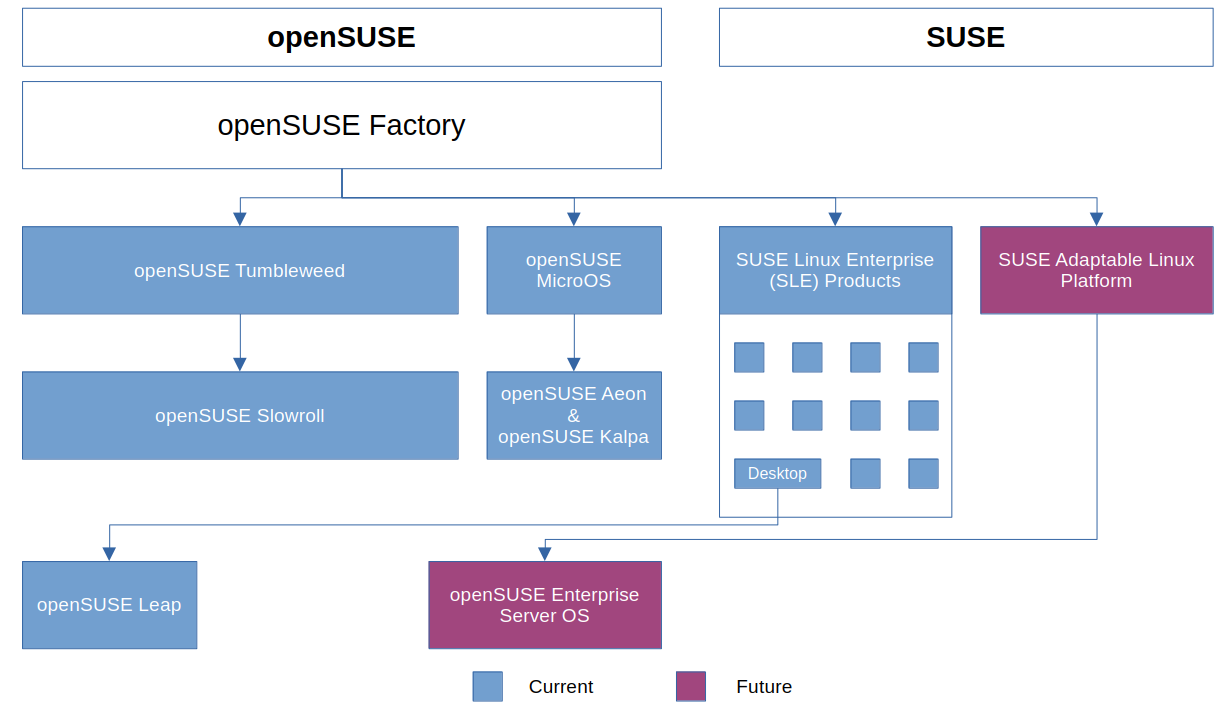
Within the current ecosystem, branding has also been refined: Aeon and Kalpa are linked to this "immutable" world, but are geared more towards those who want a pre-packaged desktop with minimal customization. The idea is to offer ready-to-use environments, designed for developers or users who don't want to spend hours tweaking their desktop, but rather have something that works well and remains stable through atomic updates.
This has led to some confusion regarding the names: some users are wondering if separating Aeon and Kalpa from the MicroOS brand means MicroOS is going to disappear or if its scope is simply being narrowed . Current information suggests the latter: the projects are diversifying, specializing in specific user profiles, but the underlying immutable operating system technology remains very much alive and available in various versions.
openSUSE Leap Micro: the “ultra stable” sibling for edge and servers
A newcomer to the family is openSUSE Leap Micro, still in the testing phase in its early versions (such as Leap Micro 5.2 beta). This system is directly based on SUSE Linux Enterprise Micro, just as Leap is based on SLES, but with a very clear objective: to be an "ultra-reliable and lightweight" platform for modern workloads based on virtualization and containers.
Leap Micro is based on the SUSE Linux Enterprise platform , not necessarily the latest version of Leap, but the previous stable and established version. From there, it builds an immutable system with robust security mechanisms, regulatory compliance, and patch automation, ideal for deployments where you don't want to make significant changes to the base system once it's in production.
Leap Micro's primary focus is on decentralized environments, microservices, and distributed projects deployed at the edge, in embedded systems, IoT, and similar applications. In other words, scenarios with many relatively small nodes that need to be secure, self-managing in terms of updates, and requiring minimal manual maintenance.
Leap Micro's own description states that it is prepared to help developers and IT teams in fields such as aerospace, telecommunications, automotive, defense, healthcare, robotics, and blockchain . All of these fields share the need for robust platforms with an immutable foundation and tools to manage fleets of distributed machines with automated patching.
Microsoft OS vs Leap Micro: Similarities, Differences, and Use Cases
At first glance, MicroOS and Leap Micro may sound very similar: both are immutable systems within the openSUSE umbrella . However, their orientation and underlying technology make for very clear differences when choosing one over the other.
MicroOS is built on Tumbleweed and its rolling release philosophy , while Leap Micro is based on the stable enterprise branch (SUSE Linux Enterprise Micro). That already gives you a clue: MicroOS is better suited to scenarios where you want to combine immutability with a relatively constant flow of updates, and Leap Micro is geared towards deployments where changes to the base system are to be minimized as much as possible.
Another crucial difference is that, as the project explains, Leap Micro doesn't offer a graphical environment or desktop . It's designed for server, edge, container, and embedded device tasks, where a full desktop isn't typically needed. In contrast, MicroOS does have a desktop variant and, as mentioned earlier, shares a philosophy with offerings like Fedora Silverblue: an immutable base system with encapsulated applications.
To put it in practical terms: if you want an immutable system for running containers, microservices, or minimalist instances on distributed networks, Leap Micro is a better fit. If you're looking for an immutable workstation on openSUSE with a modern desktop, MicroOS (or its derivatives like Aeon/Kalpa) is the more logical choice.
In any case, both benefit from the hardened security and compliance components of SUSE Linux Enterprise , making them especially attractive to companies that need to demonstrate that their systems meet certain security and quality standards, but do not want to pay for licenses for each node in development or testing environments.
MicroOS, Aeon, Kalpa and the naming mess
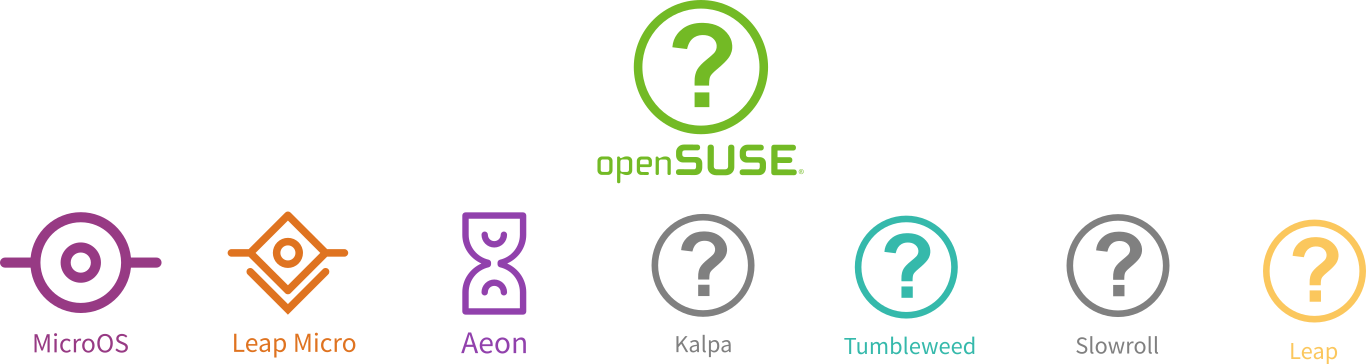
Within the openSUSE community, it's been noted that the naming scheme for immutable distributions is becoming a bit confusing . Between MicroOS, Leap Micro, Aeon, Kalpa, and the classic editions, it's understandable that many people are wondering what's intended for whom.
In broad terms, it can be understood as follows: MicroOS and Leap Micro seek to cover general-purpose and infrastructure needs (servers, edge, containers, virtualization), while Aeon and Kalpa focus more on the "out-of-the-box" desktop of developers or users who do not want to get bogged down with deep customization.
The separation of Aeon and Kalpa from the MicroOS brand doesn't necessarily mean that MicroOS will disappear , but rather that the audiences and use cases for each project are being better defined. MicroOS would remain that unchanging, general-purpose foundation, while Aeon and Kalpa would be specific versions built on that technology, but with much more targeted applications.
For the end user, the trick is not to be overwhelmed by the branding and to focus on three key questions: Do I need a desktop or server-only platform? Do I want a stable or rolling base? And do I need immutability ? With those three answers, the choice between Leap, Tumbleweed, MicroOS, and Leap Micro becomes much clearer.
Given all of the above, the openSUSE family ultimately offers a range of options, from Leap as a free and stable alternative to SLES , to Tumbleweed for those who want to stay up-to-date, to MicroOS and Leap Micro for immutable environments, containers, and edge computing. The right choice depends less on which is "best" in the abstract and more on your workflow, your tolerance for frequent changes, and the type of hardware and applications you'll be using.

Passionate writer about the world of bytes and technology in general. I love sharing my knowledge through writing, and that's what I'll do on this blog, show you all the most interesting things about gadgets, software, hardware, tech trends, and more. My goal is to help you navigate the digital world in a simple and entertaining way.