- The Codex Micro is a $230 macropad developed with Work Louder to manage Codex AI agents.
- It features 13 mechanical switches, a joystick, a rotary encoder, and LED lights that indicate the status of the working wires.
- It represents OpenAI's first foray into hardware, anticipating the arrival of a smart home assistant in the future.

It seems OpenAI has decided that artificial intelligence simply living within a browser tab is no longer enough. They've just dropped a bombshell by launching their first physical device, the Codex Micro , an accessory that isn't exactly a keyboard for writing novels, but rather an advanced command center designed for those who spend their days coding and managing AI agents.
The truth is, this move has caught many by surprise, as it was rumored that their first step into hardware would be something more disruptive or personal. However, they've opted for a smart move: tackling the operational friction for developers by creating a tool that allows them to control complex workflows without having to frantically jump from one window to another.

What exactly is the Codex Micro and how does it work?
For those unfamiliar with the term, this is a macropad , essentially a mini mechanical keyboard with very specific functions. This device features 13 mechanical switches and has been meticulously developed in collaboration with Work Louder , a company with a proven track record of crafting keyboards for tech professionals.
The device costs $230 and comes equipped with an array of controls: a planar joystick for navigating frequently used actions, a touch sensor, and a rotary dial. The latter is particularly useful, as it allows you to adjust Codex's reasoning level on the fly, preventing you from having to put down the main keyboard to change parameters in the software.
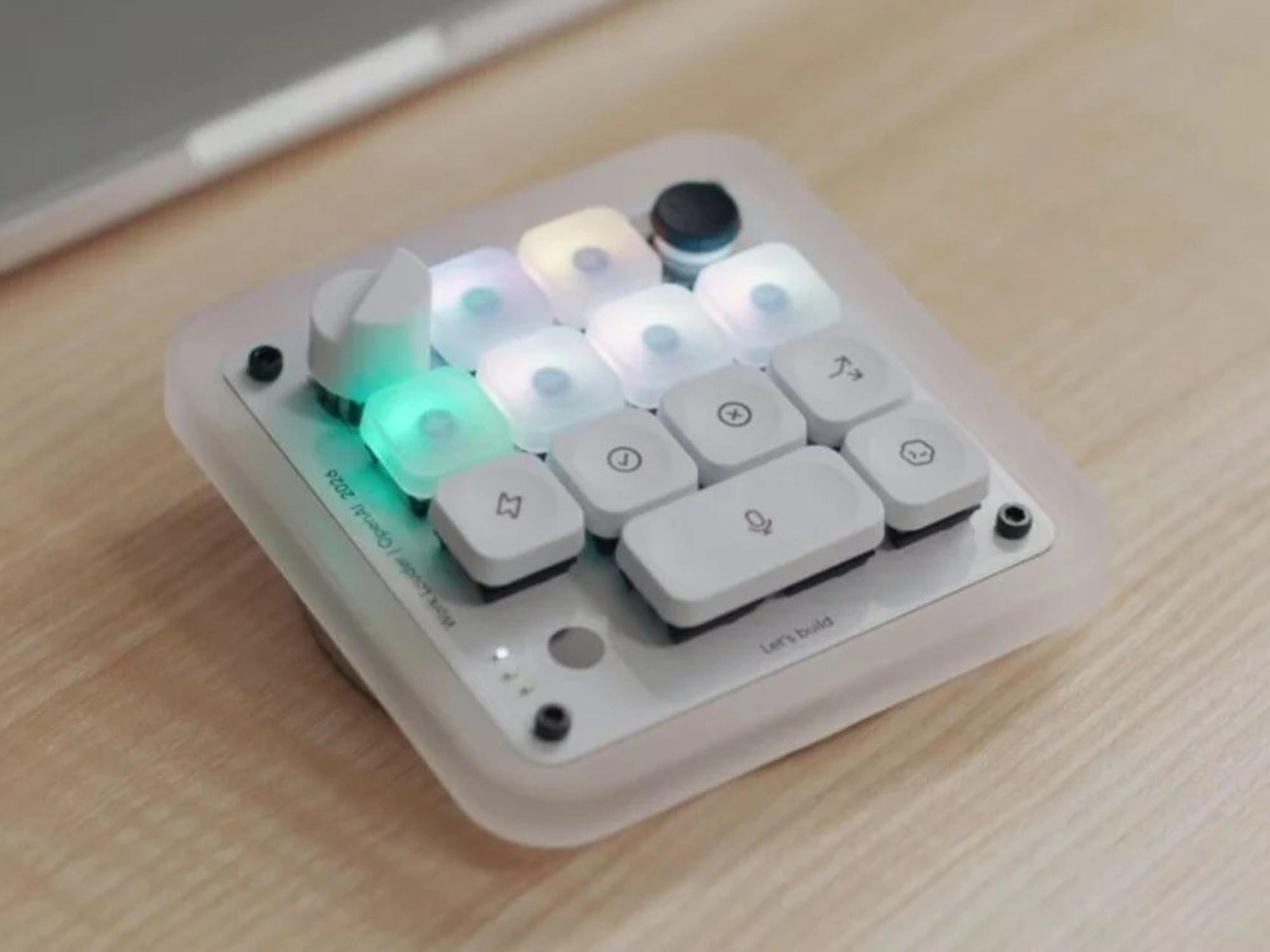
The most striking feature is its six RGB keys , which function as a status indicator for up to six agents or threads. There's no need to look at the monitor to know what's happening: white light means the agent is inactive; green indicates an unread message; blue means the AI is processing; orange requests your human approval; and pink warns of an error.

It also includes a dedicated push-to-talk key for sending voice commands and shortcuts for accepting or rejecting suggestions. All of this is compatible with Mac and Windows via Bluetooth or USB-C, and includes 32 custom keycaps for a perfect setup.
The strategy behind specialized hardware
Many will wonder why OpenAI has ventured into this territory. The answer is simple: they want AI to be native to the workflow . Instead of trying to build a laptop from scratch, they adapted an existing Work Louder design, allowing them to reduce inventory risk and launch the product in record time.
This approach is entirely different from that of competitors like Anthropic, which focus more on voice and chat. OpenAI is betting on a hybrid experience where physical control and real-time visibility via LEDs eliminate the programmer's cognitive load. Essentially, they've validated that AI is so critical today that it deserves its own dedicated button.

For those venturing into the productivity sector, this offers a clear lesson: value lies not in the hardware itself, but in its deep integration with the software . Codex Micro isn't a product for the general public, but rather a very specific niche of early adopters who already routinely use code editors and IDEs in their daily work.
The future of OpenAI and its next physical steps
While the Codex Micro has opened the door, it's not the flagship project the company has up its sleeve. They are known to be working with LoveFrom , the studio of Jony Ive (the genius behind Apple's design), to develop a family of up to five physical products.
The main attraction will likely be a smart speaker with native AI capabilities, slated for 2027. This device wouldn't be a simple music player, but a home computer that uses GPT-Live for natural conversations, incorporating cameras and sensors to understand the environment and proactively assist the user.
Meanwhile, Codex Micro has already proven its commercial success, selling out quickly after its launch on July 24, 2026. With a user base of 8 million active users across Codex and ChatGPT Work, OpenAI is paving the way for human-AI interaction to move from screens to tangible objects.