- The first recognized video game was OXO, created in 1952 by Alexander Douglas.
- Tennis for Two and Spacewar! marked fundamental milestones in the evolution of the original video game.
- Pong revolutionized digital entertainment, launching the commercial video game industry in 1972.
- Since then, consoles and computers have transformed video games into a mass cultural phenomenon.
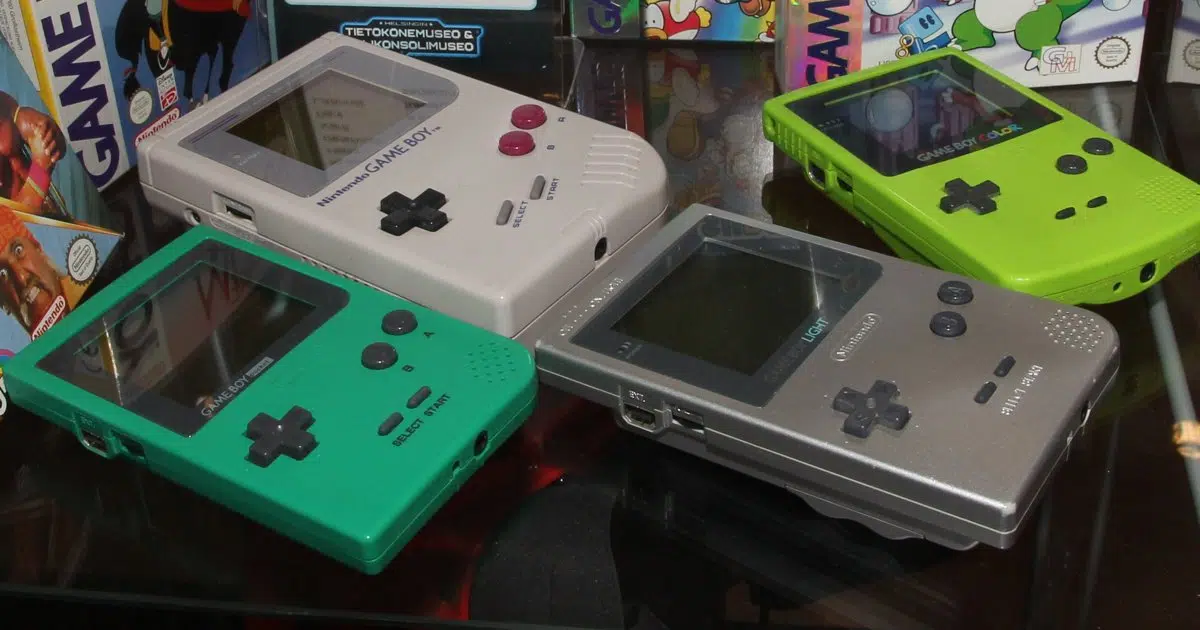
Have you ever wondered what the first video game in history was? The first things that might come to mind are Pac-Man, Pong, or even Super Mario. However, the true history of video games is much older and more complex than it seems. In this article, we'll take you on a journey through the early decades of video games, from laboratory experiments to the first commercial titles that gave rise to an industry that now generates billions.
Many of these early video games emerged as pastimes among scientists or university students before becoming a global cultural, economic, and social phenomenon. Let's delve into the origins of digital entertainment, reviewing the technological advancements, key figures, pioneering devices, and anecdotes that marked the beginning of video games as we know them today.
The technological background that made it possible
Before discussing video games as such, we must go back to the technological developments that made them possible. World War II and the subsequent Cold War greatly accelerated advances in computing , artificial intelligence , and human-computer interaction.
Alan Turing and Claude Shannon were two of the pioneers who envisioned computers capable of executing logical models, algorithms, and, later, simulations. Turing even designed a chess program in 1948 which, although it couldn't be run due to a lack of suitable hardware , foreshadowed game programming.
Claude Shannon , for his part, proposed in 1949 a system for a machine to play chess using evaluation rules and decision trees, concepts that are still maintained today in modern engines such as Stockfish.
In the following years, the idea of using computers to simulate games became a powerful tool for demonstrating hardware and software . It wasn't just about entertainment, but about testing the limits of the new digital machines.

1947-1952: The first interactive prototypes
The Cathode Ray Tube Amusement Device , created by Thomas Goldsmith and Estle Mann in 1947, is considered one of the earliest devices that approached the concept of a video game. It was a missile simulator that allowed the user to control the trajectory of the projectile on a semicircular screen. Although it used analog circuitry and physical overlays on the screen, its purpose was already playful and interactive.
Another key milestone was the Nimrod computer , exhibited in 1951 by the British company Ferranti. This gigantic machine was designed to play Nim , a mathematical strategy game. Although it had no graphics, it did display information using lights on a front panel , making it one of the first machines specifically built to simulate a game.
In 1952, researcher Alexander S. Douglas developed OXO (also known as Noughts and Crosses) for the EDSAC, a computer installed at Cambridge University. It was essentially a digital version of tic-tac-toe against the computer. OXO was the first video game with digital graphics on screen and control via a dial, making it, for many, the true starting point of video games.

1958: Tennis for Two and analog computing in the game
In 1958, nuclear physicist William Higinbotham created one of the most iconic video games for its interactive nature and its impact on visitors to the Brookhaven laboratory in New York: Tennis for Two.
Higinbotham developed this game using an oscilloscope to display a side-by-side representation of a tennis court on which two players faced each other by controlling the direction and force of a small dot that simulated the ball.
Although designed to entertain attendees at an open house, Tennis for Two became a sensation among scientists and engineers . Its value lies in being the first video game displayed in real time on a screen, and in allowing simultaneous interaction between two players.
Curiously, the device was dismantled shortly afterward, and the code was never preserved. However, it has been replicated dozens of times since then and is considered a gem in the history of experimental video games.

1962: Spacewar! and the birth of the computer video game
In the early 1960s, at the prestigious MIT (Massachusetts Institute of Technology) , a group of students from the Tech Model Railroad Club were testing the capabilities of a new PDP-1 computer. It was then that Steve Russell, along with Martin Graetz and Wayne Wiitanen , devised Spacewar!, considered one of the first fully functional computer video games.
In Spacewar!, two spaceships faced off in space with a gravitational star at the center. Players had to avoid collisions and shoot each other, using controls mapped to physical buttons. Its code was distributed over the ARPAnet (the predecessor of the Internet) and spread to become a standard demonstration for the PDP-1 computer.
In addition to its innovative gameplay and real-time visuals, Spacewar! introduced a new paradigm: the computer as an interactive entertainment platform . Its influence was so great that it inspired the first commercial video game developers in the following decade.

From humble beginnings with oscilloscope experiments to becoming one of the most powerful industries in global entertainment, the history of early video games reflects the evolution of technology, culture, and human creativity . That initial spark that drove scientists, engineers, and students to program rudimentary games is still alive in today's developers, who continue to push the boundaries of interactivity. Who would have imagined that a simple tennis match on a green screen would eventually generate 4K virtual worlds for millions of people online around the globe?

Passionate writer about the world of bytes and technology in general. I love sharing my knowledge through writing, and that's what I'll do on this blog, show you all the most interesting things about gadgets, software, hardware, tech trends, and more. My goal is to help you navigate the digital world in a simple and entertaining way.