- The digital euro promises efficiency and lower costs, but exposes to risks of privacy, control, and bank disintermediation.
- Its design (balance limits, no remuneration, technical privacy) is crucial and still leaves questions that worry citizens and banks.
- There are alternatives: pan-European instant payments, competition and technological sovereignty without sacrificing cash or excessive centralization.
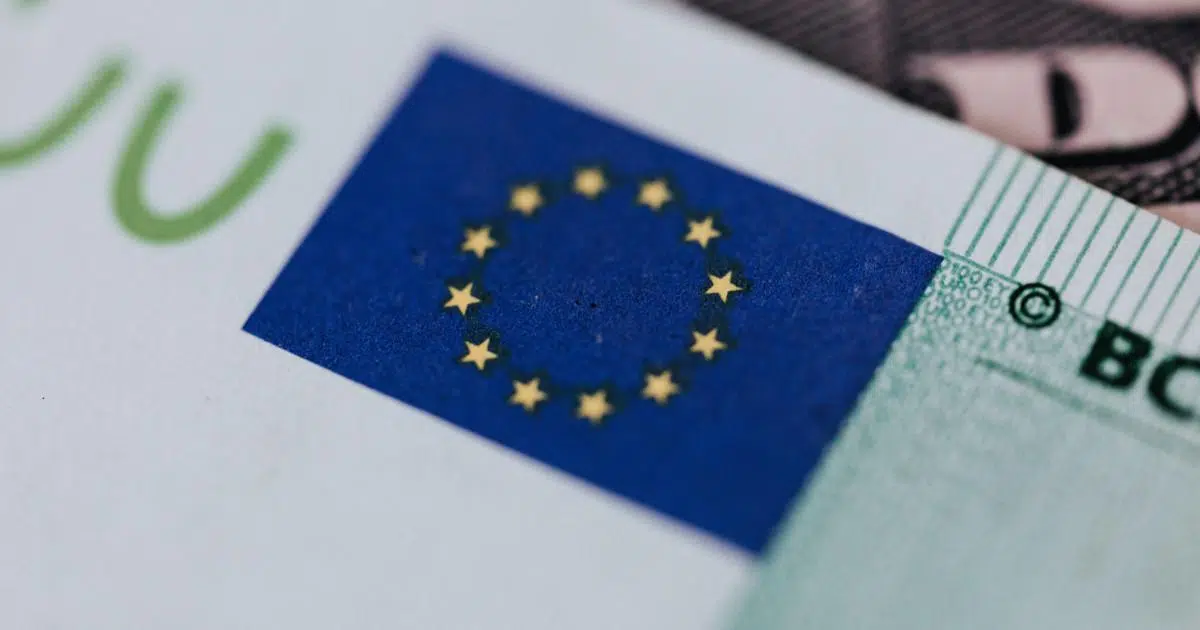
The debate surrounding the digital euro has entered the public discourse with unexpected force, pitting proponents of modernizing payments against those who fear a drift toward control and a loss of freedom. At the heart of the controversy lies the tension between efficiency and privacy : the promise of instant and inexpensive payments versus the risk of surveillance and the centralization of monetary power.
Much of the public's discontent stems from a sense of accelerated regulation and a lack of clear answers to legitimate questions. Issues such as who will see our transactions, what balance limits will be in place, and whether cash will become obsolete remain unanswered, and how the details are designed will determine whether a useful improvement to the payments system becomes a tool of control with unintended consequences.
What the digital euro really is and what it isn't
A central bank digital currency, or CBDC, is not the same as the private electronic money we already use daily with cards, apps , or transfers. The digital euro would be a direct liability of the European Central Bank , available to citizens and businesses, and would circulate alongside banknotes and coins: 1 digital euro would be equivalent to 1 physical euro. It would not be a savings product or an investment; in fact, it is designed to be interest-free to avoid competing with bank deposits.
The architecture being explored by the Eurosystem envisions a model with intermediaries: the ECB does not want to manage hundreds of millions of customers , so banks and other providers would continue to provide the service layer. Furthermore, work is underway on offline payments and automatic top-up and top-up mechanisms to ensure seamless use even if a holding limit exists.
This balance limit is key to mitigating risks in commercial banking. A limit per person and automatic transfer rules have been considered : if you receive a payment that exceeds the maximum, the excess would go to a linked payment account; if you need to pay using more than your digital balance, a prior top-up would resolve the discrepancy. The stated intention is that no one will have a payment rejected for exceeding the threshold.
Another sensitive issue is programmability. Official documents and clarifications have mentioned optional and limited conditional functions. The concept of programmable money, expiration dates, or conditional payments would open up a powerful toolbox for business use, but it also raises concerns about its potential to restrict freedoms if its scope were expanded during times of regulatory "emergency" or crisis.

Why is the citizen and political debate erupting?
Public discourse reveals conflicting positions. Some, after hearing central bank officials defend the project, agree with their arguments, but then encounter widespread opposition in the comments. The public reaction is a mix of concerns about privacy and fears of increased surveillance , while also criticizing the institutional haste to push through a tool that remains unclear to many users.
There are citizens who prioritize efficiency and, while advocating for mandatory acceptance of banknotes and coins, acknowledge that a digital euro could resolve problems with current electronic money: less dependence on the banking oligopoly and card networks , reduced fees and friction, and an end to the feeling that deposits are being lent behind your back without oversight. Even so, they caution that digital transactions, by design, are never as private as cash.
This raises an uncomfortable question: if the digital euro promises to reduce costs and foster competition, why so much social resistance? Many fear large-scale financial surveillance , the use of programming capabilities to restrict spending or set expiration dates, and a backdoor for monetary expansion that bypasses the checks and balances of the banking system. Others are suspicious of the influence of large technology platforms and a centralization that will be difficult to reverse.
Politics is not neutral here either. Certain governments and parties have expressed strong support and vetoes , with leaders labeling CBDCs "monetary tyranny" and jurisdictions erecting legislative barriers. Meanwhile, proponents of the initiative argue that Europe cannot afford to fall behind in the face of global digitalization, even though advanced economies like Switzerland and the United Kingdom have opted for caution.
Benefits attributed to it: efficiency, costs and inclusion
The promoters point to tangible advantages. The first is efficiency. Near-instant payments, available throughout the eurozone, integrated into mobile phones and apps , and with support for offline transactions, promise a real improvement over traditional transfers that still take hours or days in certain contexts.
In terms of costs, the expectation is clear: if a portion of transactions are processed through public infrastructure , layers of intermediation and fees from private networks are reduced . The social cost of cash (printing, transportation, storage) also falls, while businesses and citizens find cheaper and more predictable payment methods.
Financial inclusion is another key pillar. A universally accessible digital payment method, backed by the central bank, would allow people to participate in the digital economy without relying on private entities , especially in rural areas or for groups with dwindling access to banking services. The challenge is ensuring that its design does not exclude those who do not regularly use smartphones or the internet.
In terms of security, an architecture with high-level encryption and authentication is being implemented . The goal is to raise the bar against fraud and cyberattacks , offering a robust public payment asset. Furthermore, as central bank money, it would serve as an anchor during crises, maintaining continuity of payments if nodes in the private system fail.
Proponents add that a digital euro could boost innovation. Fintechs, banks, and developers would leverage new layers of infrastructure to create services, compete, and offer better solutions for collections, credit, or transactional savings, driving the digitalization of the productive sector.
Finally, the monetary policy angle is considered. Tools for the direct distribution of stimulus or for more fine-tuned transmission of interest rates, although controversial, would give the ECB additional instruments . Here, however, the warnings are unanimous: if misused, these tools could strain freedoms or distort the credit market.
Risks and side effects: privacy, surveillance, and banking
Despite the apparent benefits, the warnings are stark. Unlike cash, every digital transaction leaves a trace. A CBDC grants the monetary authority full and direct access to payments and balances , which in practice could allow them to monitor or limit financial behaviors deemed undesirable. The history of regulatory "exceptions" during times of crisis fuels distrust.
Programmability adds another sensitive layer: conditional payments, usage limitations by category, even expiration dates. Although restricted use within the business sector is promised , the mere existence of the technical capability opens the door to future expansion. Those who fear state control see this as a prelude to financial censorship, no matter how many safeguards are announced.
On a macro level, the concern is that a digital euro could erode traditional checks and balances. If the central bank can expand the money supply by bypassing intermediaries , limits on financing public spending could weaken, with risks of inflation and fiscal discipline. Private credit could also be displaced, and bank intermediation could suffer.
For commercial banks, the blow would be twofold. In normal times, some payments and deposits would migrate to a risk-free asset held by the public, reducing commission income and losing customer information relevant to granting credit. In times of stress, the refuge in central bank accounts would accelerate deposit outflows, fueling digital bank runs and stability risks.
There is also a competitive and sovereignty dimension. Digitalization tends toward "winner-takes-all" models, especially when global platforms control payment interfaces. If Europe relies on non-European technologies to run its digital currency , the much-desired autonomy could become a vulnerability. And if the design pushes for greater centralization, there is a risk of stifling competition rather than fostering it.
The political backdrop doesn't help either. Messages about accelerating because "democracy is slow" have generated backlash. The legislative rush, in a context of large deficits and debt pressures in some countries, fuels suspicion that a shortcut is being sought to finance public excesses. Many recall episodes of negative interest rates and massive asset purchases that already strained the stability mandate.
What the regulators say: the devil is in the details
Among the project's architects, there is a strong emphasis on the design as the determining factor. ECB sources have stressed that the primary motivation is to combine the security of central bank money with the convenience of a digital medium , taking into account user preferences while ensuring that the financial system is not disintermediated.
The most frequently cited potential safeguards include limiting the amount each user can hold to prevent the CBDC from being used as an investment vehicle; introducing tiered remuneration and penalties above certain amounts; ensuring that banks and PSPs manage the customer relationship; and strengthening technical privacy to the extent permitted by anti-money laundering regulations.
International risks are also highlighted. A highly liquid and accessible digital euro could be disproportionately used by foreign investors during global shocks, amplifying flows and tensions . Therefore, it is proposed that it be prevented from acting as a safe-haven asset for non-residents and instead focused on retail payments.
In terms of privacy, the official message is one of enhanced protection, with relative anonymity for small payments and strict data access controls. However, by definition, a digital system leaves metadata , and the misguided trust in future promises clashes with the experience of regulatory expansions following "exceptions" that become the norm.
Defending cash and social concerns
Consumer organizations and pro-cash platforms have raised the bar of scrutiny. Recent surveys indicate that a large majority in countries like Spain rejects the accelerated implementation of the digital euro , precisely because of doubts about its purpose, guarantees of freedom and privacy, and fears that cash will lose ground de facto.
Groups like Denaria emphasize that cash is not a luxury, but a cornerstone of inclusion. Seniors, people with disabilities, residents of depopulated areas, and rural women depend on it to participate in economic life. The loss of bank branches and ATMs exacerbates the problem, and alternatives are being promoted to maintain the accessibility of banknotes and coins throughout the country.
Restrictive limits on cash payments are also criticized, such as very low thresholds in certain countries or prohibitions on rentals, measures considered discriminatory and ineffective against fraud . Cybercrime data indicates that major frauds occur in digital environments, so associating cash with crime is an outdated cliché.
From this perspective, the digital euro would only be acceptable if robust privacy, freedom of choice, and equal treatment with cash are guaranteed by law and by design . Otherwise, prudence is urged, along with delaying timelines and first strengthening the existing payments infrastructure to solve real problems without creating bigger ones.
International lessons: prudence in advanced democracies
Looking abroad, the examples are telling. In the United States, the debate crystallized into widespread skepticism toward the idea of a CBDC, with legislative initiatives to limit or prevent its issuance and political leaders who have labeled it a threat to financial freedom. In practice, the system has opted to strengthen private competition and instant payments.
Switzerland, with its tradition of banking secrecy and autonomy, has chosen not to launch a retail digital franc. The United Kingdom is studying the digital pound without haste , weighing risks and safeguards. These cases show that innovation does not require rushing and that defending cash can coexist with modernizing payments.
China serves as a cautionary tale for those who prioritize civil liberties. There, the digital yuan grants the state unprecedented access to transactions, with the power to reward or punish behavior . Although Europe insists on stronger safeguards, the image of a social control system weighs heavily on public perception.
What I could fix and what I couldn't: clearing up misunderstandings
A well-designed digital euro can lower payment costs, expand options, and reduce dependence on private oligopolies. It can potentially drive down fees and modernize collections , while providing a public anchor of resilience. However, it won't magically transform digital money into something as private as cash: traceability, albeit limited, still exists.
Nor will it, on its own, solve structural problems in the financial sector, such as the need for a complete banking union or a common fiscal framework. Ignoring the banks' incentives and underestimating the effects on credit could create new problems: less financing for households and businesses, greater volatility during crises, and a monetary policy prone to intervention.
For those who fear their money being "lent behind their backs," CBDC eliminates the bank counterparty risk on the digital portion they hold as a balance. But this peace of mind comes at a systemic cost if it becomes widespread, and that's why limits and disincentives arise, which in turn reduce some of the initially perceived appeal.


Passionate writer about the world of bytes and technology in general. I love sharing my knowledge through writing, and that's what I'll do on this blog, show you all the most interesting things about gadgets, software, hardware, tech trends, and more. My goal is to help you navigate the digital world in a simple and entertaining way.