- Apple is preparing a iPhone foldable with a 24 MP front camera hidden under the screen and without a notch, supported by side Touch ID.
- The iPhone 18 range and the upcoming 20th anniversary model will use 24 MP cameras and tiered technologies, extending to an under-display camera.
- New advances such as LOFIC sensors, the A20 chip and panels from suppliers like Samsung or TCL will allow for better dynamic range and "all screen" design.
- Under-display Face ID is still under development, with patents that optimize the passage of infrared light and bring the final farewell to Dynamic Island closer.
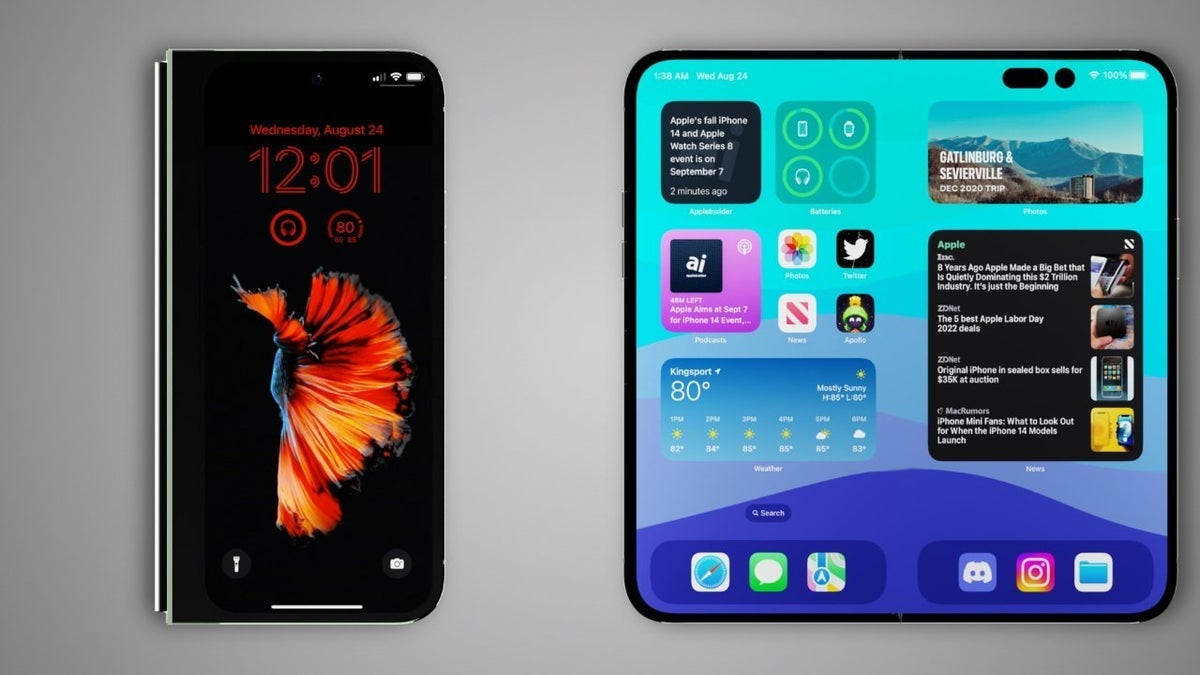
The idea of a Foldable iPhone without notch or Dynamic Island It has gone from being a simple rumor to shaping up to be Apple's next big shift. We've been seeing the brand experiment with notches, floating islands, and punch-holes for years, but the ultimate goal has always been the same: to achieve a completely clean front, a kind of uninterrupted sheet of glass where everything is hidden beneath the screen.
Recent leaks from investment banks, supply chain reports, and even demonstrations from panel manufacturers suggest that Apple may already have the technology needed to hide the front camera (and, later, even Face ID) beneath the screen. The first major showcase of this revolution would be the highly anticipated foldable iPhone, which would feature an invisible internal camera, a thinner design, and the disappearance of the iconic notch as we know it.
From the notch to the invisible camera: Apple's strategy
When Apple launched the iPhone X in 2017, the The notch became its hallmarkA huge but functional notch housed the front-facing camera and the entire sensor system necessary for Face ID. While other manufacturers were scrambling to reduce bezels, Cupertino embraced the notch as part of the design.
Over the years, the brand refined that approach. First came a reduction in notch size on the iPhone 13which freed up some screen space without sacrificing its sensors. Then came the dramatic twist: the appearance of the Dynamic Island on the iPhone 14 Protransforming what was a screen cutout into an interface element loaded with animations and features.
While the rest of the manufacturers Android preferred hide the camera in tiny holesApple did the exact opposite: making it the star with notifications, music controls, and small widgets floating around the island. That was a brilliant software move, but internally it was always seen as a transitional solutionnot as the end of the road.
The latest rumors indicate that this transition will continue with the iPhone 18 family, where Dynamic Island It would be reduced in size in the Pro and Air models.However, the big leap would come with the future foldable iPhone: a device designed from scratch so that the front camera of the internal screen literally disappears from view, hidden under the panel.

How an under-display camera works and why it's so complicated
Android phones have been toying with the hidden cameras under the panelBrands like ZTE and Samsung have launched both candybar and foldable models with this technology, primarily designed for video calls. On paper, it sounds perfect: a full-screen display, without a notch or holes, and a camera that only pops up when you activate it.
The problem is that, in practice, the quality has left much to be desired. Many of these solutions generate blurry selfies, less light than necessary and a kind of veil or fog over the image. Just the opposite of what you'd expect from a high-end phone where the front camera is key for social media and video calls.
Technically, it's not simply a matter of planting a sensor under the screen and crossing your fingers. The real challenge lies in create an area of the panel that becomes “transparent” to light When the camera is active, the pixels should be indistinguishable from the rest of the display when content is being shown. In other words, these pixels should function like any other part of the panel when no photo is being taken.
In the most advanced systems, that small region of the screen modifies its behavior when you open the camera app: the pixels turn off or change their structure so that allow light to reach the sensor with the least possible distortionWhen you return to the desktop or an app, that area resumes behaving like a normal part of the panel, blending in with the rest.
Even so, theory is more beautiful than reality. The attempts we've seen so far inevitably penalize the amount of light entering the display, and the processing algorithms have to perform veritable acrobatics to compensate for the lack of information. That's why Apple preferred to arrive later, but with a a proposal that does not represent a step backwards in terms of current quality of its front cameras.
The foldable iPhone: 24 MP under the screen and a definitive goodbye to the notch
Reports from firms like Morgan Stanley and JPMorgan agree on one point: the The first foldable iPhone is expected to be released in the second half of 2026.Its main selling point would not only be the book-like format, but the adoption of an internal camera completely hidden under the panel, with a 24-megapixel sensor designed not to feel like a "second-rate" camera.
According to these leaks, the foldable screen's front camera would feature 24 MP and an optic made up of six plastic elements Designed to maximize light transmission and reduce the typical haze effect of current solutions, the goal is for users to be able to take portraits, make video calls, and record high-resolution video without noticing that the lens is hidden beneath the display.
This approach does, however, have side effects. To achieve this completely clean internal design, the foldable iPhone would do away with Face ID on that screen. Instead, the device would use a Touch ID integrated into the side buttonThis recovers the fingerprint reader and frees up all the space previously occupied by the facial recognition sensors on the front.
On the exterior of the foldable device, the story would be different. Everything points to Apple using... a traditional "hole-hole" camera on the external panel, maintaining the best possible quality for selfies, stories, and more. This way, the user could choose between the "all-screen" experience on the inside and the more traditional camera on the outside.
Regarding the rear module, reports indicate a dual camera system with two 48 MP sensorsOne main lens and one ultra-wide-angle lens. No telephoto lens, ToF sensor, or variable aperture in this first generation, making it clear that the priority is the device's thinness, battery life, and the integration of the foldable screen, rather than an all-in-one photographic package.
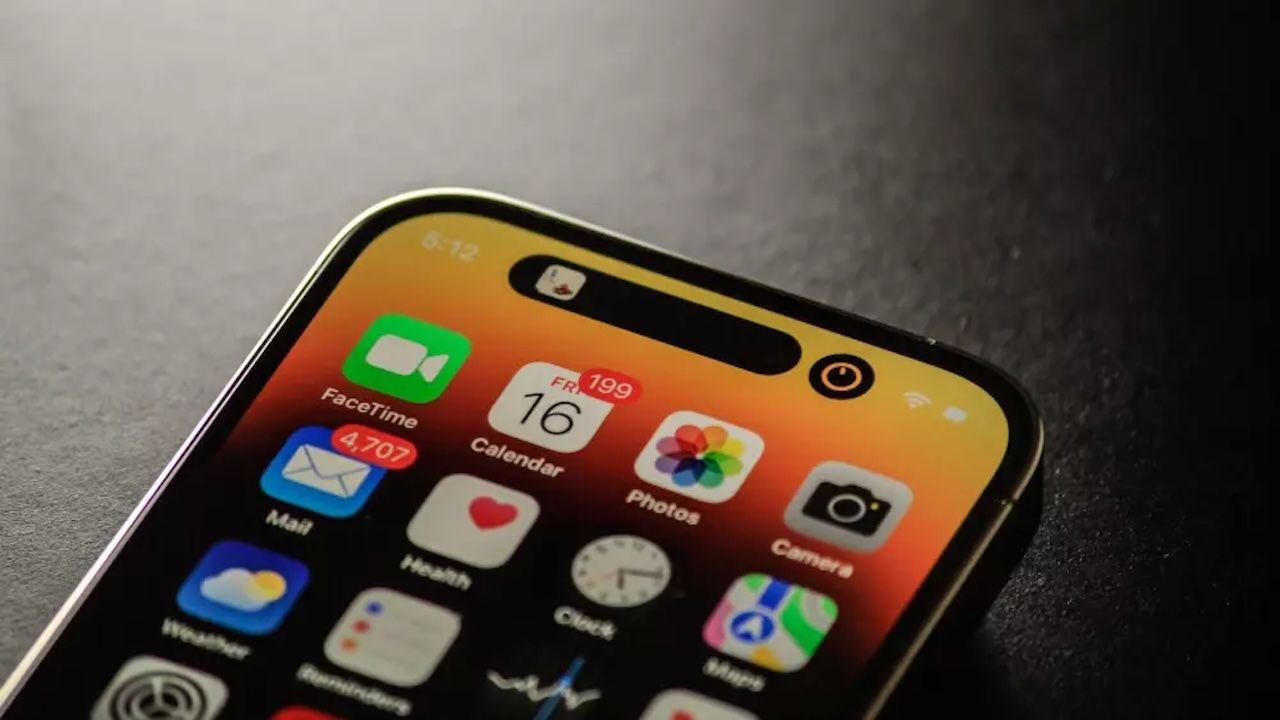
Uneven distribution: how the iPhone 18 range and the 20th anniversary model will look
This move to an under-display camera won't arrive on all iPhones at the same time. Supply chain sources suggest that Apple will implement a phased strategy, with different technologies depending on the modelIn other words, there will not be a uniform transition across the entire range.
At the top of the pyramid would be the foldable iPhone, which would become the first iPhone with a truly invisible front camera below the internal screen. Just below would be the iPhone 18 Pro and the rumored iPhone 18 Air 2, which would retain the visible front camera but with a smaller Dynamic Island and a 24 MP sensorimproving both resolution and design.
For the standard iPhone 18, the approach would be somewhat more conservative. It would also adopt a 24 megapixel front cameraBut without any reduction in the size of the Dynamic Island. Furthermore, there's talk of a schedule change: this model could be delayed until spring 2027, instead of appearing in September 2026 as is typical for the main lineup.
Meanwhile, Apple already has its sights set on another milestone: the 20th anniversary iPhone, expected in 2027This commemorative model would be responsible for extending the under-display camera to a traditional "bar" iPhone, thus completing the transition to the cleanest possible fronts without the need for a notch or visible islands.
The technical complexity is such that the foldable version could only debut the invisible camera on its inner panel. To achieve this, the company would rely on top-tier suppliers like Samsungwhich already have laser micro-perforation systems capable of creating tiny holes in the panel without this resulting in visible artifacts or loss of quality in the screen.
LOFIC, A20 and other technologies hidden behind the jump
The front-end redesign isn't the only change. Leaked reports also mention the future integration of new technology. LOFIC (Lateral Overflow Integration Capacitor) in the sensors of the iPhone 20 range, which would arrive approximately in 2027. This technique applied to CMOS would allow better management of excess load in the pixels, expanding the captured dynamic range.
In numbers, LOFIC could allow iPhones to reach up to 20 stops of dynamic rangeThis is far above the 13 steps that are currently considered the benchmark for high-end mobile phones. We would be approaching levels reminiscent of professional film cameras, with a greater capacity to retain detail in both deep shadows and complex highlights.
To make room for all these advancements, Apple is also reportedly working on a new chip, the future A20 manufactured at 2 nanometersThis reduction in processing not only increases performance and energy efficiency, but also frees up physical space within the chassis, which is key to fitting the complex foldable hinge, batteries, and camera modules without turning the device into a brick.
Furthermore, the new plastic lenses optimized for light transmission These elements would play a fundamental role in under-display cameras. They aim to counteract the loss of brightness caused by passing through the panel, minimizing internal reflections and the typical hazy effect seen in other implementations on the market.
Finally, the reports point to a reinforced metal hinge system which would improve resistance compared to the aluminum used in some current models, positioning the foldable iPhone on par with - or even above - rivals like the next-generation Samsung Galaxy Z Fold in terms of thickness and robustness.
Under-display Face ID: the missing piece
Beyond the notch, one of the major factors shaping iPhone design in recent years has been Face ID and all the hardware that it needs to functionIt's not just a front-facing camera: we're talking about infrared sensors, a dot projector, an illuminator... a set of components that take up space and need a clear "window" on the front.
Until now, placing that system under the screen ran into a technological wall: the Infrared light had trouble penetrating modern panels with sufficient clarity for reliable facial recognition. Pixels, wiring, and touch layers blocked or scattered some of that light, reducing accuracy and opening the door to security errors.
A recent patent granted to Apple describes a rather ingenious solution. The idea consists of selectively remove some subpixels in the sensor area (remember that each pixel is made up of red, green and blue emitters) to leave small gaps invisible to the naked eye, but large enough to let the necessary infrared light through.
Surrounding pixels could "lend" their subpixels to compensate for this absence and maintain image quality on the screen. At the same time, a Reduction or redistribution of part of the cabling and touch mesh In that area, creating wider corridors so that the infrared signal reaches the sensors without so much interference.
This type of solution opens the door to a future iPhone where Face ID is fully integrated under the panelwithout the need for a notch or a visible island. In that scenario, the only element that might still be perceptible would be a small hole for the visible camera, although in the long term the goal would also be to make it disappear by using completely hidden cameras.
The betting odds point to iPhone 17 Air as a possible first candidate to debut an early version of this approach, at least partially. However, it wouldn't be the first time that under-display Face ID has been mentioned for models like the iPhone 15 or 16, only to be ultimately not released, so it's wise to remain somewhat skeptical until Apple demonstrates something concrete.
What already exists: TCL's proposal and the role of suppliers
While Apple refines its own implementation, the display industry hasn't been idle. At the last Mobile World Congress in Barcelona, TCL—through its CSOT panel division—presented what they describe as the first under-display camera capable of advanced facial recognition similar to Face ID.
This exhibition, mounted in a 7,85-inch OLED panel with 420 ppi and variable refresh rate from 1 to 120 HzIt is clearly aimed at foldable, book-like devices. The panel manages to improve the quality in the camera area compared to previous attempts, while maintaining a high pixel density and fairly uniform performance across the entire surface.
What's interesting is that the system not only captures the image like a normal camera, but also It gathers information on depth and facial features. even in low light, allowing a unlocking method It offers security equivalent to that of current 3D solutions. In other words, it's not limited to simple 2D facial recognition that's easily fooled with a photo.
Until now, one of the biggest drawbacks of under-display cameras was precisely the inability to implement secure facial recognition systemsWith TCL CSOT's proposal, that barrier is beginning to crumble, opening a realistic path for technologies like Face ID to coexist with completely clean panels.
It's worth remembering that display manufacturers like TCL, Samsung, and LG don't just work for their own brands. Many high-end Android companies already use TCL panels in their flagship devices, and there's nothing preventing the same technology, with the necessary adaptations, from eventually appearing in future iPhones. After all, Apple already uses them. external providers such as Samsung or LG Display for most of their current OLED panels.
In this context, foldable iPhone without a notch nor visible perforationsprovided it meets Apple's demanding quality requirements for colorimetry, brightness, power consumption, and durability.
Advantages, trade-offs, and the user's role in this transition
If all this comes to fruition, the front camera will no longer be the "poor relation" to the rear camera module that always hogs the limelight. Apple's bet with the foldable phone and with future iPhones powered by LOFIC is... to match, as far as possible, the performance of visible and hidden camerasso that the user does not have to choose between design or photographic quality.
Reality, however, imposes limits. Although the iPhone Fold's under-display camera aims high, it's reasonable to think that The traditional external camera will continue to offer better results.Especially in fine detail, complex lighting management, and stability. Some difference is practically inevitable, because there's a panel in between which, however optimized, some information will always be lost.
In order for the entire system to fit into a slim, foldable body, Apple would have had to do without advanced features such as stabilization in the hidden camera and cut back on new features in the rear camera setup, sacrificing a ToF sensor or telephoto lens. This reinforces the idea that this first foldable phone will be more of a design statement than an absolute photographic powerhouse.
Even so, the appeal is obvious: a Ultra-thin iPhone Fold, with an internal screen without a notch or islandA reinforced metal hinge, hidden sensors, and a front that finally resembles the "all-screen" concept Apple fans have been imagining for years. Of course, it comes at a price: estimates place it above the current Pro range, around €2.000 in Europe.
On the other hand, the user will have to get used to living with two different experiences on the same device: an invisible camera, somewhat more limited, on the internal screen And an external perforated camera designed for when you want the highest possible quality. In everyday use, it will be a matter of habit: use the internal camera for video calls or multitasking, and the external one for content you want to look perfect.
Everything points to a gradual process, where we'll first see the under-display camera inside the foldable phone, then perhaps in some "Air" or Pro model with partially hidden Face ID, and finally in that The 20th anniversary iPhone that aims to be almost all glass and screenIn the meantime, rumors will come and go, but the overall design direction is fairly clear.
With this scenario in mind, the notch's days are numbered in the Apple ecosystem. The combination of invisible cameras, under-display Face ID, new sensors with LoFIC, and increasingly compact chips points to a future where The front of the iPhone will be almost entirely content.It remains to be seen whether the actual experience lives up to the hype, but if there's one company capable of turning this technical complexity into something that "just works," it's still Apple.


Passionate writer about the world of bytes and technology in general. I love sharing my knowledge through writing, and that's what I'll do on this blog, show you all the most interesting things about gadgets, software, hardware, tech trends, and more. My goal is to help you navigate the digital world in a simple and entertaining way.