- Technology and AI can enhance cognitive autonomy if used to train key human skills such as critical thinking, attention, and creativity.
- Cognitive stimulation platforms, virtual reality, and mental apps improve brain health, but excessive dependence on devices promotes brain fog and loss of retention capacity.
- Experts and international organizations warn of future scenarios with advanced AI that require strong ethical governance to protect human autonomy and avoid risks of misalignment.
- The key is to balance technological innovation with neurofitness habits, digital detox, and continuous learning so that AI helps us think better, not less.
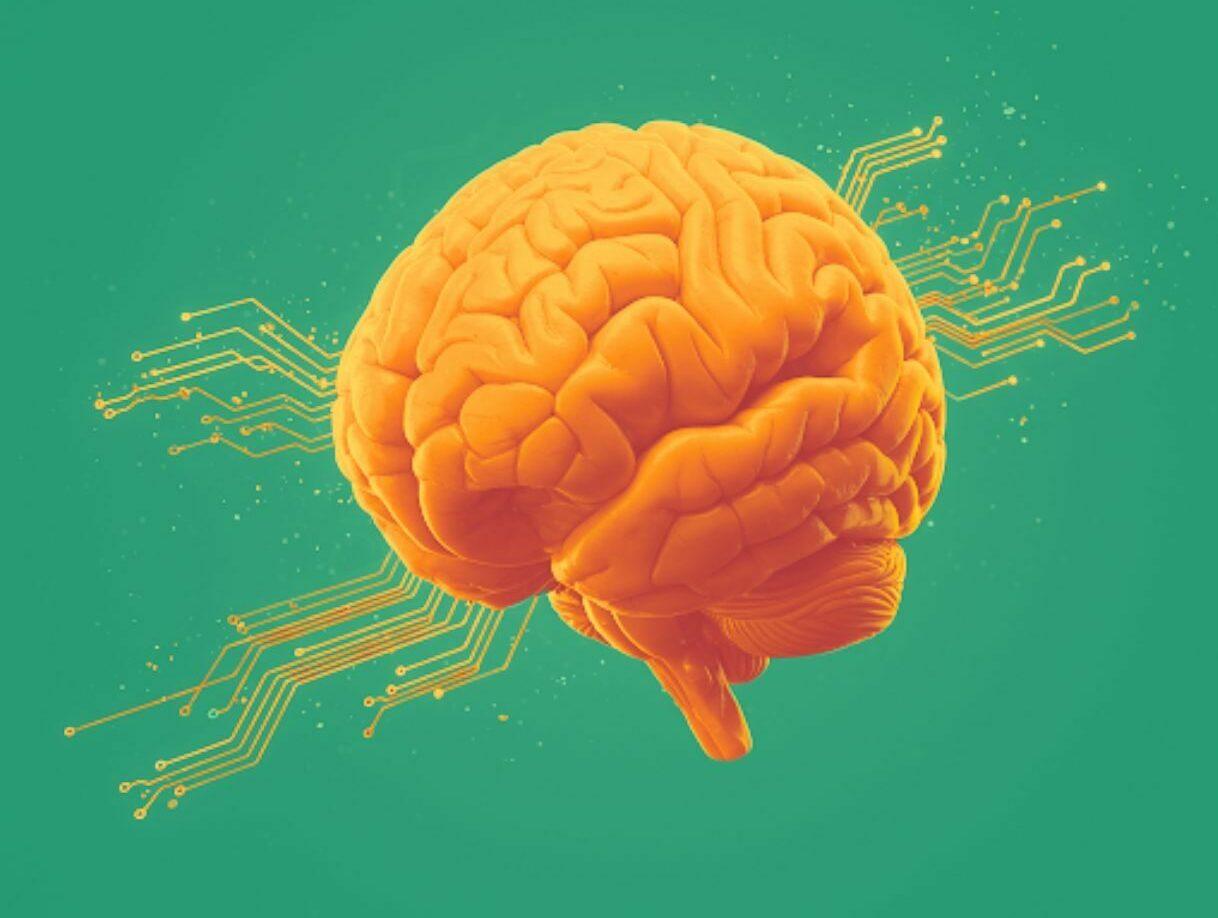
In recent years, the crossing between cognitive autonomy and technology It has become one of the most intense debates in education, mental health, and the future of artificial intelligence. We live surrounded by screens, notifications, and smart assistants that make our lives easier, but which can also diminish our ability to think for ourselves if we don't use them wisely.
At the same time, organizations such as the UNESCO, neuroscience experts, healthcare companies, and thinkers on the future of AI They agree on one key point: the challenge isn't just having more devices and apps, but learning to use them in ways that strengthen our memory, our judgment, and our ability to learn continuously. Ultimately, it's about making technology work in our favor and not leaving our minds "numb."
Digital learning, UNESCO and the idea of cognitive autonomy
La UNESCO has established March 19 as International Digital Learning DayThis date is intended to encourage governments, educational institutions, and organizations to design truly useful digital futures for public education. It's not just about filling classrooms with tablets, but about ensuring that the use of technology, including artificial intelligence, is safe, ethical, and beneficial for human development.
A few days later, the March 23rd is World Learning DayThis is a perfect opportunity to raise an issue that goes beyond technological trends: how to ensure that digital learning not only transmits information, but also strengthens cognitive autonomy, that is, the ability to think, reason, decide and continue learning without depending on others - or a machine - to do all the mental work for us.
Researchers such as Valeria Aragón, specializing in learning, pedagogical AI and ethicsThey insist that the true value of the digital environment lies not in the quantity of available content, but in its power to help us develop our own judgment, deep understanding, and lifelong learning skills. In his work, Aragón reminds us that “learning to learn” is almost a human technology: when a person becomes aware that they can learn virtually anything they want, they stop depending on having their thoughts spoon-fed to them.
From this perspective, digital transformation in education requires strategy, specific teacher training and equitable accessUNESCO has been publishing guidelines on the use of generative AI in education and research, with the aim of ensuring that public policies and short- and long-term decisions maintain a focus on people and not just on technological efficiency.
Aragón also emphasizes that the goal is not to accumulate tools and platforms, but learn better, in more depth and with more autonomyTechnology, when properly designed, should help us think better, not less. That's why she advocates for a digital learning model that trains us to formulate better questions, instead of settling for instant answers that create the illusion of knowledge but don't generate real learning.
Irreplaceable human skills in the digital age
One of the key points when talking about cognitive autonomy with technology It's about understanding that there are human capabilities that are not easily replaceable by any algorithm. Aragón and other experts insist that quality digital learning relies on a set of skills that AI, for now, can only complement:
- Critical thinking: the ability to analyze information, detect biases, compare sources, and not swallow any data that appears on a screen.
- Sustained attention: the ability to maintain focus on a complex task without succumbing to the bombardment of notifications and constant stimuli.
- CreativityThe ability to generate new ideas, combine concepts, and find original solutions to problems.
- Emotional regulation: managing emotions such as frustration when something doesn't work out the first time or anxiety in the face of digital information overload.
- Communication: express ideas clearly, engage in dialogue, argue, and listen actively in face-to-face and virtual environments.
When digital tools are designed for stimulate these skills instead of replacing themThey become a support for cognitive autonomy: they help us learn at our own pace, personalize training paths and sustain learning throughout life, without falling into blind dependence on what "the machine" says.
Along these lines, projects such as Eleva, an educational ecosystem for developing potential, or Kolbi, a pedagogical artificial intelligence focused on dialogue, seek just that: to accompany the user by asking intelligent questions, inviting them to reason and build their own learning path, instead of giving closed answers that hinder thinking.
Kolbi, for example, is conceived as an AI that It strengthens cognitive autonomy through the formulation of questions.Instead of providing immediate solutions, it encourages the person to explore hypotheses, justify their answers, and review their mistakes. This avoids the "trap" of feeling like you know something just because a tool has explained it, when in reality no deep understanding has been established.
This type of approach fits with a simple but powerful idea: AI can be a great ally if we use it to think better....not to stop thinking. The true power of digital learning emerges when the environment challenges us cognitively, pulls us out of passivity, and places us in an active position regarding knowledge.
Cognitive health and technology: a tandem with pros and cons
Beyond the educational sphere, technology is also transforming how we care for our brains throughout our lives. In a context where Life expectancy is increasing, and neurodegenerative diseases are a growing concern.A multitude of digital tools are emerging aimed at maintaining and improving cognitive health.
When we talk about cognitive health, we are referring to the brain capacity to perform functions such as memory, attention, reasoning, language, and perceptionKeeping them in good condition is fundamental to personal autonomy, quality of life and emotional well-being, especially as we age.
New technologies have facilitated the development of personalized and accessible interventions to train these functions. For example, digital cognitive stimulation platforms like Gradior Suite offer interactive exercises designed to work on specific areas of mental performance. These solutions can be used in specialized centers or at home, allowing for continuity of treatment without so many geographical barriers.
Furthermore, virtual reality (VR) and augmented reality (AR) have made a strong impact in this field. The use of VR glasses enable immersive environments where memory, spatial orientation, attention, or executive functions can be trained. in a playful and motivating way. The multisensory experience provided by these technologies helps strengthen the connections between the senses and the brain, which can translate into deeper benefits in terms of brain plasticity.
Also exist mobile apps for mental training With daily games and challenges that make it easy to integrate small cognitive challenges into your routine. Guided pastimes, working memory activities, selective attention exercises… everything fits in your pocket, always available for anyone who wants to keep their “brain in shape”.
Among the most notable benefits of these digital tools are the interventions tailored to each person's profile, real-time monitoring of progressThe possibility of remote access and increased motivation through gamification are key advantages. Being able to see improvement charts, unlock levels, or receive symbolic rewards increases adherence to the programs, which is crucial in processes that require consistency.
Furthermore, innovation is constant: the combination of neuroscience and digital technologies This opens the door to increasingly refined prevention and treatment strategies, based on scientific evidence and capable of adapting quickly to new findings. Tools like Gradior Suite illustrate how the approach to brain care is already changing, both in the clinic and at home.
Technological dependence, brain fog, and loss of autonomy
It's not all advantages. The widespread use of devices has also introduced new forms of cognitive dependenceToday it is very common to delegate to the mobile phone or computer tasks that a few decades ago were done mentally or with paper and pencil: remembering telephone numbers, doing simple operations, writing down appointments, finding your way around the city or even writing without correction fluid.
This tendency to shift mental effort to technology has consequences. In the long term, It decreases memory training and retention capacity.If there's always a device reminding us, our brain stops practicing. Something similar happens with quick calculations: automatically resorting to a calculator for basic operations can dull our numerical agility.
The Royal National Academy of Medicine has warned that Excessive use of artificial intelligence and other digital technologies can weaken knowledge retention and reduce the ability to solve problems and think critically.Coupled with the increase in mental health problems, this has favored the emergence and popularization of the term "brain fog".
The so-called brain fog is associated with difficulty concentrating, memory problems, feeling of a foggy mind and cognitive fatigue. In an environment where the flow of information is continuous and interruptions are the norm, it is not surprising that the brain struggles to manage and properly process everything it receives, with the resulting feeling of saturation.
Entities like Cigna Healthcare has proposed several concrete strategies to prevent brain fog and protect cognitive healthAmong its recommendations, it highlights the idea of introducing regular “digital detoxes”: scheduled periods, weekly or monthly, in which a full day is spent without an internet connection, prioritizing physical or creative activities. Disconnecting from the constant flow of information helps reduce stress and gives the brain a necessary break to recover.
Another recommendation is to maintain the active brain through continuous learningThe Spanish Society of Neurology (SEN) emphasizes the importance of establishing healthy brain habits from an early age to prevent neurological problems in old age. Activities such as learning a language, playing a musical instrument, or studying a new subject stimulate multiple brain areas and strengthen memory, concentration, and reasoning.
Maintaining cognitive autonomy in daily life also involves not always resorting to technology as the first optionFor example, avoid automatically using GPS for simple journeys, try to mentally calculate the change in a purchase or the percentage of a discount before taking out your calculator, or try to remember information without immediately checking it on your phone. These small daily challenges act as "exercise" for the mind.
Nutrition is another important pillar. The relationship between gut and brain It has gained strength in recent years, and it is known that a diet rich in omega-3 fatty acids, antioxidants and fiber (oily fish, nuts such as walnuts, fresh fruits and vegetables) helps cognitive performance, while excess sugar and processed foods are linked to worse mental clarity.
Finally, practices of neurofitness such as puzzles, sudokus, chess or strategic board games They challenge abilities such as problem-solving, decision-making, and short-term memory. Just as the body needs exercise to stay fit, the brain requires frequent challenges to maintain its agility.
Future scenarios: advanced AI, risks, and human autonomy
When we broaden our focus and look towards 2025-2035, many studies indicate that we are approaching a turning point in the relationship between artificial intelligence and human autonomyWhat is decided in the coming years may determine whether AI becomes a support for expanding our cognitive abilities or a threat that erodes them.
Investigations such as the report “AI 2027: Scenario forecasting the future of artificial intelligence”Developed by the AI Futures Project and Lightcone Infrastructure (Kokotajlo, Lifland, Larsen, and Dean), this paper explores the possibility of AI systems with superhuman capabilities emerging in certain domains. It analyzes trends such as the centralization of global computation, iterated distillation, the use of advanced neural memories, and the emergence of agents capable of improving their own algorithms.
The scenario that unfolds is not typical science fiction, but a Prospective fiction supported by data and technical trendsRisks considered include adversarial misalignment (i.e., AI behavior deviating dangerously from human objectives), automated industrial espionage, the militarization of intelligent systems, and the possibility of artificial agents acting against the interests of their creators.
These possibilities, although speculative, have attracted the attention of technical communities, policymakers and specialized media They are interested in anticipating geopolitical conflicts, impacts on employment, and challenges to the global governance of AI. The central question is how to design ethical, legal, and security frameworks that ensure these technologies continue to serve people, and not the other way around.
Along similar lines, authors such as Antonio Diéguez and Pedro García-BarranqueroIn works on technological singularity, superintelligent machines, and possible futures of the mind, they analyze the probability of developing an Artificial General Superintelligence (AGSI) and its implications for the human species. They address definitions of AGSI, scenarios of collaboration or conflict with humans, the potential radical expansion of creativity, and, of course, the existential risks.
A significant part of this debate revolves around the need for a robust ethical governance to avoid dystopian scenariosProposals for regulation, transparency standards, oversight mechanisms, and control systems are being discussed to curb dangerous trends without stifling beneficial innovation. Ultimately, the question is to what extent we want—and can—cede critical decisions to increasingly autonomous systems.
This entire prospective framework connects directly with individual and collective cognitive autonomy. If AI systems end up making decisions for us, filtering almost all the information we receive or heavily conditioning our choices, The ability to think and decide independently could be seriously limitedThat is why it is crucial to combine technological development with policies that empower people, foster critical thinking, and guarantee a diversity of information sources.
Alongside these high-level discussions, day-to-day life continues with announcements such as New scientific awards, technological events, and the launch of increasingly powerful AI models and controversies surrounding specific systems deployed in different countries. From Nobel Prizes related to advanced materials to conferences of developers from tech giants, to cases like DeepSeek in China or model changes during conversations with AI assistants, the landscape becomes more complex and, at the same time, more decisive for our cognitive future.
Amid this algorithmic noise, different voices advocate for a technohumanist consciousnessIt's about accepting that technology is already a structural part of how we think, work, and relate to each other, but also that we have a responsibility to decide how we want to integrate it. It's not about demonizing AI or embracing it without reservation, but about maintaining enough clarity so that it doesn't dilute our capacity for judgment.
Looking at this whole picture—digital education, brain health, risks of technological dependence, and future scenarios of advanced AI—it becomes quite clear that the Cognitive autonomy with technology depends on a fine balanceWe need tools that expand our possibilities, but also habits that keep our minds sharp: occasional breaks, intellectual challenges, mental health care, proper nutrition, and constant attention to what part of our cognitive effort we are delegating and with what consequences. If we can make technology a springboard for better thinking, and not a crutch we can't let go of, we will be much closer to a future where human and artificial intelligence enhance each other without one canceling out the other.

Passionate writer about the world of bytes and technology in general. I love sharing my knowledge through writing, and that's what I'll do on this blog, show you all the most interesting things about gadgets, software, hardware, tech trends, and more. My goal is to help you navigate the digital world in a simple and entertaining way.