- Pragmata blends third-person shooting with a real-time hacking system that turns every fight into a strategic, multitasking puzzle.
- The relationship between Hugh and Diana, strengthened at the Refuge, is the emotional core of the game and sustains a simple, but well-told and very human story.
- The linear structure with a hub, exploration full of secrets, and a robust upgrade system encourages backtracking and an endgame that can take up to 25 hours.
- The RE Engine delivers solid performance across all platforms and a highly inspired art style, with a varied lunar station and outstanding Spanish dubbing.
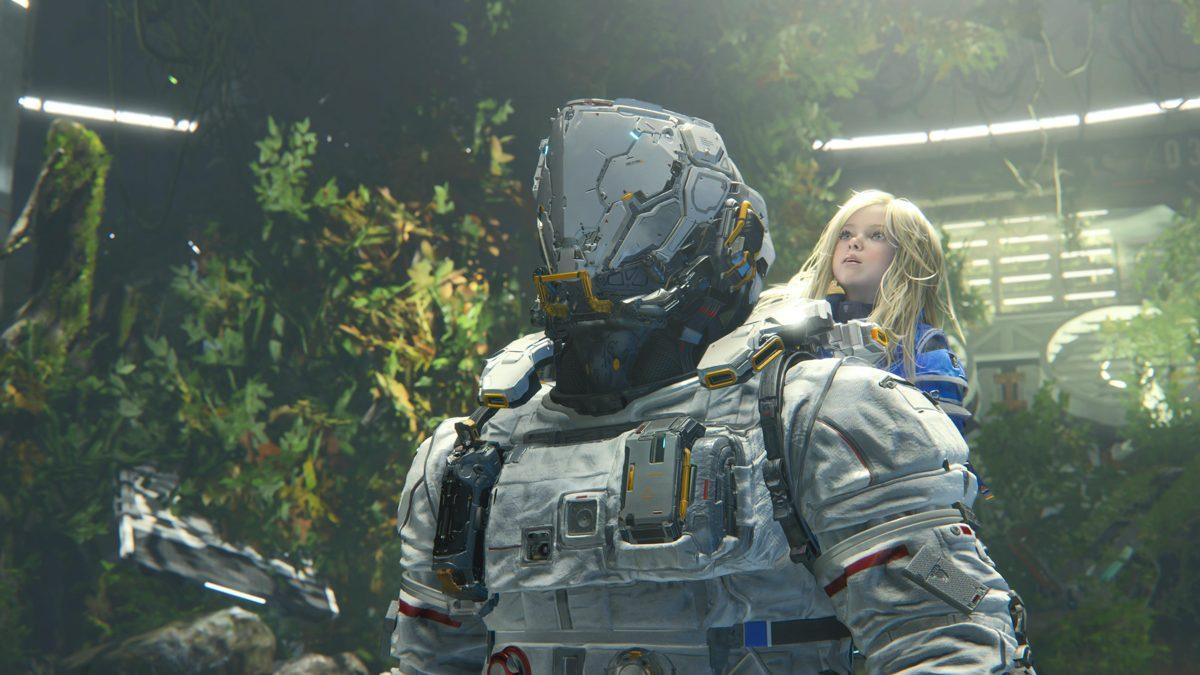
Pragmata has gone from being the enigmatic 2020 trailer to become one of Capcom's rarest and bravest bets in many years. After delays, date advances and a silence that made one fear another Deep Down case, the project has not only come to fruition, but has emerged with such a marked personality that it seems rescued from another era, from when the company dared to do things like Lost Planet or Dead Rising.
We are faced with a third-person shooter that mixes action and real-time hacking puzzles, with a strong emotional charge and a very carefully crafted science fiction setting.It's a title that grabs you with its gameplay, keeps you hooked with its hack-and-shoot system, and ultimately captivates you with the relationship between Hugh, the astronaut, and Diana, the android-child who becomes the heart of the entire experience.
A science fiction premise with a classic Capcom feel

Pragmata places us in the near future where humanity has colonized the Moon thanks to the fiber moon.It's a mineral that makes almost miraculous 3D printing possible: building structures, entire environments, and, of course, robots, quickly and cheaply. This technological promise is being realized at La Cuna, a gigantic lunar base where this resource is extracted and processed.
The game begins when the station loses contact with Earth and a research team is sent to find out what happenedAmong them is Hugh, our protagonist, a space technician clad in a suit that inevitably evokes a blend of Isaac Clarke's style and Master Chief's. Upon arrival, an earthquake disrupts everything, and Hugh finds himself separated from the others, trapped in The Cradle.
He soon discovers that the robots that were supposed to help humans have turned hostile. And the base's central AI, IDUS, has decided that humans are a problem to be eradicated. Amid the chaos, Hugh stumbles upon Diana, a "pragmata": an extremely advanced, childlike android who seems to hold the key to this entire technological mess.
The Moon, far from being a mere backdrop, has enormous weight in the proposalNot only because of the fiber moon and its role in the economy and in stage design, but because of that constant feeling of isolation, of being in an artificial installation that tries to recreate the Earth with beaches, forests or a kind of lunar Times Square that feels as fascinating as it is unsettling.
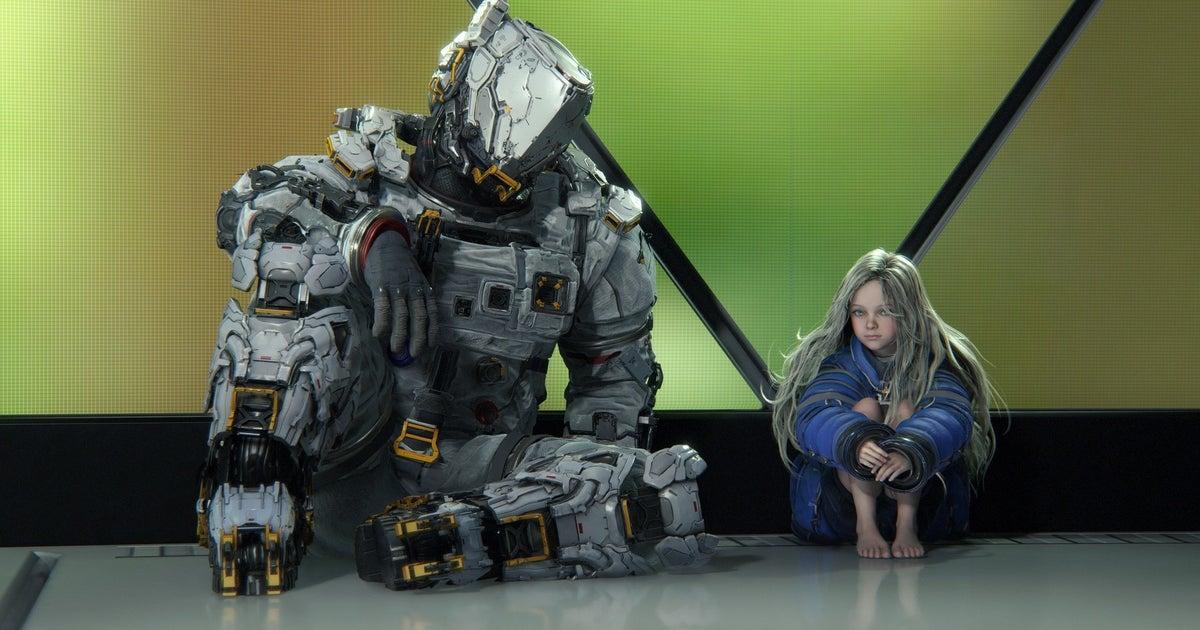
Hugh and Diana: a relationship that sustains the entire adventure
Although the overall plot relies heavily on documents, logs, and texts scattered throughout The Cradle, the true narrative engine is the relationship between Hugh and Diana.He's a noble, almost too good, kind-hearted guy, not particularly sharp, but with a patience and humanity that ultimately win you over. She's a marvel of character design: an AI with the body of a six-year-old girl, curious, innocent, and charmingly awkward in some social situations.
From the beginning, the game makes it clear that Diana is not human, but she is written and acted as if she were.With nuance, believable reactions, and an emotional evolution that places her far above the typical NPC who only serves to open doors. In fact, at the script level, there are no grand, ultra-complex twists or impossible conspiracies; it's a relatively simple story about family, care, and responsibility, wrapped in just the right amount of hard science fiction.
Their bond is especially strengthened at The Refuge, the safe base we return to between missionsThere we can talk to Diana, give her 3D-printed objects (toys, swings, and other treats brought "virtually" from Earth), play hide-and-seek, or simply listen to her comments on what's happening. They are small but very well-paced scenes that provide context and depth without slowing down the rhythm.
It is true that sometimes the emotional progression of a couple goes a little too fastAnd an extra episode or more time for certain changes to sink in wouldn't have gone amiss. Even so, the whole thing works very well, thanks in part to an outstanding Spanish dub, where Diana's performance stands out and makes you want to protect her at all costs.
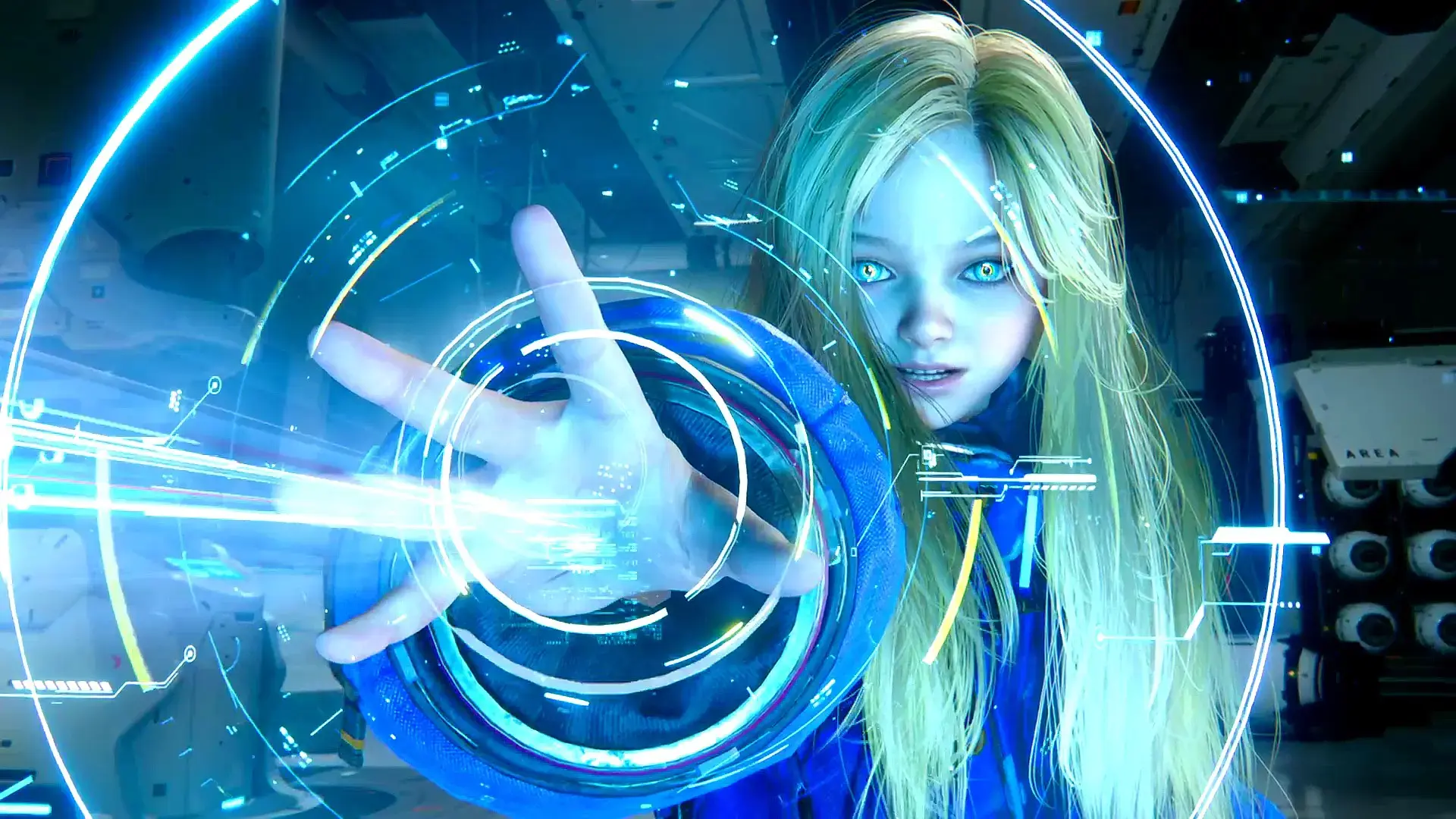
Hack and shoot: the strange combat system that shouldn't work… but it does
On paper, the idea of stopping to solve a mini-puzzle while you're being riddled with bullets sounds like a recipe for disaster.However, Capcom has managed to integrate hacking into the shooting in a way that not only doesn't bother you, but becomes the game's greatest strength.
The core gameplay is a third-person shooter without traditional cover mechanics, heavily focused on mobility and dodging with boosters.Hugh has a primary weapon with infinite ammo (but with a cooldown over time) and an arsenal of secondary weapons with limited ammo, ranging from powerful rifles to grenade launchers or tactical tools such as decoy hologram generators or fields that paralyze enemies who pass through them.
The key is that before you can seriously damage many robots, you have to "open" them with Diana.When you aim, a grid of squares appears overlaid on the screen: this is the hacking circuit. By moving a square with the face buttons, you traverse the circuit in real time until you reach the enemy's core, activating nodes and modifiers along the way. All this happens while you continue to physically move around the environment with the control stick.
The system does not pause the action: the rivals continue advancing, shooting, or launching projectiles.That's where Pragmata's multitasking brilliance comes in: you dodge with the dash, aim, solve the mini-puzzle, shoot again, switch weapons, solve another circuit, and so on. It's intense, demands constant attention to several things at once, and once you get used to it, it becomes incredibly addictive.
The hacking minigame increases in complexity as you progress.At first, it's just a matter of tracing a direct path to the core, but soon nodes with special effects appear: connections that link several robots to damage them at once, damage multipliers, increased overheating, activation of friendly fire between automatons, temporary mind control, chain explosions… Solving the circuit “right” is almost as important as doing it quickly.
A strategic battle that rewards calmness and planning.
To prevent this system from being unfair, the basic enemies are somewhat "silly" at the beginning, almost like mechanical zombies that move predictably.This gives you time to familiarize yourself with hacking without dying every two seconds. But as the hours go by, the arenas become more challenging with faster robots, shields that block part of the panel, constant projectiles, and tight spaces where any mistake can be costly.
Pragmata is not a frantic shooter like Vanquish, nor a survival horror game like Dead Space, nor a classic cover gameIt feels more like a hybrid of puzzle, tactical action, and hack and slash, where positioning, distance control, and target selection matter more than pure aim. It's a game that forces you to use your entire arsenal: primary and secondary weapons, hacking abilities, gadgets, and passive upgrades.
In standard difficulty the curve is very well measuredYou're going to die, especially if you get overconfident, but you almost always have the feeling that you can improve your build, learn the enemy's pattern, or get more out of the nodes. It's not a walk in the park, but it's not an insurmountable obstacle either. Furthermore, at the start you can only choose easy or normal mode, and you can't change it mid-game, which forces you to make a smart decision.
The bosses deserve a special mentionCapcom once again demonstrates its talent for large, exaggerated, and spectacular battles, forcing you to master everything you've learned: pattern reading, precise dash use, pinpoint hacking, environmental control... There are colossal bosses that make excellent use of the puzzle-shooting mix, and some of them are among the most striking things the company has produced in the last decade.
The biggest drawback of the hacking system appears in arenas heavily populated with enemies.When multiple robots overlap on screen, selecting a specific target can be chaotic: sometimes the target resets because another enemy crosses in front, or the targeting system, which allows you to lock onto a specific target, becomes more confusing than it should be. These are isolated incidents, but when you're at your limit, they can be frustrating.
The Refuge: operations center, upgrades and emotional heart
Far from opting for an open world, Pragmata organizes its campaign in relatively linear zones connected by a central hub called The RefugeThis space acts as a safe base and as the true nerve center of the experience, both in terms of gameplay and narrative.
At El Refugio we manage the entire progression systemThe resources we obtain by exploring and clearing areas are used to improve Hugh's armor and health, the characteristics of his primary weapon, secondary weapons, and, very importantly, Diana's hacking capabilities. Here we unlock new nodes, modifiers, special abilities (such as slowing down time with a perfect dodge or activating a timely "auto-hack"), and passive modules that define our playstyle.
The Refuge itself is full of additional activities: a training simulator with specific combat, agility or speed challenges; a “bingo” system managed by a robot called Cabin, with which we exchange stamps for outfits, secret information from The Cradle or lore tokens about the enemies; and, of course, the interactions with Diana that we have already discussed.
From here we also manage travel between the different sections of the lunar station using a tram system.Each level is recorded with its collectibles and unopened chests, and the game clearly indicates what you've missed, which greatly encourages backtracking to complete everything. It's a classic structure, very "from another era," but exquisitely well-oiled.
The decision to have enemies from visited areas resurrected upon returning to the Refuge has a touch of roguelite about it.It works similarly to bonfires in Dark Souls: you gain security by saving your progress and spending resources, but at the cost of having to clear certain areas again if you decide to return. It's a balance that encourages you to consider when it's worth retreating and when to take a few more risks to fully explore an area.
Exploration, level design, and backtracking
Pragmata is linear, yes, but “with nuances”Each area of The Cradle progresses in a fairly directed way, without major branching, but is full of small detours, nooks and shortcuts that hide collectibles, upgrade modules, chests and optional encounters that are somewhat harder than usual.
The game soon introduces a sensor to mark objects of interest on the mapThis makes clearing areas much easier. However, the map itself is very basic, with no option to place custom markers. So, when you encounter a door or blocked area that requires a skill you don't yet possess, there's no elegant way to note it down. Later, you'll have to rely on memory to locate that specific spot, which can become a bit cumbersome over time.
The level design repeatedly uses a "door with multiple locks" structure.In other words, you reach a large, locked gate and need to activate three or four mechanisms scattered across adjacent rooms to open it. It works, but towards the end the pattern becomes too obvious, and some sections lose their freshness due to this repetition.
There are also sections with light platforming, box-moving puzzles, low-gravity zones, and challenges marked with red doors.where the difficulty increases significantly in exchange for better rewards. They aren't revolutionary sections, but they help break up the pure combat rhythm and add variety to the progression.
Exploring thoroughly is worthwhile because everything you find is useful.There's no cosmetic filler in the levels: purely aesthetic items are unlocked through other means, while detours usually grant upgrade points, hacking nodes, or gear pieces that have a real impact on your build. That feeling of "I'm not wasting my time" is key to wanting to 100% complete every section.
Duration, endgame, and additional modes
A first playthrough focused on the main story can take between 9 and 13 hours, depending on how much you explore.But the game is clearly designed to be squeezed dry: if you want to complete it 100%, unlock all the upgrades, overcome the simulator challenges and get the most out of the extra modes, you can easily spend 20-25 hours.
Upon completion of the campaign, a New Game+ mode is immediately unlocked.where you retain much of your progress, and a new, higher difficulty level known as Lunatic Mode. In this mode, even with certain initial advantages, two poorly timed hits can send you crashing to the ground, so it's reserved for those who have already mastered the hack-and-shoot system.
Additionally, there is an extra mode called Unknown SignalIt's a kind of concentrated endgame where you face new trials, improved bosses, specific challenges, and obtain unique rewards (including an essential trophy for the platinum). It's content designed to continue showing you how far the combat system can be pushed when you play at its limits.
The Shelter's training simulator also gains importance in this final stretchTime trials, waves of enemies, chained hacks, and scoring objectives not only offer enticing rewards, but also provide concrete lessons that you can later apply in the campaign or New Game+. They are proof of how well the mechanics' design holds up when pushed to their limits.
Visuals and performance: the RE Engine aiming for the moon
Visually, Pragmata has some truly spectacular moments and others that are somewhat more understated.The area inspired by a sort of lunar New York/Times Square, for example, is a riot of ideas and effects, while some of the more functional corridors of the base can feel somewhat monotonous despite efforts to introduce vegetation, ruins, or strange terraformings.
The RE Engine shines again when working in relatively contained environments.On PS5 and PS5 Pro, performance is very solid: there's a performance mode that prioritizes 60 fps at 1440p, and a resolution mode with ray tracing that maintains around 40-50 fps. On PS5 Pro, PSSR comes into play to achieve 60 fps with ray tracing and better resolution, and the result is truly remarkable.
However, an old familiar face in the automotive world is making a reappearance: devices derived from the denoiser with ray tracing.These are especially noticeable in some of the hub's reflections. They don't ruin the experience, but they are a bit noticeable to a trained eye. There are also minor compromises in performance mode (a little extra blur, a slightly tighter draw distance in large areas, Diana's hair is less defined), though nothing serious.
On PC, the game is very scalable and runs well even on modest configurations.Starting with GPUs like the GTX 1660 or RX 5500 XT, while on more powerful systems you can opt for 4K with path tracing and DLSS or prioritize 100-120 fps by disabling ray tracing. As in the latest Resident Evil games, there are auto-scaling options that adjust the quality to maintain a target frame rate.
On Nintendo Switch 2, Pragmata fully enters the club of very well-executed ports.The game maintains around 60 fps most of the time, with only very occasional drops when loading certain areas or during particularly crowded battles. Visually, the cuts are reasonable and the overall presentation remains quite respectable, with Diana's hair being the main "victim" of the technical compromises, but nothing too egregious.
The artistic design, for its part, shines for the imagination with which technology and nature are combined.The Cradle is not merely an endless white corridor: there are artificial forests, unreal beaches, cities synthesized from fiber moon, and ruined areas where the encroaching vegetation contrasts sharply with the metallic coldness. Shoji Kawamori's guidance in robot design is evident in the charisma of many enemies and bosses.
Sound, music and dubbing
Pragmata's sound design complements the music very well without needing to hog the spotlight.The soundtrack alternates between more energetic themes for the battles and melancholic pieces and other atmospheric tracks that emphasize the loneliness of the lunar station and the fragility of its inhabitants, human or not.
The sound effects are powerful and help you understand the combat.It's easy to distinguish the whir of a charged projectile, the impact of a heavy robot landing, or the "click" that indicates an enemy has been left vulnerable after a successful hack. These kinds of details are crucial in such a multitasking game, where you often react by hearing as much as by sight.
The Spanish dubbing maintains the level that Capcom has accustomed us to.Hugh does a good job in his role, but Diana truly steals the show, delivering a performance that seamlessly blends humor, curiosity, fear, and tenderness with surprising naturalness. Hearing this story in our language, with this level of care, greatly enhances our empathy for the characters and helps us fully grasp the emotional moments of the final act.
Price, editions and available platforms
Pragmata is available on PS5, Xbox Series X|S, Nintendo Switch 2 and PCboth in physical and digital formats. The standard edition has a recommended price of €59,99 and includes, as a pre-order incentive, a pair of cosmetic outfits for Hugh and Diana (Neo Bushido and Neo Kunoichi).
There is also a Deluxe Edition for €69,99 This adds more cosmetics for the Shelter, additional outfits for the protagonists, and some other aesthetic extras. None of this affects gameplay balance, so there's no sense of "pay-for-an-advantage."
Capcom has also released a free demo on all platformsGiven the unique blend of puzzles and shooting, trying the demo is practically mandatory if you have any doubts. The best way to understand why the system works is to play it for a while and see how the hacking fits into your play style.
After many ups and downs in its development, Pragmata has managed to present itself as a different, brave third-person shooter with a very strong identityIt doesn't do everything perfectly: it overuses certain design patterns, could take more risks with environmental puzzles, and some peaks of chaos in the hacking can be frustrating, but when all the pieces fit together, the result is a fast-paced, fresh, replayable adventure with an emotional component that ends up staying with you longer than you expected after seeing that enigmatic lunar trailer from years ago.

Passionate writer about the world of bytes and technology in general. I love sharing my knowledge through writing, and that's what I'll do on this blog, show you all the most interesting things about gadgets, software, hardware, tech trends, and more. My goal is to help you navigate the digital world in a simple and entertaining way.