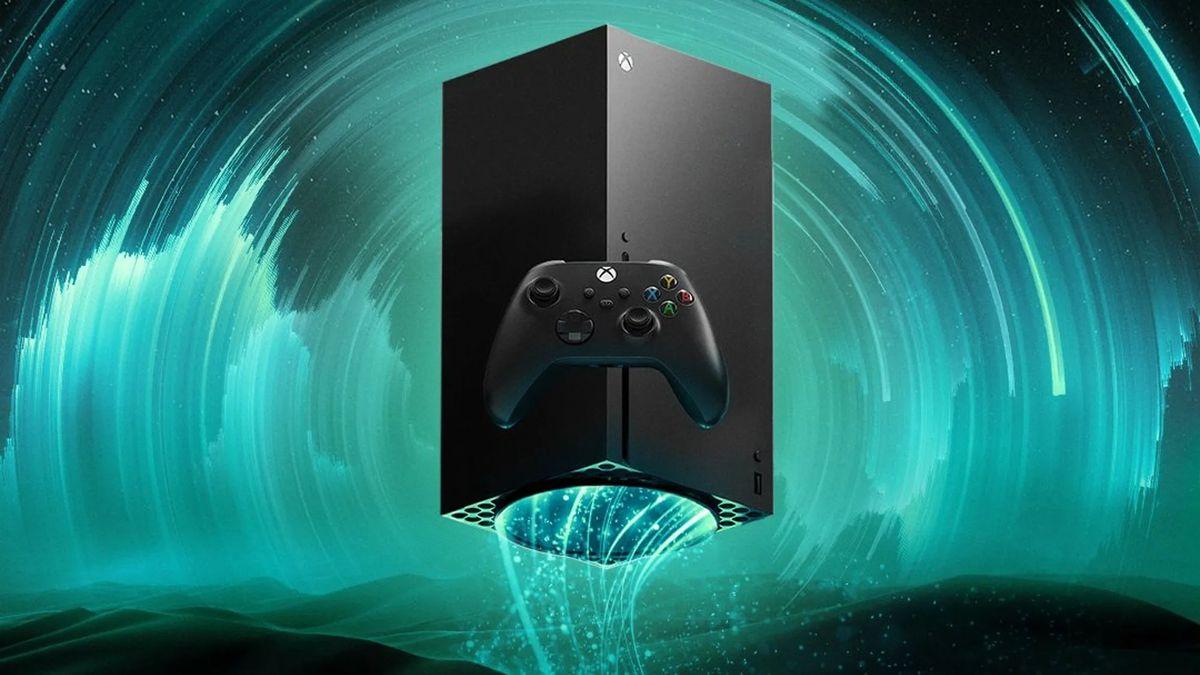
Microsoft's next-gen console has become the talk of the town: rumors, leaked internal documents, and official announcements have all contributed to a puzzle that's starting to take shape. While there's no formal announcement, what's been said from Redmond and what reliable hardware sources have revealed paints a fairly complete picture.
In this article, we've gathered and organized everything we know about Xbox Next : roadmap, agreements with AMD, leaked specifications, ecosystem direction, compatibility, price, approximate release date, and even plans for a handheld console and new controllers. We also want to be realistic: many of these details are still just rumors, and it's best to take them with a grain of salt to avoid unrealistic expectations.
Official roadmap, ecosystem, and Xbox's biggest technical leap
Microsoft has reiterated that they are working on their next generation of consoles and that their goal is to deliver "the biggest technical leap you've ever seen" in an Xbox console. Sarah Bond, along with Phil Spencer and Matt Booty, made it clear in a key 2024 podcast that the company is committed to the hardware and to a platform vision that transcends the living room.
The core idea is that “Xbox is an ecosystem” : play wherever you want, whether it’s on console, PC, mobile, laptop, or TV. Bond expressed it with a phrase that is defining the entire strategy: offering an experience that “isn’t tied to a single store or a single device .” In other words, a cohesive platform that accompanies you and maintains your progress, your library, and your services on any screen.
The collaboration with AMD is another pillar of that plan. Microsoft has announced a multi-year strategic alliance that includes the design of custom chips for the next family of Xbox-branded devices: consoles, PCs, and laptops. The goal is to boost visual quality, immersion, and AI-powered experiences with custom silicon—something vital if they want to make the leap they're so proud of.
Furthermore, Bond emphasized that the next console will be compatible with previous Xbox titles . However, leaks add some nuances: compatibility is not expected to extend to licenses purchased on PC, and publishers are not keen on automatic cross-buy between platforms, so compatibility would be limited to the Xbox ecosystem itself.
Meanwhile, the push for cloud gaming and the intention to open a mobile store remain on the agenda. Xbox Cloud Gaming has grown strongly under the umbrella of Game Pass, and the brand makes no secret of its ambition to break down barriers , bring games to more screens, and encourage creators with tools and a GDK that facilitates publishing across the entire ecosystem.
Architecture, leaked specifications and expected performance
The most consistent leaks suggest that both the PS6 and the new Xbox will be based on Zen 6 CPUs and RDNA 5 GPUs , with SoCs manufactured using a 3nm process by TSMC . In Sony's case, a smaller chiplet APU is suggested , which is cheaper to produce, while the Xbox Next would opt for a larger and more expensive multi-chip design, aimed at integrating more power.
Several configurations have been rumored for the Xbox Next. One of the most frequently mentioned describes an 11-core CPU divided into three "large" Zen 6 cores and eight lower-frequency Zen 6c cores. This hybrid approach would aim to balance single-threaded and multi-threaded performance , although on paper, pure single-threaded performance might be lower than if all cores were equivalent.
The graphics would be one of the most significant leaps forward. There's talk of an RDNA 5 GPU with between 64 and 68 CUs (4.096-4.352 shaders), surpassing the PS6's GPU, which would have between 40 and 48 CUs (2.560-3.072 shaders). For memory, both would feature 24 or 32 GB of GDDR7 with 160-192 bit buses and speeds of 32 Gbps, along with a 1-2 TB SSD as standard.
Another leaked detail concerns the target power consumption: Xbox Next is rumored to have a TBP of 180-200 W , higher than the 160 W attributed to the PS6. This is a significant detail: it affects chassis design, cooling, and costs, and explains why there's a strong emphasis on Microsoft's APU being large and expensive . A supposed AMD "Magnus" APU has also been mentioned as the platform on which the prototype is being developed.
Using rough calculations, some sources estimate that the Xbox Next could reach around 26,11 TFLOPs FP32 compared to the PS6's 18,43 TFLOPs . These figures, compared to PC benchmarks, would place the Xbox GPU below a GeForce RTX 5070/5080, depending on the benchmark used, and the PS6's closer to a Radeon RX 7800 XT . Other leaks even suggest high-level equivalencies: the PS6 close to a hypothetical Radeon RX 9070 XT (similar performance to an RTX 4070 Super) and the Xbox Next on par with an RTX 5080 , always with RDNA architecture, not NVIDIA , and with all the caveats inherent in console-to-PC comparisons.
However, all of this should be taken with a grain of salt. The experience with the Series X and PS5 makes this clear: more TFLOPs don't guarantee noticeably better performance in games if developers opt for platform parity or if optimizations don't fully utilize the hardware. We've seen this this generation: the Series X has more shaders than the PS5, and yet there hasn't been a clear advantage in multiplatform games, and titles with aggressive upscaling and modest internal resolutions have been abundant.
So what can we expect? With the leaked power, current titles should comfortably run at 4K and 60 FPS (with intelligent upscaling where appropriate), but that universal native 4K/60 isn't guaranteed in the next batch of "next-gen" games. Some sources point to 4K/120 in certain cases, but the reality will depend on the engines, technical ambitions, and the use of AI for upscaling and frame generation.
Ray tracing deserves a separate discussion. Contrary to exaggerated predictions that placed the PS6 ahead of an RTX 5080 in ray tracing, more sensible voices estimate a 3 to 5x improvement over the PS5/Series X. This is enough to see more games with ray tracing applied simultaneously to lighting, shadows, and reflections, but not enough to reach the pinnacle of high-end PCs at the time these consoles are released.
Dedicated AI acceleration hardware for upscaling and frame generation is also expected . It's reasonable to envision an evolution of FSR (whether called FSR 4 or FSR 5 eventually) customized for Xbox, with super-resolution and frame-generation models trained for its silicon. This type of solution will be key to sustaining high frame rates with convincing image quality.
Price, models, calendar and puzzle pieces
On the pricing front, there are two schools of thought. On one hand, there are conservative projections that place the Xbox Next in the €500-€600 range at launch, in line with the Series X. On the other hand, there are more aggressive rumors: if Microsoft integrates third-party stores (like Steam or the Epic Games Store ) and waives the 30% commission on sales, and if it also includes a large and expensive APU, the hardware cost could skyrocket and push the MSRP significantly above its rival.
Along the same lines, it's rumored that the console could run Steam and GOG games via a virtual machine , which would be technically feasible and free of legal hurdles, while compatibility with the existing Xbox catalog would remain within the Xbox ecosystem. However, an Xbox license granting automatic access to the PC version is not planned , due to the stance of many publishers.
When will it be released? Here, too, there are two timelines. On the one hand, in formal communications regarding the acquisition of Activision Blizzard, Microsoft stated that it didn't expect a new generation before the end of 2028. On the other hand, various sources place the Xbox Next release for the end of 2027 (November-December), even before the PS6. Both scenarios could coexist: the internal roadmap could shift depending on component availability, competition, and current circumstances.
Meanwhile, speaking of mid-generation revisions, Microsoft initially denied the need for a refresh for the Series X, but leaks eventually revealed "Brooklin ," a cylindrical redesign of the Series X with a 100% digital focus , a more efficient 6nm power supply, 2TB of storage , a front USB-C port , and a target price of around $499 . Alongside the console, the "Sebile" controller appeared with updated wireless connectivity, Bluetooth 5.2 , a gyroscope, precision haptics , quieter buttons and sticks, a rechargeable and replaceable battery , and lift-to-wake functionality.
Furthermore, third-party manufacturers hinted in 2022 at the possibility of mid-cycle "Pro" models (the infamous TCL slip-up ), suggesting 4K at 120 FPS and even 8K under certain conditions. Although Phil Spencer tempered expectations, recent history reminds us that policy can change if the market demands it and if the cost-benefit ratio of the refresh rate is justified.
The portable component is also on the table. Microsoft, in collaboration with ASUS, has unveiled new Xbox Ally devices with an integrated Xbox experience running on Windows and access to platforms like Steam, and Bond has spoken of “Xbox consoles in your living room and in your hands .” The most recent dates point to an October 16th release for the Ally and Ally X models , with leaked prices of €599,99 and €899,99 respectively in Europe, still pending confirmation due to “macroeconomic conditions.” It's not a “pure” Xbox handheld, but it does indicate the direction they're heading: mobility within the ecosystem.
The relationship with AMD, beyond mere statements, has been formalized in AMD's own Q2 2025 earnings report . This report details a new multi-year collaboration with Microsoft to develop custom chips for the next generation of Xbox devices (consoles, PCs, and laptops). The document also reflects a 68% year-over-year increase in revenue , an operating margin rising from 8% to 21% , $767 million in operating profit, and $1.1 billion in revenue in the gaming division, driven by custom chips and GPUs . Among the product launches mentioned are the Ryzen 9000WX , Threadripper PRO 9000WX , Radeon RX 9600 XT , and Radeon PRO W7900 , in addition to the first mobile workstations featuring Ryzen PRO processors.
Regarding physical media, it's unclear whether Xbox Next will opt to do away with the disc drive and sell it as an accessory. Removing the optical drive reduces costs, lightens the console, and can improve cooling, but there are markets where the disc drive remains important . The middle ground, with an optional disc drive and a reasonable price, would, on paper, be the most sensible solution to balance costs and preferences.
Finally, several leakers have focused on a supposed AMD "Magnus" APU as the heart of the new Xbox and as a common base for both console and PC. It has also been suggested that it would allow third-party retailers to operate without major legal issues thanks to virtualization , although they emphasize that this is all still in the testing phase and it will be years before we see how the concept translates into a final product.
The picture emerging is that of a powerful Xbox Next, focused on AI, ray tracing, and efficiency , designed to coexist with Xbox PCs and laptops in a broader ecosystem, and with an eye toward integrating more stores and game formats. The big question, as always, is: final price, timeline, and execution . If Microsoft gets the equation right regarding cost, availability, and game catalog, the promised technological leap could feel like a significant advance, even if it won't dethrone the enthusiast PCs that will lead the technological spectrum when the time comes to market.
Detailed leaked specifications
- Process and design: 3nm multi-chip SoC (TSMC) with Zen 6 + RDNA 5 architecture; larger MCM design on Xbox Next to prioritize power.
- CPU: Up to 11 cores combining 3 high-clocked Zen 6 and 8 lower-clocked Zen 6c; emphasis on balance between single-core and multi-core.
- GPU: 64-68 CUs (4.096-4.352 shaders) at over 3 GHz; substantial improvement over Series X in raster and ray tracing.
- Conference proceedings: 24/32 GB GDDR7, 192-bit bus (or 160-bit in other configurations), 32 Gbps.
- Storage: 1TB or 2TB high-performance SSD.
- Consumption: Target TBP of 180-200 W; demanding on cooling, in line with the larger APU size.
- IA: dedicated blocks for rescaling and frame generation (evolution of custom FSR).
Realistic performance and expectations
- Estimated TFLOPS: ~26,1 FP32 on Xbox Next; higher than PS6 (~18,4), but not a defining experience.
- Resolution and FPS Targets: Solid 4K/60 in current games with smart rescaling; 4K/120 viable in specific cases.
- Ray tracing: 3 to 5 times more performance than the current gen; simultaneous RT in lighting, shadows and reflections in more titles.
- Parity between platforms: Multis could continue to match versions; the extra raw power doesn't always translate into visible advantages.
Game Pass will remain the center of gravity . Microsoft has established the service as the cornerstone of its offering: day-one releases, partnerships with third parties, and a subscription model that aims to be available on every compatible screen . As its first-party production stabilizes, the catalog is expected to gain more traction, reinforcing the console's value, even though raw power isn't everything.
- Xbox Next is emerging with Zen 6, RDNA 5 and integrated AI, more GPU power than PS6 and clear improvements in ray tracing.
- Multi-year agreement with AMD: Custom chips for Xbox consoles, PCs, and laptops; broader ecosystem.
- Price and date Subject to scenario: 2027-2028 on the radar, cost between €500-600 or more if third-party store is integrated.
- strategy focused on Game Pass, cloud, and “not being tied to a single store or a single device.”


Passionate writer about the world of bytes and technology in general. I love sharing my knowledge through writing, and that's what I'll do on this blog, show you all the most interesting things about gadgets, software, hardware, tech trends, and more. My goal is to help you navigate the digital world in a simple and entertaining way.