- It's not a standalone console: it streams games installed on your PS5 via Wi-Fi with 1080p and up to 60 fps.
- It includes haptic feedback and adaptive triggers in compatible games, and uses PlayStation Link for audio.
- It does not work with PS VR/VR2, incompatible peripherals, or games that PS5 plays from the cloud with PS Plus Premium.
- Requires PS5, PSN account and good network (5 Mb/s minimum, 15 Mb/s recommended); model CFI-Y1016 with firmware updates.
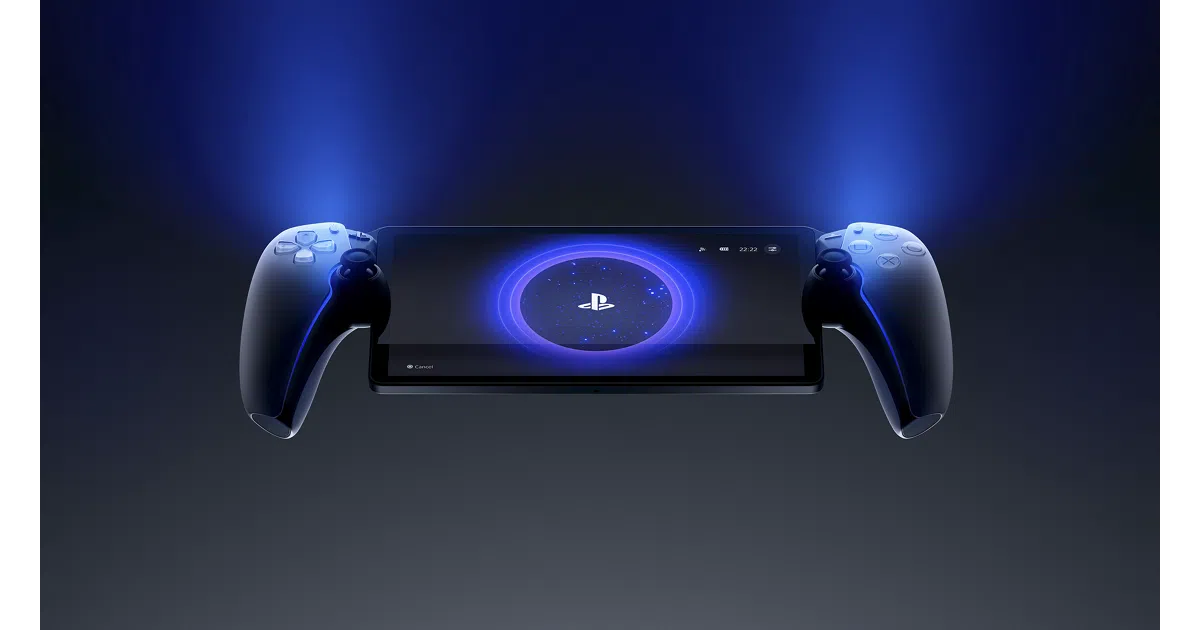
If you're wondering exactly what PlayStation Portal is, here's a clear and detailed explanation, straight to the point, with everything you need to know before buying or dismissing it. The key idea: it's not a standalone console, but a remote player for PS5 designed to let you play your games installed on the console over your Wi-Fi network (and even outside the home if the connection allows).
Its launch generated doubts among some in the community because many were expecting a traditional handheld , something like a "pocket PS5." Portal is, essentially, an 8-inch screen with DualSense controllers on either side that mirrors your PS5 via streaming ; no native game execution. Within this realistic framework, the device displays some very interesting features… and obvious limitations that should be considered.
What is PlayStation Portal and how does it fit into the PS5 ecosystem?
PlayStation Portal is a remote control device designed by Sony to bring your PS5 experience to any corner of your home (and beyond, if your internet connection supports it). Its function is to stream compatible games already installed on your PS5 via Wi-Fi , maintaining some of the immersive experience of the original controller thanks to haptic feedback and adaptive triggers when supported by the game.
For everything to work, there are essential requirements: you need a PS5, a Wi-Fi internet connection of at least 5 Mbps (Sony suggests 15 Mbps or more for a smoother experience), and a PlayStation Network account. The console must be connected to the network, powered on or in rest mode, and paired with Portal before you start playing.
Although designed for home use, it doesn't tie you to a single local network. You can connect Portal and PS5 to different Wi-Fi networks (for example, the console at home and Portal in another location), as long as the connection is stable and you have remote access enabled. However, the final quality will depend on the state of your network: latency, dropouts, or spikes can affect the experience.
Display, controls and DualSense experience
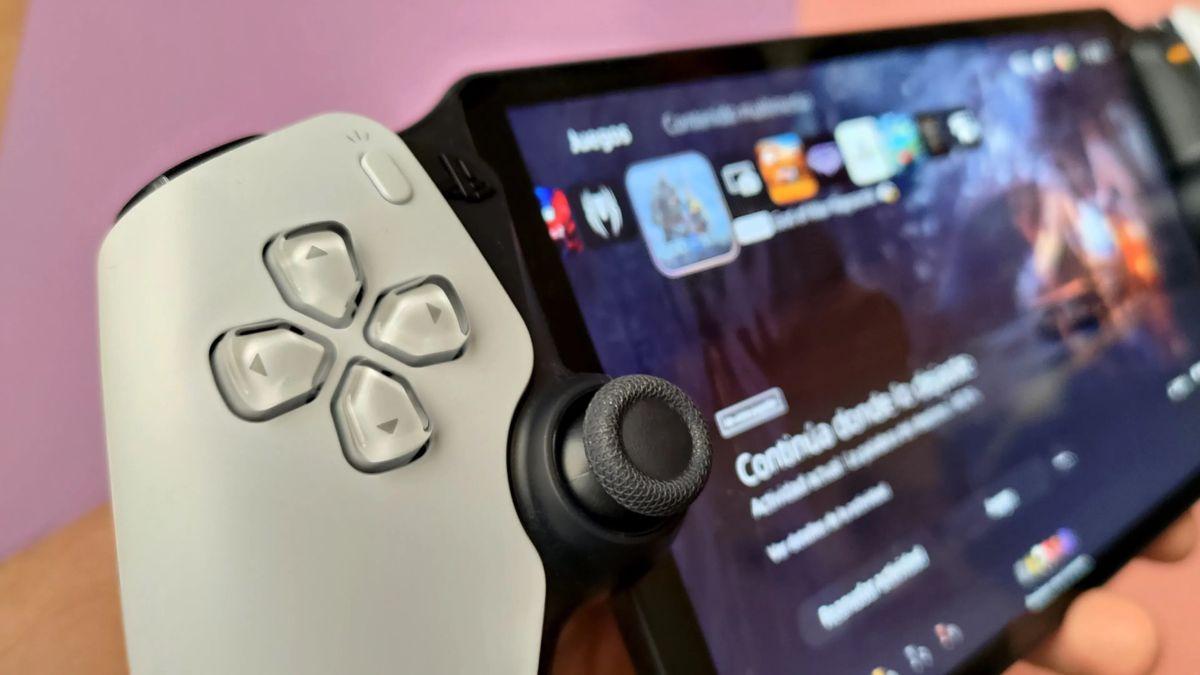
The device's visible heart is an 8-inch Full HD (1080p) touchscreen LCD . It looks sharp, with good intensity and definition, so games look their best when played remotely. It's designed to transmit up to 60 frames per second, so the smoothness is what you'd expect in a good network environment.
The sides integrate controls equivalent to those of the DualSense: it features haptic feedback and adaptive triggers in compatible titles , adding immersion compared to other remote gaming solutions on the market. Furthermore, the screen acts as a replacement for the controller's touchpad: a single touch activates two virtual touch zones that replicate that function.
If you're coming from a Switch or a Steam Deck, the adaptation is immediate: the grip is similar to that of a controller with a screen in the middle , with a weight and ergonomics that clearly recall the PlayStation 5 ecosystem . The initial feeling might be unusual, but it feels natural after a few minutes.
Real-world performance: latency, stability, and image quality
The quality of the experience depends primarily on your network. With average, stable connections, Portal streams convincingly at 1080p and up to 60 fps . In tests with varying bandwidths, no serious performance issues were observed in demanding games like God of War or Elden Ring, and even fast-paced online titles like Mortal Kombat 1 can run smoothly if latency is kept to a minimum.
However, it's important to understand that many PS5 games are designed for large screens. When reduced to 8 inches, subtitles and scoreboards can appear small in some titles, something that isn't always optimized for handheld gaming. This is a logical consequence of the "streaming from a living room console to a small screen" approach.
Regarding the initial connection, after configuring the pairing the first time, subsequent sessions usually start almost instantly . In rare cases, a second connection attempt may be necessary, but this is not typical if the home network is properly set up and not congested.
Game compatibility and what you won't be able to do
The Portal does not run games locally; it streams what your PS5 is running. Games that require PlayStation VR or PlayStation VR2 , as well as specialized peripherals other than DualShock 4, DualSense, or DualSense Edge, are not compatible with Remote Play through the device.
There's also a significant cloud-related restriction: titles streamed via PS5 through a PS Plus Premium subscription cannot be used with Portal . In other words, to play Portal, the game needs to be installed on your PS5 and compatible with Remote Play.
That said, the landscape is evolving. There's an update in beta that opens the door to cloud gaming without a PS5 ; it's a very appealing feature, although for now its availability and scope depend on development and the testing program.
Connectivity and sound: goodbye to Bluetooth, hello PlayStation Link
In terms of audio, Sony has opted for its own wireless protocol: Portal doesn't include Bluetooth, but rather PlayStation Link for compatible headphones (such as the PULSE range). This decision makes sense for reducing latency and maintaining audio quality, but it limits compatibility with standard Bluetooth headsets.
If you prefer a wired connection, no problem: it has a 3,5 mm output for connecting your usual headphones. It also features built-in speakers and charges via USB-C, as you'd expect from a modern device.
Internal hardware, battery and autonomy
Internally, Portal functions as a streaming client and doesn't require a desktop chip. It uses a Qualcomm Snapdragon 662 with an Adreno 610 GPU , more than enough to decode the video stream and manage the interface without consuming extra resources for game calculations.
The battery is 4.370 mAh. Estimated battery life ranges from 5-6 hours to peaks of 8-12 hours depending on usage, screen brightness, network quality, and game type. If you prioritize marathon gaming sessions, be sure to have a USB-C charger or a reliable power bank handy.
Network, account, and business model requirements
For everything to run smoothly, Sony specifies a minimum of 5 Mbps and recommends an additional 15 Mbps. The console must be linked to the PlayStation Portal, connected to the internet, and either turned on or in standby mode . You'll also need a PSN account; officially, account holders must be at least 7 years old, and those under 18 require parental consent.
The device being sold corresponds to model number CFI-Y1016 . Like any hardware with live software, it will receive updates. Sony recommends always installing the latest firmware for security and performance; delaying updates may compromise features or leave you exposed to avoidable risks.
Key specifications at a glance
- Screen: 8-inch touchscreen LCD with virtual “touchpad”.
- Resolution and fluency: 1080p and up to 60 Hz/60 fps in streaming.
- controlsDualSense style with haptic feedback and adaptive triggers in compatible games.
- Connectivity: Wi-Fi (5 GHz recommended), audio via PlayStation Link and 3,5 mm jack, USB-C for charging.
- Audio: built-in speakers; no standard Bluetooth.
- chip: Qualcomm Snapdragon 662 with Adreno 610 GPU.
- Battery: 4.370 mAh (indicative variable autonomy).
What does it feel like to play: practical impressions
In everyday life, this option makes sense in homes where the TV is a highly contested commodity or when you don't feel like using the living room. Portal lets you continue playing in another room without sacrificing too much in terms of image quality and control , especially if your network is up to par and the game isn't heavily reliant on latency.
In single-player or more relaxed cooperative games, the experience shines. In competitive games where every millisecond counts, the most demanding players might notice some drawbacks , although with good networks the results are surprisingly good. As always with streaming, your Wi-Fi and surrounding environment are the deciding factors.
One usability detail: the initial setup process involves a bit of work (accounts, passwords, pairing). Once that's done, starting a session is usually just a matter of turning on the Portal and pressing a button . In other words, minimalist and straightforward, which is exactly what you want when you're looking for a seamless gaming experience.
Prices, editions and availability
In addition to the classic white finish, there's a Midnight Black edition with a more understated and elegant look . At certain times, there have been some attractive discounts on sites like Amazon and AliExpress (for example, offers that brought the price down to around €209 with promotional codes), so it's worth keeping an eye out for sales and coupons.
Keep in mind that, practically speaking, you're paying for a screen with DualSense controls and streaming-focused connectivity . It's a worthwhile purchase if you plan on using remote play extensively; otherwise, you might be better off allocating that budget to other accessories or upgrading your network.
Important limitations to consider
Beyond the obvious (it doesn't run games locally), there are clear limitations: PS VR/VR2 games and those that rely on incompatible peripherals are excluded . And, for now, titles that your PS5 streams with PS Plus Premium also can't be used in Portal.
Regarding audio, keep in mind that there's no Bluetooth and you'll need PlayStation Link for wireless headphones (or the 3,5mm jack for wired headphones). If you already own universal Bluetooth headphones, you won't be able to pair them directly.
For whom does PlayStation Portal make sense?
The ideal user is someone who shares a TV, wants to play away from the living room, or values the convenience of lying in bed and continuing their game with the entire PS5 interface at their fingertips. If you also appreciate the haptic feedback and triggers of the DualSense controller, Portal is currently the most faithful way to bring that feel to remote play.
In homes with good 5GHz Wi-Fi and consoles in standby mode ready to wake up, Portal shines. If your network is unreliable, the experience may suffer , and you might be better off upgrading your router and coverage before considering the device.
PlayStation Portal has clear advantages for those who need freedom inside (and occasionally outside) their home: it streams at 1080p/60 fps, integrates DualSense sensors, and simplifies remote play with a single touch . It also reveals its limitations: there's no Bluetooth, it doesn't run games locally, and it's not compatible with VR or PS Plus streaming from PS5. If your network is up to par and that's how you plan to use it, it's a very attractive proposition; otherwise, you might want to upgrade your Wi-Fi or consider other options before committing.


Passionate writer about the world of bytes and technology in general. I love sharing my knowledge through writing, and that's what I'll do on this blog, show you all the most interesting things about gadgets, software, hardware, tech trends, and more. My goal is to help you navigate the digital world in a simple and entertaining way.