- Google for Health integrates IA ( Gemini:) to inform users, assist clinicians, and accelerate research.
- The old Google Health (2008–2012) was a free, ad-free PHR, with debates about privacy.
- AMIE and a possible app to centralize reports are being explored, with a focus on security and consent.
- Partnerships with hospitals, telehealth, and interoperability mark success in the real world.
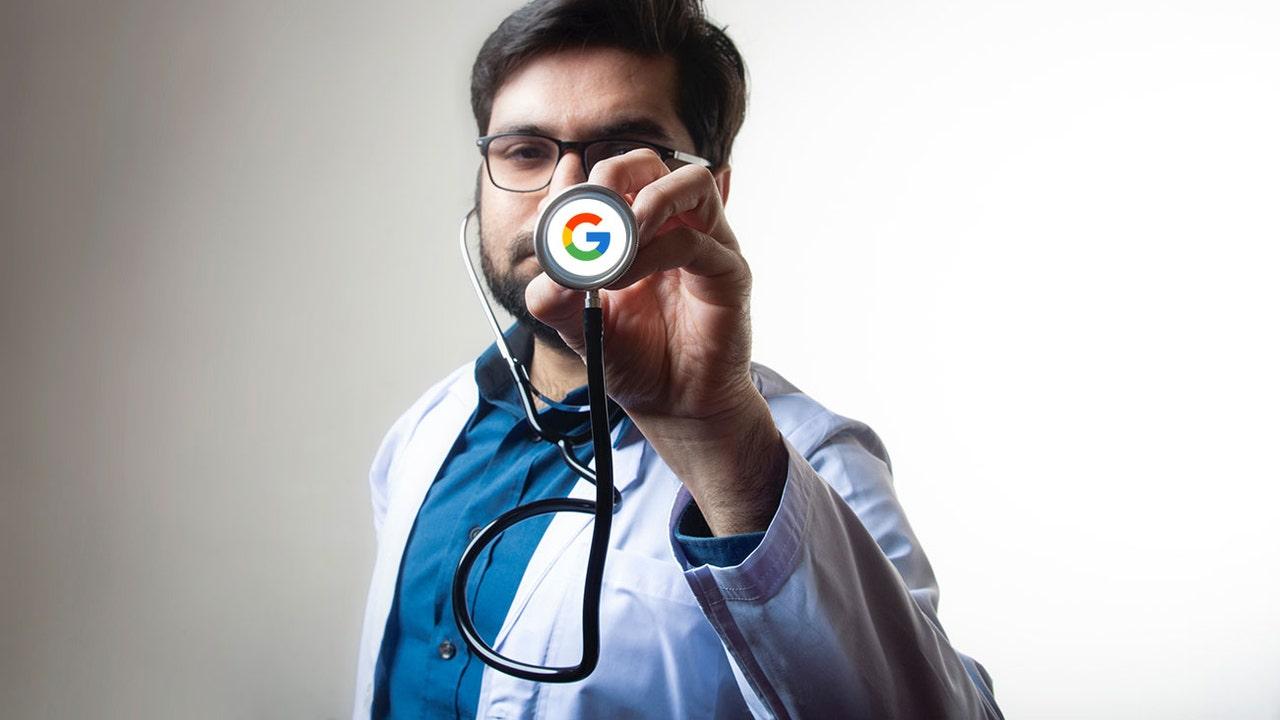
Although we've been hearing about the so-called "Dr. Google" for years, behind that label lies a much broader strategy called Google for Health. This initiative integrates products, research, and partnerships to make technology more useful in healthcare , from the information we consult daily to the tools used by doctors, nurses, and researchers.
The person at the helm is Susan Thomas, a physician specializing in geriatrics and currently the director of Google Health. Her approach combines clinical rigor with technological realism : AI is key, yes, but it serves patients, professionals, and science, not as a substitute, but as tangible support that saves time, improves the quality of information, and accelerates discoveries.
What is Google for Health today?
Currently, Google's efforts in healthcare are focused on three main areas. First, making information more useful for consumers , both on its search engine and on YouTube. Second, creating products that help healthcare professionals work more effectively. And third, using AI to advance scientific research in biomedicine.
In all cases, the company's language models—especially Gemini—are the common thread. Gemini allows for summarizing, synthesizing, and grounding information , so that responses are more precise and verifiable, and data isn't fabricated. This philosophy of "grounded models" guides experiences both in public-facing and clinical settings.
From Google Health (2008–2012) to the current approach
To understand Google for Health, it's helpful to look back. In mid-2006, Google Health, a personal health history service, began to take shape and was launched publicly on May 20, 2008. It was optional, free, and ad-free ; users voluntarily entered their data and could manage their own profile and even that of family members, always with explicit consent.
That product sparked intense debate. The New York Times analyzed the privacy risks and noted that many patients were wary of handing over their medical records to a large technology company. Criticism came from voices like Robert "RSnake" Hansen and Nathan McFeters, while free software activist Trotter Fred defended the importance of such a platform in empowering patients.
Technically, the Google Health API relied on a subset of the Continuity of Care Record (CCR) standard. Google published an overview of its architecture to guide those who wanted to integrate. At that time, automated import was limited to medication data from partner hospitals in the US, and the rest of the data had to be entered manually.
Over time , the service began forging relationships with telehealth providers to synchronize remote consultation records with the patient's account. Its most visible competitor in the US was Microsoft's HealthVault , along with Dossia and the open-source project Indivo, in an ecosystem where open-source and proprietary electronic health records coexisted both within and outside the United States.
Despite its ambition, Google Health was shut down on January 1, 2012. An additional year was given to recover the data , and as of January 1, 2013, records could no longer be downloaded. The lessons learned from that period largely inform the current approach, which is more focused on applied AI and collaboration with the healthcare system.
- Google Health: personal medical history (2008–2012), free and without ads.
- Integration with Google Health: API based on CCR and initial partnerships with hospitals and telehealth.
Reliable information for the public: Search and YouTube
For those seeking health information, the search engine has for years included knowledge panels that appear when searching for common conditions such as diabetes, asthma, or depression. These panels link to accredited sources and have been built in partnership with the UK's NHS, the US National Academy of Medicine, the Mayo Clinic, and the WHO, among other institutions.
The challenge is that not all diseases or languages are covered by these panels. That's where the final layer comes in: AI summaries. Gemini synthesizes the best sources and answers questions in natural language , for example: "How do I manage my diabetes with glucose monitors?" This feature—available in Spain—expands the thematic scope and contextualizes the answer for each question.
Google asserts that its models are designed to avoid "hallucinations" and that the answers are grounded in evidence. The company works to ensure that the summaries are useful and verifiable , helping to separate truth from falsehood , and continuously improving the selection and presentation of information to make it reliable for the average user.
On YouTube, the strategy complements the search engine: authoritative sources—doctors, nurses, hospitals—appear at the top of the results when health-related topics are searched. In addition, communities of health-focused creators have been fostered , addressing sensitive or everyday issues (teenage acne, women's health, mental health) with rigor and accessible language.
Misinformation is actively combated. Google removes erroneous content and does not promote baseless theories ; the priority is that anyone searching for a symptom or treatment finds clinically supported material rather than unfounded opinions published without oversight.
AI for professionals: less workload and more time with the patient
In a consultation, ten minutes fly by, and much of that time is wasted reviewing medical records. With Gemini, doctors can receive a precise summary of the patient's file before sitting down with them , with references to the source of each piece of information so they can verify it instantly. The idea is to free up time to talk and listen, which is where clinical value is created.
This same technology is being applied to nursing. The HCA hospital group in the US uses Gemini to structure shift handovers. Instead of writing everything by hand, concise notes are generated from the log , reducing oversights and ensuring that nothing important is missed when attending to dozens of patients simultaneously.
Beyond clinical summaries, there is fertile ground in reducing bureaucracy: forms, discharges, continuity reports. AI can pre-complete documents based on already recorded information , decreasing errors and alleviating the cognitive load of professionals working against the clock.
In nursing, the use case is clear: if a nurse has to remember critical information for 25 patients and receives an unexpected call, it's easy to miss a detail. An assistant that instantly retrieves relevant information from the medical record prevents gaps and ensures consistent quality in handovers and patient communication.
AI for research: a "co-scientist" that accelerates hypotheses
In the scientific field, Google has unveiled an AI "co-scientist": a set of agents powered by Gemini that help generate and evaluate hypotheses. The promise is not to replace researchers , but to accelerate their work and uncover relationships that would otherwise take years to emerge.
An example shared by Imperial College illustrates the potential: in one project, this AI co-scientist proposed ideas in two days that a researcher had been developing for three years without sharing them. The acceleration of findings is the differentiating factor : more iterations, faster, without sacrificing the human judgment that validates, compares, and decides the next steps.
AMIE and personal health agents
Google is also exploring AMIE (Articulate Medical Intelligence Explorer), a chatbot designed to allow patients to ask health-related questions. The medium-term vision is for everyone to carry "a doctor in their pocket ," with personal health agents providing guidance and support in daily life and self-care.
This ambition coexists with real challenges. The digital divide exists, and older people need more human experiences ; it's not enough for the technology to simply work: it must be accessible, empathetic, and consider diverse socioeconomic realities so that no one is left behind.
Privacy and security: consent first
The sensitivity of medical data demands safeguards. The current guideline is clear: "Your data belongs to you and is only shared where you choose ." Google emphasizes that it doesn't want your data and that its models don't rely on personal clinical information without explicit consent, which raises concerns about access to sensitive data by law enforcement or other parties.
This approach contrasts with the fears that surrounded the old Google Health. At the time, Google argued that it was more secure than paper due to less human interaction , but the public debate—reflected in the New York Times analysis and in criticisms from security experts—demonstrated that trust is just as important as the number of features.
An app to centralize reports? What we know
Meanwhile, the development of an app called Google Health, designed to unify medical records on mobile devices and in the cloud, has been leaked. The leaked screenshots suggest it will be "the easiest way to access your most important medical records ," with the option to connect your Google Health account to providers who generate your analyses, tests, or appointments.
The filtered interface displays sections such as home, reports, contacts, and sharing. The idea is reminiscent of a "Google Pay for healthcare" : you add your providers and have all your relevant clinical information in one place. The challenge, of course, is monumental: agreements with insurers, private providers, and, hopefully, public healthcare systems, country by country.
Even if the product were ready, availability would be gradual. Interoperability and regulatory compliance vary across markets , and connecting legacy systems is no trivial task. Still, the promise of centralization—when it materializes—would resolve the current chaos of multiple apps and portals for accessing results and appointments.
Integrations, partners and competition
In addition to its search layer and AI products, Google for Health operates within a multi-faceted ecosystem. Partnerships with telehealth providers enable the synchronization of remote consultation data with the patient's account, creating continuity of care between in-person and virtual settings.
Historically, major competitors have included Microsoft with HealthVault (now discontinued), Dossia, and Indivo, and multiple open and proprietary electronic health records coexist worldwide. The key to competitive advantage lies not only in having the best technology , but also in integrating with existing data and workflows while adhering to local standards and regulations.
Challenges, limitations and opportunities
Expanding AI knowledge panels and summaries to more conditions and languages is a scaling challenge. Ensuring that information is useful in diverse cultural and clinical contexts requires refining how sources are selected, how recommendations are displayed, and how misinformation is avoided without limiting access to quality content.
In hospitals, adoption depends on seamless integration with existing medical records. If a Gemini summary saves minutes per consultation and reduces errors , traction will follow naturally; but that requires true interoperability and clear auditing mechanisms so clinicians can trust and verify every point.
The research component will continue to expand. The AI "co-scientist" brings faster hypothesis cycles , and that pace can change the speed of discovery in biomedicine. However, it doesn't replace expert judgment or experimental validation, but rather enhances them.
Finally, if the report centralization app reaches the general public, it will have to earn its place in the ecosystem. Connecting insurers, private clinics, and public systems is a marathon , not a sprint, and will require agreements, standards, and, above all, user trust that their information is secure and under their control.
Today, Google for Health combines lessons learned from the past with the power of modern AI. The project leverages Gemini to better inform people, ease the burden on healthcare professionals, and accelerate science , while experimenting with new interfaces like AMIE and exploring an app that aggregates our health reports. Much remains to be refined—privacy, integration, digital equity—but one thing is clear: today's "Dr. Google" is far from a hasty search; it's an ecosystem that aims to make healthcare more accessible, reliable, and useful for everyone.

Table of Contents
- 1 What is Google for Health today?
- 2 From Google Health (2008–2012) to the current approach
- 3 Reliable information for the public: Search and YouTube
- 4 AI for professionals: less workload and more time with the patient
- 5 AI for research: a "co-scientist" that accelerates hypotheses
- 6 AMIE and personal health agents
- 7 Privacy and security: consent first
- 8 An app to centralize reports? What we know
- 9 Integrations, partners and competition
- 10 Challenges, limitations and opportunities
