- Winamp went from being the player MP3 most popular of Windows to be overshadowed by the rise of streaming and the new music platforms.
- After its acquisition by AOL and the announcement of its closure in 2013, the sale to Radionomy saved the project and led to new versions such as Winamp 5.9.x.
- The brand has reinvented itself with NFTs, features for creators and a web platform, although with strong controversy over licenses, source code and changes of direction.
- Today Winamp is a modern player and ecosystem for artists, far from its original identity, but with a key historical legacy in digital music.
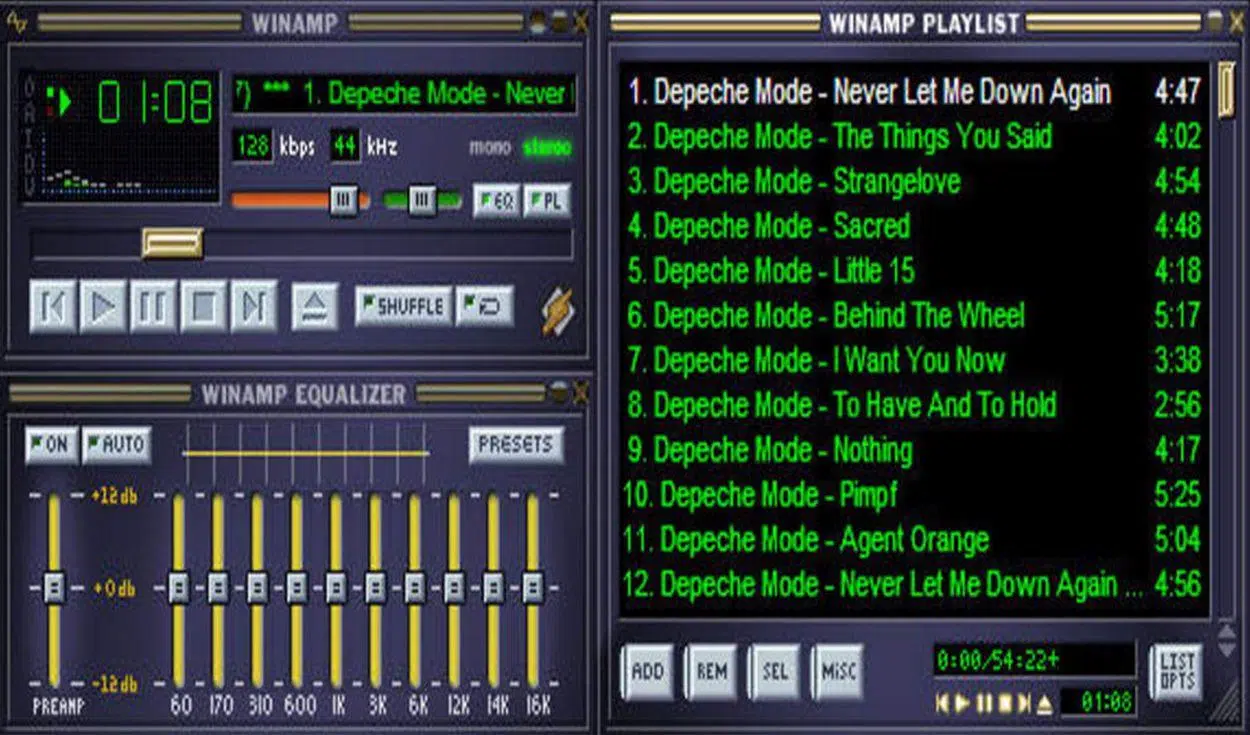
If you grew up using a Windows PC in the 90s or early 2000s , it's almost impossible you didn't have Winamp installed. That lightweight player, with its mini hi-fi system look and thousands of skins, was for years the gateway to the MP3 music we downloaded (legally or not so legally) from the internet. Today, platforms like Spotify hold the throne , but there was a time when digital music revolved around a single program.
While it's now commonplace to open Spotify , Apple Music, or YouTube Music on your phone, tablet, or computer and have millions of songs streaming, for a long time the ritual was very different: downloading MP3s, organizing them into folders, and playing them with Winamp. That's why so many people are wondering what happened to that icon with the yellow lightning bolt, why it disappeared, who bought it, and why, suddenly, its name has resurfaced in connection with NFTs, open source, and a new platform for creators.
What exactly was Winamp and why was it so important?
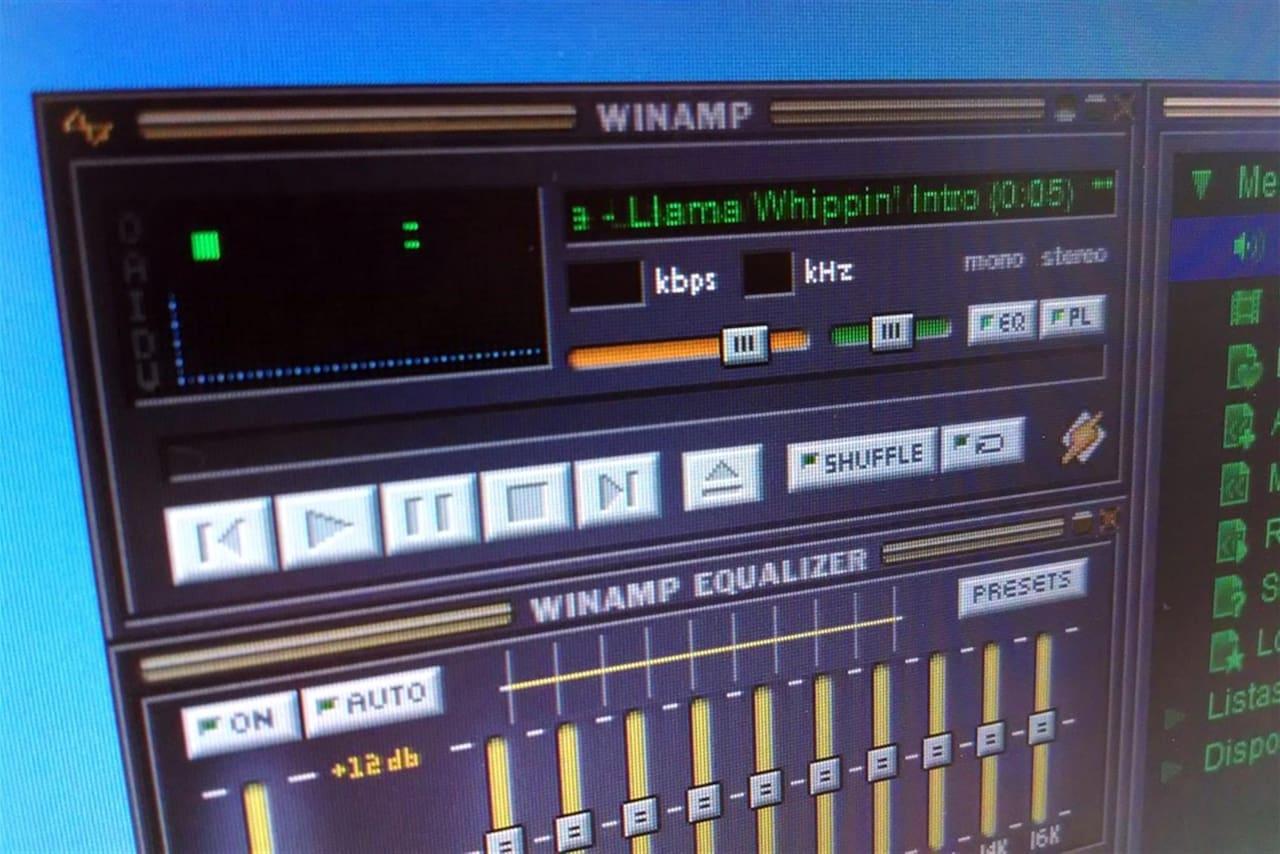
Winamp was launched on April 21, 1997, by Nullsoft , a small company founded by Justin Frankel and Dmitry Boldyrev. Initially a simple media player for Windows, its success was so phenomenal that it was soon ported (with varying degrees of success) to other systems like macOS and Linux , greatly expanding its user base.
Its fame was built on several pillars: it was very lightweight, consumed very few resources, and could handle a multitude of different audio formats without breaking a sweat. But what truly captivated millions of people were its skins: covers that completely transformed the interface, from minimalist designs to truly wild visual creations, almost all of them made by the community itself.
Another of its strengths was its architecture based on plug-ins and extensions . These allowed for the addition of audio effects modules (DSP), spectacular visualizations like MilkDrop or AVS, compatibility with more codecs, keyboard shortcuts , synchronized lyrics, and much more. Winamp became a true multimedia "Lego" that each user could mold to their liking.
In those years when MP3s began circulating online via Napster and other P2P networks, Winamp became the de facto standard. Its impact was so great that it directly influenced the design of other media players and forever popularized the concept of skins in Windows applications, something that even Microsoft would eventually embrace with its "skins" for Windows Media Player.
Nullsoft didn't limit itself to Winamp: it also created projects like SHOUTcast (an internet radio streaming technology still used by many broadcasters) and Gnutella (a popular P2P network). The financial success of the player, distributed as shareware, was immediate, and the small company began earning thousands of dollars a month before the giants came knocking.
The AOL acquisition and the glory years
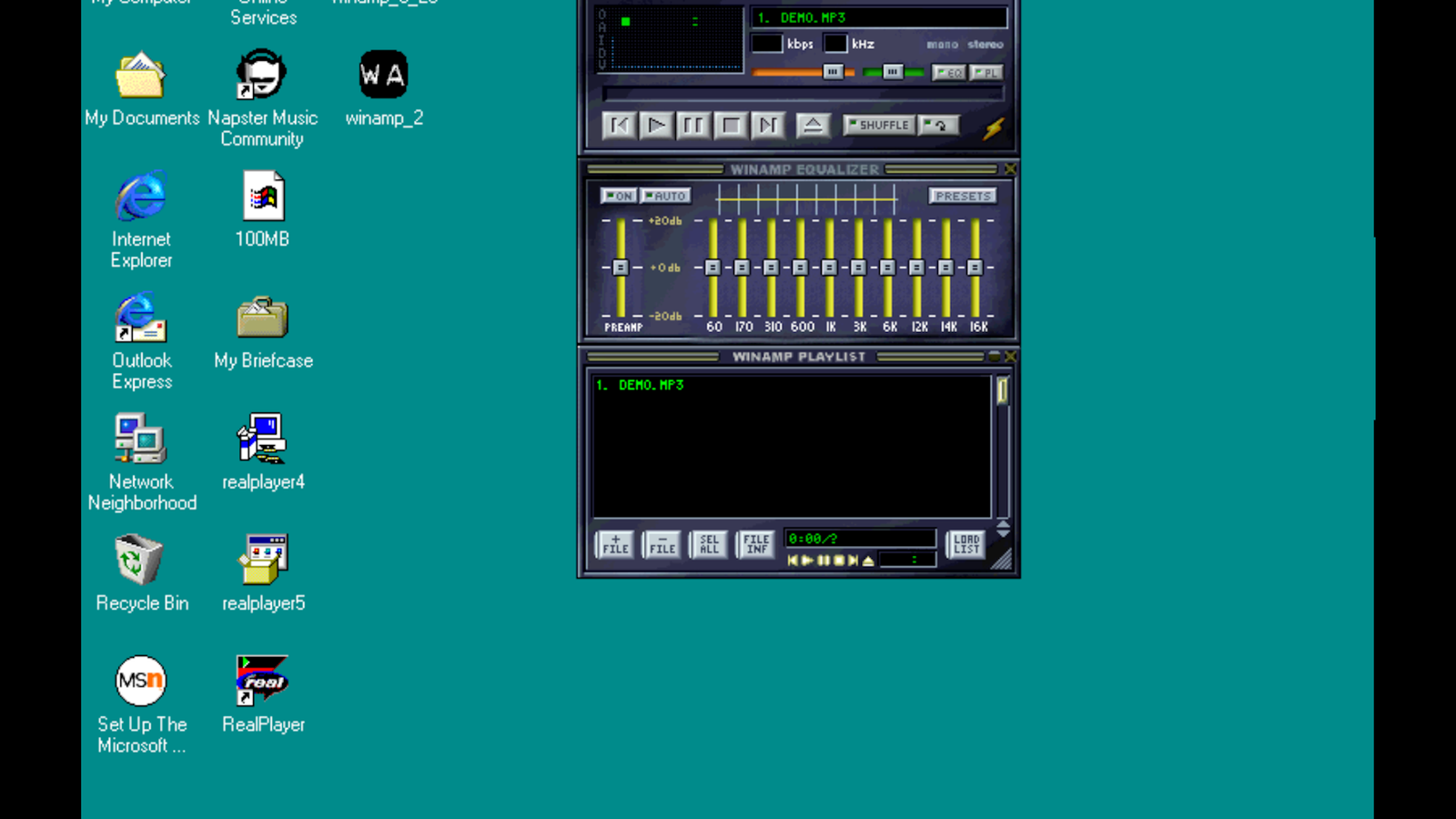
In 1999, when Winamp was already one of the most installed programs on PCs worldwide , AOL (America Online) decided to acquire Nullsoft. They paid around $60 million and turned Justin Frankel into the perfect example of the "American Dream": a student who drops out of college, locks himself away to program for an entire summer trying to emulate a mini stereo system on his computer… and ends up selling his project for a fortune.
Under the AOL umbrella, Winamp continued to evolve. More powerful media libraries were added , along with improved playlist management, streaming radio and video services, and integration with SHOUTcast. Version 2.x, lightweight and incredibly fast, reached a state of "perfection" for many users: simple, stable, and with just what was needed.
Winamp 3 attempted to take a bigger leap forward, incorporating a more complex interface and advanced features, including video support, but the experiment failed: it consumed too much RAM and crashed frequently . Faced with this failure, the developers decided to change course and "merge" the best features of the 2 series with the salvageable aspects of the 3.
That's why there was never a 4.x version line. It jumped directly to Winamp 5, with the symbolic idea that 2 + 3 = 5. Version 5.5, which arrived in 2007 as the tenth anniversary edition , was especially important: it unified the player and library interface, significantly improved localization (including official versions in several languages), added album art support, support for external devices like the iPod, 5.1 surround sound, 24-bit playback, thousands of radio stations, and a toolbar for Internet Explorer.
From then on, Winamp was much more than just an MP3 player. It supported a wide range of audio formats (MID, MIDI, MP1, MP2, MP3, MP4, AAC, Ogg Vorbis, WAV, WMA, FLAC, audio CD, KAR, RAW, M3U playlists, PLS, ASX, and others) and also videos in AVI, MPEG, and NSV (Nullsoft Streaming Video), in addition to taking advantage of DirectShow filters for formats like Matroska or Theora, provided that codecs were installed on the system.
Features, skins and versions that defined an era
Among the features that made Winamp so popular was its incredible visual customization capability. The themes were divided into "classic" and "modern ." The classic themes always followed the same button and panel structure, with only the graphics changing. The modern themes went much further: they were designed with a proprietary scripting language that allowed for altering both the appearance and behavior of the interface, creating entirely new windows, transparent frames, or futuristic designs.
Winamp was also a pioneer in integrating online services. From within the program, you could access internet radio and television using SHOUTcast, play music videos, tune in to XM Satellite Radio, or search for multimedia content with services like Singingfish. In its registered version, it also included tools for ripping CDs to MP3 or AAC and burning audio CDs directly from playlists.
Another highly valued feature was that, despite its increasing complexity over the years, it remained surprisingly lightweight . It opened instantly even on modest computers, had a low memory footprint, and the interface, while small by today's high-resolution screen standards, was clear and straightforward for its time.
In terms of language, the program was officially released in English, but the community created translations into Spanish and other languages. Starting with version 5.531, the installer itself included the option to install a "Spanish (International Sort)" language pack, and language packs with the .wlz extension became popular to further expand multilingual support.
Over time, Winamp also made the leap to smartphones . An Android version appeared in 2010 , and the iOS version was released in 2011 , attempting to adapt to the new mobile reality where computers were no longer the sole center of digital life.
The announcement of closure and the fall from grace
Despite all its virtues, the market began to change radically. Users grew accustomed to new, constantly updated free alternatives, and streaming platforms began to emerge. Winamp still maintained a loyal user base, but it was no longer the undisputed king it had been years before.
On November 19, 2013, a devastating message was posted on the official website: Winamp and its associated services would no longer be available after December 20 of that year. Users were urged to download the latest version (5.666) before that date. In practice, this meant that AOL was ending the project on PC, macOS, and Android.
At that time, rumors circulated about a possible acquisition by Microsoft, which was theoretically also interested in SHOUTcast. However, the deal never materialized . And it made sense: Microsoft already had its own media player ( Windows Media Player ) and its own online radio guide, so it didn't have a real, urgent need to integrate Winamp.
The announcement of its closure was experienced by many as a small digital mourning. Those who had used Winamp in their teens felt a significant wave of nostalgia: for an entire generation, it was the application that transformed the PC into a stereo system. Meanwhile, the business model wasn't helping matters either: few people paid for the "Pro" or full edition, there were numerous very solid alternatives, and the program hadn't innovated in a groundbreaking way for some time.
Campaigns were launched asking that the project not be shut down , older versions were downloaded in case they ever disappeared from the servers, and many users took advantage of the last available version to save it as if it were a small treasure from the old days of Napster and floppy disks.
Radionomy's salvation and slow comeback
The story didn't end with AOL's closure. On January 1, 2014, it was announced that AOL was selling Winamp and SHOUTcast to the Belgian company Radionomy , which specialized in online radio. This acquisition saved the player and its ecosystem of some 50.000 SHOUTcast stations, which were then joined by approximately 6.000 additional stations owned by Radionomy.
For a while, it felt like it was frozen. The latest stable version was stuck at 5.66, and although there was still an active community keeping it alive through customizations and side projects, no major official updates were coming . It seemed like Winamp was headed for becoming pure nostalgia software.
The surprise came in 2018, when a beta version of Winamp 5.8, dated October 2016, was leaked online. This was the first version under Radionomy's management. That build introduced full support for Windows 8.1 and Windows 10 , eliminated the paid version, and made the player completely free again.
Following the leak and the ensuing uproar, the company reacted by releasing an official, revised version 5.8 a few days later , with build number 3660 (compared to the leaked 3653). Although it retained the classic logo and was still considered a development version, it was a clear sign that someone, somewhere, had decided that Winamp still had a future.
Plans for a more ambitious relaunch began to take shape around 2021, when Radionomy (and later its parent company AudioValley) confirmed they were working on "the new Winamp" for a new generation , with a refreshed logo and a broader focus on music, artists, podcasts, and online radio.
The new versions, NFT, and a very different Winamp
That relaunch took some time to materialize, but it finally arrived. In July 2022, a 5.9 Release Candidate appeared, and after some tweaks, Winamp 5.9 was officially released on September 9, 2022. The most significant change wasn't immediately apparent: the project was migrated from Visual Studio 2008 to Visual Studio 2019, modernizing the entire codebase.
Aside from that "engine overhaul," Winamp 5.9 brought improvements in compatibility with Windows 11 , high-resolution audio, better support for HTTPS streams, and other internal updates. However, it also meant raising the minimum supported operating system to Windows 7 SP1, leaving behind very old versions of Windows.
In December 2022, another notable update arrived: Winamp 5.9.1, which introduced NFT music playback . From then on, users could add Ethereum- and Polygon-based music NFTs to their library. This integration was the first visible step in the brand's shift towards the world of tokens and Web 3.
In April 2023, Winamp 5.9.2 was released as a minor update , fixing bugs and fine-tuning details. Simultaneously, the company began working on a new Winamp experience accessible through a web browser, with an approach that moved significantly away from the classic desktop player and closer to a modern platform focused on creators.
As part of this shift, Winamp announced a particularly controversial project: the auction of the player's original skin as an NFT through OpenSea. A bidding war was launched for a unique token associated with the classic appearance, accompanied by the sale of 20 additional Winamp-based skins, each multiplied into editions totaling 1.997 NFTs—a nod to the program's launch year.
The economic model involved Winamp taking the majority of the revenue, while the artists received 20% of the initial sale of their work as NFTs and 10% of royalties on subsequent sales. Buyers acquired a token associated with an image of the original skin or its derivatives, granting them the right to copy and display the image, but not to own the copyright to it.
The reaction of the community, the creator, and the new platform
This move towards NFTs wasn't exactly universally popular. In fact, one of the most vocal critics was Justin Frankel , the original co-creator of Winamp. He stated that he had spent years trying to give successive owners the benefit of the doubt, but that the shift towards NFTs seemed disastrous to him.
Frankel strongly criticized the environmental impact of the NFT ecosystem and the fact that, in his opinion, it's a negative-sum game where people enter to speculate, hoping to sell at a higher price to future buyers. He also emphasized that what was actually being auctioned wasn't the skin itself, but simply a URL pointing to that image.
A large part of the long-time user community, who associated Winamp with nostalgia and affection, reacted similarly. The connection to NFTs and digital speculation soured the memory for many, who had previously been quite forgiving of the project's ups and downs. What had been an almost untouchable icon came to be seen, by some, as just another example of a "classic brand recycled for the crypto trend."
Meanwhile, the new Winamp with its web interface began to make it clear that it had little in common with the minimalist program of yesteryear. Those who access its online player find an interface quite reminiscent of other current services, with a design visually closer to Spotify than to the classic Winamp, and with hardly any aesthetic nods to its golden age.
According to the company itself, the idea is to focus the product on music creators , offering them better tools to monetize their work, manage rights, market their services, and maintain direct contact with their fans. This approach isn't actually new to the industry: we've heard similar promises from other platforms for years, with mixed results.
In April 2025, Llama Group (the company that now manages the project) launched Winamp for Creators , a platform specifically for artists that includes monetization tools, rights management, marketing, and features for training and identity verification. With this, Winamp is no longer just a music player, but an ecosystem that aims to directly connect musicians and listeners.
The attempt to make Winamp "open source" and the mess with the code
A particularly striking recent chapter came on May 16, 2024 , when Llama Group announced that Winamp would become “source-available” starting September 24, 2024. The idea was to publish the source code of the Windows application, but under its own license called the Winamp Collaborative License 1.0.1.
That license, in theory, allowed the community to view and study the code, but prohibited distributing modified versions or creating forks . Only official maintainers could compile and publish new versions. In other words, it wasn't open source in the classic sense (it wasn't a free license like the GPL or MIT), but a much more restrictive model.
On September 24, 2024, the Winamp source code was finally published on GitHub. However, the repository was taken down shortly afterward . The community had identified several sensitive issues: the code tree included proprietary components belonging to companies such as Microsoft, Dolby, and Intel , as well as parts related to SHOUTcast Distributed Network Audio Server, which remains the property of the original developers at Nullsoft.
In addition to these potential infringements or gray areas regarding third-party rights, many users strongly criticized the Winamp Collaborative License itself, arguing that the initiative was being marketed as "open source" when, in reality, it did not allow for truly community-driven development . Complaints focused both on limitations to redistributing changes and on legal questions surrounding the inclusion of certain codecs.
Faced with a wave of criticism and licensing issues, the Winamp team decided to remove the repository from GitHub while they reviewed the code to separate the truly releaseable parts from the proprietary or incompatible license elements. This raised the question of whether, after removing everything they couldn't publish, the program would remain functional or be so severely curtailed that it would lose much of its usefulness.
That episode perfectly illustrated just how Winamp's comeback has been, in recent years, a rollercoaster of announcements, changes of direction, and controversies . From the announced closure in 2013 to the failed "open source" experiment in 2024, through NFTs and the reinvention as a platform for creators, the project has been far from the tranquil stability of its early years.
So what happened to Winamp and what is it today?
Looking back at its entire history, it's clear that Winamp is no longer the music player you remember from the late 90s and early 2000s. Back then, its mission was simple: play your downloaded MP3s, offer a small but functional interface, cool skins, and minimal resource consumption. Now, the brand is trying to thrive in a world dominated by streaming, mobile devices, and comprehensive platforms for artists.
On the desktop, Winamp still exists as a modern player, with recent versions like 5.9.2 (released in April 2023), compatible with Windows 10 and 11, capable of playing a good catalog of formats, with visual plugins, surround sound support, and a long list of advanced features. But it's no longer the center of the mass music experience as it once was.
At the same time, the Winamp brand has expanded into a web platform and services geared toward creators , with Winamp for Creators as its main pillar. The emphasis now is on monetizing content, managing rights, connecting artists with their audiences, and exploring new distribution methods, including those linked to NFTs and tokens.
For many veteran users, opening the classic Winamp on a modern high-resolution monitor today is almost comical: the giant pixels, the narrow interface, and the tiny buttons make it seem like the screen is stuck in 97. This lack of visual continuity and "nostalgic care" in the new versions is one of the points that most disappoints part of the community, who expected to see more nods to the original design in this new phase.
Even so, the name Winamp retains enormous symbolic weight. It continues to spark curiosity every time there's an ad, and its legacy is undeniable: it popularized skins, spurred the mass adoption of MP3s , facilitated the expansion of online radio, and was, for years, the program with which millions of people listened to their first digital songs. It may not reign supreme today as it once did, but its story lives on.
Looking back at this entire journey—from its launch in 1997, the purchase by AOL, the undeniable rise, the announced closure in 2013, the rescue by Radionomy, the new modern versions, the forays into NFTs and the failed attempt to become open source— it is clear that Winamp has gone from being a simple MP3 player to becoming a symbol in constant reinvention , with highs and lows, but with a permanent place in the collective memory of those who lived through the early years of digital music on the computer.


Passionate writer about the world of bytes and technology in general. I love sharing my knowledge through writing, and that's what I'll do on this blog, show you all the most interesting things about gadgets, software, hardware, tech trends, and more. My goal is to help you navigate the digital world in a simple and entertaining way.
Table of Contents
- 1 What exactly was Winamp and why was it so important?
- 2 The AOL acquisition and the glory years
- 3 Features, skins and versions that defined an era
- 4 The announcement of closure and the fall from grace
- 5 Radionomy's salvation and slow comeback
- 6 The new versions, NFT, and a very different Winamp
- 7 The reaction of the community, the creator, and the new platform
- 8 The attempt to make Winamp "open source" and the mess with the code
- 9 So what happened to Winamp and what is it today?