- Unreal Engine 5.8 integrates Microsoft's Advanced Shader Delivery (ASD) to precompile shaders in the cloud and reduce stuttering on PC.
- The system uses SODB and PSDB databases to ensure shaders are ready before the game starts, reducing the CPU load.
- It is compatible with modern GPUs from NVIDIA, AMD, Intel, and Qualcomm, requiring DirectX 12 and Shader Model 6.
- It does not eliminate all performance issues or include ray tracing, and it requires each studio to update their games individually.

If you're a regular PC gamer, you know there's nothing more frustrating than those little stutters that appear out of nowhere while you're exploring an open world or casting a spectacular spell. These annoying jumps, known as stuttering , have been the Achilles' heel of many recent titles, and much of the blame lies with how real-time shaders are handled.
To address this problem, Epic Games has taken a step forward with version 5.8 of its engine. The major new feature is the integration of a Microsoft technology called Advanced Shader Delivery (ASD) , which promises to change how games render their graphics before they reach us, aiming for a much smoother experience from the very first second.
What exactly is Advanced Shader Delivery?

The root problem is that shaders must be compiled for each user's specific hardware. This typically happens the first time you play, which spikes CPU usage and causes those annoying freezes. The ASD system changes the game by shifting shader compilation off the player's device.
To achieve this, the process works as follows: developers create a State Object Database (SODB) containing all the shader code and Pipeline State Objects (PSOs). Then, through cloud-based compilation, this information is transformed into a Pre-compiled Shader Database (PSDB) . This allows the game to be shipped with ready-to-use shaders, optimizing load times and eliminating compilation-induced stuttering.
Technical requirements and hardware compatibility
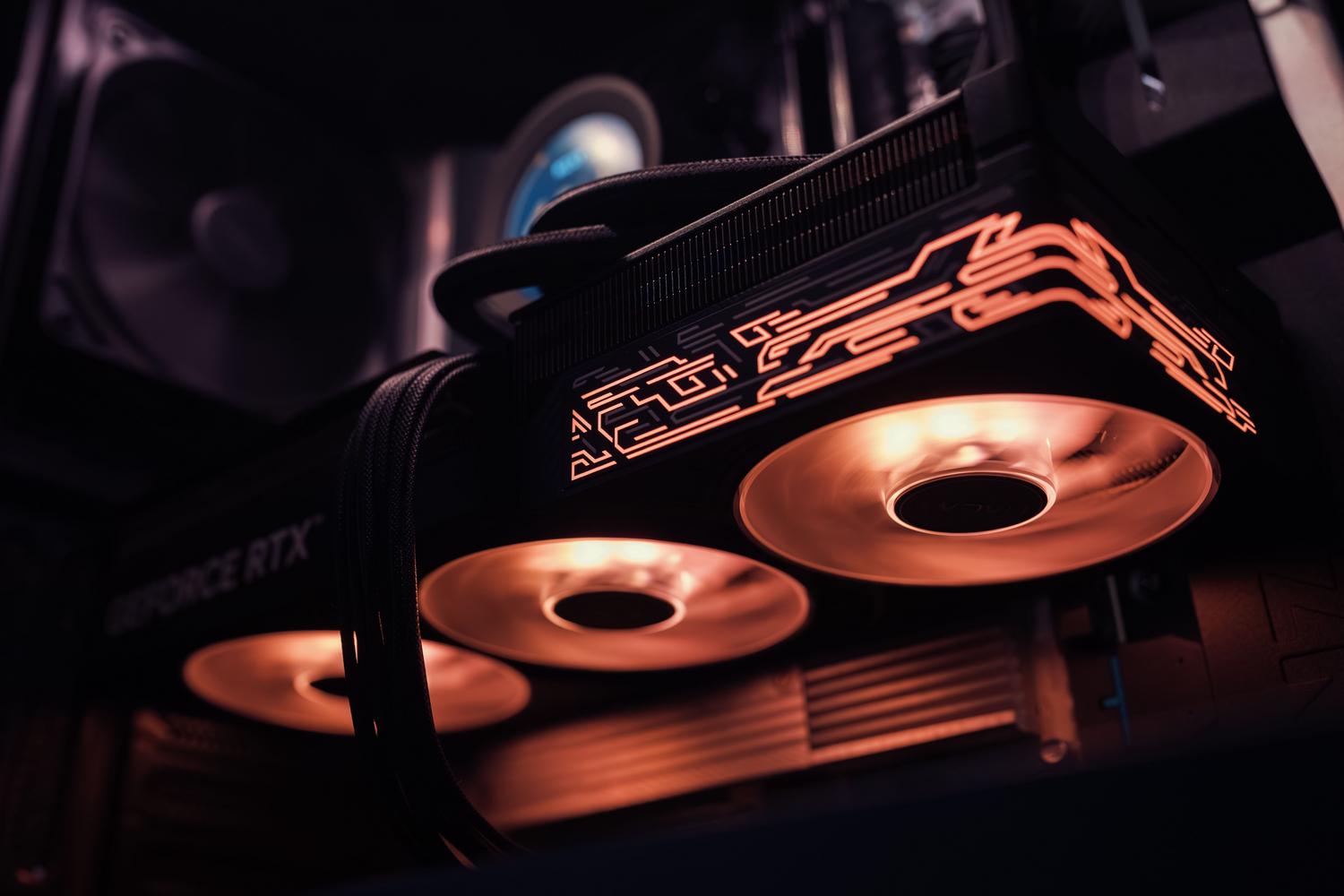
It's not enough for the game to use Unreal Engine 5.8; for this magic to work, the entire ecosystem needs to be aligned. Direct3D 12 and Shader Model 6 are essential , along with the latest drivers and compatible hardware.
- NVIDIA: Support has already arrived with the Game Ready 621.01 WHQL drivers and the R620 branch for GeForce RTX cards.
- AMD: The RDNA 1, 2, 3, 3.5 and the future RDNA 4 architectures are already prepared for ASD.
- Intel and Qualcomm: Support has been extended to Intel Arc B-Series chips (such as the B570 and B580) and Core Ultra Series 2 and 3, in addition to Snapdragon X2 with Adreno graphics.
What ASD can (and cannot) fix
It's important not to get carried away by excessive hype and to understand that this tool isn't a magic bullet. Epic Games has made it clear that ASD doesn't replace the existing PSO precaching system in the engine, but rather complements it. Furthermore, some performance issues will remain, such as resource loading while the character moves around the map, which requires different optimizations.
Another key point is that ray tracing shaders are not included in this current implementation. Furthermore, games already on the market will not benefit immediately; each studio will need to adapt its projects and release specific patches for its users to see the improvement.
Distribution and availability in stores
The rollout of this technology also depends on where we buy games. Currently, the Microsoft Store already supports this system , allowing the delivery of pre-compiled shaders. The Epic Games Store , for its part, plans to integrate this functionality in early 2027, so there will be a transition period until it becomes standard across all distribution platforms.
The arrival of ASD in Unreal Engine 5.8 marks a turning point in the fight against stuttering by allowing developers to deliver shaders already optimized for each GPU. While it doesn't solve all performance issues or automatically affect older games, it represents a huge step forward in making future PC releases much more stable and enjoyable to play.

Passionate writer about the world of bytes and technology in general. I love sharing my knowledge through writing, and that's what I'll do on this blog, show you all the most interesting things about gadgets, software, hardware, tech trends, and more. My goal is to help you navigate the digital world in a simple and entertaining way.