- The Swedish Academy honors John Clarke, Michel H. Devoret, and John M. Martinis for validating quantum tunneling at the macroscopic scale.
- His experiments with a superconducting circuit also showed discrete energy levels.
- The work lays the foundation for superconducting qubits and the current wave of quantum technologies.
- The award includes 11 million Swedish kronor and reinforces the role of quantum physics in innovation.
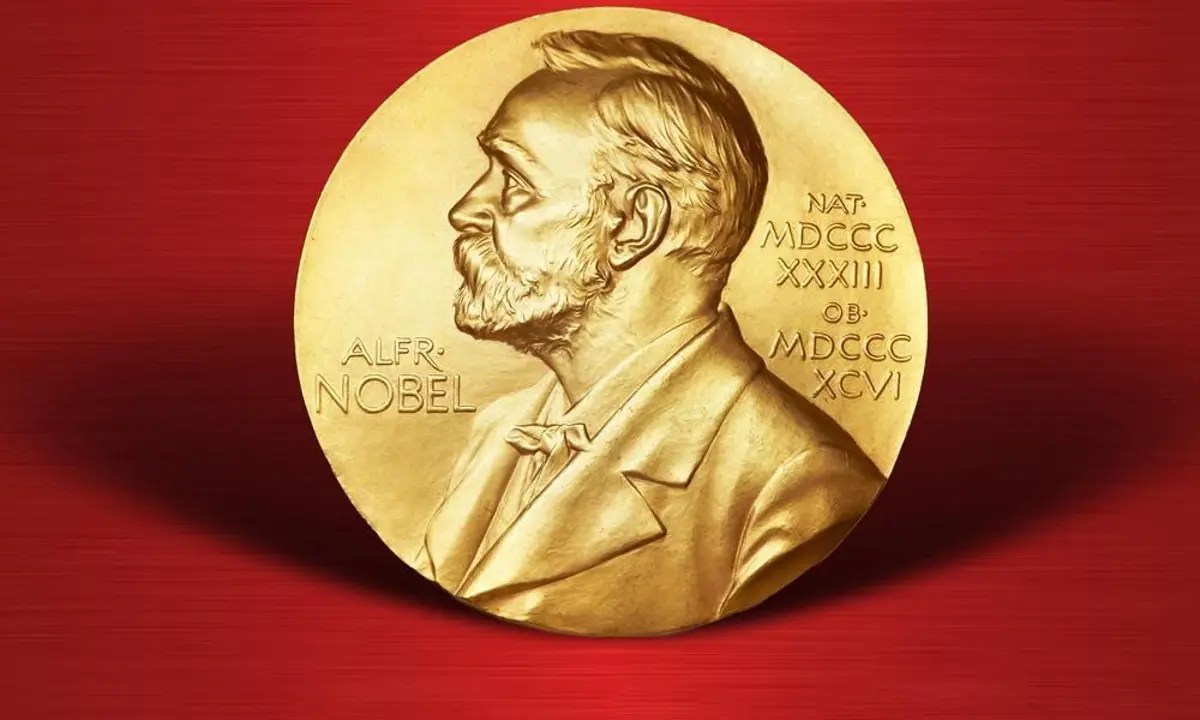
The Royal Swedish Academy of Sciences has awarded the Nobel Prize in Physics to John Clarke, Michel H. Devoret and John M. Martinis for a groundbreaking experimental demonstration: the manifestation of the macroscopic quantum tunneling effect and the quantization of energy in an electrical circuit.
The ruling recognizes pioneering experiments that transferred typically microscopic phenomena to the domain of a hand-held chip, strengthening the bridge between quantum mechanics and the everyday world and opening the door to next-generation quantum technologies .
What exactly has been awarded?
Quantum mechanics allows a particle to cross energy barriers through tunneling . What is extraordinary here is that the laureates demonstrated this same process in a macroscopic system : a superconducting circuit where the jump is detected as the appearance of a voltage after a previous state of current with no potential drop.

Furthermore, the device responded only to discrete energies , confirming the quantization of the system. This double observation, in a single circuit, proved that it behaved as a coherent quantum entity and not as a simple aggregate of particles.
How was the experiment?
In 1984–1985, the team built a circuit with superconductors separated by an insulating layer, the classic Josephson junction . By precisely tuning and measuring its parameters, they were able to control the processes that emerged when current was injected into the circuit.
Overall, the charges in the superconductor were organized as if they were a single particle occupying the entire device. This state, initially without voltage, was confined by an effective potential barrier; the system escaped this barrier through quantum tunneling , as evidenced by the reading of a finite voltage.
The key variable is the superconducting phase across the Josephson junction, a collective degree of freedom that acts as an analogue to the position of a quantum particle. Verifying its quantum and macroscopic nature on a palm-sized chip became an experimental milestone.
Who are the winners?
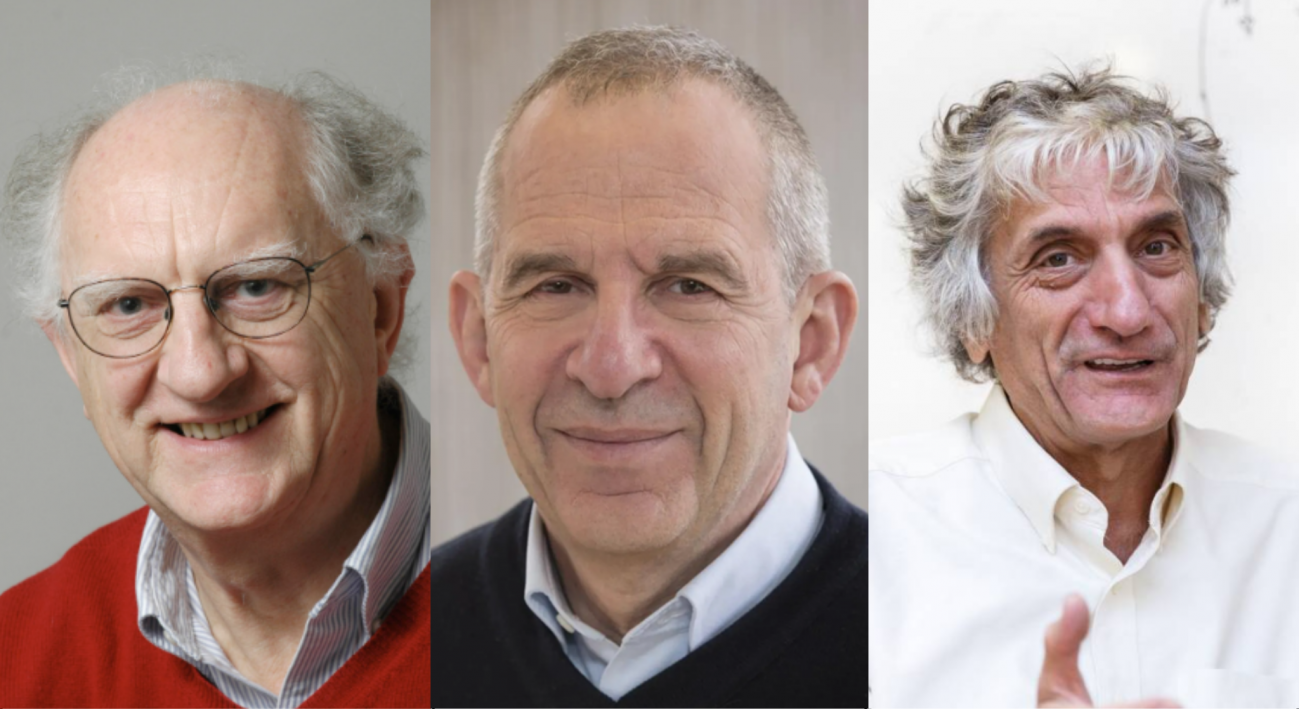
John Clarke is affiliated with the University of California, Berkeley; Michel H. Devoret has spent his career at Yale University and the University of California, Santa Barbara; and John M. Martinis has worked extensively at the University of California, Santa Barbara. Their collaboration solidified a line of research that redefined the boundaries of superconducting circuit physics.
The prize includes 11 million Swedish kronor (approximately $1,17 million). Clarke called the news a great surprise and emphasized that his work, conceived in the 1980s, has become the foundation for cutting-edge quantum technology.
Reactions from the scientific community
According to Olle Eriksson , chairman of the Nobel Committee for Physics, quantum mechanics continues to offer unexpected discoveries and unquestionable usefulness, given that it is based on the digital technology we use daily.
Experts such as Lesley Cohen (Imperial College London), Ignacio Cirac (Max Planck Institute for Quantum Optics), Juan José García-Ripoll (CSIC), Artur García (BSC-CNS) and Alba Cervera Lierta (BSC) agree that the award-winning experiments laid the foundation for superconducting qubits and have been crucial for the development of quantum processors and sensors that are now being tested in laboratories and companies around the world.
Impact and applications
The most direct interpretation of the work is its foundational role in quantum computing based on superconducting circuits . Companies and academic teams have built processors with qubits that take advantage of discrete energy levels and readout techniques inspired by these experiments, with advances including milestones such as the so-called quantum supremacy reported by Martinis's team in 2019.
The effect also transcends computing: the experimental framework has driven highly sensitive quantum sensors (such as SQUIDs), as well as developments in quantum cryptography and advanced metrology, with potential in medicine, geophysics, new materials and computational chemistry.
A career on the shoulders of giants
This achievement rests on pillars such as BCS theory and the predictions of Brian Josephson , who introduced supercurrent through insulating barriers and explained why superconductors can exhibit large-scale quantum coherence . The experimental validation by Clarke, Devoret, and Martinis brings this previously abstract physics closer to the realm of fabricable chips.
challenges ahead
Although current demonstrations already allow for the execution of useful algorithms and experiments, the path to large-scale practical systems requires scaling up the number of qubits and combating decoherence . Cryogenic engineering, materials quality, and error-correction codes are active fronts that will determine the pace of the second quantum revolution.
With the validation of macroscopic quantum tunneling and quantized energy in superconducting circuits, the Nobel Prize recognizes a clear and measurable demonstration of quantum mechanics at the device scale, a result that has changed the way hardware is designed and that today fuels the race to compute, measure and communicate with rules that, for decades, seemed reserved for the subatomic world.

Passionate writer about the world of bytes and technology in general. I love sharing my knowledge through writing, and that's what I'll do on this blog, show you all the most interesting things about gadgets, software, hardware, tech trends, and more. My goal is to help you navigate the digital world in a simple and entertaining way.