
System crashes can happen from time to time, and several customers reported that they were experiencing the ERROR_FILENAME_EXCED_RANGE error. This error is often followed by an error message It's really difficult to locate the file name/extension you are looking for. Today we show you how to solve it Windows 10.
It's really difficult to get the file name/extension you're looking for.[FIX]
Fix – ERROR_FILENAME_EXCED_RANGE
Solution 1 – Rename the directory
It is really difficult to locate the name/extension of the file you are looking for. If you try to change or access a file, you will often get an error message. The problem is usually not with the file, but with the location of the file. Windows has a limit on the length of file paths. If the path is too long, you will get an error message.
This bug caused users to have difficulty accessing or moving files. You can fix the problem by renaming the file and changing its path. It is usually impossible to change the name of a file. However, you can fix the problem by changing the name of the directory that contains the problematic file.
Simply rename the folders that lead to your file. The limit of letters and numbers will be reduced when you rename the folders, and your files will work again.
Solution 2: Create a network drive
For a while, you can work around the problem by using a network drive. This solution can only be used if you share your folder. These steps will help you do it quickly and easily:
-
Find the problematic folder and right-click it. You can choose Please share this with > Specific people On the menu

-
Click the button to choose the group or user with whom you want to share the file Communicating . You need to choose your username carefully for security reasons.
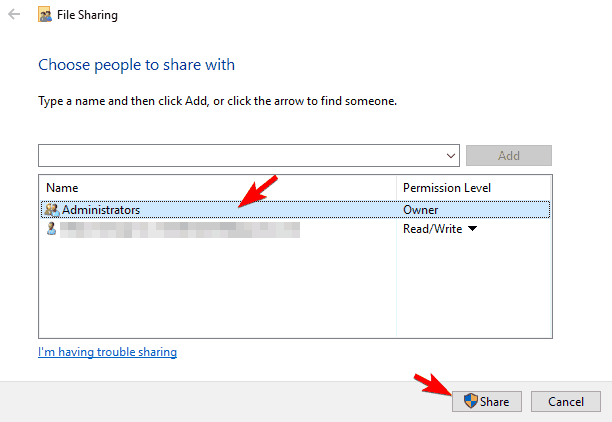


First you will need to share the folder. Now, create a network drive. These steps will help you to make a network drive.
-
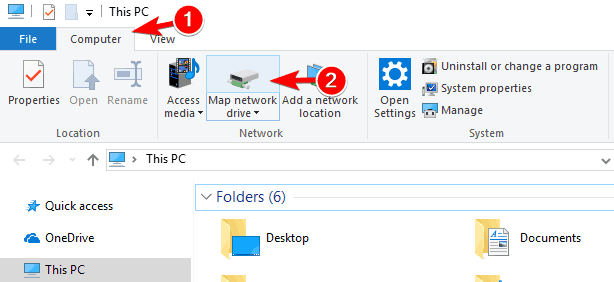
Opens This computer . Simply click on the tab Team Choose The Map Grid Unit Option .
-
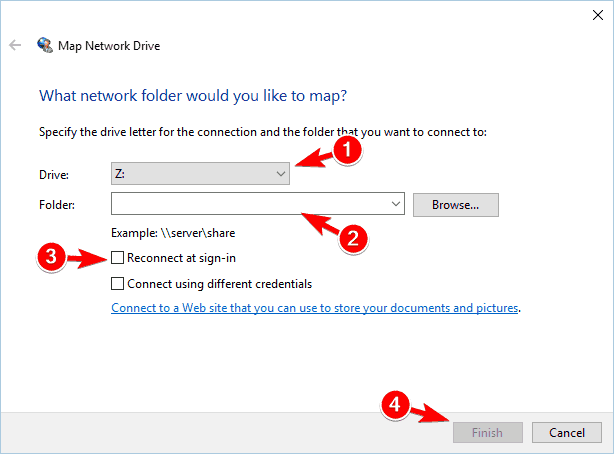
Choose the drive letter you want to use and then choose the folder path. Check the box to confirm Sign in to reconnect Click the button concludes .
-
Now you will see the new unit, which you can use to access your conflicting files.


While this is a simple solution, if you don't know much about sharing and network folders, it can be difficult to accomplish. You can move your conflicting files to another folder by creating a new network drive.
Solution 3: Use Teracopy
You may receive error messages from time to time. It's really difficult to get the file name/extension you're looking for. Teracopy can guide you to fix this error. This tool can be used if you are unable to remove the files that cause this error.
Simply Teracopy Download Drag the files you are having problems with to that folder. Now, click on much more information To remove the conflicting files from your computer, you can see that it is a pretty simple solution for those files.
Solution 4: Copy the files or move them to another folder
Most likely this error will not allow you to open the files, however, you may be able to move the files. Move the files to another folder by simply searching for them. It is possible to create another directory in your root folder (like C:, D:) and then copy the files. You should now be able to access the copied files without any problems.
Solution 5: Add the files to a compressed folder
This solution can help you fix this error if you are trying to access the files. Add the conflicting files to a zip file and they will be easy to move. To access the files, you can also extract them to another location.
You have to take into account that the file may take some time, depending on the size of your files. Files can be archived without using third-party software, by clicking on the folder or file you want to archive and choosing the option Add to file .
Many people recommend the 7-zip tool to fix this problem. You can create a zip file with this program, or you can remove the files that don't work.
Solution 6: Use the command prompt
This issue can be easily resolved by advanced customers using the symbol of the system You can use this tool to assign the path of a folder to drive letters. You can access your conflicting files using this tool. These are the steps you need to follow:
-
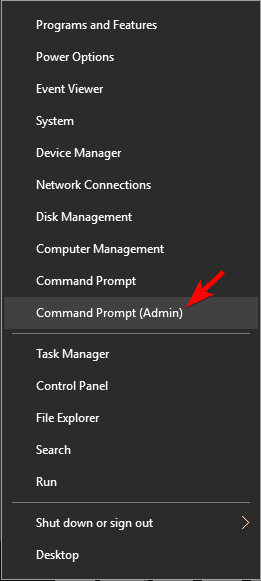
For much more information, press Windows key + X To open Win + X, click on the menu icon and choose your option Command prompt (manager). .
-
Enter the next commands the moment you have opened the prompt subst X: «C:Path_to_the_problematic_file» Use the press Email .
-
At this point you should be able to access drive X: and any other problematic files after running this command.

You have to take into consideration that this is a solution for advanced users. This means that if your command prompt knowledge is low, you may not be able to run the command prompt properly. We should also mention that although we did not see any new drive on the PC, we were able to use the Command Prompt to get to it. To remove the new drive you will need to enter Subst x /d In the command window.
Solution 7 – Use Total Commander
If you can't access your files thanks to It is really difficult to locate the name/extension of the file you are looking for. An error message may be displayed Total Commander . This is a dual-pane file manager that will let you quickly access your files. Total Commander is shareware, but you can get it for free and fix your problem. You can also use any file manager if you don't like this program.
The individuals detailed that they had deleted conflicting files from their computers. GoodSync Explorer So you could use that tool too.
Solution 8: Use the extended path tool
Several customers detailed that this problem was easily resolved using Extended Route Tool . You can rename and copy files, as well as delete them. You can quickly rename large files, move them to other areas, or delete them. You can download the app for free.
You can also evaluate tools like Long Path Fixer , Long Paths Sketch Free o Ant Renamer You can use these free tools to name and access conflicting folders or files.
Solution 9 – Use the command prompt to rename folders or files
It's really difficult to find the file name/extension you're looking for. You may not be able to access your files and folders due to their long path. However, you can fix this problem by renaming the files.
To rename files, you first need to identify hidden files or folders with their extensions. Follow these steps to make this easy:
-
Opens file explorer .
-
Simply click on the tab Verifica Make sure to check Enlarge file name You can find it here Hidden items . This will let you see all the hidden files and extensions.
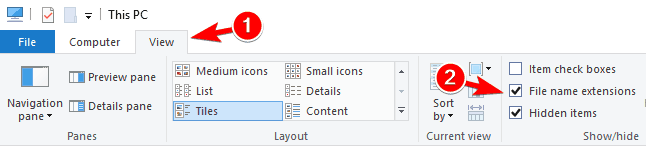

At this point you can start the command prompt and use it to rename the conflicting files. These are the steps you need to follow:
-
Begins Symbol of the system Manager: How is this achieved? Solution 6 For more information, request the manual.
-
When the command prompt starts, you can enter REN «C:Path_to_the_problematic_fileProblematic_file.txt» «File2.txt» You need to specify the path and extension of the problem file. You can use ProblemFile.txt As an example, replace the file name with what is causing this error.
You may want to rename a folder if you cannot access multiple files. Do the following:
-
Opens Symbol of the system Manager
-
Where? Symbol of the system Come in, open REN «C:Problem_Folder_Path» «New folder name». You have to choose the folder that has the longest name.
-
At this point you should be able to easily access your conflicting files by renaming them.
This solution is quite advanced and may not suit everyone. The Command Prompt is not something you are familiar with. You may need to rename folders or files appropriately.
Solution 10 – Upload the file and name it to Dropbox
This is a simple solution that can be used if only certain small files are accessible. While you can use this method with large files, the Dropbox upload process requires the files to be uploaded to Dropbox.
Find the file you're having trouble with and upload it to Dropbox. Open Dropbox Storage, rename the file, and then upload it. Automatic sync with Dropbox will automatically download the file to your computer so you can easily access it.
Solution 11: Changes to the overall policy
Windows 10 users are asking for updates on the limit of letters and numbers in the path. It seems that Windows 10 has removed this limit. This restriction existed in the previous versions of Windows, which allowed users to use only 260 letters and numbers as paths. These steps will allow you to change the path limit:
-
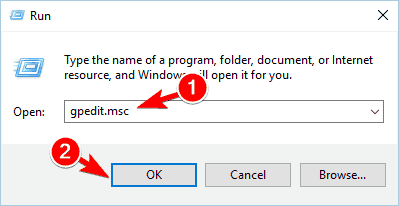
For much more information, press Windows key + R you can enter gpedit.msc .
-
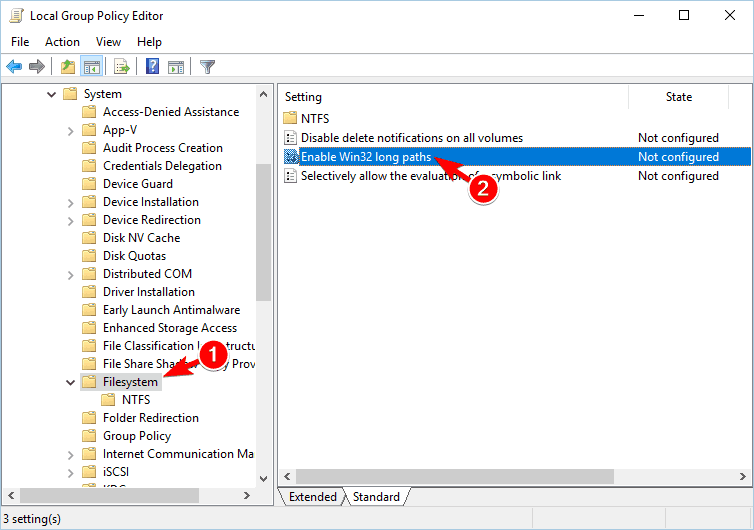
Navigate through the left sidebar after starting the Set Policy editor Local Computer Policy > Computer Configuration > Administrative Templates > System > System > File System . Find it right now Long trails to activate NTFS Double click on the link in the bottom right corner.
-
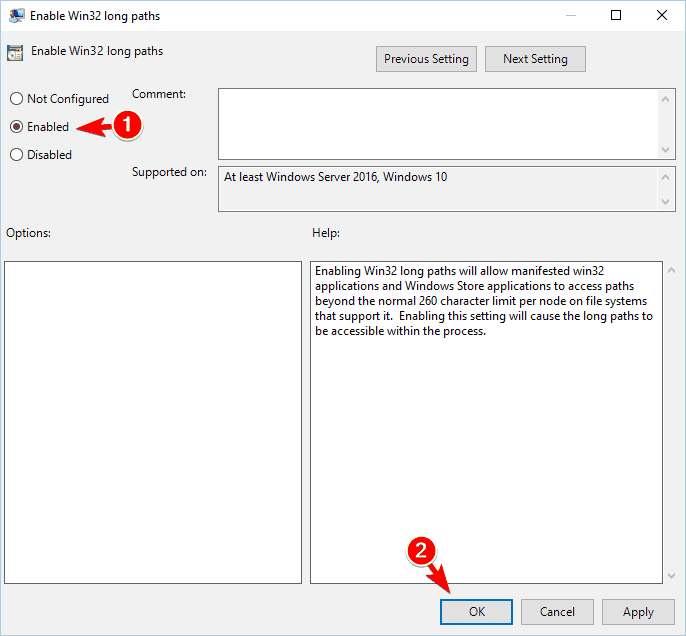
Choose the correct option Able Please click here Please order You can find it here Admits Stores changes.
-
CLOSE Set Policy Editor Check if it is solved by restarting the computer.


You can remove the restriction using the Registry Editor if you are unable to access the Set Policy Editor on your version of Windows. Follow these steps to do so:
-
For much more information, press Windows key + R you can enter regedit . Squeeze Email Or click here OK .
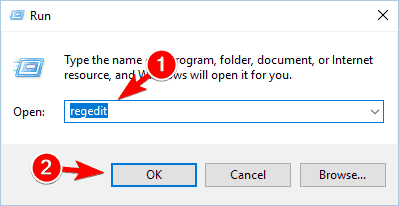
-
Where? Registry Editor Navigate through the left panel of the screen by opening it HKEY_LOCAL_MACHINESYSTEMCurrentControlSetControlFileSystem from the key. Double click on the button on the bottom panel LongRoadsEnabled DWORD You have to manually create this key if it is not free.
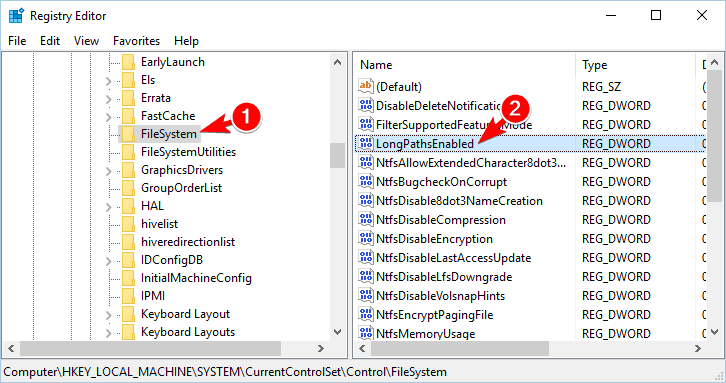
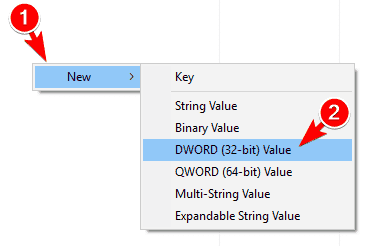
To do this, right-click on the empty area of the right panel. New > 32-bit DWORD Value . Please enter it LongPathsEnabled Double-click on the name of your new DWORD to see its characteristics.
-
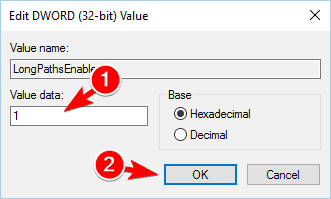
When opening the window Intellectual Detail Value Data a 1 Click here Admits Stores changes.
-
CLOSE Register Editor Turn on your PC.


This zip file can be used to instantly use the changes in the registry if you do not want to edit it manually. Run the zip file Removes the file limit of 260 letters and numbers. To remove the restriction on file paths, you can checkout the file. The restriction can be reactivated by running the second file in the file.
This option can be turned on regardless of the method you use. It will allow you to access any file path you want without any problems.
It's really difficult to find the file name/extension you're looking for. and the ERROR_FILENAME_EXCED_RANGE error can appear on any PC, but you should be able to fix it easily using one of the solutions in our product.
Windows 10: “Application.exe has stopped working” error [Fix]
Windows 10: Unable to set up iCloud
Windows 10: “Close programs to prevent data loss” message [Fix]
“Missing Files at Job” Error in uTorrent[FIX]

My name is Javier Chirinos and I am passionate about technology. Ever since I can remember, I have been interested in computers and video games, and that passion has turned into a job.
I have been publishing about technology and gadgets on the Internet for over 15 years, especially in mundobytes.com
I am also an expert in online marketing and communication and have knowledge in WordPress development.