- GTA has gone from simple 2D games to huge 3D open worlds that have defined the modern sandbox genre.
- The PS2 era releases (GTA III, Vice City and San Andreas) marked a turning point in scale, personality and gameplay options.
- With GTA IV and GTA V The saga took a leap in realism, adult narrative and persistent online gameplay thanks to GTA Online.
- The rankings vary, but GTA IV, San Andreas and GTA V always appear at the top as the pinnacles of the franchise.
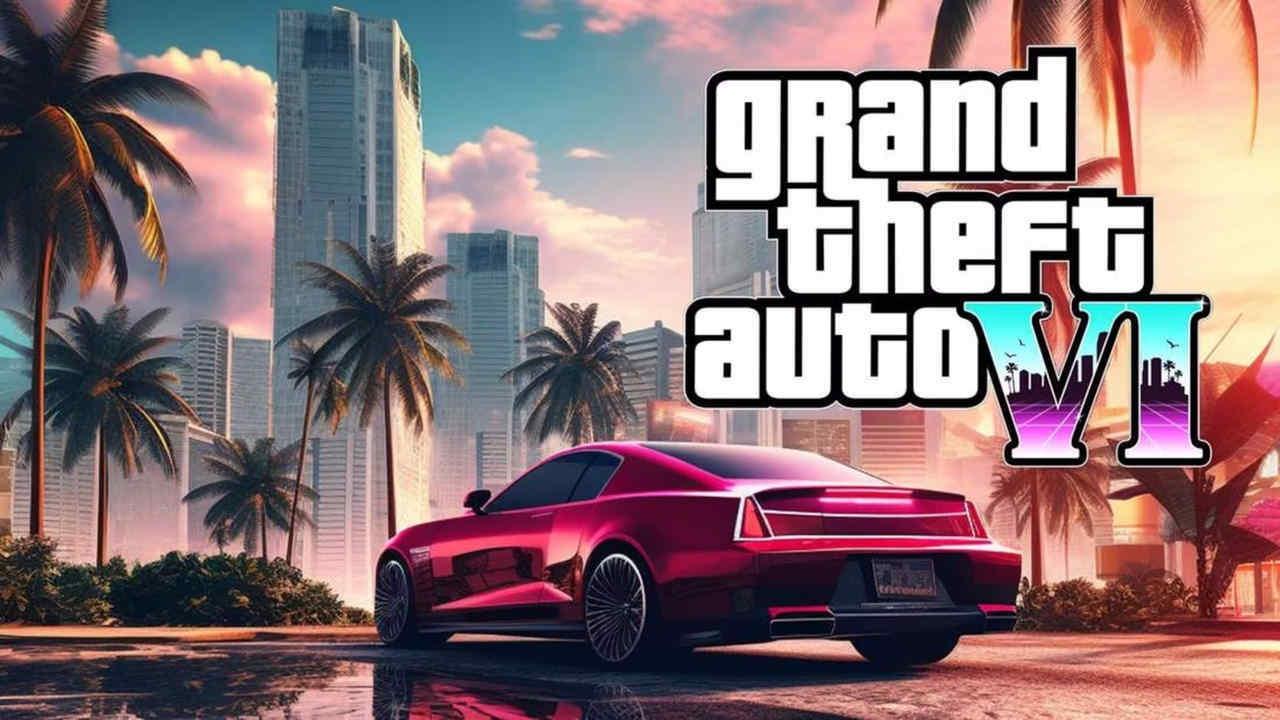
To talk about Grand Theft Auto games is to delve into one of the most influential sagas in video game history. From that first top-down experiment in the 90s to the mammoth open worlds of today, each installment has refined a formula based on total freedom, crime, and living cities that react to your actions.
Recommending just one GTA title is nearly impossible because, let's be honest, if we disregard the purely visual aspects, practically all of them have something essential . Ranking them from worst to best is a significant challenge, but not an impossible mission. Across more than a dozen main games, spin-offs, and expansions, Rockstar has honed a style that blends satire, frenetic action, driving, and a surprisingly mature narrative.
How we ranked the Grand Theft Auto games
Before we delve into the ranking, it's important to clarify exactly what we mean when we say " Grand Theft Auto games ranked from worst to best ." This list includes the main installments, portable spin-offs , and major expansions , but not compilations or remasters.
To place each title on the list, information from various specialized websites and articles analyzing the series from different angles was cross-referenced: subjective rankings, impact classifications, gameplay analyses, and lists based on average Metacritic scores. Factors such as innovation, legacy, open-world quality, narrative, critical reception, and audience response were also considered.

It's not an exact science, that's clear. There are lists that place San Andreas above all others and others that crown GTA V , while Metacritic, for example, gives first place to GTA IV with a 98. Here, all that material is integrated to build a global vision of the saga and explain why each game occupies the place it does when we put all the data on the table.

The roots of the saga: the 2D era and the expansions
Before the leap to 3D and the sandbox genre becoming "the GTA genre," the franchise was forged with top-down titles, simple-looking worlds, and a freedom that was truly revolutionary at the time . Although they may look dated today, their historical importance is enormous.
Grand Theft Auto (1997)
The first Grand Theft Auto was the spark that ignited it all. Technically, it's a 2D game with a top-down view, small sprites, and schematic cities, but at the time it offered something almost no one dared to consider: freely moving through three cities inspired by New York, Miami, and California (Liberty City, Vice City, and San Andreas) while robbing banks, stealing cars, and sowing chaos for points.
The game was initially conceived as a racing game called Race'n'Chase , but the team soon realized that the real fun lay in escaping the police, running over pedestrians, and accepting criminal contracts from phone booths. That blend of open world, mission-based structure, and dark humor was a breath of fresh air in 1997 and laid the foundation for the modern sandbox genre.
Today its controls feel clunky and the scoring system is outdated, but it remains historically key . It's the origin of now-iconic elements: the radio stations, the irreverent tone, the free progression of missions, and the three major cities that would later reappear time and again.
GTA 2 (1999)
Just two years later came GTA 2 , a sequel that opted for continuity rather than revolution. It maintains the top-down view and a look very similar to the original, albeit with a retro-futuristic aesthetic and a completely fictional city called Anywhere City, far removed from direct reflections of real urban centers.
In terms of gameplay, it introduced interesting concepts, such as the respect indicator for different gangs that determined which missions were available, and a somewhat more reactive environment, with pedestrians and criminals who could get into trouble with the police without your intervention. Even so, many rankings agree that it didn't differentiate itself enough from its predecessor and that its more gratuitous violence felt a bit forced.
In terms of legacy, it's usually ranked slightly above or below the first GTA depending on the criteria prioritized. Some websites penalize its lack of innovation and place it below the original, while others value those small design improvements. Together, they form the cornerstone of the classic sandbox genre , although today they're more historical curiosities than recommended starting points for the series.
GTA London 1969 and 1961
In between came the expansions GTA London 1969 and GTA London 1961 , which are a special case within the series. They use the same technical foundation as the first game, but move the action to a real city: London , with recognizable neighborhoods and very clear nods to British culture of the 60s.
Its great appeal was precisely that change of pace: driving on the left, locating iconic areas like Big Ben or Camden and enjoying a very careful atmosphere , especially in the soundtrack, which was awarded a BAFTA and set the course for the importance that licensed music would have in the saga.
In terms of mechanics, they were more of the same, almost like a big pack of missions and vehicles for the first GTA. That's why many lists place them low in the rankings: they don't revolutionize the formula , but they are entertaining and, above all, interesting for daring to use a real city instead of an American parody.
The portable stage and modern top-down experiments
With the success of the console versions, Rockstar attempted to bring the GTA experience to handheld consoles. This era saw the release of some of the series' less polished games, but also some very interesting experiments that demonstrated the open-world crime format could be adapted to smaller screens.
GTA Advance (2004)
Grand Theft Auto Advance was the attempt to bring the franchise to the Game Boy Advance with its own game. It brought back the top-down view and reused the Liberty City setting from GTA III, but the hardware limitations took their toll: basic graphics, a lack of cutscenes, and truncated dialogue made the experience feel like a step backward.
In terms of mechanics, it reasonably replicated the mission structure, car thefts, and urban chaos, but the controls, especially behind the wheel, were a real ordeal due to the close-up camera and certain handling issues. Many rankings agree in placing it last because, although it deserves credit for attempting it on a 2D handheld, it neither innovates nor lives up to the rest of the series.
GTA Liberty City Stories (2005)
A year later, Rockstar shifted its approach and released GTA: Liberty City Stories for PSP, later ported to PS2 and other systems. Instead of rebuilding from scratch, it reused the GTA III map and turned it into a direct prequel set a few years earlier, with Toni Cipriani as the protagonist instead of Claude.
The game marked the official debut of the series on a handheld console, featuring 3D environments very similar to the PS2 installments . The city design was adapted to the PSP's capabilities, camera angles were refined, motorcycles were added, and the ability to change clothes was introduced, bringing it closer to the standards of Vice City and San Andreas. A major new feature was the inclusion of an Ad-Hoc multiplayer mode with several options for local play with friends.
Even so, most reviews agree that, while solid, it didn't bring much new to the formula and felt like a cut-down "portable version." That's why it usually appears in the lower-middle range of rankings, ahead of GTA Advance and the classic 2D games, but far from the main installments.
GTA Vice City Stories (2006)
GTA: Vice City Stories repeated the formula the following year, also on PSP and then on PS2, but this time with much more care. Again, it's a prequel , this time to Vice City, set two years before the events of the original game and starring Victor Vance.
Rockstar leveraged the experience gained from Liberty City Stories to deliver technical improvements (draw distance, animations, performance) and, most importantly, a criminal empire-building system that combined Vice City's property purchases with San Andreas' gang wars. Managing illegal businesses, protecting them, and expanding your network added a welcome strategic layer.
In addition, multiplayer was brought back, new radio stations and activities were added, and the mission design was refined. Many rankings place it above Liberty City Stories and it's considered significantly better within the handheld genre, although it's still seen as more of an interesting add-on than a "heavyweight" title in the franchise.
GTA Chinatown Wars (2009)
With Grand Theft Auto: Chinatown Wars , Rockstar decided to take a real risk. Initially released for the Nintendo DS and later for PSP and mobile devices, it brought back an isometric, top-down camera, but with a cel-shaded, comic-book style and a surprising level of urban detail for a handheld game.
Liberty City feels alive here: there are spontaneous illegal street races, chases beyond your control, and pedestrians with varied behavior. The game integrates minigames specifically for the DS touchscreen (like picking locks with the stylus), a controversial drug trafficking system that forces you to monitor prices and routes to maximize profits, and driving mechanics that, despite the change in perspective, are very well done.
Critics welcomed it with open arms, praising how well it condensed the essence of GTA onto a handheld console and how fresh its approach was.
Critics warmly welcomed it, praising how well it captured the essence of GTA on a handheld console and the freshness of its approach. In general rankings, it typically places in the middle of the pack, above classic handheld spin-offs and very close to some major titles, and on Metacritic it has even achieved scores approaching high marks , confirming it as one of the most unique and beloved experiments in the series.
The great leap: from 2D to 3D and the sandbox revolution
The franchise's true turning point came when it definitively abandoned the top-down view and embraced 3D with a third-person camera. From that point on, GTA not only changed its own history but also that of modern video games , defining the standard for contemporary open-world games.
Grand Theft Auto III (2001)
GTA III is the turning point. Taking inspiration in part from games like Driver but going much further, Rockstar transformed Liberty City into a three-dimensional environment where, for the first time, you could explore an entire city on foot or by car with a camera over the protagonist's shoulder.
Its story remains relatively simple, and the protagonist, Claude, is mute, but the feeling of being inside a living city, with traffic, pedestrians, various radio stations, and large-scale organized crime missions, was a game-changer. Many describe it as the template for modern open-world games , despite its limitations: there were no planes or motorcycles, you couldn't swim, and some systems look primitive with age.
Even so, the freedom it offered in 2001 was overwhelming. Heist missions, chases, gang wars, and pitch-black humor with social commentary combined to create a phenomenon that practically invented the sandbox genre as we understand it today. It's not uncommon to see it high in the all-time rankings and sharing top scores on Metacritic with more recent releases.
Grand Theft Auto: Vice City (2002)
Just a year later, and far from releasing a fourth installment, Rockstar went back to the 80s with GTA: Vice City . The change wasn't so much technical as it was in identity and setting : the 80s Miami that inspired the game is overflowing with neon lights, pastel colors, white suits, and a soundtrack full of classics from the era that became an inseparable part of the experience.
The story, openly inspired by "Scarface" and series like Miami Vice, finally introduced a charismatic protagonist with his own distinct voice: Tommy Vercetti, played by Ray Liotta. Motorcycles, new weapons, the ability to jump from moving vehicles, crouch for cover, and, above all, the property and criminal empire system that allowed you to gradually take control of businesses throughout the city were all added.
Many players remember it as the GTA with the most personality of all: its aesthetic, characters, and music have aged remarkably well. Technically, it wasn't a revolution over GTA III, but in terms of atmosphere and narrative, it was a huge leap forward that placed the series among the elite of the industry.
Grand Theft Auto: San Andreas (2004)
With GTA: San Andreas , Rockstar broke down the barriers. The map was no longer just a city, but an entire fictional state with three major urban centers (Los Santos, San Fierro, and Las Venturas), towns, forests, deserts, and mountains. The world was enormous for its time and teeming with activities: gyms, restaurants, casinos, driving schools, shooting ranges, races, collectibles, and much more.
The story of Carl “CJ” Johnson and his return to Grove Street blended gang wars, police corruption, organized crime, and politics with a tone that alternated between seriousness and humor without losing its balance. Furthermore, San Andreas integrated role-playing mechanics : you could gain weight, build muscle, improve your stamina, your skill with weapons, or your sex appeal, and all of this influenced how the world interacted with you.
The level of customization was incredible: clothes, hairstyles, tattoos, modifiable cars… The freedom to create “your own life” on that gigantic map turned the game into a phenomenon, especially on the PS2, where it became its best-selling title. It's no wonder that many still consider it the best GTA ever , or at least the most influential of the PS2 era.
The HD era: realism, mature storytelling, and more vibrant worlds
With the arrival of PS3, Xbox 360 and then the next generation, the saga took another leap: it drastically improved the graphics, opted for more complex stories and better-written characters, and began experimenting with a permanent online multiplayer that has ended up marking an entire decade.
Grand Theft Auto IV and Episodes from Liberty City (2008-2009)
GTA IV marked the series' leap into high definition. Liberty City was reinvented once again with a level of detail and realism that was breathtaking at the time. Crowded streets, advanced physics, more believable day and night cycles, and a feeling of being in a real, contemporary city took the technical bar to another level.
But its main focus was narrative. The story of Niko Bellic , an Eastern European immigrant who arrives chasing the American dream and ends up trapped in a spiral of violence and disillusionment, is one of the most serious and mature in the franchise. The game explores themes such as immigration, the trauma of war, corruption, and the hypocrisy of the system with a sobriety that surprised many.
In terms of gameplay, the shooting and cover systems were completely overhauled, driving was improved (making it heavier and more realistic, with both detractors and supporters), and new activities and social interactions were added via mobile and the internet. Online multiplayer allowed up to 16 players in the same open world with competitive and free modes.
This base game was supplemented by the expansions The Lost and Damned and The Ballad of Gay Tony , grouped as Episodes from Liberty City, which told two parallel stories from the perspective of a biker and a bodyguard in New York City's nightlife. These additional campaigns reinforced the project's narrative ambition, intertwining plots and characters in a shared Liberty City.
All of this led many media outlets to place it at the top: on Metacritic, GTA IV achieved a 98, the highest score in the series, and it appears in more than one ranking as the best GTA ever made . Other lists place it somewhat lower due to its more sober tone and an open world perceived as less "playful" than that of San Andreas, but no one disputes its impact.
Grand Theft Auto V and GTA Online (2013 onwards)

When GTA V arrived in 2013, Rockstar was already playing in a different league. The game brought us back to San Andreas, but this time focused on a gigantic Los Santos County and its surrounding areas, which, in terms of scale and density, put everything seen up to that point to shame. Every neighborhood, mountain, highway, or beach felt unique, and the feeling that there was always something happening around you became a hallmark of the franchise.
The big innovation was the system of three playable protagonists : Michael, Franklin, and Trevor. You could switch between them almost at any time, see what they were doing on their own, and take on missions that intertwined their lives in very different ways. This structure allowed for a lot of narrative depth, added pacing, and enabled the exploration of multiple perspectives on the same criminal plot.
The main campaign relied on spectacular heists, varied missions, and a tone that blended savage satire of capitalism and American culture with moments of dark humor and Hollywood-style action sequences. Graphically and in terms of world design, the game set a new standard: detailed animations, meticulous lighting, hundreds of side activities , realistic traffic, and more sophisticated AI.
However, the real game-changer has been GTA Online , the multiplayer mode that launched alongside the game and has since become practically a standalone title. Here you can create your own character, buy apartments, businesses, and vehicles, participate in cooperative heists, races, gang wars, competitive modes, and, of course, delve into role-playing servers where the community portrays all sorts of characters.
Rockstar has kept GTA Online alive with constant free updates and expansions , adding new heists, vehicles, weapons, properties, and modes for years. This has allowed GTA V to remain among the best-selling games in the world month after month, easily surpassing 160 million copies sold. Many consider it the most complete and polished GTA of all, and it appears on the podium in almost every ranking.
Rankings, Metacritic and the eternal debate: which is the best GTA?
Given all this history, it's understandable that there's a perpetual debate about which is the best GTA game . The lists vary depending on the criteria: some sites prioritize innovation, others the amount of content, others the narrative, and some rely solely on average scores.
Looking at Metacritic (excluding expansions, remasters, and the first game, which has no score), the approximate ranking of the main GTA games is as follows: GTA IV in first place with 98, followed very closely by GTA V and GTA III tied at 97, and a little further down San Andreas and Vice City with 95. Right behind them are Chinatown Wars, Liberty City Stories, Vice City Stories, and, closing the list, GTA II.
Other articles and reports, however, compile entirely subjective lists. Some consider San Andreas to be the pinnacle due to its ambition and everything it introduced; others point to GTA V as the absolute pinnacle because it does everything well: story, open world, variety of missions, and a colossal online mode; and there are those who place GTA IV at the very top for its mature narrative and the strength of Niko Bellic as the protagonist.
There are also rankings that hypothetically place GTA VI in first place, based on expectations and the potential of the new consoles, even though the game hasn't been released yet. As of today, it's known that Rockstar is working on it and has officially confirmed its development, but without a firm release date, all we can do is speculate that it will raise the bar for open-world games once again.
Beyond the exact ranking of each title, all these lists make one thing clear: with each major release, Rockstar has sought to surpass itself . From top-down experiments to high-definition cities where you can practically live another life, the franchise has set trends, and today, any contender for "best game of all time" knows that, sooner or later, they will have to measure up to GTA.
Looking at the saga as a whole, it's clear how Grand Theft Auto has evolved from a small, mischievous game with top-down car views to an absolute benchmark of interactive entertainment . Between memorable cities like Liberty City, Vice City, and San Andreas, iconic characters, unforgettable soundtracks, and a freedom few have matched, it's only natural that debates about which is the best GTA continue... at least until the next installment once again turns everything we thought we knew about open worlds on its head.

Passionate writer about the world of bytes and technology in general. I love sharing my knowledge through writing, and that's what I'll do on this blog, show you all the most interesting things about gadgets, software, hardware, tech trends, and more. My goal is to help you navigate the digital world in a simple and entertaining way.