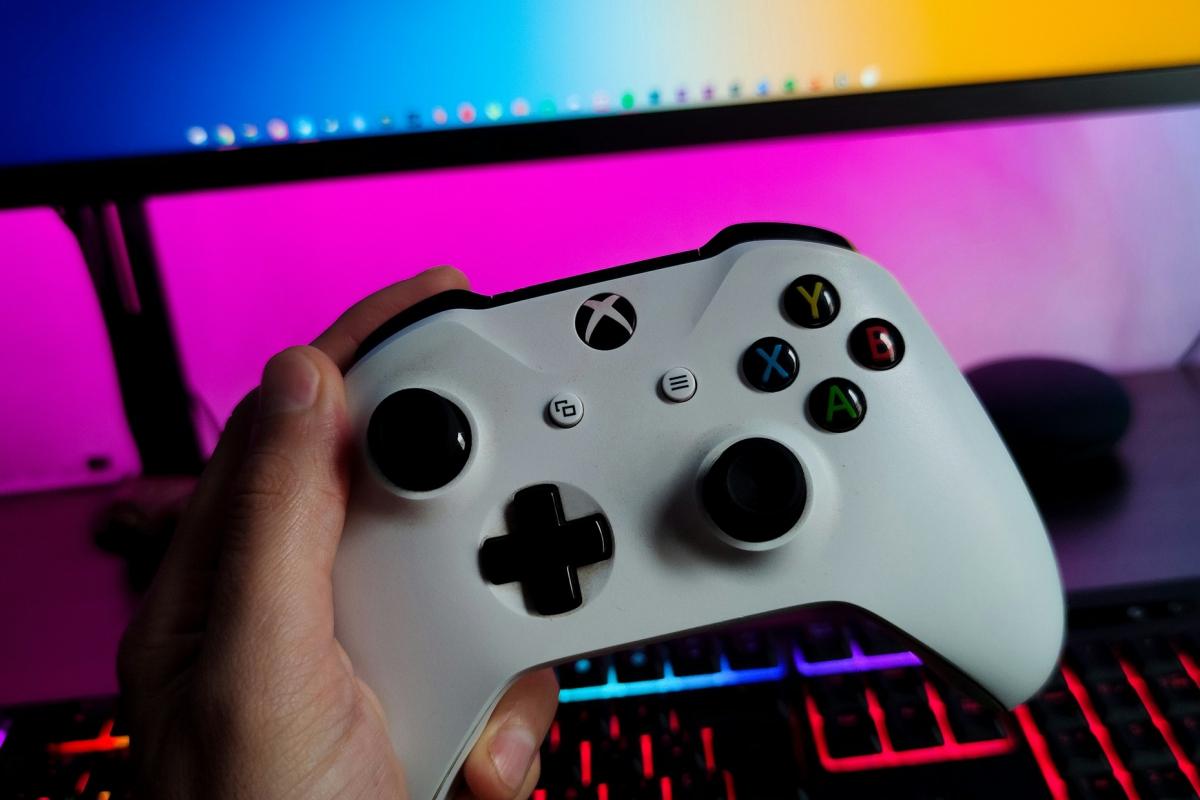
The idea of playing games on any device without spending a penny is closer than ever, and it's not just talk: Microsoft has begun internally testing a free, ad-supported plan for Xbox Cloud Gaming . This confirms rumors that have been circulating since early October and opens a new door for those who want to experience cloud gaming without subscribing to Game Pass.
What's being evaluated is a model where you access a selection of games for free, but with short advertisements before each session . The company is testing it privately with employees, with well-defined time and game catalog limits, and with an eye toward a public beta that would allow them to refine details before its final release.
What exactly is Microsoft testing?
Official sources cited by a major US newspaper have confirmed that a free, ad-supported cloud-based access service is being developed for certain titles, separate from Game Pass . This means it's not a discount or a coupon, but rather a parallel option that will coexist with the current subscription plans.
This information aligns with a report published in early October, which detailed that Microsoft employees were already using an early version of this feature . During these tests, the system plays a short advertisement before each game and otherwise operates like the Xbox Cloud Gaming we already know on compatible devices.
A key aspect of the experiment is that the advertising shown is pre-roll and lasts around two minutes . It's not a mid-game break, but a single insertion at the beginning of the session, designed to maintain the flow once you're in the game.
How it would work: ads, time limits and catalog
To make free access viable, Microsoft has defined usage rules. According to internal testing, each gaming session is limited to one hour . If you want to start another session, you'll see a short block of ads and gain another hour of free gameplay.
In addition to the session limit, there's a monthly cap of five free hours . This way, the plan serves as an entry point to try the service, play a few games, and decide if it's worth upgrading to a paid subscription with more time, a larger game library, and more benefits.
The catalog isn't complete, but it's not insignificant. The plan is to include some Microsoft titles, games from the Free Play Days promotions, and a selection of Xbox Retro Classics . The option to "stream your own game" is also being considered, where the title and license allow it.
Another important detail is that the selection of free games with ads can be rotated . This allows the service to remain active, enabling developers to test different combinations and gauge which offerings resonate best with players new to the Xbox ecosystem via the cloud.
Supported platforms and beta availability
Compatibility will remain unchanged from the current solution: you'll be able to play on PCs, Macs , Xbox consoles, mobile devices, and web browsers . The philosophy behind Xbox Cloud Gaming is to follow the motto of "being where the gamers are," and this new plan aims in the same direction.
Although everything is currently being validated internally, the company plans to launch a public beta in the coming months . This phase will be crucial for adjusting timings, ads, streaming quality , and the catalog, based on real user feedback.
Relationship with Game Pass and recent subscription changes
It's worth remembering the context: Xbox Cloud Gaming was originally called xCloud and officially launched in 2020 after a pre-launch phase . During this time, it has been integrated into the various Game Pass tiers, with a particular focus on the most comprehensive cloud gaming option.
Microsoft has recently reorganized its Game Pass plans and expanded the cloud component of its offering . This has been accompanied by price adjustments and a tiered structure that, in some markets, uses new terminology.
Part of this restructuring has brought several new developments: it has been emphasized that Xbox Cloud Gaming is no longer in beta , quality improvements have been announced for certain subscribers, and, in parallel, the first completely independent version of Game Pass is taking shape as a free, ad-supported access service . This separation opens the door for users who are not interested in paying a monthly fee to still play in the cloud.
Expected image quality and performance
On the technical front, the paid service has provided useful benchmarks for understanding the different levels of quality. Currently, Game Pass Ultimate subscribers can achieve resolutions up to 1440p with a bitrate of up to 30 Mbps in compatible titles, while lower resolutions typically hover around 1080p with a bitrate of approximately 12 Mbps.
For the ad-supported plan, it's reasonable to expect a more modest resolution and bitrate , given its status as a free, basic access option. In any case, the focus isn't on competing head-to-head with the premium subscription experience, but rather on providing everyone with a smooth first experience of cloud gaming.
Why a free plan with ads fits the current strategy
Microsoft's move doesn't come out of nowhere. Video streaming services like Netflix and Disney+ have already successfully embraced ad-supported plans to expand their user base and diversify revenue streams. Applying that logic to cloud gaming has its nuances, but the inspiration is clear.
Xbox's own management has repeatedly stated that its goal is to break down barriers to entry and reach new audiences . Executives like Matt Booty have emphasized this vision of "being where the gamers are," and executives like Jason Ronald have underscored the need to make the service more accessible and affordable , both by expanding regions and exploring alternative access methods.
In fact, the idea of a free tier had been on the table for some time. Microsoft Gaming's CFO, Tim Stuart, hinted almost two years ago that an ad-supported model could serve as a gateway to emerging markets and user profiles unwilling to pay a monthly subscription upfront.
Sources, internal evidence and the role of the media
Confirmation that Microsoft is internally testing free, ad-supported access came via an official statement reported by a leading international news outlet. This statement aligns with previous reports that company employees had been using a trial version since early October.
Furthermore, leaks and comments from specialized journalists had been suggesting for weeks that the free plan was progressing well. The overall picture painted by these pieces fits the sequence of: closed-door testing, adjustments, and a final public beta.
What about advertising within the gaming experience?
One of the most frequently asked questions is whether advertising will appear during gameplay. The current testing format is straightforward: a short ad before the game starts, and nothing more once the game loads . In terms of user experience, this is similar to what we experience when watching ad-supported content on video-on-demand platforms.
Meanwhile, a video has circulated on social media showing a user displaying what appears to be a Dior ad while loading Gears of War: Reloaded with a paid subscription. The authenticity of this clip has not been verified, and it should be taken with a grain of salt. In any case, the discussion makes it clear that the implementation of advertising in cloud gaming is generating both curiosity and skepticism —two feelings that Microsoft will have to manage transparently.
Impact on the user: benefits and fine print
The biggest advantage is obvious: playing for free . For many people, that initial experience is what leads them to consider a subscription later on. The fine print, however, lies in the time limits per session, the monthly spending cap, and a catalog that isn't the full Game Pass catalog.
For those who just want to play the occasional game on their phone or browser, watching two minutes of ads in exchange for an hour of gameplay might be perfectly acceptable. Those looking for marathon sessions, top quality, and the entire catalog will still find paid plans the most convenient option.
Business Context: A Busy Year for Xbox
This shift comes in a challenging year for Microsoft's gaming division , marked by staff reductions and project cancellations. Recent reports suggest that pressure to maintain high margins has influenced these decisions, further emphasizing the need to explore new avenues for growth and monetization.
In this puzzle, cloud gaming emerges as a strategic bet: it allows for scaling users without relying on the console market and without the friction of downloads or installations . The free, ad-supported plan fits in as an additional layer that can broaden the entry funnel without cannibalizing the premium offering if implemented carefully.
What games you can play and how they are selected
The catalog for this service is based on three pillars: Microsoft's own titles, Free Play Days games, and Xbox Retro Classics . The first group guarantees brand recognition; the second allows you to try new releases or recent hits during weekends; the third provides nostalgia and variety with games that perform well when streamed.
The "stream your own game" option also comes into play , when the content and license allow it . This is an interesting option for those who already own certain titles and want to enjoy them in the cloud without additional steps, always within the framework that Microsoft enables for this free service.
How it fits with the expansion of Xbox Cloud Gaming
Microsoft recently announced that Xbox Cloud Gaming was leaving beta and becoming an official service . Along with this step, its inclusion in Game Pass plans was expanded, and technical improvements were introduced for the highest quality settings for those with the top subscription tier.
In some markets, the new structure is organized into tiers that better distinguish the advantages of each segment, with references to plans like Essential and Premium and price increases for Ultimate . In this context, the free, ad-supported plan acts as a showcase: it demonstrates the cloud's value proposition with no upfront cost and, if it proves successful, encourages users to upgrade.
Pros and cons of the model from the player's perspective
Among the pros are the ability to try the real cloud gaming experience on your devices for free , the absence of ads during gameplay, and broad compatibility. Among the cons, the one-hour session limit and the five-hour monthly cap may be insufficient for those who want to explore beyond a quick glance.
It's also worth noting that the streaming quality of the free plan will likely be more modest than that of the paid tiers. However, for many, it will be more than enough to assess latency, clarity, and performance on their own connection before committing to a subscription.
What happens from now on?
The next step is clear: launch a public beta and gather data on a large scale . From there, Microsoft will be able to adjust ad lengths, time limits, the rotating game catalog, and features like "stream your own game," with the dual goal of attracting new players and not eroding the value of Game Pass.
If the reception is positive, this would be the first version of Xbox Cloud Gaming completely independent of Game Pass since its inception. This represents a significant shift that could set a trend in the industry if it proves that the balance between advertising and gameplay is sustainable.
With all of the above on the table—confirmation of internal testing, the two-minute pre-roll ad format, one-hour sessions with a maximum of five hours per month, compatibility with PCs, Xbox consoles, portable devices, and browsers, the catalog focused on first-party games, Free Play Days and Xbox Retro Classics, the technical improvements in paid tiers with up to 1440p at 30 Mbps compared to 1080p and 12 Mbps, and a schedule pointing to a public beta soon— this free, ad-supported plan is shaping up to be a logical move to expand the reach of the Xbox cloud at a time when major platforms are seeking hybrid formulas that combine accessibility, cost control, and new monetization methods.


Passionate writer about the world of bytes and technology in general. I love sharing my knowledge through writing, and that's what I'll do on this blog, show you all the most interesting things about gadgets, software, hardware, tech trends, and more. My goal is to help you navigate the digital world in a simple and entertaining way.