- Goods receipts in SAP connect inventory, financial accounting, and cost accounting through provisional valuation and subsequent settlements.
- Setting up automatic accounts, operation keys, and manufacturing profiles is essential for goods movements to generate correct accounting entries.
- Price control (standard or average variable), retroactive taking, and activity billing determine how materials and activities are valued in cost object accounting.
- Product cost collectors and mixed calculation allow for accurate analysis of profitability per product and management of cost deviations from the standard price.
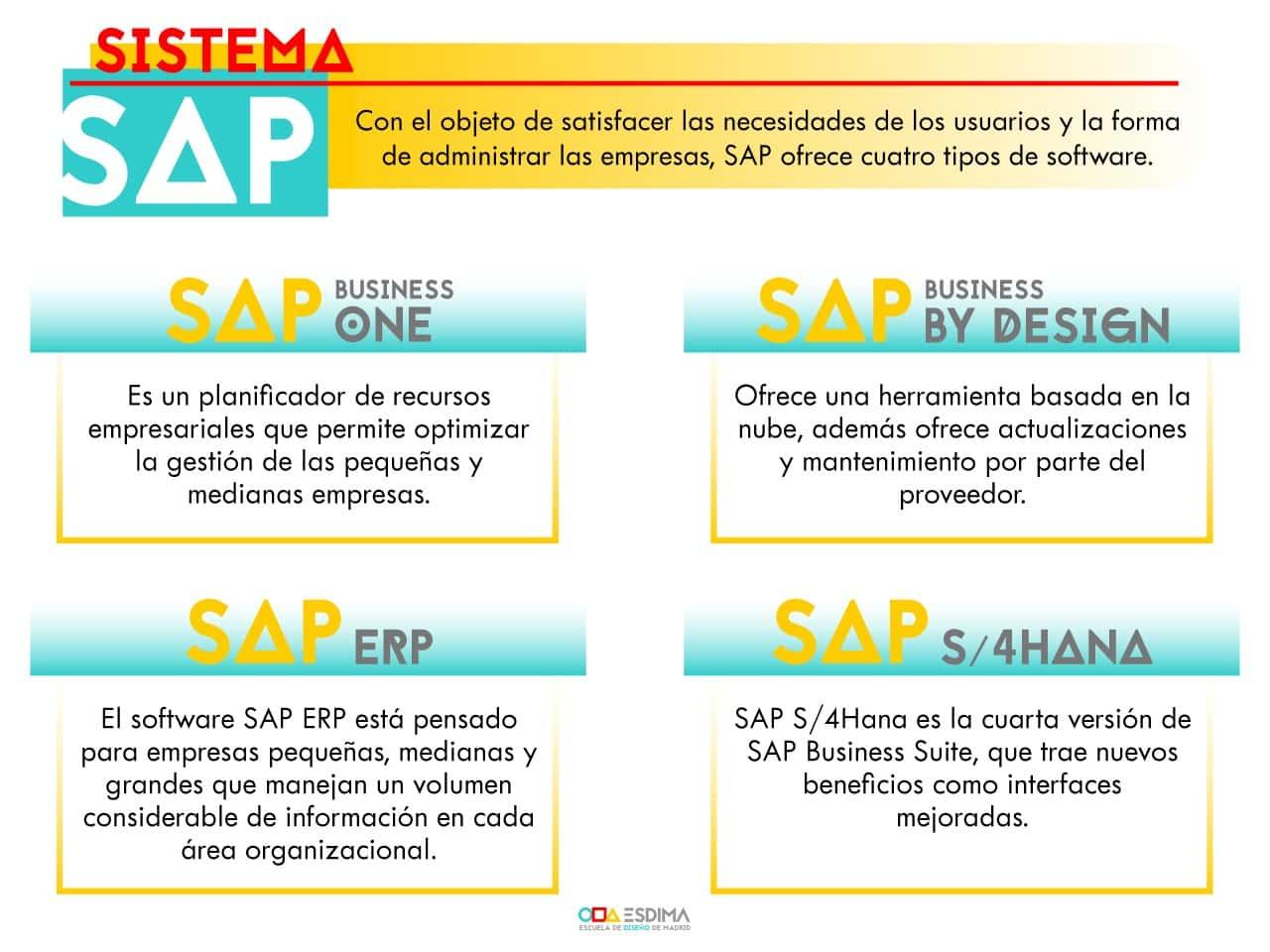
When people talk about SAP, many think of something incredibly complex, reserved only for large companies; today there is also debate about whether Is a cloud-based ERP worth it?The reality is that, behind that fame, there is a whole set of Products and services designed to control in detail key processes such as purchasing, production, inventory and accountingUnderstanding how these components fit together is essential to getting the most out of them and not getting lost among so many acronyms.
Within this universe, one of the most important topics is how goods movements are managed and their impact on costs. The way SAP handles a goods receipt, inventory, valuation and cost object accounting (CO-PC-OBJ) It makes the difference between having a real picture of what it costs to manufacture a product or living blindly with approximate data; that's why it's worth reviewing solutions like inventory programsLet's break it down calmly and in clear Spanish.
What are SAP's cost and inventory-oriented products and services?
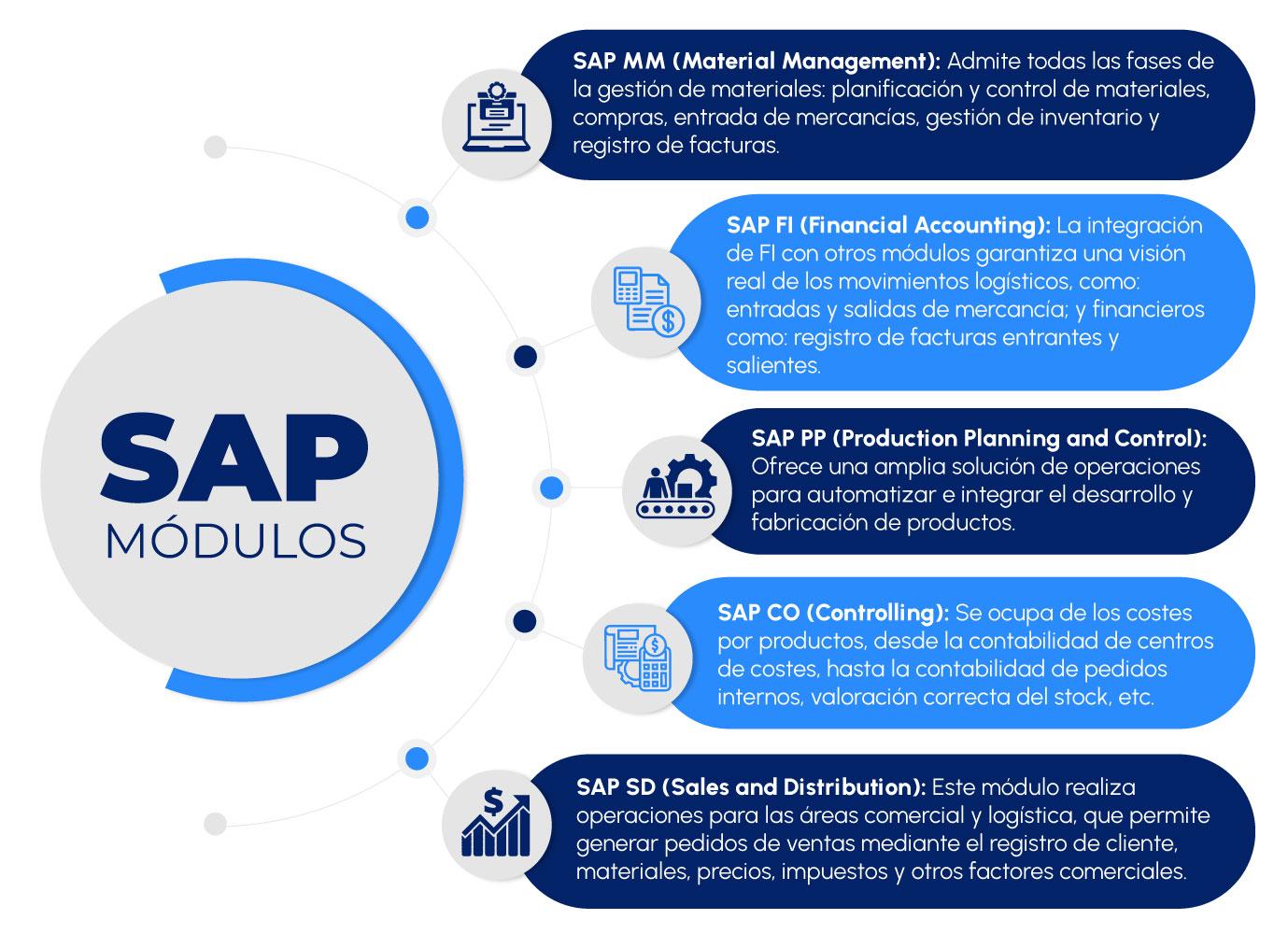
In the SAP environment, a fundamental part of the product catalog focuses on the integrated management of materials, production, inventories and cost accountingThis block includes modules such as Materials Management (MM), Production Management (PP), Controlling (CO) and, within it, Cost Object Accounting (CO-PC-OBJ).
This family of SAP solutions is designed so that every movement of goods has a immediate reflection in inventory, financial accounting (FI) and cost accounting (CO)In other words, it's important to know not only how many units come in or go out, but also their value, which production orders are affected, and how this impacts margins and results.
The associated services (consulting, training, support, parameterization) revolve around correctly configuring these processes: Define automatic accounting accounts, types of movements, valuation rules, repetitive manufacturing profiles, and product cost collectors, among other elements; to address it practically it is advisable implement business management software Following best practices. Without this configuration, the system wouldn't know which account to debit or credit when a goods receipt is recorded.
In industrial companies, the crown jewel is Cost Object Accounting. Through this component, SAP allows allocate and settle all costs related to the manufacture of a product to production orders or product cost collectors, clearly differentiating actual costs, standard costs, deviations and how they are transferred to inventory.
Goods receipt as a key component of the SAP ecosystem
In SAP, a goods receipt (GRM) is a movement that transfers a product to inventory within the Materials Management (MM) moduleAlthough it sounds simple, behind this movement there is a whole logic that affects stock, inventory value and cost objects in CO.
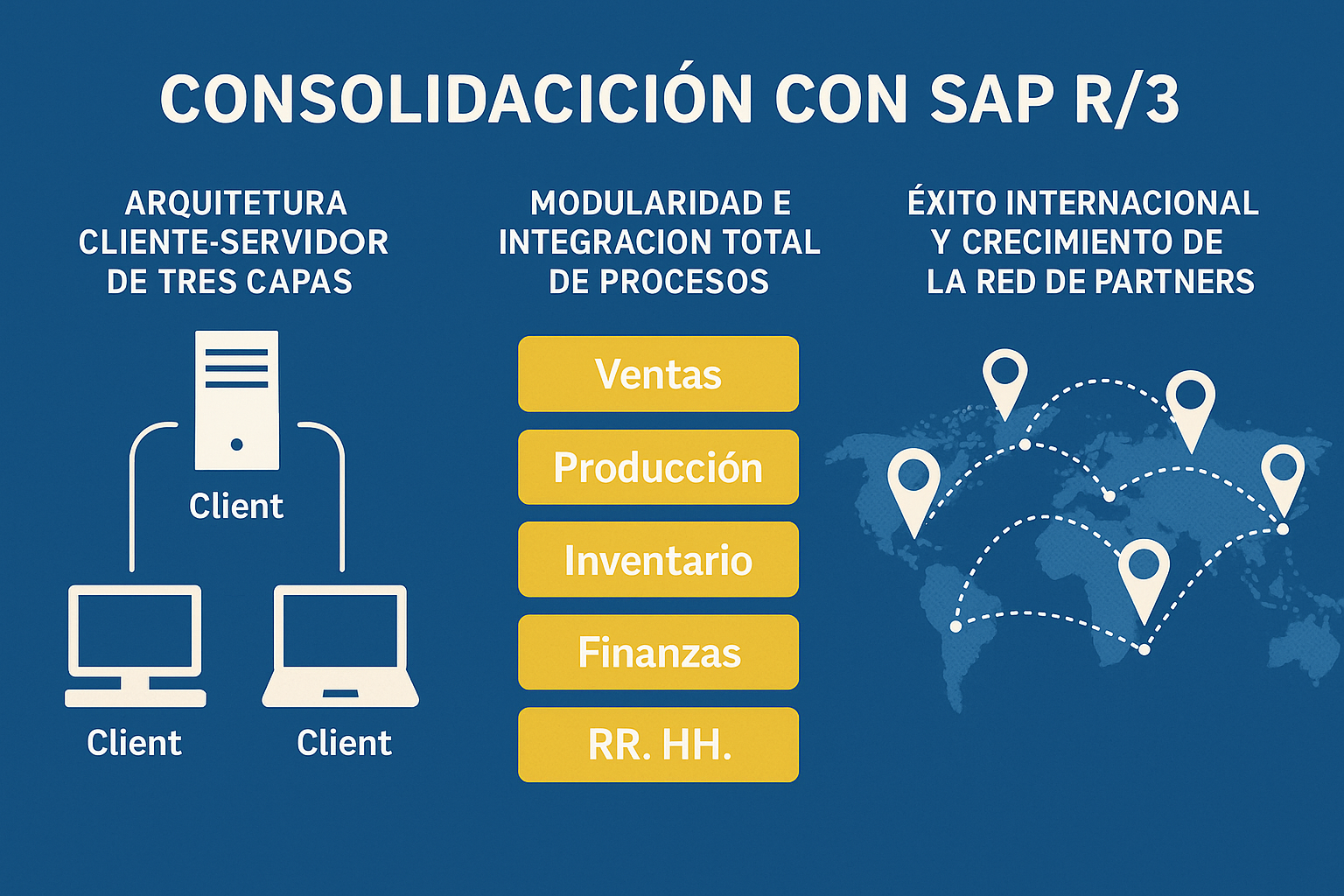
The R/3 system (and its successors) supports several main classes of goods entry: Entries for external procurement with reference to a purchase order, entries for in-house manufacturing with reference to a production order or process order, entries linked to repetitive orders, and entries with direct reference to a product cost collectorEach one triggers different counts.
When the receipt of goods is linked to in-house manufacturing, two basic scenarios can occur in cost object accounting: that the production/process order is not associated with a product cost collector, or that it is.In the first case, the order is paid directly. In the second, the payment is made to the product cost collector, who acts as a central "depot" for costs related to that material.
In addition to entries referencing orders, the system supports goods receipts directly against a product cost collectorIn that case, the inventory valuation is done preliminarily against the normal stock or against the valued customer order stock, simultaneously updating the inventory value in the material master data.
In all these movements, the key is that SAP performs a provisional inventory valuation at the time of goods receiptwhich can then be adjusted during the settlement of deviations at the end of the period within the Controlling of the product (by orders or by periods).
Prerequisites and configuration for handling goods receipts
For this entire system to function, it is essential to prepare the Materials Management Customizing. Specifically, it is necessary to define which accounting accounts are updated with each relevant merchandise movementThis is done in the Valuation and Allocation section, within the creation of automatic postings; furthermore, it is recommended evaluate the software before adopting it to ensure that it meets these requirements.
In a given valuation context, the system needs to know how to link the transaction keys to their accounts: the The BSV key (inventory variation) is associated with the material stock accountWhile The GBB key (counterpart to stock accounting) is linked to modifications of specific accounts, including AUF (goods receipts for orders with allocation) and an inventory modification account or center activities.
This configuration ensures that, when goods receipt is recorded, SAP can correctly debit the stock accounts and credit the inventory modification account in Finance (FI), while simultaneously updating cost objects in CO. Furthermore, the system generates a material document and an accounting document concurrently, facilitating their export and integration with office tools through the Office integration.
Another key configuration aspect is linked to the type of manufacturing. In repetitive manufacturing, all goods movements are managed from the Specific menu for Repetitive Manufacturingand not from the standard Materials Management menu. This involves defining repetitive manufacturing profiles with the appropriate options for automatic inputs, retroactive take-offs, and activity billing.
In make-to-stock and process manufacturing, parameterization involves the roadmap and key operational controlsThis indicates which operation acts as a milestone or notification point and whether, upon closing it, the system should create an automatic goods receipt and/or a retroactive material consumption record.
How SAP values goods receipts: standard price and moving average price
When registering a goods receipt, SAP performs a provisional valuation based on the type of supply and the price control of the materialTwo main scenarios come into play here: external procurement and in-house manufacturing.
When the material comes from an external supplier, the company can decide whether assess the entry upon receiving the goods or wait for the invoiceIf you choose to value at receipt, the system uses the net price of the order as a provisional valuation. If the invoice price differs, the discrepancy is adjusted in the inventory when the invoice is posted.
In the case of in-house manufacturing, the provisional valuation is calculated at record the receipt of goods for the production order or the repetitive orderThe system takes the quantity delivered to the inventory and multiplies it by the price defined in the Accounting view of the material master, conditioned by the price control.
If the price control indicator is set to S (standard price)All incoming goods are valued at that fixed price, regardless of actual costs. If the indicator is at V (variable average price)The system follows the rules defined in Customizing for the valuation of entries from orders, which differ depending on whether Periodic Product Controlling or Product Controlling by Orders is used.
In the periodic product controlling, the parameterization of the input valuation is done within the calculation of the current cost, in the option of set the entry valuation for order deliveryIn the Controlling of the product by orders, there is an equivalent adjustment to also set that valuation, but focused on individual orders.
Accounting and cost impact of goods receipt
When a goods receipt associated with a production order or recurring order is recorded, the system triggers a series of events: The order or product cost collector is paid, the defined accounting accounts are debited and credited, and material and accounting documents are generated.All of this is based on an inventory valuation that, at this stage, remains provisional.
In Finance (FI), standard logic dictates that The stock account is debited and the inventory modification account is credited.Simultaneously, in Controlling (CO) credits to the order or to the cost collector are recorded, reducing the outstanding balance to be absorbed by the stock.
The settlement of costs takes place in the period closing, within the periodic product Controlling or the product Controlling by ordersIn this phase, SAP analyzes actual costs against the standard price or the moving average price and generates the necessary postings to maintain inventory value consistency.
For materials valued at standard price, if the The actual cost is higher than the standard cost, and there is sufficient stock coverage.If the actual cost is lower than the standard cost, the system debits an expense account for price differences and credits the inventory adjustment account. If the actual cost is lower than the standard cost, the opposite occurs: the inventory adjustment account is debited and a profit account for price differences is credited.
In materials with a variable average price, the behavior is different: If the actual cost exceeds the standard cost, the inventory account is debited and the inventory adjustment account is credited; if the actual cost is lower, the entry is reversed.In these cases, the average price may change with each movement of goods and with the settlement of deviations at the end of the period.
Mixed calculation of costs and currencies in cost object accounting
Some materials use a mixed cost calculation, where the standard price is defined as a mixed price resulting from different cost variants or scenarios. This allows for reflecting situations where the same product can be manufactured using alternative routes or bills of materials.
In these cases, the fixed standard price used to value goods receipts and inventory is that mixed price calculated in the cost calculationHowever, the moving average price can be updated with each entry, exit, and settlement of deviations, offering a more dynamic view of the actual cost.
Another aspect that cannot be overlooked is the treatment of the CO company currency versus accounting company currencyIf they differ, the system updates the value of the goods receipt in both currencies, ensuring that cost accounting and financial accounting are aligned at the currency level.
This multi-currency mechanism is very useful for business groups that They report internally in a corporate currency different from the local currency., avoiding discrepancies between FI and CO when analyzing deviations, margins or inventory valuations.
All these elements (standard price, variable average price, mixed calculation, multiple currency) are part of the SAP advanced services in cost object accountingwhich allow going far beyond the simple recording of physical movements of goods.
Automated goods receipts and manufacturing profile
To simplify daily work on the factory floor, SAP offers the option of Create automatic goods receipts when notifying the last operation of an orderThis functionality saves time and reduces manual errors, but requires proper configuration.
In repetitive manufacturing, it is necessary to indicate in the repetitive manufacturing profile An automatic goods receipt should be generated when the actual data from the last reporting point is recorded. This option is configured in the product's periodic Controlling Customizing settings, within the current cost calculation, by reviewing the control data of the repetitive manufacturing profile.
In make-to-stock and process manufacturing, it is necessary to indicate in the roadmap control key that the last operation is a notification point (in repetitive orders) or a milestone (in classic orders) and, furthermore, that said operation must trigger the creation of the automatic goods entry.
It is important to keep in mind one key detail: if after the notification point that creates the automatic goods receipt there is an additional operationThe activities of that subsequent operation will no longer be automatically accounted for. This necessitates carefully designing the sequence of operations so that activity costs are recorded at the appropriate time.
The automation of goods receipt is complemented by other functions, such as Retroactive collection of consumption and billing of activities linked to the EMso that a single user action can generate the entire necessary accounting flow.
Goods receipt with retroactive material collection
Backflush is a feature that allows Report the consumption of incoming materials at the same time as the goods receipt is recordedwithout having to manually register all component outputs one by one.
When recording the receipt of goods, the user can accept or modify the proposed materials and their quantitiesThese materials are determined from the current bill of materials and the allocation of components to operations. It is also possible to add additional components if there have been unforeseen consumption.
The retroactive intake assessment uses the standard price or average variable price of the component materialprovided that the Actual Cost Calculation/Material Ledger component is not active. If this component is active, the valuation is done at the period price, according to the price control defined in the Accounting view of the material master.
For the retroactive tap to work in conjunction with the automatic goods receipt, it is necessary to perform additional specific parameterizations, in addition to those already mentioned for the creation of automatic entries from transaction or order notifications.
The combination of goods receipt, retroactive taking, and cost settlement allows the SAP services in cost object accounting provide complete traceability of the manufacturing cyclefrom the consumption of components to the final evaluation of the finished product.
Retroactive intake in repetitive manufacturing
In repetitive manufacturing environments, retroactive sampling is tightly integrated with the manufacturing profile and notification points. An indicator (EM and SM) can be activated in this profile that specifies that A goods receipt and a retroactive goods issue must be carried out simultaneously..
Thanks to this configuration, it is possible to create a retroactive notification point that automatically generates the receipt of goods and the exit of components in a single step. All necessary parameterizations are performed in the Customizing linked to the repetitive manufacturing profile.
To determine what and how much is consumed, the system breaks down the current bill of materials, either the one valid on the accounting date or the one defined by a revision status in the manufacturing versionThis bill of materials serves as a basis for proposing the theoretical consumption of components.
In repetitive manufacturing, goods receipts are recorded from the Repetitive Manufacturing menunot from the general Materials Management menu. This makes it easier for the shop floor worker to use a transaction tailored to their daily workflow, where notification, EM, and backflush are performed together.
A typical example might be the following: 500 tons are delivered to the warehouse from a recurring order whose planned cost calculation was based on 1.000 tons. A reference time of 100 minutes had been estimated to manufacture those 1.000 tons, so for 500 tons, 50 minutes of activity are billed, at a rate of $30 per minute. The system updates $1.500 of actual activity costs in the product cost collectorin addition to recording the consumption of materials and the valuation of incoming goods.
Retroactive take-up in manufacturing against stock and by process
In make-to-stock and process manufacturing, the retroactive intake is controlled from within the machine itself. roadmap and operationsThe specific operation indicates that a retroactive take-up must be performed, and the control key of the last operation defines that an automatic goods receipt should be generated.
When the production order is created, the system It automatically includes the bill of materials and assigns the materials to be used to the corresponding operations.This allocation is what allows the system to know which components it should consume retroactively when a certain operation is notified or the EM is performed.
In this context, retroactive taking is usually linked to key notification points or milestones within the routeso that with a single action both the production activities and the consumption of associated components are recorded.
The advantage for the company is that The administrative burden on the plant is reduced, and consistent accounting of materials and costs is ensured.provided that the bill of materials and routes are properly maintained.
For the process to run smoothly, it is critical that SAP's consulting and support services conduct regular reviews. routes, control sheets and material allocations, avoiding stock discrepancies or unjustified cost deviations due to parameterization errors.
Goods receipt and activity invoicing
In many manufacturing scenarios, it is not enough to simply record material consumption; it is also necessary to allocate the activities performed (labor, machine, etc.)SAP allows you to link goods receipt to internal billing of activities, especially in repetitive manufacturing.
If notification points are not used, it is possible to indicate in the repetitive manufacturing profile where activity invoicing is done upon registration of goods receiptAt that moment, the system automatically calculates the volume of activity and the price of each type of activity.
El volume of activity This is taken from the quantitative structure of the current material cost plan or from the preliminary cost calculation for the product cost collector. This proposed volume can be manually modified if there are discrepancies with the plan.
El price of each type of activity It is obtained from the Cost Center Accounting (CO-OM-CCA), following a valuation variant. This variant is selected from the cost calculation variant for actual costs, which in turn is determined by the order type of the production cost collector.
Thus, when registering an incoming goods receipt, the system can automatically allocate internal activity costs to the product cost collectorensuring that cost object accounting captures both material consumption and associated production effort.
Product cost collectors and individual needs
Product cost collectors are cost objects designed to accumulate all costs related to the production of a material over time, especially useful in repetitive manufacturing or in scenarios where a proliferation of orders is to be avoided.
When it comes to materials for individual needs (for example, linked to specific customer orders), a production cost collector of this type is responsible for always receive all costs of materials and billing for the activity, and is paid at the standard price at the time of receipt of goods.
This approach allows a clear separation between the standard cost that is transferred to inventory and the actual deviationsThese items remain in the collection until liquidation. This allows the company to maintain inventory valued at standard price while analyzing the actual differences in product control.
In contexts such as custom manufacturing, there are special requirements for these cost collectors, especially when working with stock for valued customer orders and standard pricing strategiesSAP provides additional documentation specific to these cases, which goes into more detail about the valuation and settlement of these scenarios.
The correct use of cost collectors, along with other SAP services in CO-PC-OBJ, allows the organization to have a very precise view of profitability by product, by customer or by orderbeyond simply tracking physical inventories.
Documentation and components related to the explanation of SAP products
The detailed explanation of how these SAP products and services work goes beyond the configuration screens. The solution itself offers documentation structured by components which helps to understand the complete logic of accounting and valuation.
For example, to understand in detail the accounting logic in cost object accountingThere is specific documentation that addresses CO-PC-OBJ from an accounting point of view, explaining the relationship between orders, collectors, stock accounts, inventory modification accounts and price difference accounts.
If you work with the component Calculation of the actual cost/Ledger of materialsThe associated documentation details how the period price is determined, how deviations are integrated, and how the cost of goods movements is retroactively recalculated.
In the field of Materials Management, the documentation of LO Materials Management It describes in greater detail the processes of goods receipt, stock management, types of movement and their integration with Finance and Controlling.
There are also specific references for other closely related components, such as LO-PP for manufacturing orders and notifications, or for the processing of Stock for valued customer order, settlement by periods and basic decisions in cost object accountingAll of this creates a document ecosystem designed to allow the company to get the most out of SAP products and services geared towards cost management.
Taken together, SAP products and services related to goods receipt, cost object accounting, inventory valuation, retroactive accounting, and activity billing form a highly cohesive system. When properly configured, it allows connecting the physical world of materials with the financial world of costs and resultsproviding a level of visibility that few other solutions offer. Although it may initially seem like a labyrinth of acronyms and options, once the basic logic is understood, it becomes an extremely powerful tool for controlling margins and optimizing production processes.

Passionate writer about the world of bytes and technology in general. I love sharing my knowledge through writing, and that's what I'll do on this blog, show you all the most interesting things about gadgets, software, hardware, tech trends, and more. My goal is to help you navigate the digital world in a simple and entertaining way.