- A segment on Telecinco News showed the credentials of a Traffic team, with a password that was too simple.
- The case revives a precedent: massive theft of driver data and sale for 3.000 euros on the deep web.
- Following that leak, there were impersonations involving fake fines and urgent payments to private accounts.
The phrase “DGT passwords revealed on Telecinco News” has set off alarm bells for a very specific reason: during a live television broadcast, access credentials for a Traffic Department team were clearly visible. What seems like a production mishap is, in reality, a prime example of how an audiovisual oversight can have serious consequences for the security of a public agency and the data protection of millions of citizens.
Meanwhile, the recent security situation surrounding the DGT (Spanish Directorate General of Traffic) doesn't help matters . Years ago, an attack was reported that resulted in the theft of a large-scale list of driver data, including addresses, phone numbers, and vehicle details, which ended up for sale on the dark web for €3.000 within hours. This backdrop reinforces the perception that internal cybersecurity practices need to be further professionalized and that basic errors, which can be very costly, must be avoided.
What happened on Telecinco News
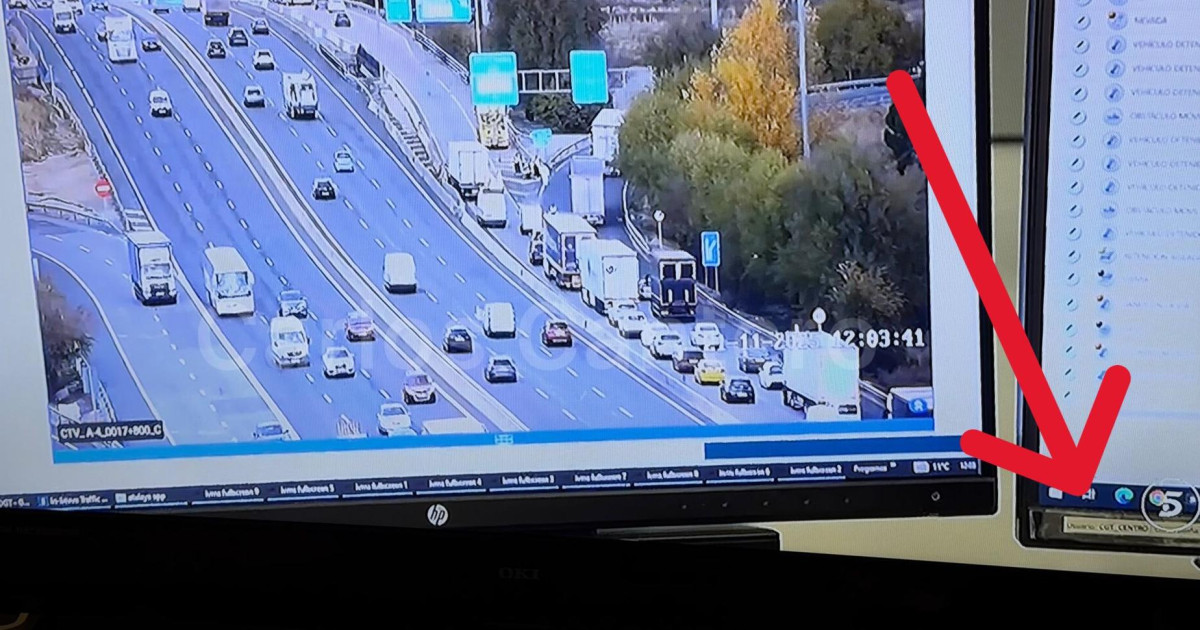
During a television segment, the camera focused on a computer in a traffic environment , and for a few moments, the username and password used to log in to the system were visible. Security expert Carlos Cantero raised the alarm, sharing the screenshot and emphasizing the vulnerability of the situation. Although the last digit of the password was omitted from the post, the rest was visible.
The most striking detail was the password's composition: an extremely simple numerical pattern , something like 5432*, with the last character hidden to prevent its complete disclosure. The problem isn't just that it was seen on TV, but the inherent weakness of such a password in environments that should be especially robust.
In the public discussion that followed the warning, there were numerous comments speculating that the actual key might have eight digits and therefore fit into an even more obvious sequence, something like 8765432*. This possibility was described as scandalous due to what it implies in terms of malpractice, especially in an organization that handles sensitive information.
Why a password like 5432* is a bad idea
Passwords with descending numerical sequences are a classic example of what you should never do. They're easy to guess, appear in automated attack dictionaries, and are easily compromised in basic audits. When they're shared in a work environment, the risk multiplies: any accidental exposure, a photo, or a television recording can compromise access.
Beyond the "what" and the "how, " the "where" complicates everything . In positions with access to internal systems, a weak password isn't just an individual problem: it opens a potential door to critical data and processes. In these circumstances, security by design requires long, random passwords with a mix of character types and, whenever possible, two-step authentication or authentication via electronic ID card reader.
Reactions, comments, and the eight-digit details
The security community and the general public reacted with astonishment to the idea that, if the password were eight digits long, it could follow a sequence as simple as 8765432*. This detail, which emerged in the comments on Cantero's post, was interpreted as proof that specific policies and training are needed for those who operate this equipment.
Ultimately, the controversy didn't end with a simple screenshot . It served to open a broader debate: what criteria are being followed for the creation and safekeeping of credentials? Who validates that they meet minimum requirements? And what role should the media play when they focus on screens or panels displaying sensitive data?
Background: from the attack on the DGT to the sale of data on the deep web
To understand why this lapse is so concerning, we need to look back. Not long ago, a serious incident was reported in which a database containing millions of drivers was stolen . The stolen information included addresses, phone numbers, vehicles, and personal details—a comprehensive package sufficient to facilitate high-impact, targeted fraud.
The magnitude of the situation is compounded by the fact that the file appeared for sale for €3.000 within hours on the dark web. This unindexed internet is fertile ground for illicit activities, and, as the saying goes, you can hire a hitman there, buy a kidney, or even an AK-47. These extreme examples illustrate that any leak that reaches these markets becomes uncontrollable.
Impersonation and fraud campaigns following the leak
Following that theft, one of the biggest waves of identity theft in Spain was unleashed . Millions of users received fake emails and text messages impersonating the DGT (Spanish Directorate General of Traffic) and urging immediate payment of supposed fines. The message appealed to urgency: deadlines of minutes and links to payments in private bank accounts, a typical phishing tactic designed to prevent the victim from thinking.
These messages, which appeared official but contained malicious links , relied on real personal data to lend credibility to the scam. When a fraudster has a name, license plate number, or exact address, the success rate skyrockets. Therefore, every new sign of vulnerability (such as a visible password) is seen as fuel for these types of campaigns.
The post on X (Twitter) and the JavaScript notice
Carlos Cantero's warning circulated widely on X , formerly Twitter. Some web integrations displayed the typical technical message indicating that the browser had JavaScript disabled and, therefore, the embedded content could not be displayed. It was accompanied by the service's usual links: Help Center, Terms of Service, Privacy Policy, Cookie Policy, Imprint, and Ads info, along with © 2025 X Corp.
That seemingly minor detail is illustrative: social media snippets or "embeds" bring with them elements unrelated to the main content (technical notices, help menus, or legal policies). When integrated into a news story, they can introduce distractions that don't provide context and sometimes complicate reading or access from certain browsers.
How should the media act when faced with sensitive credentials and data?
The television scene reopens a key editorial question: the responsibility to blur or avoid shots containing sensitive data . If a camera enters a work environment, framing must be planned and blur filters applied to screens or control panels. This isn't censorship; it's common sense to avoid exposing third parties or facilitating unauthorized access.
Furthermore, when a potential live broadcast error is detected , it's advisable to implement an information firewall: reframing, cutting, or adding captions while the shot is being corrected. The network and production company share a duty of care with the institution being visited, especially if it involves public facilities.
Informational noise: the entertainment piece that slipped in
On the pages that rank for this search, a block of entertainment content also appeared that has nothing to do with the DGT (Spanish Directorate General of Traffic). It reported that Kiko Jiménez, a contestant on "Survivor," celebrated his birthday in Honduras with Gloria Camila. The reality show's producers offered them an hour without cameras and a cake, which they decided not to share with the rest of the group because, they explained, the cake was too small.
Presenter Lara Álvarez showed the contestants a life-size replica of the cake , prompting comments from Paola and José Luis, who argued that it was indeed possible to share it. Iván, for his part, said that if he had seen "that huge cake," he would have shared it, although he admitted that the cake belonged to the couple. The audience applauded when José Luis stated that he would have shared it, to which Gloria Camila excused herself, alluding to the group's situation.
To illustrate the size, the organizers displayed a wooden block the same size as the cake , covered in cream and meringue, which the contestants were able to taste. Interestingly, the same text about this anecdote was repeated, almost verbatim, in the content accompanying the security news stories, suggesting either automatic copy-and-paste or a poorly optimized related news module.
In another paragraph of the same section, it was reiterated that Kiko was able to enjoy "Survivors" with Gloria Camila and celebrate his birthday. They emphasized the gift of an hour without cameras and insisted that the story could have remained a simple anecdote if it weren't for how the television newsroom turned it into a major issue. None of this is related to the DGT's (Spanish Directorate General of Traffic) safety regulations, but it was embedded in the pages that rank well, contributing to the noise.
What became clear after the episode
The incident on Telecinco demonstrated that cybersecurity problems are rarely purely technical . They are also organizational, cultural, and procedural. A weak password on a critical workstation is not an isolated incident: it's the tip of the iceberg of outdated policies or a lack of awareness.
The history of data leaks and sales on the dark web underscores the urgent need for improvement. When a database containing addresses, phone numbers, and license plates circulates on black markets for €3.000, every new oversight increases the risk. And when, in addition, citizens have suffered massive identity theft campaigns involving fake fines and pressure to pay into private accounts, the bar for security must be set extremely high.
What can citizens do right now?
Although the televised incident itself doesn't imply actual access to systems, it's wise to exercise extreme caution against fraud attempts . If you receive communications about fines: be wary of unrealistic deadlines, always verify through official channels, and avoid links that lead to private bank accounts.
Furthermore, if you suspect your data may have been compromised , monitor for unusual activity, activate banking alerts, and carefully examine any messages that seem urgent or threatening. Prevention is the best defense when personal data has been compromised.
Ultimately, it all comes down to a culture of security . It's about accepting that sensitive information is valuable and that, therefore, people will try to steal it, exploit it, or use it to deceive. And it's about understanding that, with well-implemented basic procedures, you can significantly reduce risk without sacrificing operational effectiveness.
Sometimes, a television anecdote brings a deep-seated problem to light . The display of credentials on a Telecinco news segment has served as a reminder that obvious passwords (like a sequence such as 5432* or one resembling 8765432*) are like powder kegs in an organization that manages the data of millions of drivers. Given the precedent of the mass theft and sale of credentials for €3.000 on the dark web, and the subsequent campaign of impersonation with fake fines, the message is clear: urgent training, stricter policies, and greater care on screen. And, from the viewer's perspective, an extra dose of critical thinking is needed regarding any message that urges payment quickly and through unofficial channels.

Table of Contents
- 1 What happened on Telecinco News
- 2 Why a password like 5432* is a bad idea
- 3 Reactions, comments, and the eight-digit details
- 4 Background: from the attack on the DGT to the sale of data on the deep web
- 5 Impersonation and fraud campaigns following the leak
- 6 The post on X (Twitter) and the JavaScript notice
- 7 How should the media act when faced with sensitive credentials and data?
- 8 Informational noise: the entertainment piece that slipped in
- 9 What became clear after the episode
- 10 What can citizens do right now?
