- C and Rust offer similar low-level performance, but Rust adds strong memory and concurrency security guarantees through its proprietary system.
- C maintains an advantage in legacy systems, highly restricted environments, and mature ecosystems, while Rust excels in new critical and concurrent projects.
- The Rust ecosystem with Cargo and crates.io drives modern productivity, and its interoperability with C allows combining both languages in complex systems.
- For a low-level oriented profile, learning C to understand the basics and Rust for secure new developments is a very solid career bet.

Choosing between C and Rust when you're passionate about low-level programming is no trivial matter: both languages give you direct access to memory, allow fine-tuned hardware control , and are used in systems where performance makes the difference between an excellent product and a mediocre one. However, their philosophies regarding security, memory management, and concurrency are radically different, and this influences both how you program and the types of errors you can make.
If you're thinking about your professional future 5 or 10 years from now , the dilemma is understandable: C is the ubiquitous veteran in operating systems , firmware, and embedded code; Rust, on the other hand, has burst onto the scene to directly address the weaknesses of C and C++, offering garbage-free memory security and a much more secure concurrency model. Let's calmly and objectively break down their similarities, differences, and when it makes sense to choose one or the other in real-world projects.
C and Rust as systems languages: what problem does each one try to solve?
C has been the "lingua franca" of low-level software for decades : kernels, drivers, system libraries, critical parts of databases , runtimes of other languages... All of this relies on C because it provides direct access to memory and CPU, generates very lightweight binaries, and can be ported to virtually any imaginable architecture.
Rust was born precisely as a response to the historical limitations of C and C++ , especially in two areas: memory safety and concurrency. The language was initially championed by Mozilla to develop secure, low-level components (such as parts of the Firefox engine) without sacrificing the typical performance of C/C++. Since then, it has been adopted by leading companies for infrastructure, high-concurrency systems, blockchain, Android development (such as creating Magisk modules for Android) , low-latency backend services, and demanding command -line tools .
Both can be considered "portable assemblers" in the sense that they give you control over the arrangement of structures, the choice of integer types, the use of stacks or heaps, and allow you to reason relatively well about the generated machine code. C has always taken advantage of this; in Rust, despite its modern abstractions (iterators, traits, generics), the compiler is designed so that these extra layers are "crushed" at compile time and disappear in the final binary when the time comes.
Even so, the way you program in Rust versus C is very different : in C everything rests on the programmer's discipline (and on review and testing); Rust shifts many of those responsibilities to the compiler, which acts as an extremely strict memory contract checker before letting you run anything.
Memory management: manual in C vs. ownership and borrowing in Rust
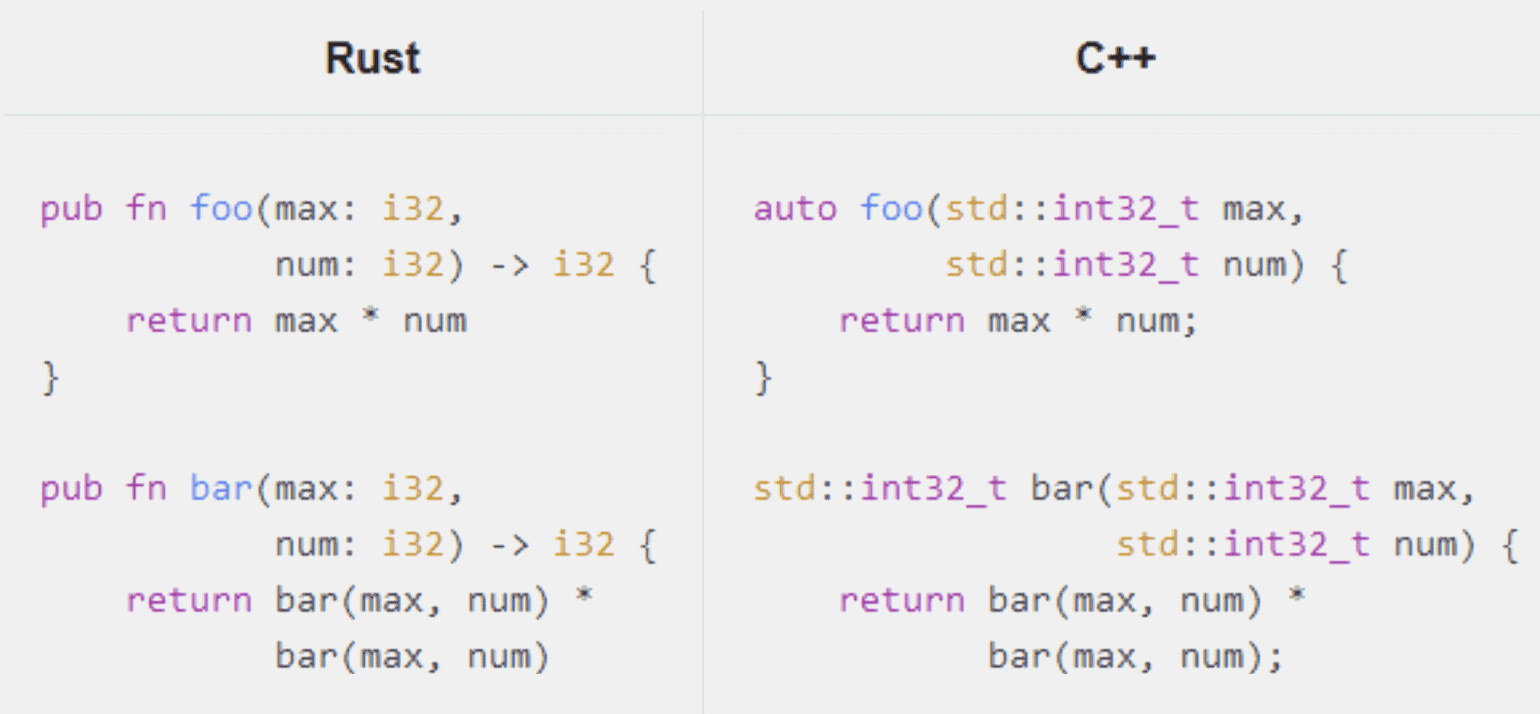
The biggest conceptual difference between C and Rust lies in how memory is handled . In C, you work with raw pointers: you decide when to allocate memory (malloc, calloc, new in C++), when to free it (free, delete), how to share it between functions or threads, and the size of your buffers. This offers incredible flexibility, but it also opens the door to a long list of classic errors.
In C, problems such as dangling pointers, leaks, and overflows are common : using memory that has already been freed, forgetting a `free` in an error path, writing more bytes than fit in a buffer, reading beyond the end of an array, freeing the same address twice… These errors can cause anything from crashes that are difficult to reproduce to very serious security vulnerabilities like those we constantly see in low-level exploits.
Rust addresses all of this with its renowned system of ownership, borrowing, and lifetimes . Every value in Rust has a clear owner; when that variable goes out of scope, the memory is automatically freed without the need for garbage collection. To use data without transferring ownership, references (borrowing) are used. These can be immutable (shared) or mutable (exclusive) and are subject to very strict rules that the compiler checks at compile time.
Rust's basic rules are simple to state but difficult to grasp at first : only one mutable reference to a piece of data can exist at a time, or multiple immutable references, but never both simultaneously; references cannot outlive the data they point to; and ownership is explicitly moved between variables. The borrow checker enforces these rules systematically, making errors such as use-after-freeing, double-freeing, or out-of-range access virtually impossible to detect in secure code.
Modern C++ attempts to mitigate some of these problems with smart pointers and RAII (such as std::unique_ptr or std::shared_ptr and the "resource acquisition is initialization" pattern), but the responsibility still largely falls on the programmer. In Rust, by design, these memory guarantees are built-in and enforced even before machine code is generated.
Concurrency and parallel programming: risk in C, safety net in Rust
Concurrency is another area where the difference between the two languages becomes enormous . C (and C++ with its standard library) offers threads, mutexes, condition variables, atomic primitives, and so on. With these tools, you can build practically anything, from multithreaded pipelines to lock-free structures, but the cost in mental complexity is high, and the compiler can do little to help you avoid logical errors.
In C, data races are a silent enemy : two threads accessing and modifying the same memory area without proper synchronization can generate erratic results, difficult-to-reproduce corruption, and bugs that only appear in production under load. Although tools exist for debugging concurrency (sanitizers, static analysis, etc.), the norm is for the programmer to bear the full responsibility for properly implementing locks, using atomic types, and designing consistent access protocols.
Rust extends its ownership and borrowing model to the multithreaded environment . The language introduces the Send and Sync traits, which indicate whether a type can be safely moved between threads or accessed by multiple threads simultaneously. These properties are usually derived automatically from the composition of each type. If you attempt to do something that could introduce a data race, the compiler will complain before generating the binary.
This translates into a very strong promise: secure Rust code is free of data races . Other concurrency problems may still exist, such as deadlocks due to improper mutex use, or logical race conditions (e.g., poorly coordinated decisions between threads), but the worst kind of concurrent memory errors—those that silently corrupt data—are virtually eliminated by the type system.
In practice, this encourages more and better parallelization in Rust.Libraries like Rayon for data parallelism, Tokio for asynchronous programming, and message-passing channels integrate well with the type model. Often, simply changing a iter() for par_iter() or use appropriate channel types to exploit multiple cores without fear of secretly intruding on shared memory.
Real-world performance: Is C really faster than Rust?
When it comes to pure speed, C and Rust are practically in the same league . Both compile to native machine code, without virtual machines or garbage collectors in between, and use very powerful optimization backends. Rust relies on LLVM (just like clang), so it inherits many of the optimization capabilities that C also leverages.
Theoretically, if you had infinite time for micro-optimization, C could match or outperform Rust in almost any scenario, because nothing Rust does is impossible to replicate in C with enough discipline. In fact, some developers coming from C acknowledge that, at the final assembly level, the code could be just as fast or even faster in C if every detail is squeezed out and extra layers are avoided.
The point is that in practice, there is rarely unlimited time to polish every function . Rust greatly facilitates the use of high-level abstractions, sophisticated data structures, and extremely optimized libraries, which means that, in real-world projects, the effective performance of a Rust program is usually at least on par with, and sometimes even surpasses, its hand-written C equivalent with fewer resources.
Rust does introduce some minor overheads when writing highly idiomatic code without considering the cost.For example, always work with indexes of type usize instead of int It may increase the pressure on 64-bit registers somewhat; passing pointer + length for slices and strings ensures safety, but adds extra data that the compiler has to handle; and not all array bounds checks are automatically removed if the optimizer cannot prove that they are unnecessary.
On the positive side, Rust also achieves small performance gains that are harder to achieve in C : strings and slices carry their length with them (avoiding O(n) traversals searching for terminators), generics allow containers and algorithms to specialize by type in the style of C++ templates but with clearer syntax, iterators are chained and merged in a single pass, and it is common to take advantage of highly optimized containers instead of resorting to makeshift structures like suboptimal linked lists.
Executable size and use of standard libraries
Another interesting difference between C and Rust is the size of the binaries and the standard library model . Virtually all modern operating systems include an implementation of libc; this means that a "hello world" in C can delegate to printf without needing to include that function in the executable, because it's already included in the system's shared libraries.
Rust, on the other hand, cannot assume that a standard libstd library is installed . Therefore, when you compile a typical Rust program, the binary usually includes relevant fragments of the standard library, making the minimum executable size significantly larger than its C equivalent. We're talking about a few hundred kilobytes of additional initial overhead, which is practically negligible for desktop or backend applications.
In embedded environments, Rust allows you to disable the standard library and generate "bare metal" code that interacts directly with the hardware, minimizing the binary size. In these scenarios, the flexibility is comparable to C, but with the advantage of still having the type system and ownership model to avoid many dangerous errors.
It's also worth mentioning the potential problem of "generic bloat" : generic functions and structures are monomorphized, meaning the compiler generates specialized versions for each specific type they're used with. This provides excellent performance, but can increase the size of the executable if many different combinations are used excessively. Tools within the ecosystem, such as cargo-bloat, help detect where this code duplication is occurring.
Ecosystem, tools and available libraries
C boasts an overwhelming maturity and a vast library library . Any serious operating system offers a robust library, and frameworks for graphical interfaces, database engines, scientific libraries, network stacks, runtimes, and utilities of all kinds have flourished around C for decades. Furthermore, many other languages offer bindings to C, making it a kind of universal glue.
Rust, although much younger, has built a meticulously crafted ecosystem around Cargo , its package manager and build tool. From day one, you have integrated dependency management, testing, benchmarking, and documentation generation. The crates.io repository is filled with packages covering everything from web development to cryptography, including WebAssembly, CLI, format parsers (JSON, TOML, etc.), and frameworks for high-performance network services.
A key cultural difference is that Rust typically relies on small, specialized dependencies , which significantly speeds up development but can lead to a large number of transitive libraries in a project. This impacts both the binary size and compilation times, although the community has developed tools to visualize and streamline this dependency tree.
In the realm of compilation tools and build systems , C typically relies on CMake, autotools, Meson, or custom solutions using Makefiles. These are powerful and flexible, but also more fragmented and have a learning curve that can sometimes be steep. Rust unifies almost the entire workflow with Cargo, which significantly simplifies daily tasks in complex projects, especially new ones that don't carry over legacy code.
Error handling: exceptions and codes versus Result and Option types
The way errors are handled also shows notable differences between C, C++, and Rust . In C, it's common to return error codes (integers, null pointers, etc.) and rely on the programmer to call helper functions, check return values, and act accordingly. It's easy to forget a check and continue with an inconsistent state.
C++ introduced exceptions as an error propagation mechanism , allowing objects to be thrown and caught with try/catch blocks. This makes it possible to separate the "normal" flow from fault handling, but at the cost of some complexity in the execution model, a potential performance overhead, and the need to be very careful with resource release in the presence of non-local jumps. RAII helps, but it doesn't eliminate all the problems.
Rust takes a different approach and avoids exceptions to the normal flow.Instead, it uses explicit types: Result for operations that can fail (with Ok and Err variants) and Option for values that may or may not be present. The language's syntax (operators like ?pattern matching with match, combinators such as map, and_thenetc.) makes it very natural to handle these cases without needing to manually check each return.
This strategy forces you to think of errors as part of the function's signature : if something can go wrong, your return type reflects that, and the compiler doesn't let you blithely ignore it. The result is more explicit and predictable code regarding what can go wrong, and fewer unpleasant surprises from exceptions bubbling up unhandled from deep within the application.
Security, types, and compile-time checks
Both C and Rust are compiled and statically typed languages , but the severity with which the compiler enforces safety rules is drastically different. C allows implicit conversions, very flexible pointer arithmetic, and extensive use of undefined behavior: something can compile without errors or warnings and yet explode at runtime in very peculiar ways.
Rust takes a much stricter and more meticulous approach to compilation . It checks not only types, but also ownership rules, borrowing and lifetimes, potentially dangerous aliasing, unsafe concurrent access, and the use of uninitialized data whenever possible. The goal is to catch the vast majority of serious errors before the binary is even executed, at the cost of forcing the programmer to constantly negotiate with the compiler until a valid and safe way of expressing the logic is found.
This results in a steeper learning curve in Rust , especially for those coming from languages where everything relies on runtime. However, once the idiomatic patterns are internalized, many experienced developers say they feel more relaxed refactoring or implementing concurrency, precisely because they know the compiler acts as a very reliable safety net.
Typical use cases: where C usually shines and where Rust excels
C remains unbeatable in certain niches due to inertia, ecosystem, and compatibility . When it comes to maintaining or extending existing operating systems, very old network stacks, firmware for extremely resource-constrained devices, or massive codebases that have been in production for decades, C is the natural choice. It is also widely used in general-purpose libraries that are then linked to other languages.
Rust shines especially in new developments where memory safety and robust concurrency are critical . It's increasingly common to see it in high-performance backend services, messaging systems, very fast command-line tools, browser components, modern database engines, blockchain and fintech, as well as in applications compiled to WebAssembly to run in the browser with native performance.
In embedded systems and low-level development, both have their place . C continues to dominate in many minimal microcontrollers and legacy platforms, but Rust is already being used in firmware, controllers, and more modern embedded systems where minimizing memory errors is crucial. The ability to disable the standard library and work almost like in C, but with Rust's type system, is proving very attractive in this area.
In video games and high-performance computing (HPC), the balance still tips towards C and C++ due to their history, specific profiling tools, established engines, and mature SIMD libraries. However, Rust is gaining ground in new engines, embedded scripting systems, and specific parts of the rendering pipeline or server logic in online games.


Passionate writer about the world of bytes and technology in general. I love sharing my knowledge through writing, and that's what I'll do on this blog, show you all the most interesting things about gadgets, software, hardware, tech trends, and more. My goal is to help you navigate the digital world in a simple and entertaining way.