- A moped is a light vehicle halfway between a bicycle and a motorcycle, with limited speed and power for urban use.
- Electric scooters and bicycles meet different needs: extreme portability versus comfort and greater autonomy.
- Regulations and maximum speed determine whether a vehicle is considered a bicycle, moped, or moped for legal purposes.
- Hybrid models like Speed Pedelec and limited scooters show how the boundaries between categories are blurring.
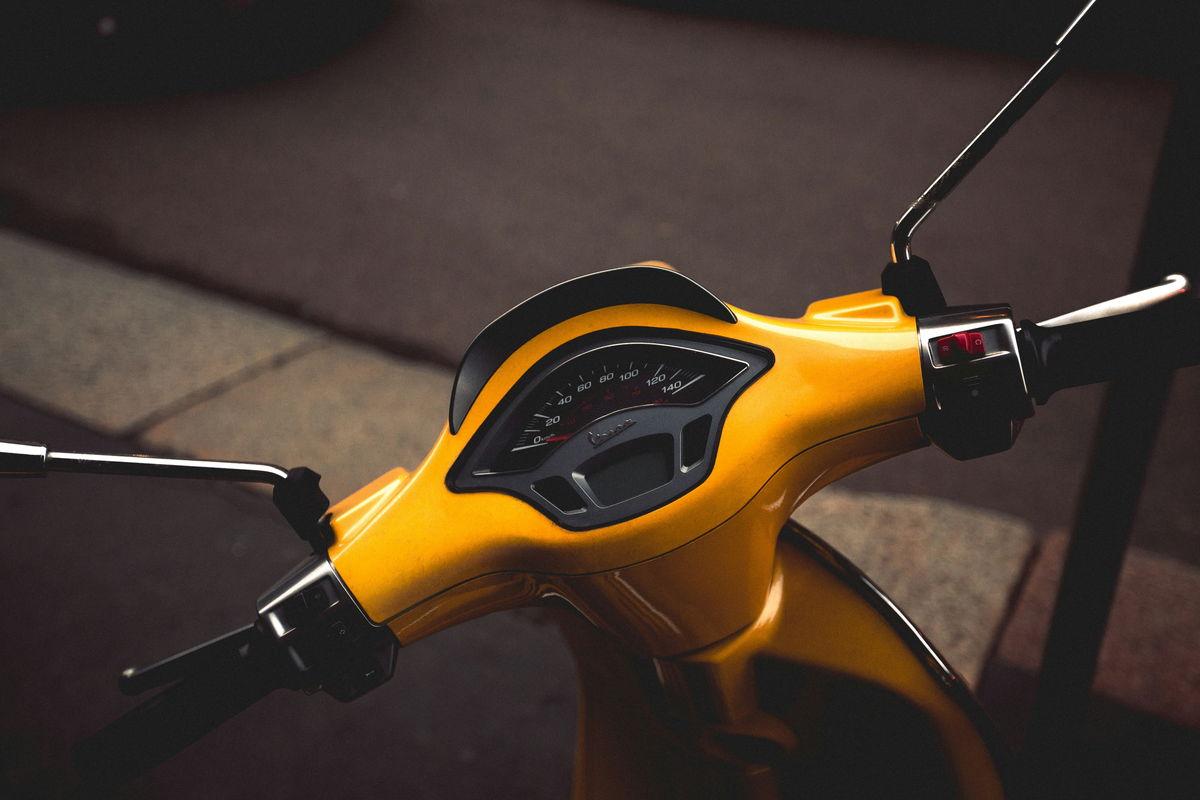
If you've been looking around the city for a while electric mopeds, electric scooters and electric bikes Mixed up in the bike lane and not sure what each thing is, you're not alone. The personal electric mobility market has exploded so much that it's normal to get confused by terms like moped, moped, scooter, kick scooter, or e-bike.
In recent years, hybrid vehicles have also appeared that blend features from various worlds: light motorcycles with pedals, bicycles that are registered as mopeds Or scooters limited to 25 km/h that try to look like an electric bike. Understanding where the moped fits into this landscape, and what differentiates it from an electric scooter or an electric bicycle, is key to choosing wisely and avoiding a purchase mistake.
What exactly is a moped today?
The word moped comes from “motor + pedal”It originally defined a very lightweight vehicle that combined a small engine with the ability to pedal. It was, so to speak, a motorized bicycle that allowed for effortless riding, but without the performance or weight of a motorcycle.
With There many models They lost the pedals and moved closer to the classic mopedBut the basic idea remains the same: a simple, cheap-to-use vehicle with limited speed, designed primarily for getting around town without major complications.
Currently, the concept has been modernized and Combustion-powered mopeds and electric mopeds coexist.The former typically use engines smaller than 50cc, offering very low fuel consumption and performance. The latter employ small electric motors and compact batteries, occupying an intermediate space between an e-bike and a lightweight scooter.
In markets such as Europe or Asia, Mopeds have made a strong comeback thanks to electrificationThey are more manageable and cheaper than a conventional scooter, easy to park in dense neighborhoods and with reduced maintenance costs, which fits perfectly with today's urban life.
How an electric moped and a combustion moped work
In a modern moped, whether electric or gasoline-powered, the philosophy is the same: assist with travel without seeking high performanceThese vehicles are designed for short journeys and medium speeds, not for highways or long trips.
When we talk about electric mopedThe heart of the system is a low-power electric motor that drives the wheel (usually in the hub) powered by a rechargeable battery. The electronics prioritize smooth power delivery, controlled acceleration, and a maximum speed which is usually around 40-45 km/h, often less so if the model aims to resemble an electric bike more closely.
The batteries in this type of vehicle are usually removable, with typical ranges between 40 and 80 kmMore than enough for everyday use in the city. Charging is done via a standard household outlet, and electricity consumption is very low compared to any conventional car or motorcycle.
Brianda combustion mopedsTypically, they use engines under 50cc, with very low fuel consumption and modest power. Their main advantage is their low weight; they are very easy to maneuver when stationary and offer just enough for agile urban riding, nothing more.
In both cases we find three clear identifying characteristics: Simple mechanics, cheap maintenance, and limited speed which, in most countries, does not exceed 45 km/h due to regulations for this type of vehicle.
Differences between a moped and a conventional motorcycle or scooter
The comparison is easy to understand if we think that A motorcycle is designed to go faster, further, and with greater stability., while the moped seeks precisely the opposite: simplicity, lightness and reduced cost.
A 125cc motorcycle or scooter has larger engines, reinforced chassis, longer-travel suspension, and oversized brakes. All of this is designed for sustain high speeds and long distances, including motorway or intercity road.
The moped, however, is one step below: smaller dimensions, less weight, and more basic equipmentThinner wheels, a less robust frame, and a seat and posture designed for short journeys. Its natural habitat is city streets and ring roads, not highways.
In everyday use, a conventional motorcycle offers more aerodynamic protection, Greater passenger comfort and improved cargo capacity (especially in scooters with under-seat storage). A moped, on the other hand, minimizes costs, makes it easier to find parking on any corner, and reduces fuel consumption and associated expenses to a minimum.
We could say that The motorcycle focuses on performance, while the moped focuses on efficiency and simplicity.This explains why many urban users are once again looking at this format, now in an electric version.
Moped vs moped: legal and conceptual differences
In Spain, the word that is most similar to moped is mopedBut they are not exactly the same. Legally, the term moped encompasses vehicles up to 50cc or their electric equivalents in power and speed.
The confusion arises because Not all mopeds are mopeds, nor do all mopeds fit equally into the administrative category.The original moped was conceived as a motorized bicycle with functional pedals, while many current mopeds are closer to a mini-bike without pedals.
Among the most common differences we find that The classic moped includes pedalsWhereas the modern moped is not. Philosophically speaking, the moped is similar to a small motorcycle, while the moped is closer to a reinforced bicycle with a motor.
There are nuances in design too: Mopeds are usually lighter, less bulky, and very simplewhile many modern mopeds feature fairings, cargo compartments and components more akin to the world of motorcycles.
At a legal level, Spanish regulations classify by power and maximum speedThus, some electric mopeds can be registered as pedal-assisted bicycles if they meet certain limits (motor up to 250 W, assistance only when pedaling and a cut-off at 25 km/h), while others become L1e mopeds and require registration, insurance, approved helmet and a specific driving license.
For whom does a moped make sense?
The user profile of a moped is quite clear: People who commute daily in the city, want to spend little and don't need a full-fledged motorcycleWe're talking about students, last-mile delivery drivers, people who commute through central neighborhoods, or workers who have short but frequent commutes.
The arrival of electricity has given this format a huge boost, because It offers zero local emissions, very little noise, and ridiculously low running costs.This fits perfectly with the traffic restrictions and low-emission zones being implemented in many Spanish cities.
Furthermore, many current electric mopeds play with striking modern or retro aesthetics, mixing the look of the classic Vespino with bicycle geometries or high-tech details such as connected screens or Boot keyless.
For those who don't want the hassle of marches, don't want to arrive at work sweating, and are looking for a practical tool rather than a toyThe moped has become a very attractive alternative to the traditional scooter.
Electric scooter: what it is and how it differs
When we talk about an electric scooter (or electric kick scooter), we are referring to a lightweight two-wheeled vehicle with foot platform and handlebars, powered by one or two electric motors usually located in the hubs.
These vehicles have gone from being a children's toy to becoming a real alternative to public transport and cars for short urban journeysTheir main advantage is that many are foldable and can be taken to the office, the subway, or the car trunk without too much trouble.
The operation is very simple: A throttle on the handlebars controls the speed.Braking can be achieved using mechanical brakes (disc or drum) and, in some models, regenerative electric braking that returns some energy to the battery.
Modern scooters are equipped with high-density lithium-ion batteries, tires of different sizes, and, in mid-range and high-end models, suspension systems to improve comfortAll of this in weights that, depending on the model, can range from just over 10 kg to 30-35 kg in very powerful scooters.
The lack of a seat and the fact of go standing They are clearly differentiated from both mopeds and motorcycles, placing them in their own category within urban micromobility.
Electric bicycle: what makes it different from scooters and mopeds
An electric bicycle, or eBike, is basically a conventional bicycle equipped with an electric motor and a batteryThe system assists the cyclist's pedaling. The idea is not to completely replace human effort, but to amplify it.
In pedal-assisted eBikes, the assistance only comes into play when you pedal and it cuts off when you stop.In Europe, most electric bikes for urban use conform to the EPAC standard: motor up to 250 W and assistance up to 25 km/h.
This means they are legally considered bicycles for traffic purposes (they do not need registration or mandatory insurance), provided that they respect those limits and do not incorporate an accelerator that moves the bike without pedaling.
The great advantage of the electric bike is that It allows you to travel longer distances with less effort.Tackling hills and daily commutes without arriving exhausted or sweaty. At the same time, if you wish, you can do moderate exercise every day without needing to go to the gym.
Compared to mopeds and scooters, eBikes are usually less portable but They gain in comfort, autonomy and versatilityespecially on mixed urban-interurban routes and for those who value the sporting or health component.
Speed, regulation and safety: moped vs scooter vs eBike
In terms of speed, each vehicle plays in a different league due to design and regulations. Many consumer electric scooters travel between 20 and 30 km/h of maximum speed, although there are high-performance models that can easily exceed 40-50 km/h, something that is not always legal or advisable in urban environments.
Electric bicycles for urban use, under European regulations, The assistance is limited to 25 km/h.There are so-called Speed Pedelecs, which maintain engine assistance up to 45 km/h, but in that case they become mopeds and must be registered, insured and meet the corresponding requirements.
Mopeds, both electric and combustion-engine, are usually limited to 45 km/h in most countriesThis puts them a step above the standard scooter and eBike in terms of speed, allowing them to integrate better into motorized city traffic.
From a regulatory standpoint, it's important to look at the fine print of each country or city, because There are differences in where you can drive, at what speed, and what safety equipment is mandatory.Helmet, lights, bell, reflective elements or license plate may be required depending on the type of vehicle.
In all cases, it is important not to lose sight of the fact that A good helmet, closed shoes, and, if possible, gloves and some protective gear. They are highly recommended even when the law does not expressly require them.
Costs: purchase price, maintenance and accessories
Price is one of the most decisive factors when choosing between moped, scooter or electric bicycleEach category has its own range of costs, both upfront and throughout its useful life.
For electric scooters, it's possible to find acceptable models starting from around 400-500 euros, rising to several thousand High-performance scooters offer long range and premium finishes. E-bikes typically start at a higher price point: a reliable conventional bicycle can cost around €1.000, while a decent e-bike usually starts at around €1.200-€1.500.
At the top end, High-end electric bikes and cargo bikes can easily reach €4.000-€10.000While many scooters reach their peak sooner, with prices below that in most cases.
Mopeds, requiring homologation as a moped, complete lighting and other elements, are placed in a similar or slightly higher price range to many quality eBikesespecially when we're talking about electric models with good battery life and modern equipment.
In terms of maintenance and daily use, scooters, eBikes and mopeds share that Electricity or fuel consumption is very low compared to a car. Maintenance usually focuses on tires, brakes, transmission checks (in the case of bikes) and basic battery care, with generally affordable costs.
Comfort, autonomy and user experience
In terms of comfort, the differences are noticeable from day one. Electric bicycle with a good saddle, large wheels and natural riding position It usually offers a very comfortable ride, ideal for medium and long journeys, and for driving on uneven asphalt or simple roads.
Electric scooters, meanwhile, can be surprisingly comfortable if they have generous wheels and suspensionHowever, the standing position becomes more tiring on long journeys, and every bump is felt more intensely if the model is very basic.
The moped, in electric or combustion format, is situated in the middle: It offers a motorcycle-style seat and posture, with more support and stability.but without achieving the refinement of suspensions or the aerodynamic protection of higher displacement scooters.
In terms of range, eBikes usually have an advantage because They combine human and electrical energyWith high-capacity batteries, it's common to exceed 60-80 km per charge if you make reasonable use of the assistance modes.
Electric mopeds, with removable batteries offering 40-80 km of range, are well-suited to urban usage patterns, while many mid-range scooters offer real range of 20-40 km, sufficient for city use but less suitable if you have long journeys without the option of recharging.
Portability, storage and security against theft
If you need to combine your vehicle with public transport, take it up to a home without an elevator, or put it in the trunk, the Portability becomes a key factor when choosing.
Electric scooters clearly win in this area: Most are foldable and relatively compactIt can be stored under an office desk or in a corner of the living room. A lightweight scooter can weigh less than 20 kg, although more powerful models weigh considerably more.
Folding electric bikes exist, but, in general, They take up more space and weigh more than a scooter.A normal urban eBike can weigh between 20 and 30 kg, and its length makes it difficult to fit comfortably in a small trunk or in certain elevators.
The moped, by its very nature as a moped, is clearly less portableIt must be parked on the street or in a garage and secured with good locks or anchors. On the other hand, many electric mopeds allow you to remove the battery and take it home to charge and store it.
In the face of theft, scooters have the advantage that In many cases they can be stored indoorsBoth at home and in the office, this minimizes risks. E-bikes and mopeds parked on the street are more vulnerable, so it's advisable to invest in good anti-theft systems and, if the value justifies it, consider specific insurance.
Maintenance and repairs: ease and costs
Maintenance is also an important factor, especially if you don't like tinkering with tools. In this regard, Electric bicycles have an advantage because any reasonably modern bike shop knows how to work with them..
eBikes require regular maintenance: Gear adjustment, chain lubrication, wheel truing, brake inspection And, from time to time, replacement of worn components. Nothing too out of the ordinary for a normal bike, except for extra care of the battery and motor.
Electric scooters, in theory, require somewhat less maintenance: There is no chain drive or gears.The key will be to monitor tire pressure and condition, check brakes, tighten bolts, and maintain the battery. The problem is that it's not always easy to find workshops specializing in electric scooters in every city.
As for mopeds and light mopeds, maintenance is more similar to that of a motorcycle, although simpler: Periodic inspections of brakes, tires, oil (in combustion), transmission and electrical systemsMany official networks and multi-brand workshops already offer specific service for electric models.
Whatever the vehicle, it's important to be clear that Brands usually offer a warranty on the main components.However, in case of a breakdown outside of warranty, it is important to have an accessible technical service and spare parts available.
Examples of boundaries: when a bike wants to be a scooter… and vice versa
The current market is full of proposals that attempt break down traditional categoriesA good example are the so-called Speed PedelecElectric bicycles whose assistance does not cut off at 25 km/h, but continues to help up to 45 km/h.
A representative example of this concept is the Yamaha Booster, a Electric bike with a robust look and nineties spiritInspired by the legendary Yamaha BW's moped (Booster in some European countries), it features 20-inch wheels with very wide tires, providing extra grip and some off-road capability.
Its Yamaha PW-S2 45 engine offers up to 75 Nm of torque, with active assistance up to 45 km/hIt features a 630 Wh battery and an Enviolo automatic hub transmission, allowing for smooth and effortless riding in urban traffic. Weighing around 36 kg, it's heavier than a "normal" eBike, but still significantly lighter than most scooters.
This Booster, when exceeding 25 km/h of assistance, It is legally considered a moped in our legislation. That implies registration, insurance, mandatory helmet and, at a minimum, a moped license to be able to ride it.
At the opposite end of the spectrum we have the Yadea GFX, an electric scooter launched as an L1e moped but factory limited to 25 km/hThe manufacturer's idea is to offer a very easy and accessible experience, almost closer to that of an electric bike than a classic moped, but without the need to pedal.
Yamaha Booster vs Yadea GFX: a bike that looks like a moped versus a scooter that looks like an eBike
The Yamaha Booster and the Yadea GFX are two clear examples of how The boundary between bicycle, moped and scooter becomes blurredOn paper, they belong to different categories, but in everyday life they overlap.
The Booster offers a high and dominant driving positionWith wide tires that provide excellent grip and braking, this bike is surprisingly easy to handle at a standstill, even though its 36 kg weight exceeds that of many eBikes. However, it does require pedaling to provide assistance: if the battery runs out, you can continue pedaling, but moving its 36 kg is no walk in the park.
The GFX, for its part, is betting on acceleration more typical of an urban motorcycleThis is very useful at traffic lights or when making quick maneuvers between cars. Despite weighing 55 kg, its dimensions are very compact, with 12-inch wheels and a design that makes it agile in heavy traffic.
The big practical difference is that in the GFX Never pedalYou always arrive at your destination refreshed, without physical effort or risk of sweating, in exchange for being completely dependent on the battery. Both are single-person vehicles, with full lighting, rearview mirrors, and the same legal obligations as any moped (registration, insurance, helmet, appropriate license, etc.).
On a technological level, the GFX benefits from being a very recent model, with advanced “tech” equipmentKeyless start via card or mobile phone, connected display, and other smart features. The Booster, while modern, lags slightly behind in this area, partly because it belongs to an older generation of products.
Advantages and disadvantages of each approach
If we compare these two concepts side by side, we can clearly see the strengths of each. The Yamaha Booster stands out for its feeling of control, the brutal grip of its wide tires, and the possibility of exercising. If you wish, you can adjust the level of assistance to sweat more or less.
It's also a plus that, in case you run out of battery, you can still move forward by pedalingAlthough the effort is considerable. For those who want a versatile vehicle somewhere between a bicycle, moped, and scooter, with striking aesthetics and a nineties spirit, the Booster is a very unique option.
On the Yadea GFX side, the advantages include a lively acceleration, very useful in the city, a relatively low weight for a scooter (55 kg) and compact dimensions that facilitate parking and maneuverability.
Furthermore, not having to pedal means that It's perfect for those who don't want any physical effort. on their daily commute. However, the 25 km/h speed limit may fall short for some users, especially considering that legislation would allow speeds of up to 45 km/h in this category.
In terms of price, the Booster is around €2.399 plus registration fees, while the GFX starts at around €1.599 plus registration fees, although It's easy to find deals and discounts that bring their actual prices closer to the actual rates.Both models have a Zero Emissions label and have access to restricted areas in many cities.
Choosing between a moped, electric scooter, or electric bicycle involves carefully analyzing the types of journeys you make, how physically demanding you are, your budget, and what you value most: if absolute portability, comfort over long distances or urban simplicity with minimal costsWith the current variety of hybrid formats such as the Yamaha Booster and the Yadea GFX, it's easier than ever to find a vehicle that fits your daily life perfectly, provided you are clear about the differences between each category and the legal obligations of each one.

Passionate writer about the world of bytes and technology in general. I love sharing my knowledge through writing, and that's what I'll do on this blog, show you all the most interesting things about gadgets, software, hardware, tech trends, and more. My goal is to help you navigate the digital world in a simple and entertaining way.